
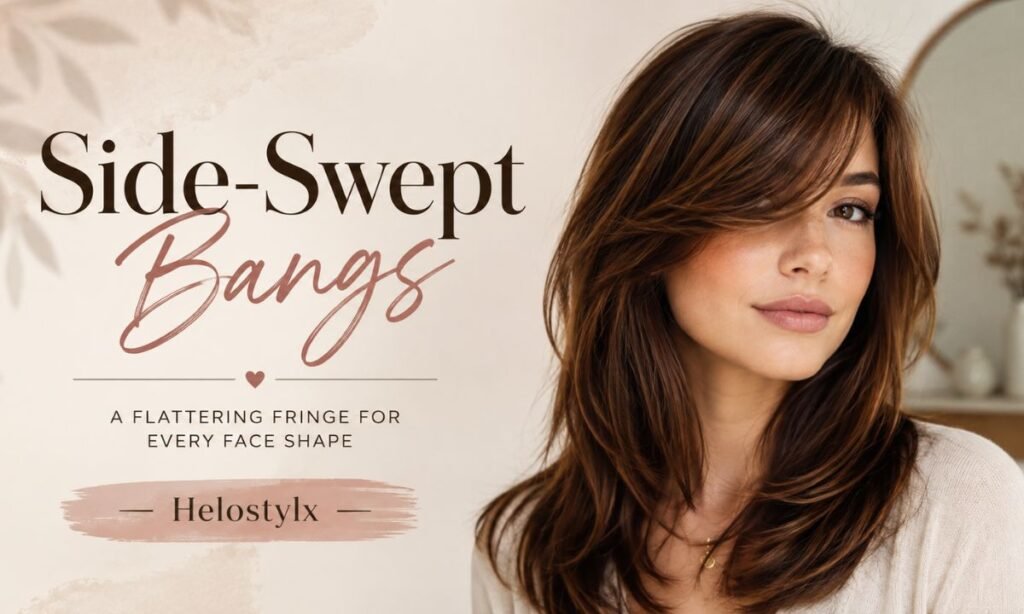
Side-swept bangs are having a real moment again, and this time they look more polished than the choppy, razor-cut versions from the early 2000s. If you’re considering a fringe that softens your face, adds movement, and works with almost any hair length, side bangs are one of the lowest-commitment ways to refresh your look without a drastic haircut.
This guide breaks down why the trend is resurfacing, who it actually flatters, how it compares to curtain bangs, and which specific styles are worth showing your stylist.
Why Side-Swept Bangs Are Trending Again in 2026
Side-swept bangs are trending in 2026 because they offer a soft, low-maintenance alternative to full fringes while still delivering a noticeable style change. Hair trends move in cycles, and the Y2K revival that brought back low-rise silhouettes and glossy textures has now reached into hairstyling, pulling the 2000s side bang along with it.
Several factors are driving the comeback:
- Y2K nostalgia in fashion and beauty. As early-2000s aesthetics return across clothing and makeup, hairstyles from that era are following the same wave.
- Social media styling tutorials. Short-form video content has made it easier for people to see how side bangs are cut, blended, and styled at home, which lowers the intimidation factor.
- Preference for softer, “your-hair-but-better” looks. Many people want a refresh that still looks natural, and a side-swept fringe blends into the rest of the hair rather than dominating the whole style.
- Versatility across textures and lengths. Unlike blunt bangs, side bangs adapt to wavy, curly, and straight hair with minimal daily effort.
The 2026 version of this trend leans toward longer, face-framing pieces rather than the very short, heavily flat-ironed bangs of the original 2000s look. Stylists are cutting them with more texture and softer edges, which makes the style feel current instead of like a costume throwback.
Why Side Bangs Work
Side bangs work because they create diagonal movement across the face, which softens angles and draws attention toward the eyes and cheekbones. This asymmetry is the main reason the style photographs well and blends naturally into different haircuts.
Here’s what makes them effective:
- They soften strong features. A side-swept fringe breaks up a straight hairline and can visually reduce the appearance of a broad forehead.
- They require less precision than blunt bangs. Because side bangs are cut on an angle and grown out gradually, minor unevenness is far less noticeable than with a straight-across fringe.
- They grow out gracefully. As they lengthen, side bangs can be tucked behind the ear or blended with layers instead of needing an immediate trim.
- They work with parting styles. A side bang naturally complements a side part, and it can also be styled to sit within a middle part for a fuller framing effect.
- They add dimension to flat hair. For fine or one-length hair, a swept fringe introduces layers and movement without a full restyle.
The trade-off is upkeep between salon visits. Side bangs still need regular trims (generally every six to eight weeks) to keep the shape from growing shapeless or blending too far into the rest of the hair.
Who Do Side Bangs Work For?
Side-swept bangs suit most face shapes and hair types, which is part of why the style has stayed relevant across decades. The angled cut is more forgiving than a blunt fringe because it doesn’t create a hard horizontal line across the forehead.
| Face Shape | How Side Bangs Help | Styling Tip |
| Round | Adds length and breaks up width | Keep bangs longer, past the cheekbone |
| Square | Softens strong jawline angles | Angle the fringe steeply for a diagonal line |
| Heart | Balances a wider forehead with a narrower chin | Sweep bangs off to one side, not too heavy |
| Oval | Works with almost any length or angle | Customize based on personal preference |
| Long | Visually shortens the face | Choose a fuller, slightly shorter sweep |
Hair type also plays a role in how well side bangs perform day to day:
- Straight hair holds the sweep easily and needs minimal daily styling.
- Wavy hair can add texture to the fringe, though it may need a light smoothing product to prevent flyaways.
- Curly hair benefits from a diffused or air-dried side bang cut specifically for the curl pattern, since curls shrink up and shift placement compared to straight strands.
- Fine hair tends to look most natural with a lighter, wispier bang rather than a thick, blunt piece.
- Thick hair can carry a fuller side bang without it appearing too heavy.
If you have a cowlick near the hairline, mention it to your stylist before cutting. Cowlicks can push bangs in an unintended direction, so the cut may need to be adjusted to work with your natural hair growth pattern rather than against it.
Side-Swept Bangs vs. Curtain Bangs
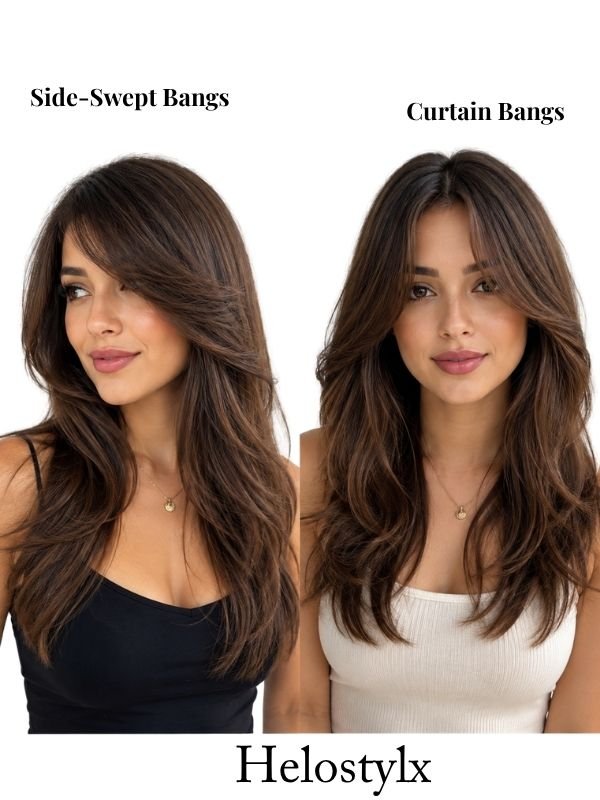
Side-swept bangs and curtain bangs are often confused because both sweep away from the center of the face, but they’re cut and styled differently. Curtain bangs are parted down the middle and framed evenly on both sides, similar to actual curtains framing a window. Side bangs, on the other hand, are concentrated more heavily on one side and typically blend into a side part.
| Feature | Side-Swept Bangs | Curtain Bangs |
| Parting | Usually off-center or side part | Center part |
| Coverage | Heavier on one side | Even on both sides |
| Face-framing | Diagonal, asymmetrical | Symmetrical framing |
| Best for | Softening one dominant angle | Balancing the whole face evenly |
| Styling effort | Low, mostly needs a round brush or flat iron for direction | Low to moderate, often relies on natural texture |
| Grow-out flexibility | Tucks behind ear easily | Can be pushed back but changes the framing effect |
Neither style is objectively better. Curtain bangs tend to suit people who already part their hair in the middle and want a fuller, rounded frame around the face. Side-swept bangs suit those who prefer an asymmetrical look or already wear a side part, and they tend to be more forgiving for people who want the option to skip styling and simply tuck the fringe away on low-effort days.
Celebrity-Inspired Ways to Wear the Trend
Celebrity stylists have been reworking the side bang for red carpets and everyday looks alike, proving the trend isn’t confined to a single decade or hair texture. A few approaches worth referencing when talking to your stylist:
- The sleek, glossy sweep. A smooth, flat-ironed side bang paired with sleek lengths channels the original 2000s red-carpet look but feels updated with a glassy, frizz-free finish rather than heavy hairspray.
- The soft, wavy sweep. Loose waves running through the bang and the rest of the hair give a more relaxed, undone version of the trend that works well for daytime.
- The bang with a low bun or ponytail. Pulling the rest of the hair back while leaving a side-swept piece out is a popular way to add a face-framing detail without committing to bangs throughout.
- The bang with bold color contrast. Some people use a subtly different tone or babylights around the fringe to make the sweep stand out against the rest of the hair.
These variations show that side bangs aren’t a rigid, one-note style. They can be dressed up for formal occasions or worn casually depending on how they’re blow-dried and finished.
Also Read This : What Is a Shag Haircut? A Complete Styling Guide
Side Bang Hairstyles to Try
If you’re ready to bring side-swept bangs into your own routine, these four variations cover a range of hair lengths, textures, and commitment levels.
Layered Lob
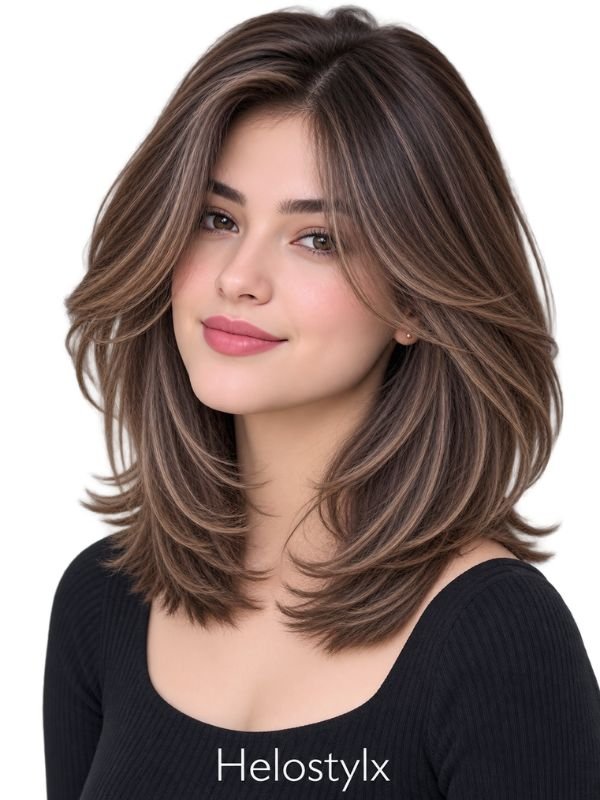
A layered lob (long bob) with a side-swept fringe is one of the most requested versions of this trend because it combines two flattering elements in one cut. The layers around the face blend seamlessly into the bang, so there’s no harsh line where the fringe ends and the rest of the hair begins.
This style works particularly well for people with medium to fine hair who want the appearance of added volume and movement. The lob length, typically resting between the chin and shoulders, keeps the cut low-maintenance while the side bang adds a face-framing focal point.
Subtle Side Bang
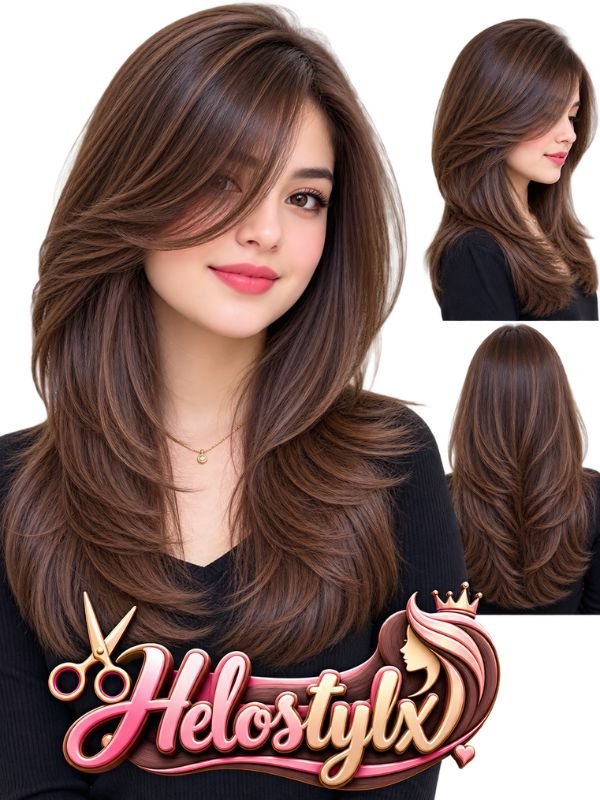
For anyone hesitant about committing to a noticeable fringe, a subtle side bang is a smaller, wispier version that blends into longer layers. Instead of a distinct chunk of hair cut shorter, this style uses a few face-framing pieces angled toward one side.
It’s a good starting point if you’re transitioning into bangs for the first time, since it can be grown out easily or cut shorter later if you decide you want a more dramatic sweep. It also requires less daily styling, since the pieces are light enough to air-dry into place.
2000’s Side Bang
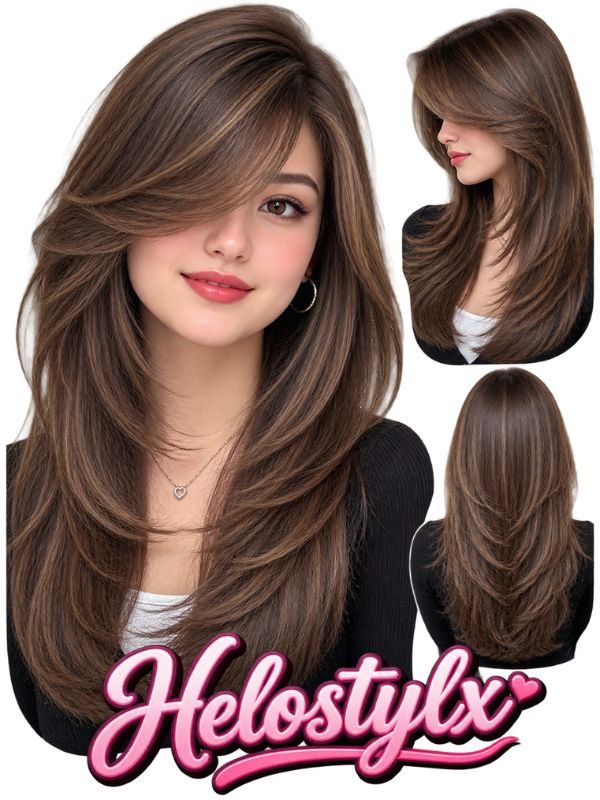
This is the version most associated with the original trend: a longer, more substantial fringe that sweeps diagonally across the forehead, often cut with a razor for softer, feathered ends rather than a blunt line. It typically extends past the eyebrow and can reach the cheekbone or jaw.
To keep this style from reading as costume-like, ask your stylist to avoid a completely flat, uniform sweep. Adding subtle layering within the bang itself creates the texture that makes the 2026 take feel current instead of like an exact throwback.
Side Bang High Ponytail
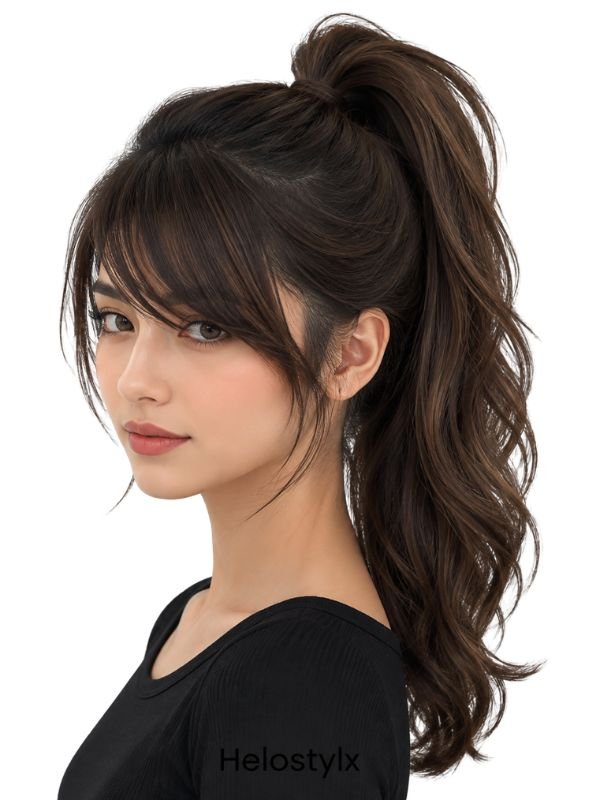
Pairing a side-swept fringe with a high ponytail creates contrast between a sleek, pulled-back style and a soft, face-framing detail. This combination works for both casual and dressed-up occasions, since the ponytail keeps the rest of the hair controlled while the bang adds movement near the face.
To style it:
- Brush the hair back into a high ponytail, leaving the side bang section out.
- Secure the ponytail with an elastic, smoothing the base with a small amount of styling cream to prevent flyaways.
- Use a round brush or flat iron to shape the bang, sweeping it in the desired direction.
- Set the fringe with a light-hold hairspray so it holds its shape without looking stiff.
This look is especially useful for hot weather or workouts, since it keeps hair off the neck while still offering a styled, finished appearance.
Final Thoughts
Side-swept bangs are back because they solve a common styling problem: how to change up your look without overhauling your entire haircut. They soften angular features, work across most face shapes and hair textures, and grow out more gracefully than a blunt fringe.
Whether you go for a subtle face-framing piece, a fuller 2000s-inspired sweep, or pair the bang with a sleek ponytail, the key to making this trend feel current rather than dated is texture and movement over a flat, uniform finish. Bring reference photos to your stylist, mention your natural hair growth pattern and any cowlicks, and plan for regular trims to keep the shape looking intentional as it grows out.
