
If your arms get tired blow-drying, your brush gets stuck halfway through, or your “quick morning routine” somehow eats up 40 minutes, you already know what it’s like to have thick hair. It’s gorgeous. It’s also a lot of work unless you’re wearing the right cut.
Thick hair tends to hold its shape, resist frizz better than fine hair, and look full and healthy with almost no effort. But it can also be heavy, hard to layer correctly, and prone to puffing out into a triangle shape if the cut isn’t built for it. The wrong haircut fights your hair every single day. The right one works with it.
That’s why choosing a low-maintenance haircut matters so much if you have thick strands. A well-designed cut removes bulk in the right places, lets your natural texture do the styling for you, and cuts your daily routine down to a few minutes with a brush and maybe a spritz of product.
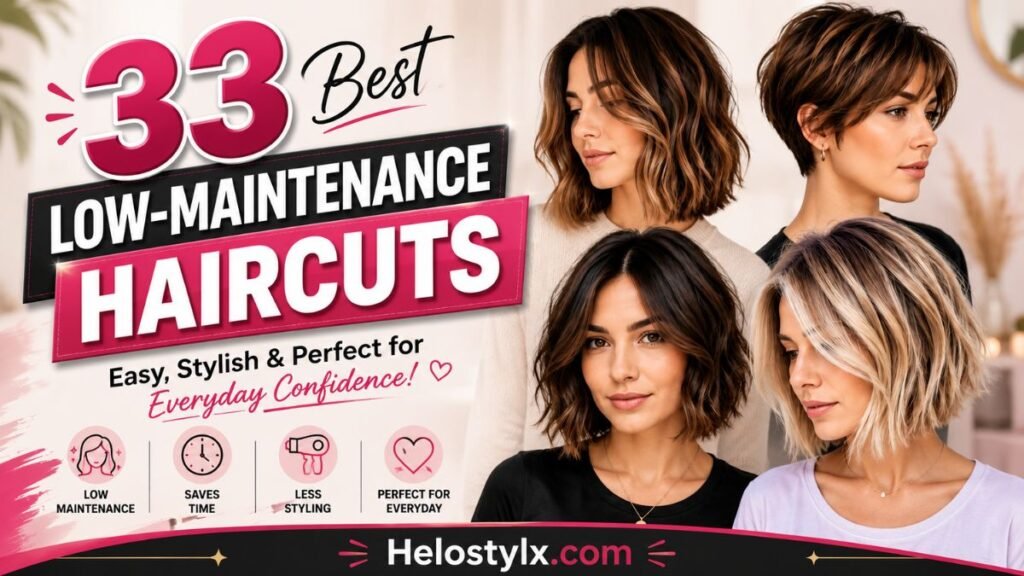
In this guide, you’ll find 33 real, stylist-approved haircuts for thick hair short, medium, and long plus how to pick the right one for your face shape, texture, and lifestyle, styling tips that actually work, the 2026 trends worth knowing, and answers to the questions clients ask me most in the chair.
Quick Answer
The best low-maintenance haircuts for thick hair remove weight through layering, not thinning shears alone. Top picks include the textured bob, long layered shag, curtain-bang lob, wolf cut, and blunt bob. These styles work with thick hair’s natural body, air-dry well, and only need light styling to look polished day to day.
What Is a Low-Maintenance Haircut?
A low-maintenance haircut is a style that still looks intentional even when you skip the round brush and the heat tools. It’s cut to fall into place on its own, using your hair’s natural texture instead of fighting it.
For thick hair specifically, that usually means smart layering, a strong perimeter, and a shape that lets air-drying look finished rather than frizzy or shapeless.
Low-maintenance doesn’t mean boring. Some of the most photographed cuts on Instagram right now — the wolf cut, the shag, the curtain-bang lob — are all wash-and-go friendly once they’re cut correctly for thick hair.
The real test is simple: if you towel-dry your hair, run a little product through it, and let it air dry, does it look like a style or just a shape? A true low-maintenance cut passes that test.
How to Choose the Best Haircut for Thick Hair
Picking the right cut isn’t just about what’s trending. A few personal factors matter more than any Pinterest board.
Face shape. Layers and fringe can soften angles or add balance. Round faces usually want height and length past the chin, while square faces benefit from soft, feathered layers around the jaw.
Hair texture. Thick straight hair holds blunt lines beautifully, while thick wavy or curly hair usually needs layering to prevent a triangle shape. Know your texture before you sit in the chair.
Hair length. Shorter cuts remove weight fastest and dry quicker, but they need more precise cutting. Longer cuts hide grow-out better but need enough internal layering to move.
Lifestyle. Be honest about how much time you actually spend on your hair each morning. If it’s under 10 minutes, you need a cut built for air-drying, not one that depends on a blowout.
Maintenance level. Some cuts need a trim every 4-6 weeks to hold their shape (like pixies and blunt bobs). Others can stretch to 10-12 weeks (like long layers). Pick based on your salon budget and patience for regrowth.
33 Best Low-Maintenance Haircuts for Thick Hair
1. Textured Pixie Cut
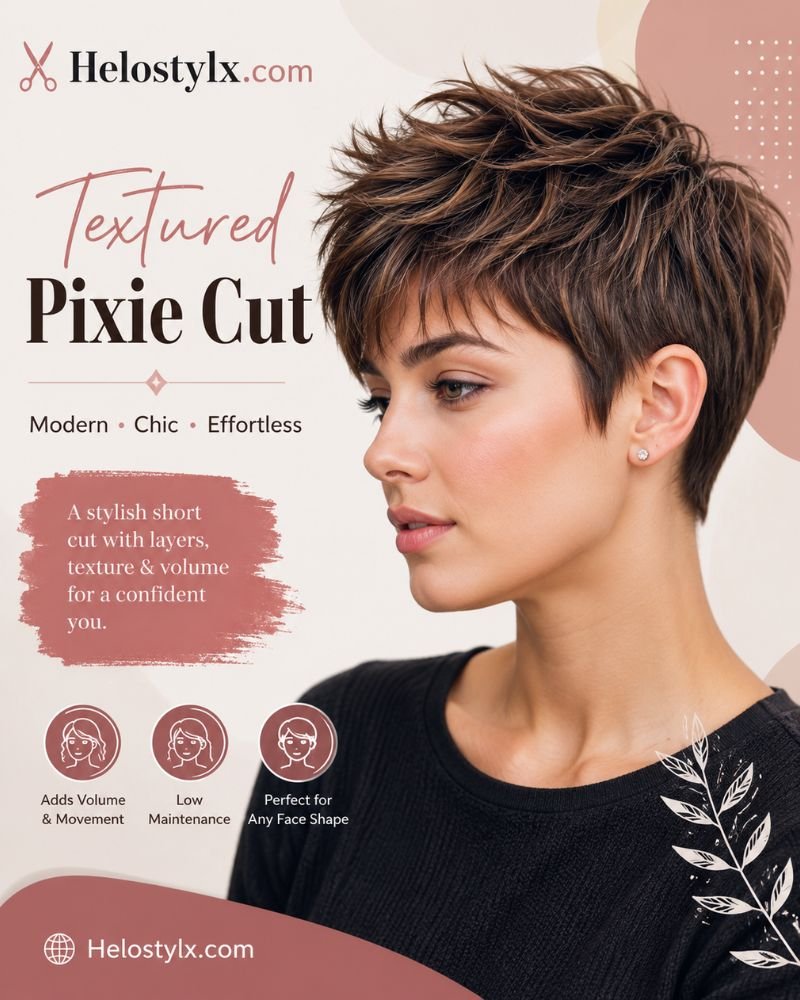
Why it works: A textured pixie removes serious bulk from thick hair by cutting close to the head and point-cutting the ends, so hair sits light instead of puffing outward.
- Best face shapes: Oval, heart, square
- Best texture: Straight to lightly wavy
- Styling difficulty: Easy
- Maintenance: High (trims every 4 weeks)
- Pros: Fast drying, cool in summer, shows off bone structure
- Cons: Frequent trims needed, less versatile for updos
- Stylist tip: Ask for texturizing only at the crown and nape — over-thinning the whole head can make thick hair look thin and patchy instead of light.
2. Blunt Bob
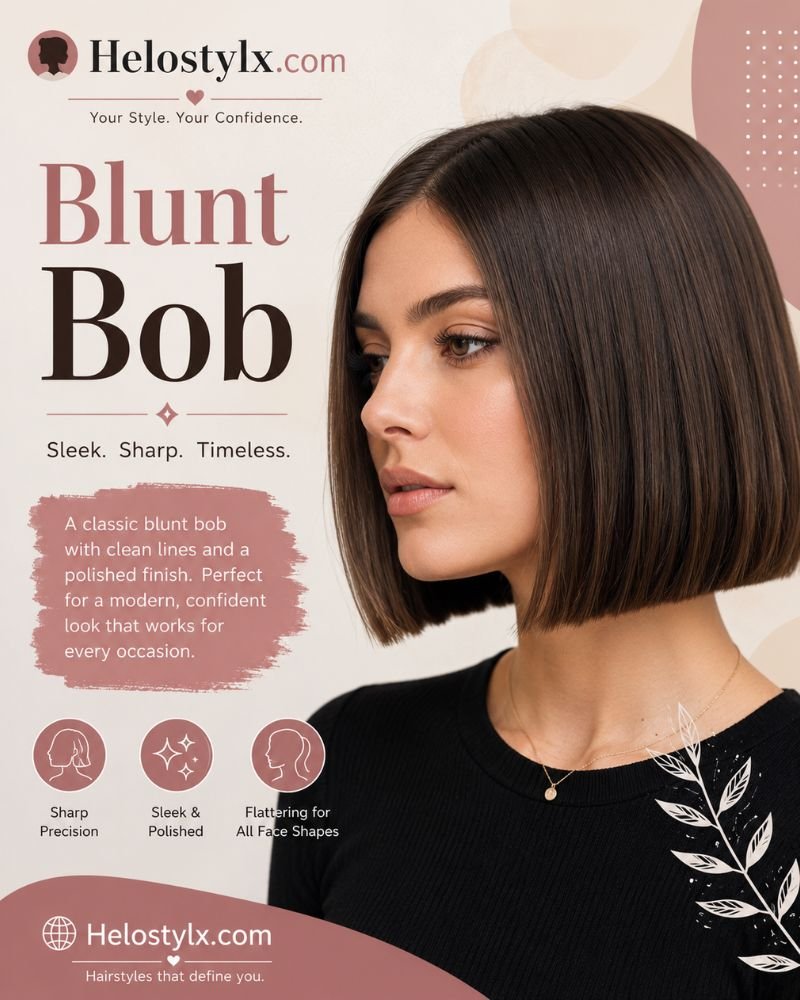
A classic blunt bob keeps thick hair’s density intact while creating one clean, weighty line that swings back into place after washing. It’s one of the most forgiving cuts for straight, thick strands.
- Best face shapes: Oval, round, heart
- Best texture: Straight, mild wave
- Styling difficulty: Easy
- Maintenance: Medium (trim every 6-8 weeks)
- Pros: Looks polished air-dried, no layering to manage, timeless
- Cons: Can look heavy on very round faces without an angle
- Stylist tip: Ask for a slight forward angle toward the chin — it slims the jawline and keeps the blunt line from reading too boxy.
3. Layered Bob
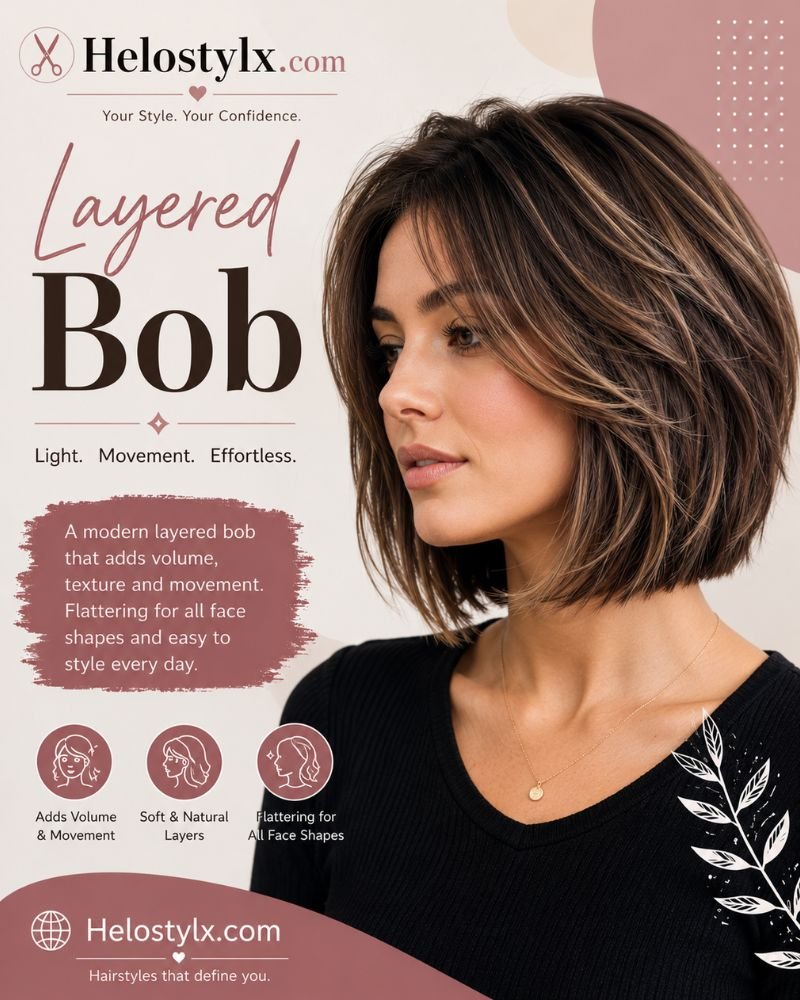
This bob adds internal layers so thick hair moves instead of sitting like a helmet. It’s the go-to fix for clients who love a bob but hate the “triangle” effect.
- Best face shapes: Square, round
- Best texture: Wavy, straight
- Styling difficulty: Easy
- Maintenance: Medium
- Pros: Reduces bulk, still reads as a classic bob, easy to air-dry
- Cons: Needs a skilled cutter to avoid choppy gaps
- Stylist tip: Diffuse-dry with your head tipped forward for two minutes to activate movement in the layers before flipping upright.
4. French Bob
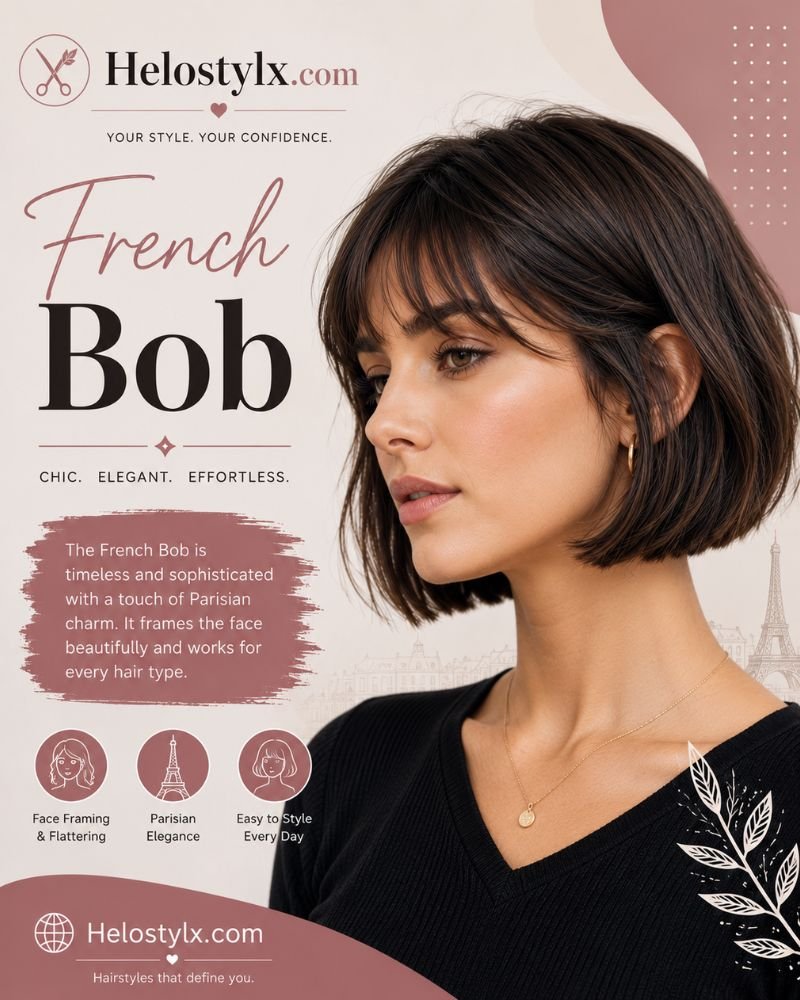
Chin-grazing and slightly rounded, the French bob is having a huge moment because it looks effortlessly chic with almost zero styling. On thick hair, it holds shape beautifully without going flat.
- Best face shapes: Oval, heart
- Best texture: Straight, wavy
- Styling difficulty: Easy
- Maintenance: High (grows out fast, needs trims every 4-5 weeks)
- Pros: Instantly polished, works with bangs, low daily effort
- Cons: Very unforgiving of split ends, shows regrowth quickly
- Stylist tip: Use a wide-tooth comb, not a brush, right after washing to keep the rounded shape from frizzing.
5. Stacked Bob
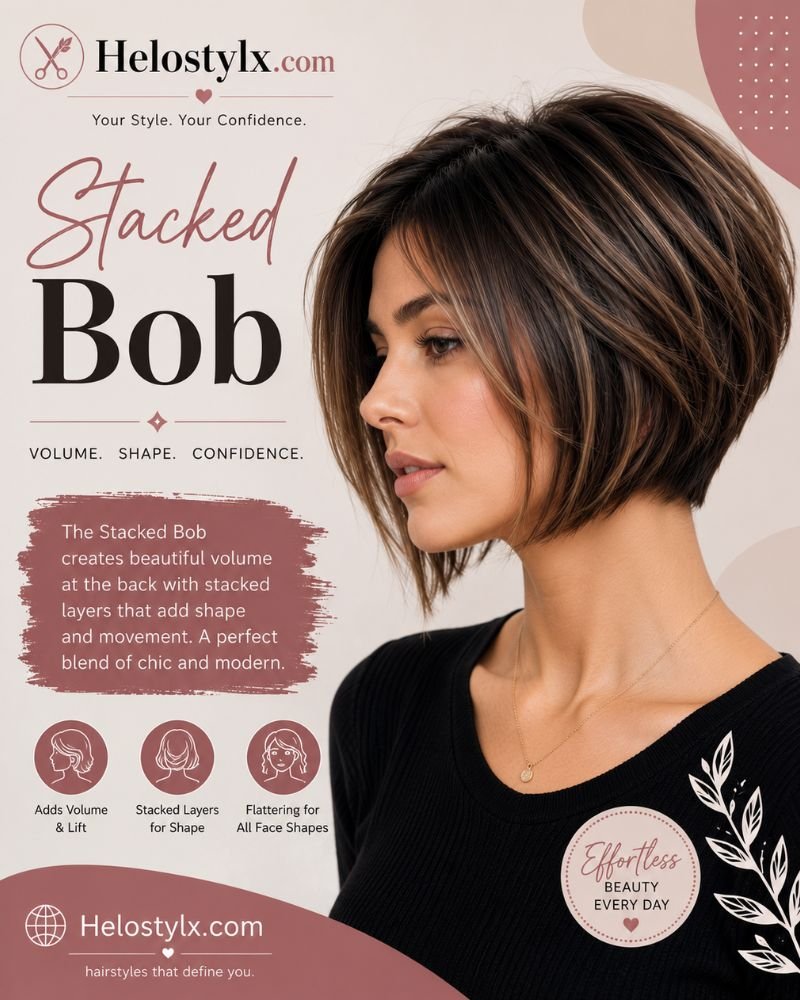
The back is cut shorter and stacked with graduation, while the front is left longer — this builds shape into thick hair automatically, no styling tools required.
- Best face shapes: Round, oval
- Best texture: Straight
- Styling difficulty: Easy
- Maintenance: Medium
- Pros: Built-in volume at the crown, quick to dry, low upkeep
- Cons: Not ideal for curly or very wavy texture
- Stylist tip: Sleep on a silk pillowcase to protect the stacked shape overnight and cut down on morning frizz.
6. Asymmetrical Bob
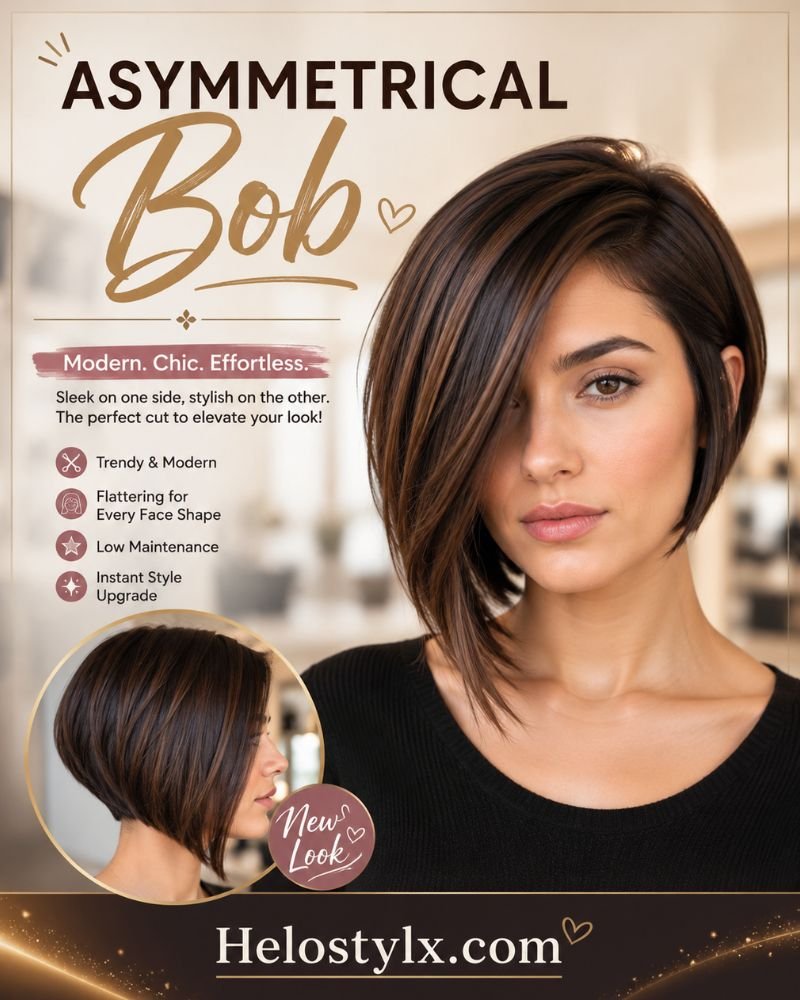
One side longer than the other, this bob gives thick hair a modern edge while the angled line naturally removes weight where it’s needed most.
- Best face shapes: Square, heart
- Best texture: Straight, lightly wavy
- Styling difficulty: Easy to moderate
- Maintenance: Medium
- Pros: Distinctive look, slims the face, low daily styling
- Cons: Regrowth is more noticeable on an asymmetrical line
- Stylist tip: Part your hair on the opposite side occasionally to keep both lengths from developing a “trained” bend.
7. Shaggy Pixie
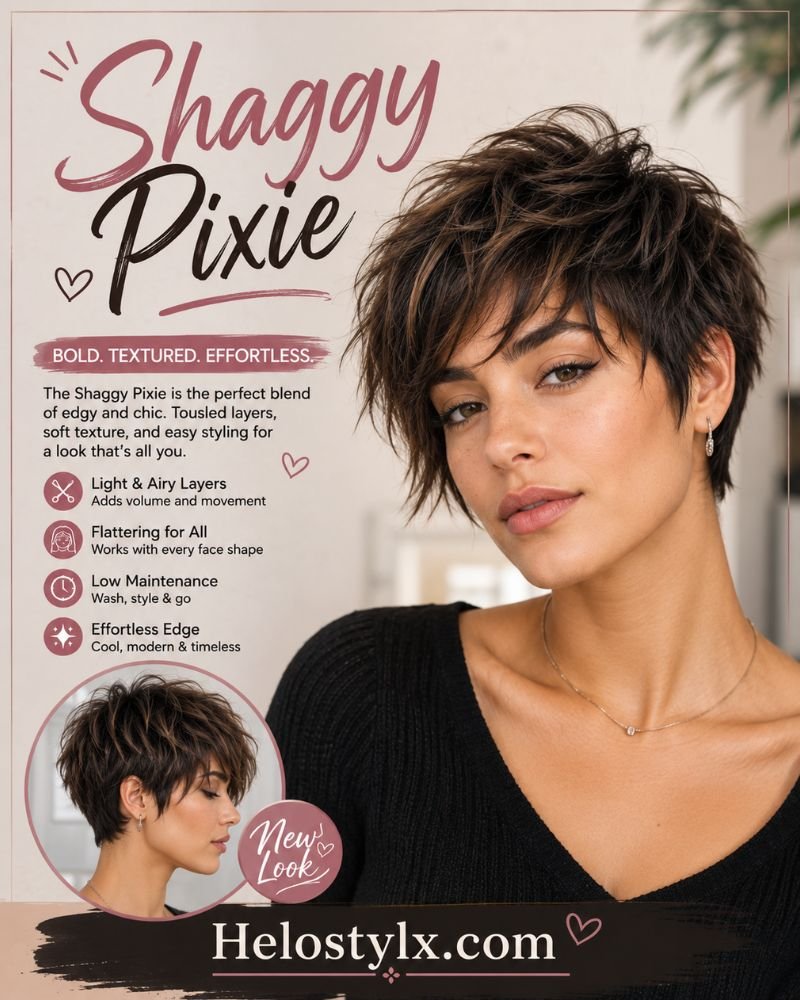
A pixie with longer, choppy layers on top gives thick hair texture and movement instead of the dense, solid look a classic pixie can create.
- Best face shapes: Oval, heart, diamond
- Best texture: Straight to wavy
- Styling difficulty: Easy
- Maintenance: High
- Pros: Effortlessly cool, works wet or dry, very low daily effort
- Cons: Needs regular trims to keep the shag shape crisp
- Stylist tip: Scrunch in a small amount of texture paste while hair is damp for that lived-in, second-day look on day one.
8. Curly Pixie Crop
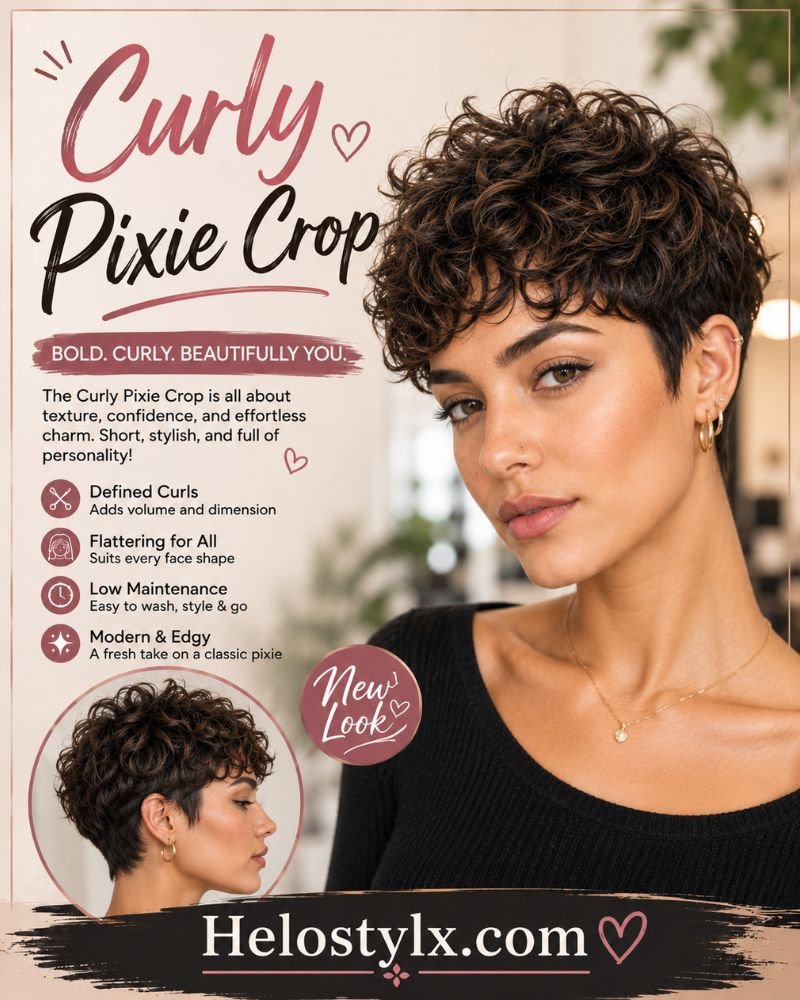
Cut specifically to work with curl pattern, this pixie lets thick, curly hair shrink up into defined coils without bulk building up at the sides.
- Best face shapes: Oval, round
- Best texture: Curly, coily
- Styling difficulty: Easy
- Maintenance: Medium-high
- Pros: Wash-and-go friendly, shows off curl definition, cooler in humidity
- Cons: Curl shrinkage can make it look shorter than expected
- Stylist tip: Get it cut curl-by-curl (dry cutting), not just cut wet and hoped for the best — thick curls need a curl-specialist approach.
9. Chin-Length Bob with Bangs
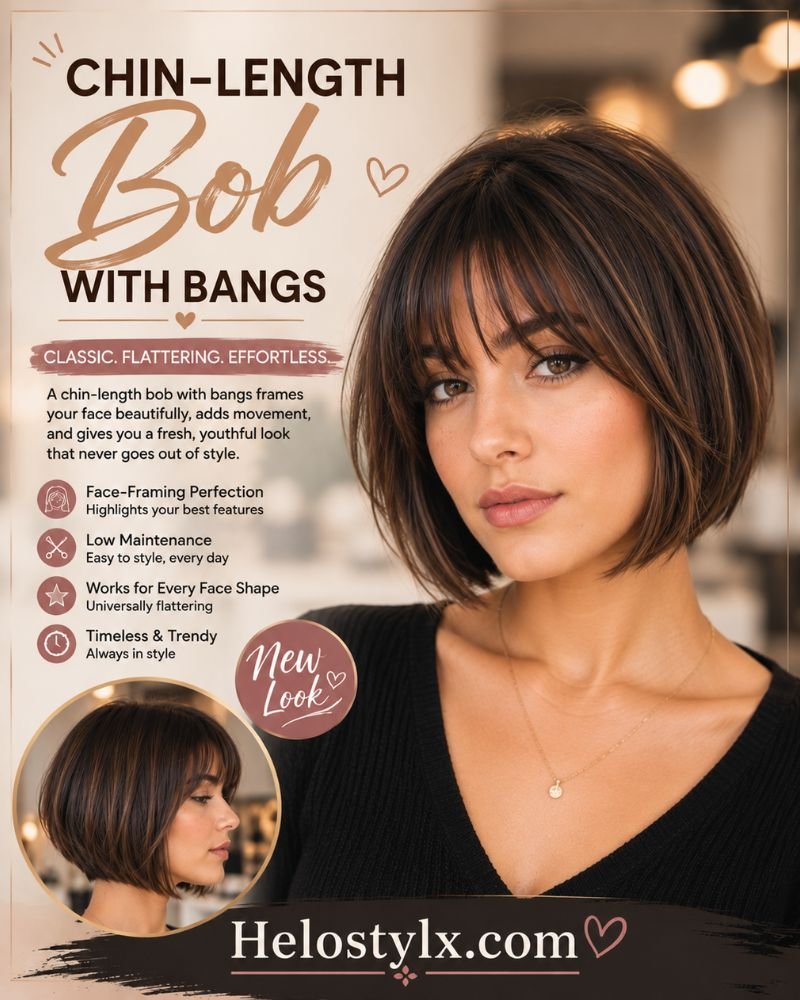
Pairing a chin bob with full or curtain bangs frames the face and takes visual weight off thick hair’s density, all while staying wash-and-wear simple.
- Best face shapes: Oval, long
- Best texture: Straight, mild wave
- Styling difficulty: Moderate (bangs need daily attention)
- Maintenance: High
- Pros: Face-framing, youthful, versatile styling options
- Cons: Bangs need trims every 2-3 weeks to stay in shape
- Stylist tip: Dry your bangs first, before the rest of your hair, using a small round brush for a soft, non-flat fringe.
10. Undercut Bob
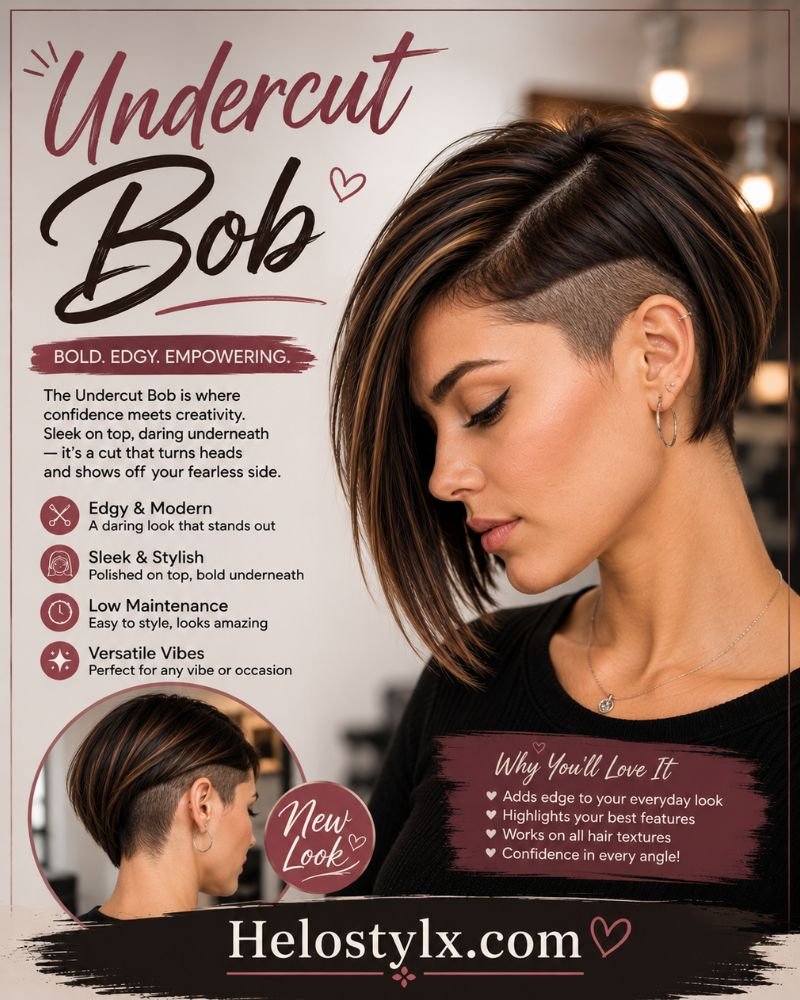
Shaved or clipped underneath with length left on top, this bob dramatically reduces the actual volume of thick hair without changing the visible length.
- Best face shapes: Oval, square
- Best texture: Straight, wavy
- Styling difficulty: Easy
- Maintenance: Medium (undercut needs upkeep every 6-8 weeks)
- Pros: Genuinely lightens thick hair, edgy but still professional-looking
- Cons: Undercut is visible if you wear your hair up
- Stylist tip: Ask your stylist to point-cut the top layer so the line where it meets the undercut blends instead of creating a hard shelf.
11. Cropped Shag
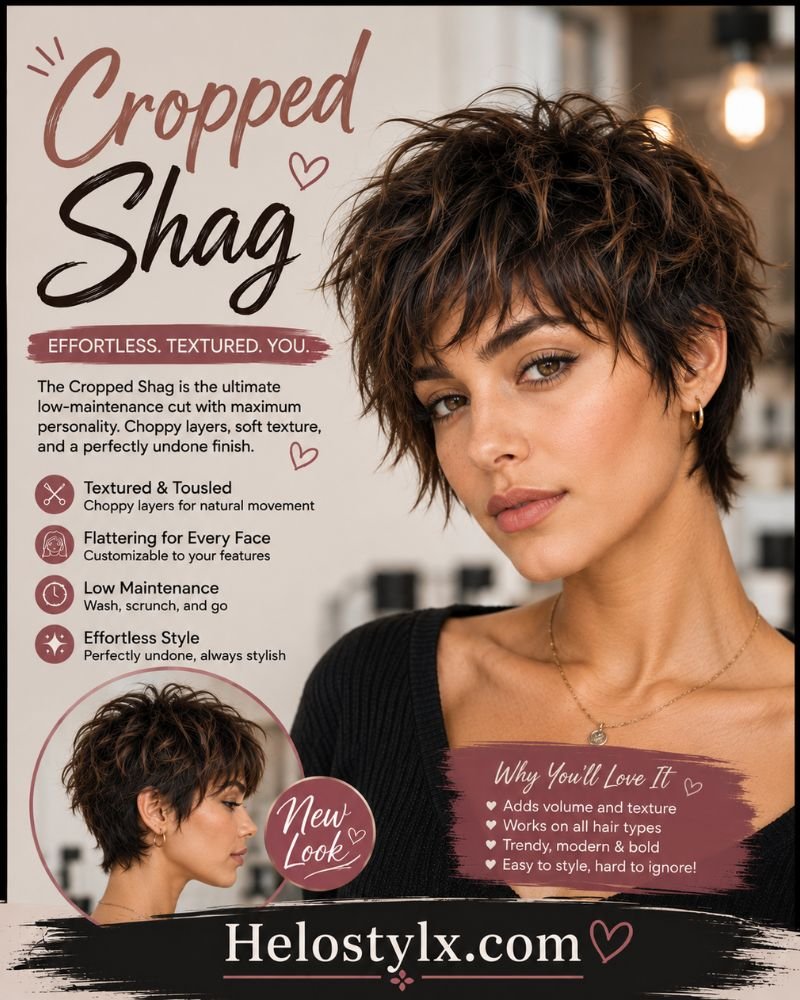
A shorter take on the shag with choppy, face-framing pieces throughout — this cut breaks up thick hair’s density from root to end.
- Best face shapes: Round, square, heart
- Best texture: Wavy, straight
- Styling difficulty: Easy
- Maintenance: Medium-high
- Pros: Tons of movement, disguises bulk, flattering on most face shapes
- Cons: Can look uneven if cut without enough layering skill
- Stylist tip: Apply a texturizing spray to roots before air-drying for extra lift and a slightly undone finish.
12. Classic Shag
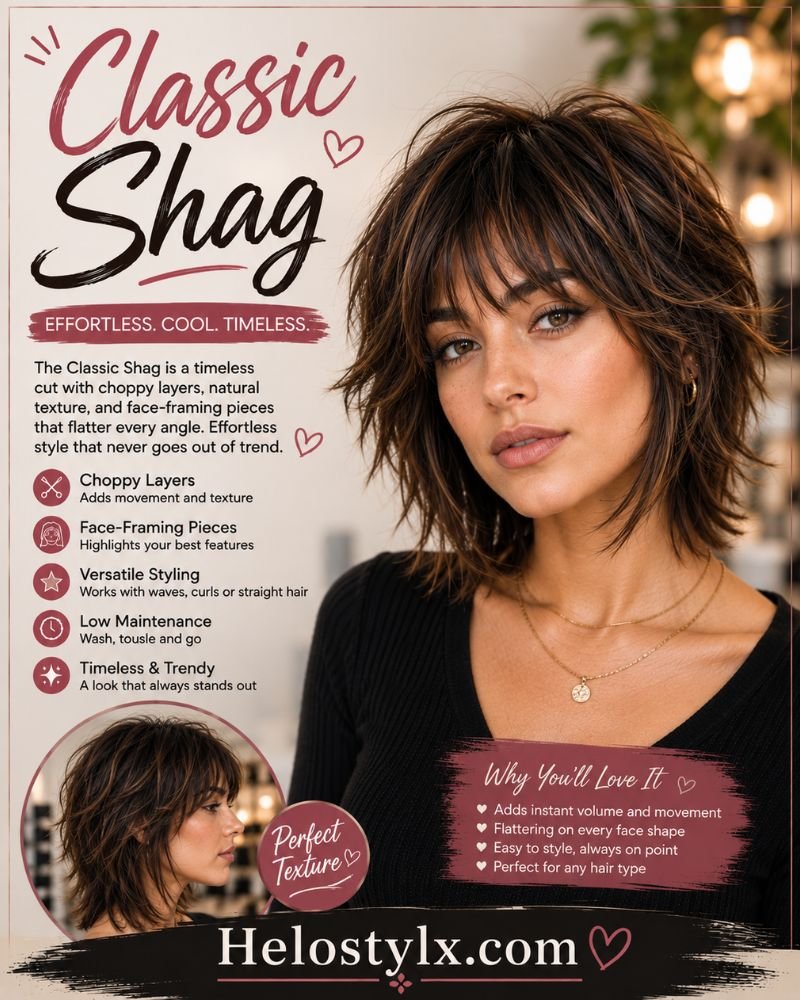
The shag is one of the single best cuts for thick hair in 2026 because heavy layering removes bulk throughout, not just at the ends, giving movement everywhere.
- Best face shapes: Oval, round, square
- Best texture: Wavy, straight
- Styling difficulty: Easy
- Maintenance: Medium
- Pros: Works air-dried, hides grow-out well, always feels current
- Cons: Loses shape if cut without enough internal layers
- Stylist tip: Twist small sections around your finger while damp and let them air-dry for effortless piece-y texture.
13. Long Bob (Lob)
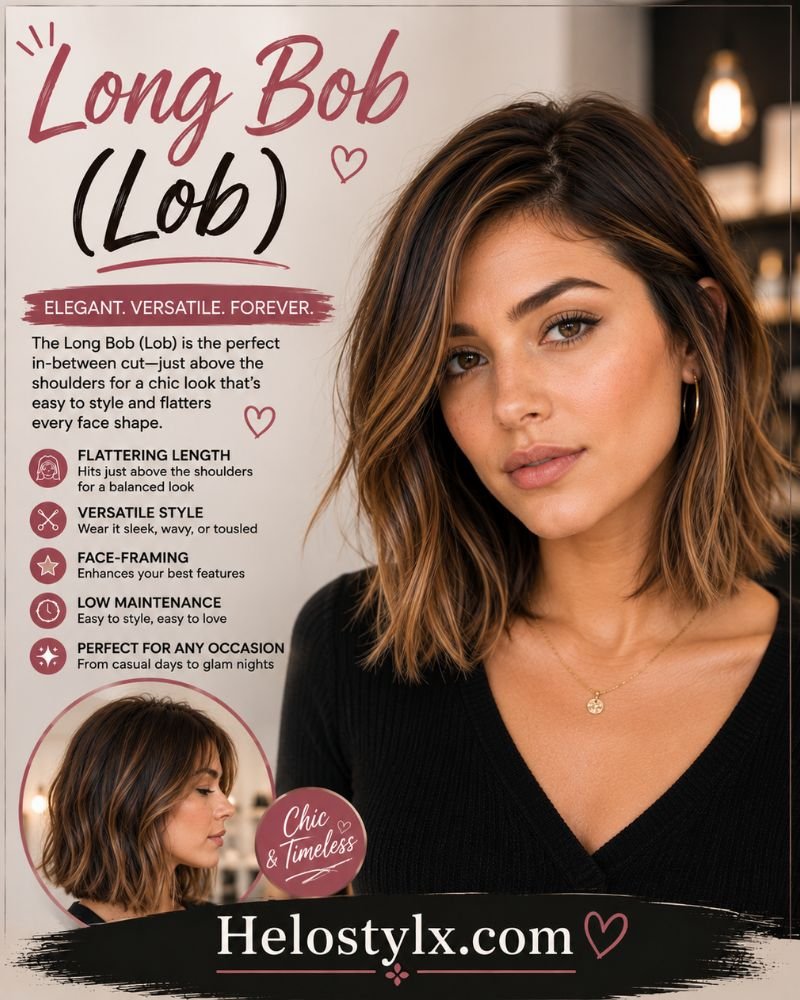
The lob keeps enough length to feel long while shedding the extra weight that makes thick hair hard to manage at true long lengths.
- Best face shapes: Most shapes, especially oval, heart
- Best texture: Straight, wavy
- Styling difficulty: Easy
- Maintenance: Medium (trim every 8-10 weeks)
- Pros: Versatile, low daily effort, easy ponytail length
- Cons: Needs light layering or it can look bottom-heavy
- Stylist tip: Apply a lightweight cream, not a heavy oil, to avoid weighing thick hair down at this length.
14. Layered Lob
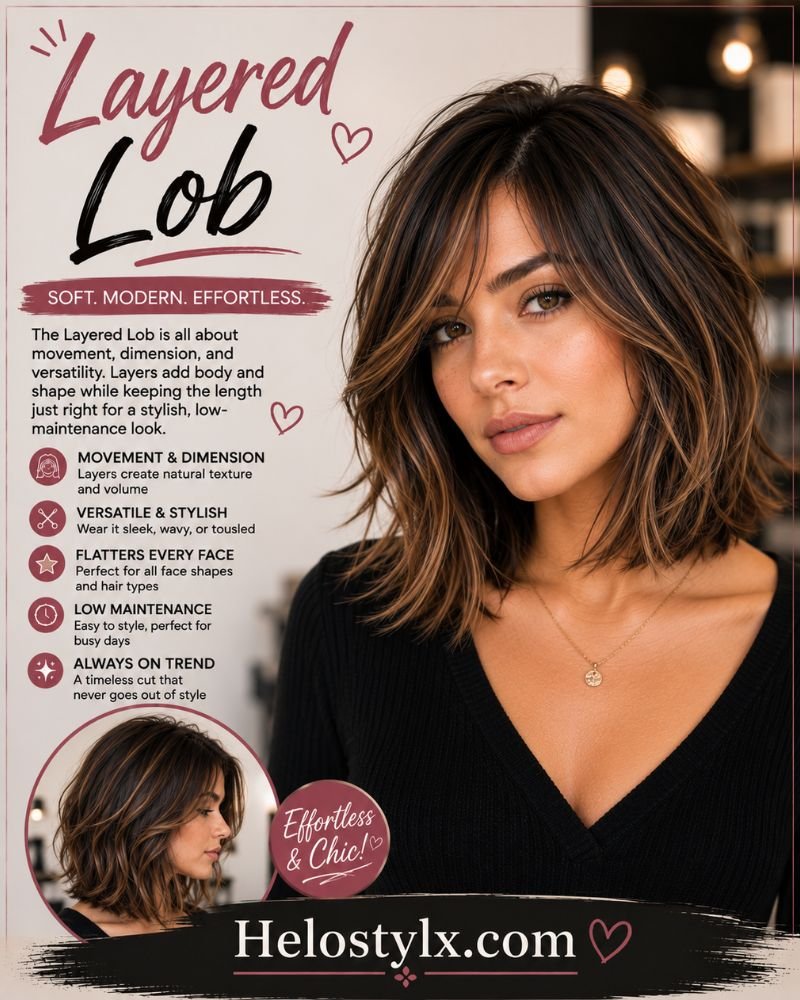
A lob with internal layers cut throughout, this style is built specifically to give thick hair movement at shoulder length instead of a stiff, block-like shape.
- Best face shapes: Round, square
- Best texture: Wavy, straight
- Styling difficulty: Easy
- Maintenance: Medium
- Pros: Great swing and movement, flattering, easy upkeep
- Cons: Needs re-layering every few months to stay balanced
- Stylist tip: Blow-dry with a paddle brush pointing the nozzle downward to smooth the cuticle without adding frizz.
15. Curtain Bangs Lob
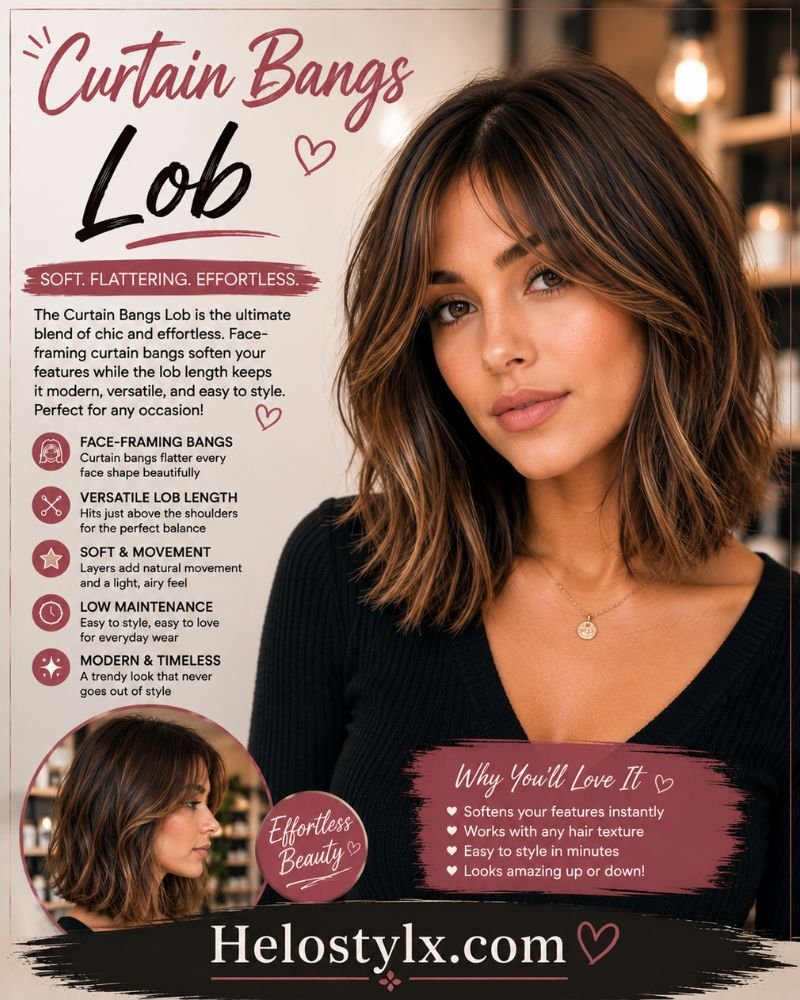
Curtain bangs split down the middle and sweep to either side, softening the face while giving thick hair a built-in frame that needs almost no styling.
- Best face shapes: Square, long, round
- Best texture: Straight, wavy
- Styling difficulty: Easy
- Maintenance: Medium-high
- Pros: Instantly softens features, grows out gracefully, on-trend
- Cons: Bangs need a quick blow-dry to lay correctly most days
- Stylist tip: Use a small amount of gel on damp bangs, then let them air-dry parted — they’ll set into the curtain shape naturally.
16. Wolf Cut
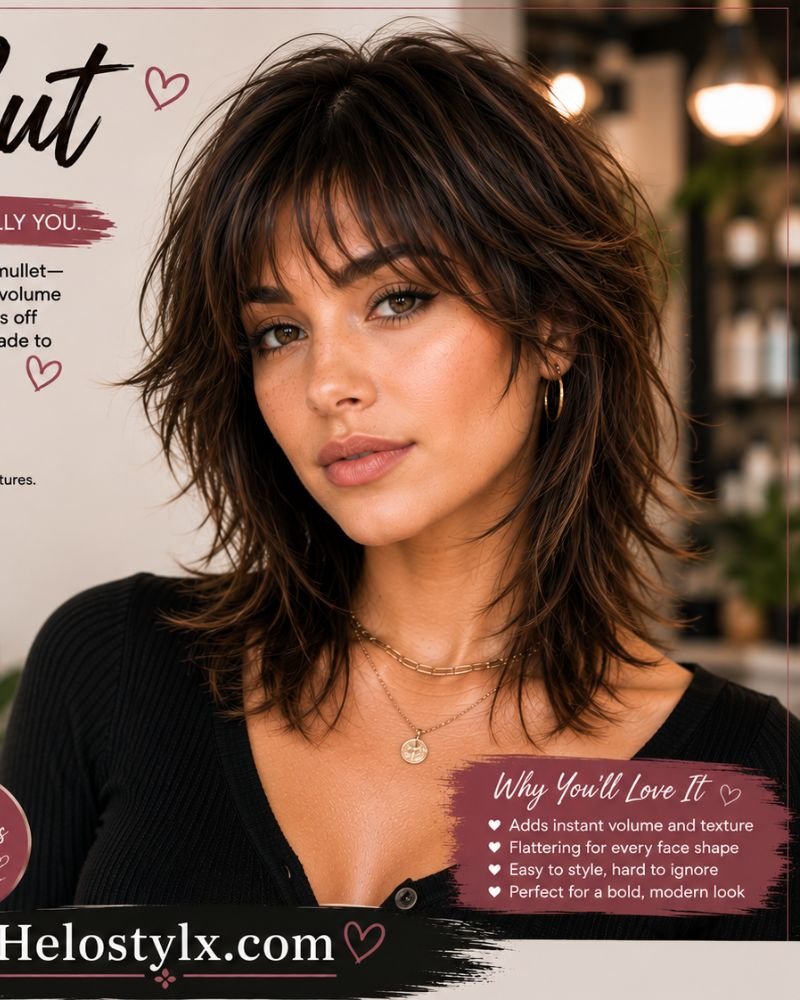
Part shag, part mullet, the wolf cut is one of 2026’s biggest trends and one of the best options for thick hair because heavy layering removes weight from crown to end.
- Best face shapes: Oval, round, heart
- Best texture: Wavy, curly, straight
- Styling difficulty: Easy
- Maintenance: Medium
- Pros: Extremely low-effort, tons of texture, works at any length
- Cons: Not ideal for formal or corporate settings
- Stylist tip: Scrunch a curl cream through damp hair and diffuse on low heat to bring out the shaggy, piece-y texture.
17. Butterfly Cut
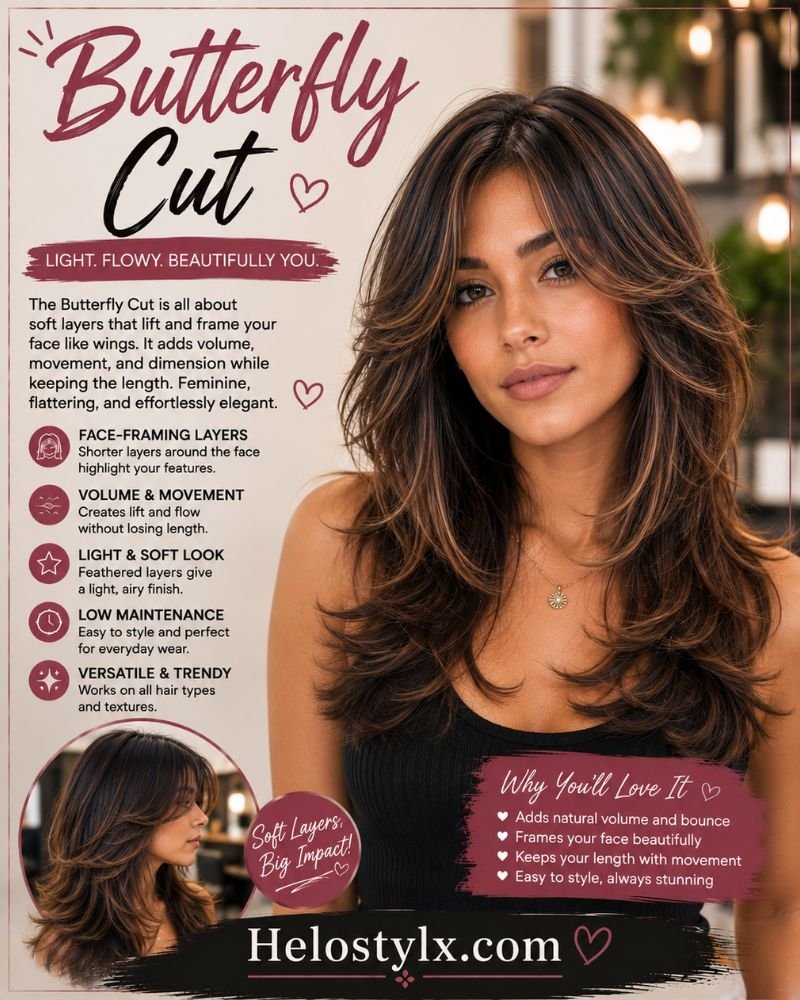
Face-framing layers up front with longer layers underneath create a “winged” effect that’s specifically praised by stylists this year for cutting weight out of thick hair.
- Best face shapes: Oval, heart, round
- Best texture: Straight, wavy
- Styling difficulty: Easy
- Maintenance: Medium
- Pros: Keeps length while removing bulk, adds tons of movement
- Cons: Requires precise layering to avoid a choppy, uneven look
- Stylist tip: Flip your head upside down while blow-drying the underneath layers for extra volume and separation.
18. Collarbone Layers
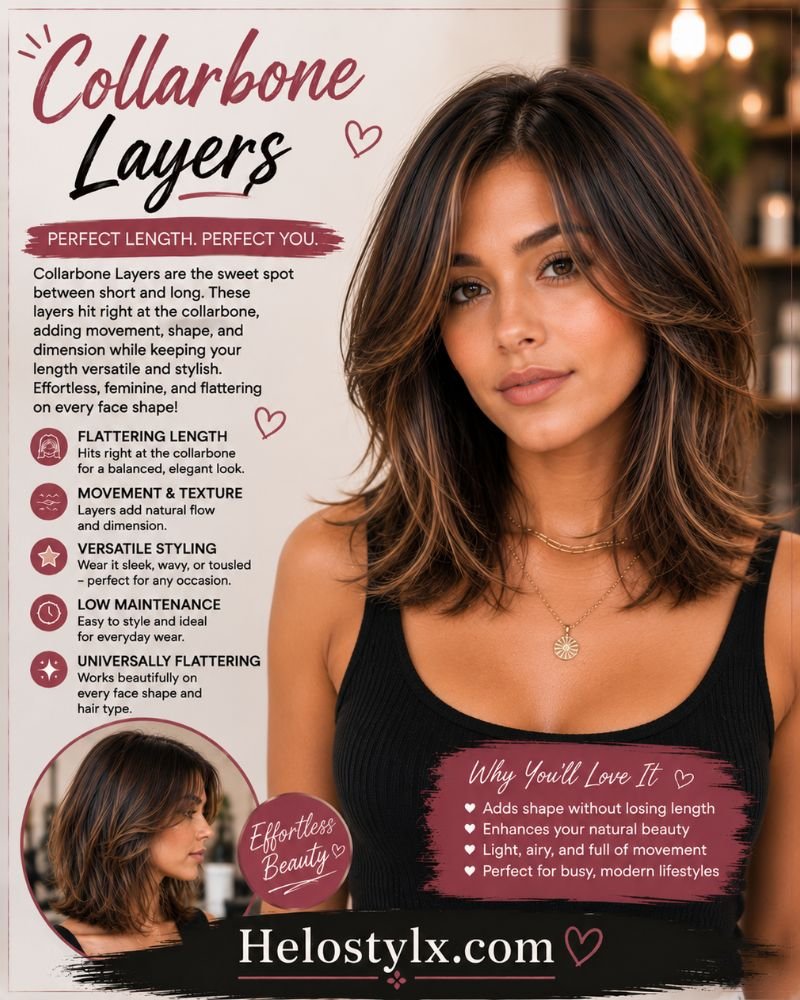
Cut just below the collarbone with soft layers throughout, this length hits the sweet spot for thick hair long enough to tie back, light enough to air-dry fast.
- Best face shapes: Most shapes
- Best texture: Straight, wavy
- Styling difficulty: Easy
- Maintenance: Low-medium
- Pros: Practical everyday length, easy to maintain, versatile
- Cons: Can look plain without some layering or a fringe
- Stylist tip: Add a leave-in detangler at the mid-lengths only — thick roots don’t need it and it can cause buildup.
19. Textured Shoulder-Length Cut
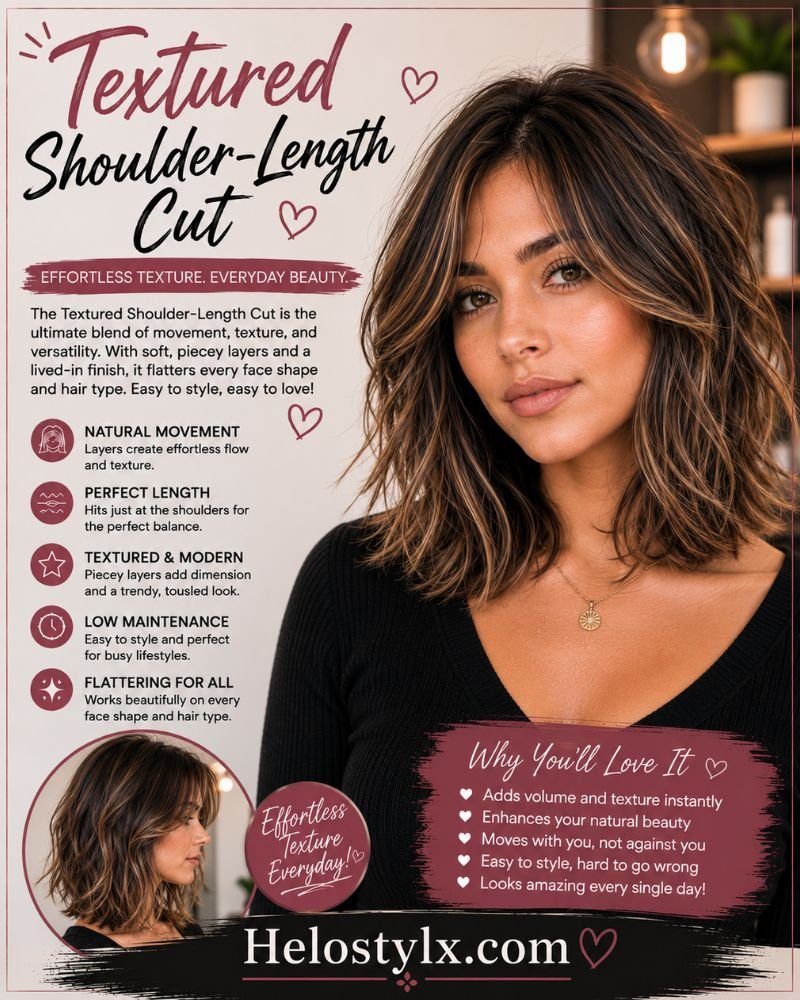
Point-cut ends and soft internal layers give this everyday length real texture, so thick hair falls naturally instead of looking like one solid block.
- Best face shapes: Oval, square
- Best texture: Straight, wavy
- Styling difficulty: Easy
- Maintenance: Medium
- Pros: Great transitional length, works for work or weekends
- Cons: Needs regular trims to keep the texture from growing out flat
- Stylist tip: Rough-dry with your fingers instead of a brush to preserve the piece-y texture the cut is built for.
20. Curly Shoulder-Length Lob
Cut dry, curl by curl, this lob lets thick curly hair shrink up into full, bouncy shape without the bulk piling up at the sides.
- Best face shapes: Oval, round
- Best texture: Curly, coily
- Styling difficulty: Easy
- Maintenance: Medium
- Pros: Wash-and-go friendly, frames the face beautifully, low daily effort
- Cons: Curl shrinkage means it reads shorter than the actual cut length
- Stylist tip: Apply curl cream on soaking wet hair, then scrunch upward never brush dry curls, ever.
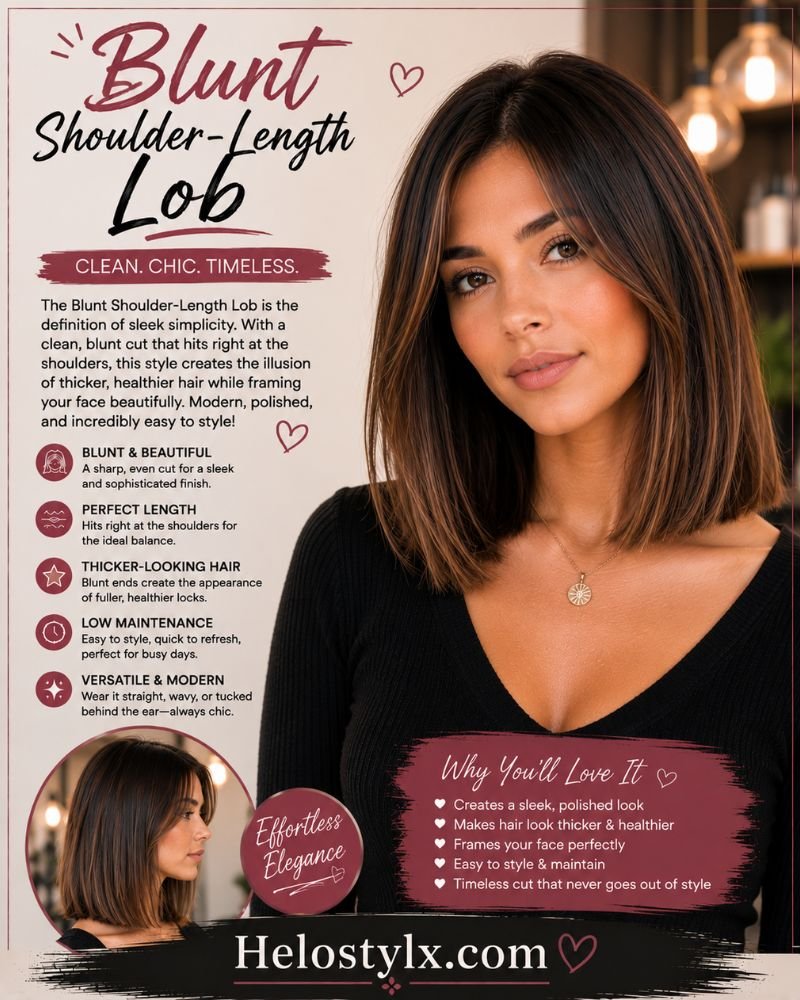
21. Blunt Shoulder-Length Cut
One clean, weighty line at the shoulders keeps thick hair’s density working for you, creating a polished, no-fuss look with almost no styling needed.
- Best face shapes: Oval, heart, round
- Best texture: Straight
- Styling difficulty: Easy
- Maintenance: Medium
- Pros: Looks intentional air-dried, timeless, low daily effort
- Cons: Not ideal for wavy or curly texture — can look bottom-heavy
- Stylist tip: Comb through leave-in conditioner before it fully dries to keep the blunt ends smooth and glossy.
22. Face-Framing Layered Bob-Lob
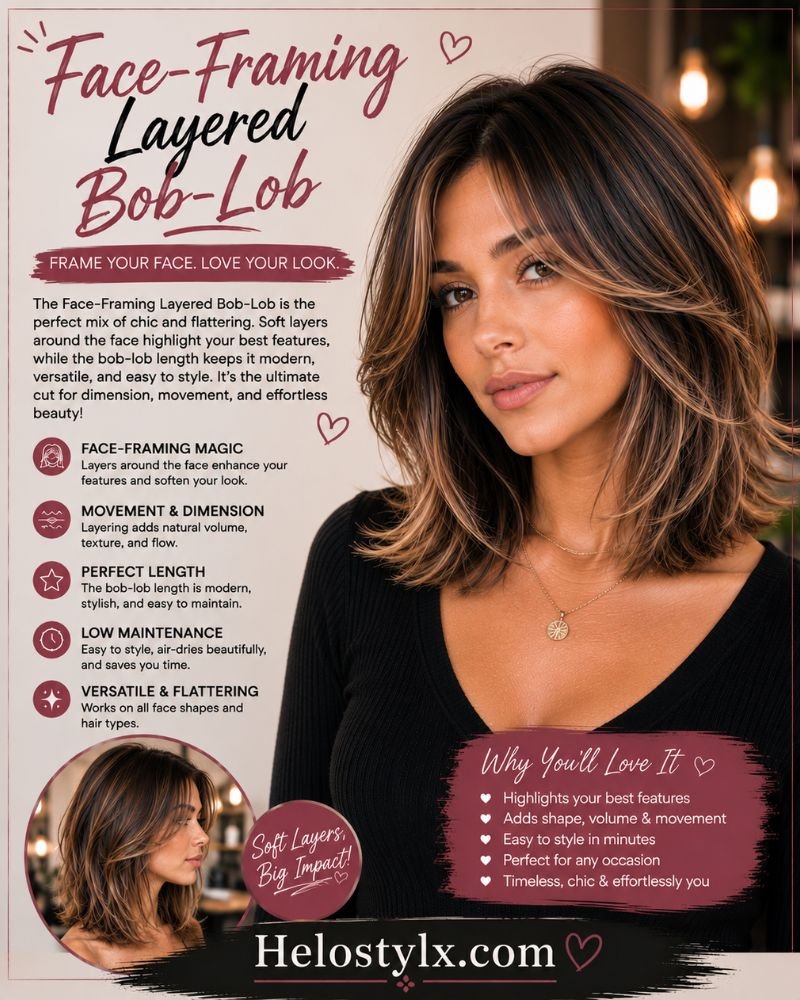
A hybrid length between bob and lob with soft layers only around the face, this cut is built for clients who want minimal daily styling with maximum flattery.
- Best face shapes: Square, round, long
- Best texture: Straight, wavy
- Styling difficulty: Easy
- Maintenance: Medium
- Pros: Softens the face instantly, air-dries well, versatile
- Cons: Needs precision cutting so the face-framing pieces blend properly
- Stylist tip: Twist the face-framing pieces around a large-barrel curling wand for two seconds each for a soft, undone finish.
23. Long Layers
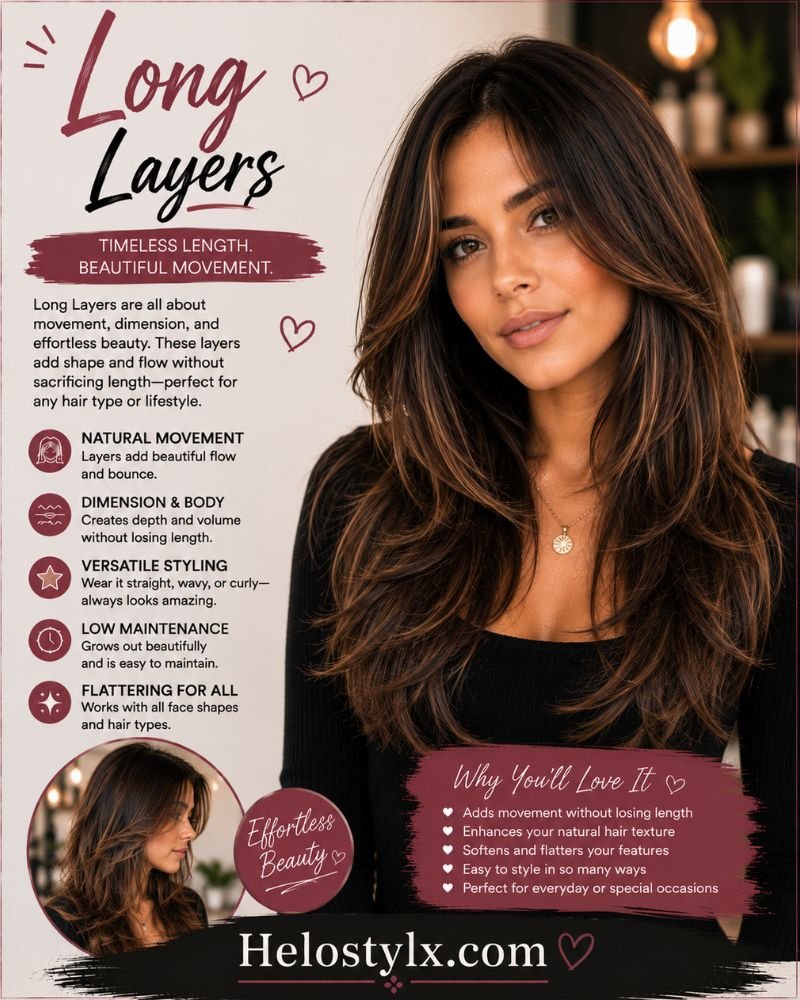
Classic long layers cut throughout the length remove serious weight from thick hair, letting it move and bounce instead of hanging in one heavy sheet.
- Best face shapes: Round, square
- Best texture: Straight, wavy
- Styling difficulty: Easy
- Maintenance: Low
- Pros: Long stretches between trims, tons of movement, universally flattering
- Cons: Can lose shape at the very ends if not trimmed regularly
- Stylist tip: Use a boar-bristle brush to distribute natural oils from root to tip and keep the layers looking glossy.
24. Long Shag
Heavy, choppy layers from root to tip make this one of the single most effective long cuts for thick hair, removing bulk everywhere at once.
- Best face shapes: Oval, round, heart
- Best texture: Wavy, straight
- Styling difficulty: Easy
- Maintenance: Low-medium
- Pros: Very low daily effort, works air-dried, always feels current
- Cons: Needs a skilled cutter or it can look thin and stringy
- Stylist tip: Apply a texturizing spray at the roots and scrunch the ends for that lived-in shag texture.
25. Long Layered Cut with Curtain Bangs
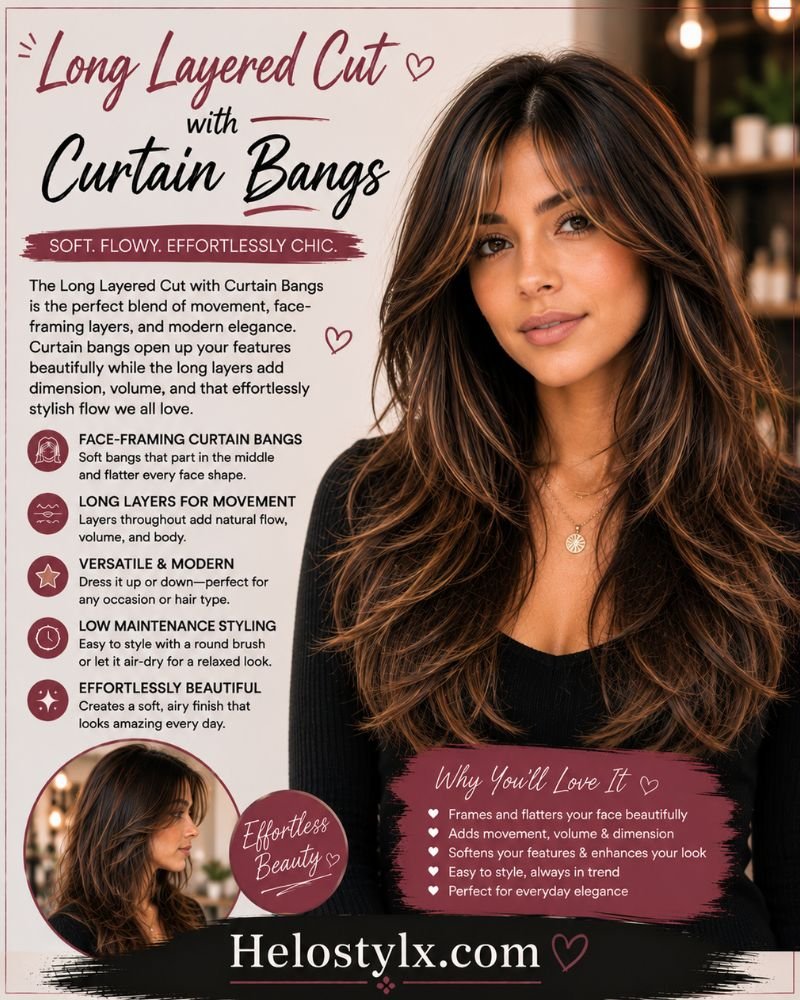
Combining long layers with a soft curtain fringe gives thick hair a face-framing effect that needs almost no daily styling to look finished.
- Best face shapes: Long, square, round
- Best texture: Straight, wavy
- Styling difficulty: Easy
- Maintenance: Medium
- Pros: Softens features, minimal upkeep, works at any length past the chin
- Cons: Bangs need occasional trimming to keep the frame in place
- Stylist tip: Blow-dry bangs with a round brush pulling slightly outward for a soft curtain shape that lasts all day.
26. V-Cut Layers
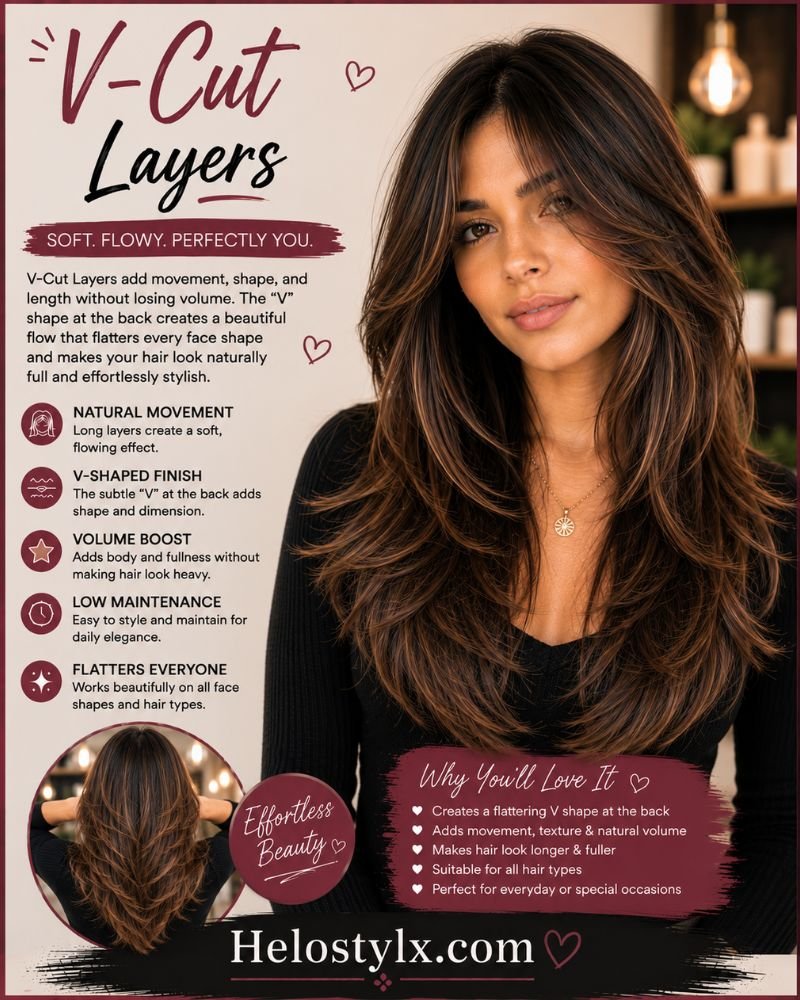
Cut into a deep V at the back with layers built up toward the crown, this style removes weight from the ends while keeping fullness up top.
- Best face shapes: Oval, round
- Best texture: Straight, wavy
- Styling difficulty: Easy
- Maintenance: Low
- Pros: Dramatic movement, thins out heavy ends, low daily effort
- Cons: The deep V shape needs re-cutting to maintain the angle
- Stylist tip: Braid hair loosely overnight to enhance natural wave and wake up with texture already built in.
27. U-Cut Layers
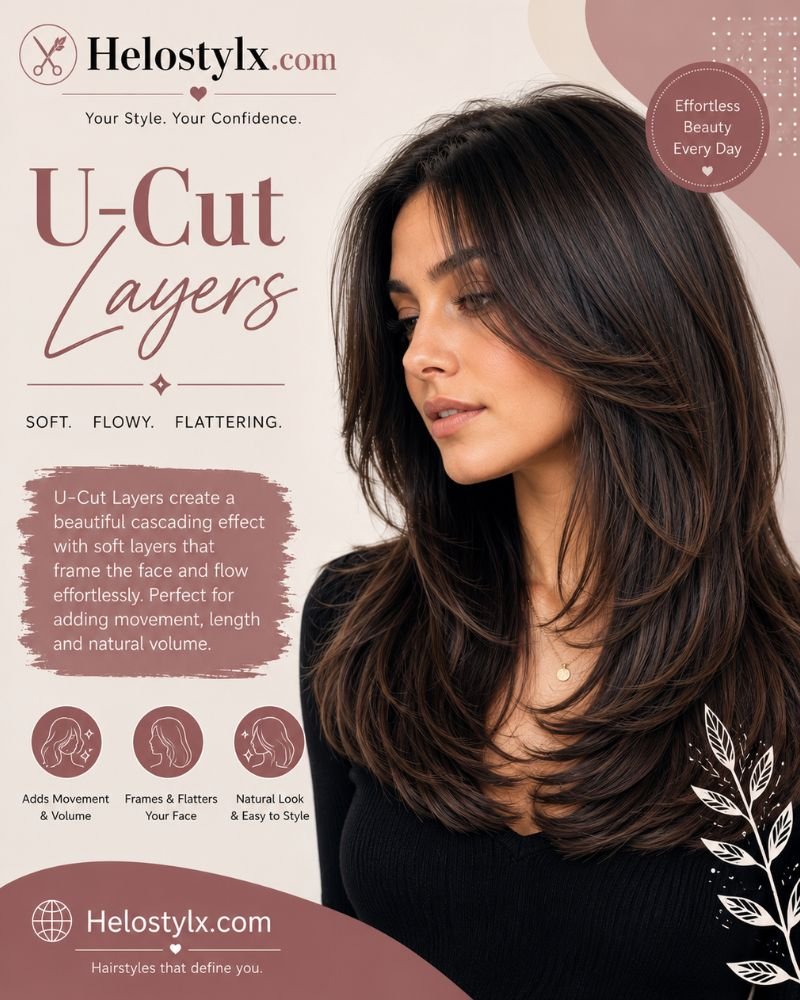
A softer, rounded version of the V-cut, this style removes just as much weight from thick ends but with a gentler, more blended line.
- Best face shapes: Most shapes
- Best texture: Straight, wavy
- Styling difficulty: Easy
- Maintenance: Low
- Pros: Subtle but effective weight removal, versatile, easy upkeep
- Cons: Less dramatic than a V-cut if you want a bold change
- Stylist tip: Ask for the layers to start at the cheekbone for the most natural, face-flattering movement.
28. Long Feathered Layers
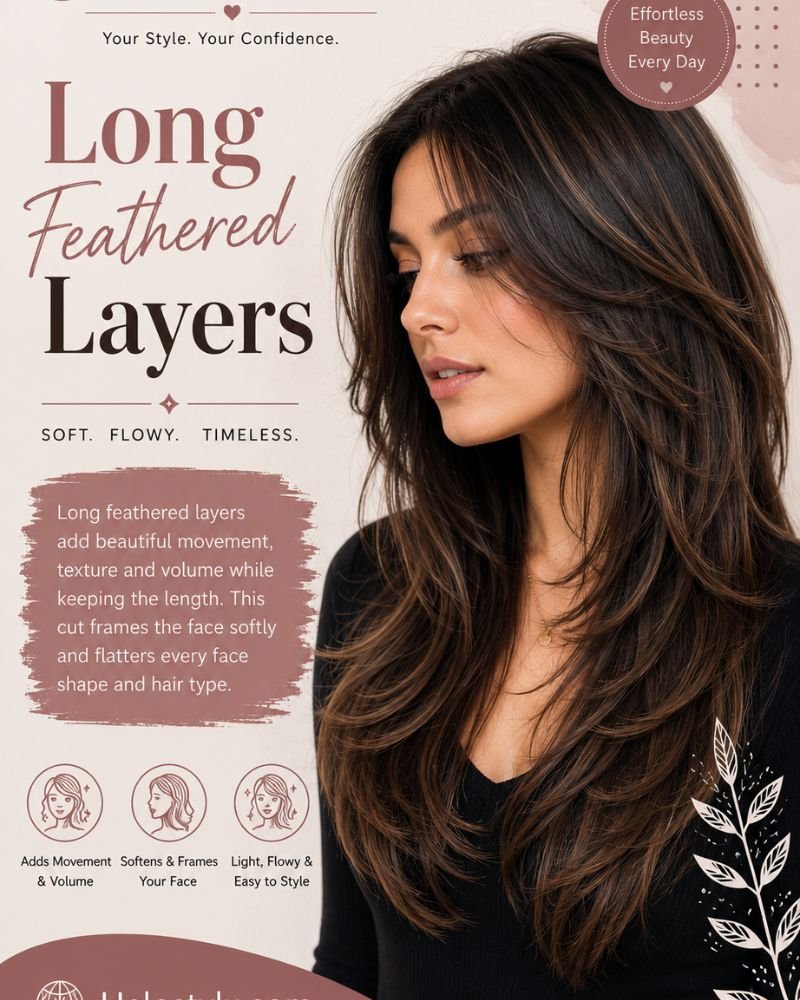
Feathered layers are cut with a razor or slide-cutting technique to soften ends and remove bulk gradually, giving thick hair a wispy, airy finish.
- Best face shapes: Oval, heart
- Best texture: Straight, fine-to-medium wave
- Styling difficulty: Easy
- Maintenance: Low-medium
- Pros: Soft, romantic movement, lightweight feel on thick strands
- Cons: Razor-cut ends can look wispy if hair is damaged
- Stylist tip: Use a heat protectant with a light hold, since feathered ends show heat damage faster than blunt ones.
29. Long Curly Layers
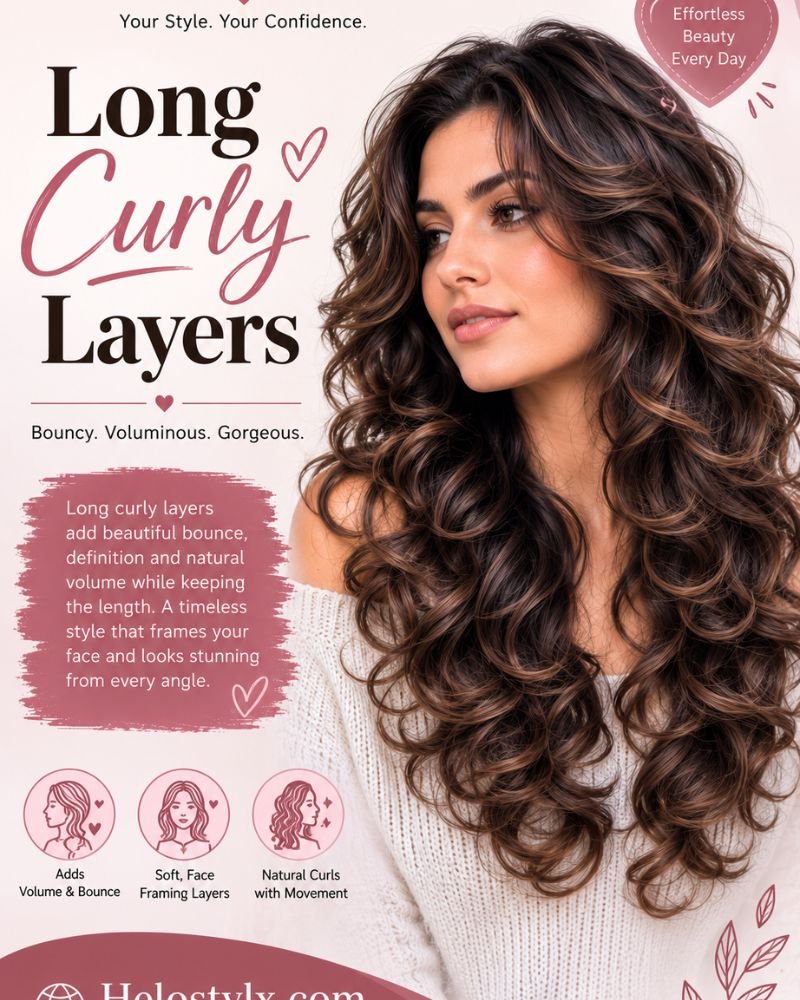
Cut specifically for curl pattern with layers spaced to let ringlets bounce independently, this style keeps thick curly hair from clumping into one heavy mass.
- Best face shapes: Oval, round, heart
- Best texture: Curly, coily
- Styling difficulty: Easy
- Maintenance: Medium
- Pros: Enhances natural curl, reduces bulk, wash-and-go friendly
- Cons: Needs a curl-specialist cut to avoid triangle shape
- Stylist tip: Apply product in four sections, not all at once, so every curl gets even coverage.
30. Long Straight Blunt Cut
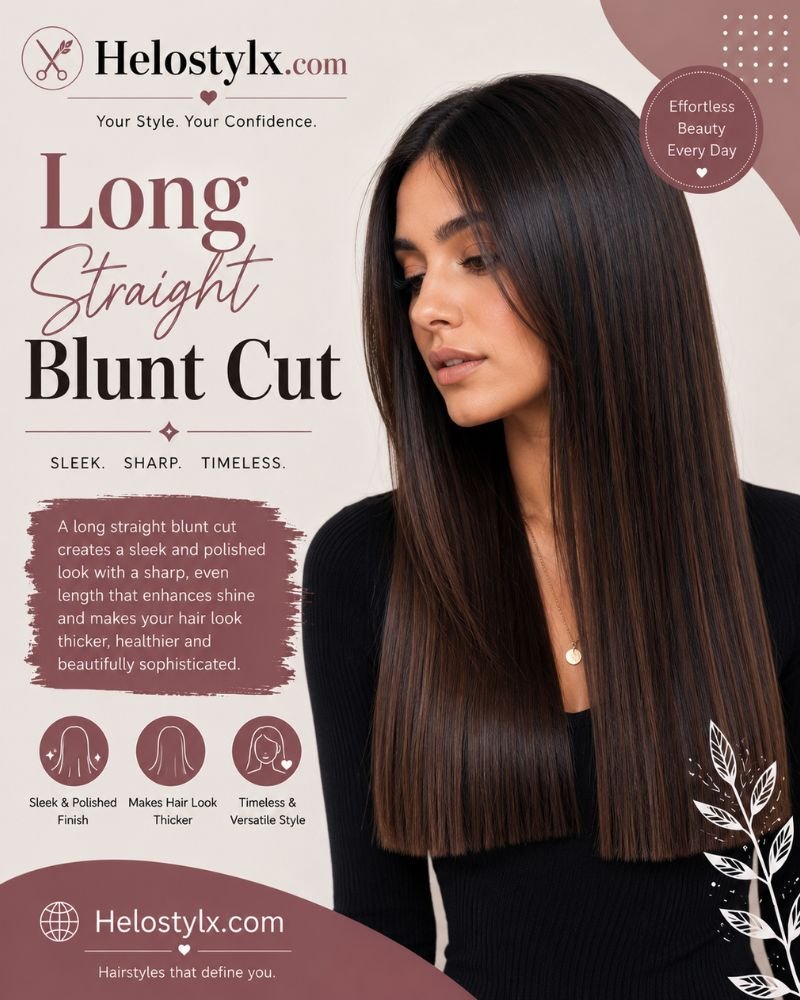
One solid, healthy line with zero layering, this cut works surprisingly well for thick straight hair because the density itself creates natural fullness and shine.
- Best face shapes: Oval, heart
- Best texture: Straight
- Styling difficulty: Easy
- Maintenance: Low
- Pros: Extremely low effort, glossy and healthy-looking, timeless
- Cons: Not suitable for wavy or curly texture — it can look like a heavy triangle
- Stylist tip: Get a “dusting” trim every 10-12 weeks to keep ends blunt without losing length.
31. Long Wavy Layers with Face-Framing
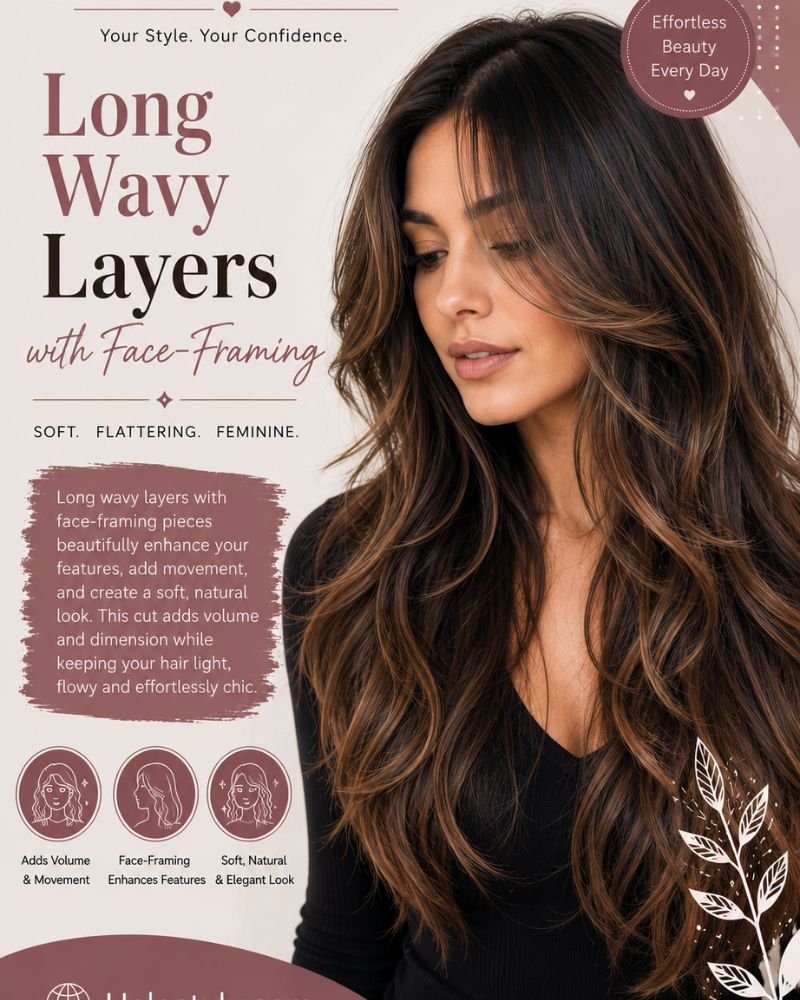
Soft layers combined with face-framing pieces bring out natural wave pattern in thick hair while keeping the overall silhouette light and easy to manage.
- Best face shapes: Square, round, long
- Best texture: Wavy
- Styling difficulty: Easy
- Maintenance: Low-medium
- Pros: Enhances natural texture, flattering, minimal daily styling
- Cons: Waves can look frizzy without the right leave-in product
- Stylist tip: Scrunch a curl-enhancing mousse into damp hair and let it air-dry for defined, frizz-free waves.
32. Long Layers with Side Bangs
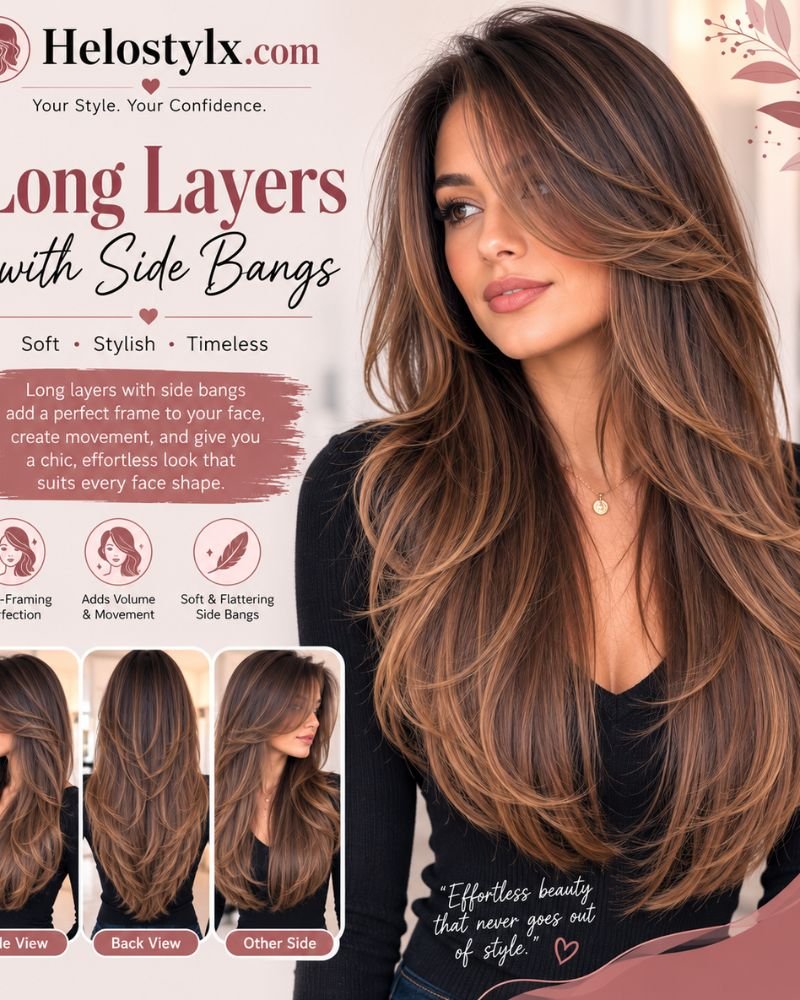
A swept side bang paired with long layers softens the face and removes visual bulk from one of the heaviest areas on a thick-haired head — right at the hairline.
- Best face shapes: Long, square, heart
- Best texture: Straight, wavy
- Styling difficulty: Easy
- Maintenance: Low-medium
- Pros: Flattering, low daily effort, grows out easily into a full fringe
- Cons: Side bangs can get in the way during workouts
- Stylist tip: Set the bang with a small clip while your hair dries, then release for a swept, natural-looking shape.
33. Long Shag with Bangs
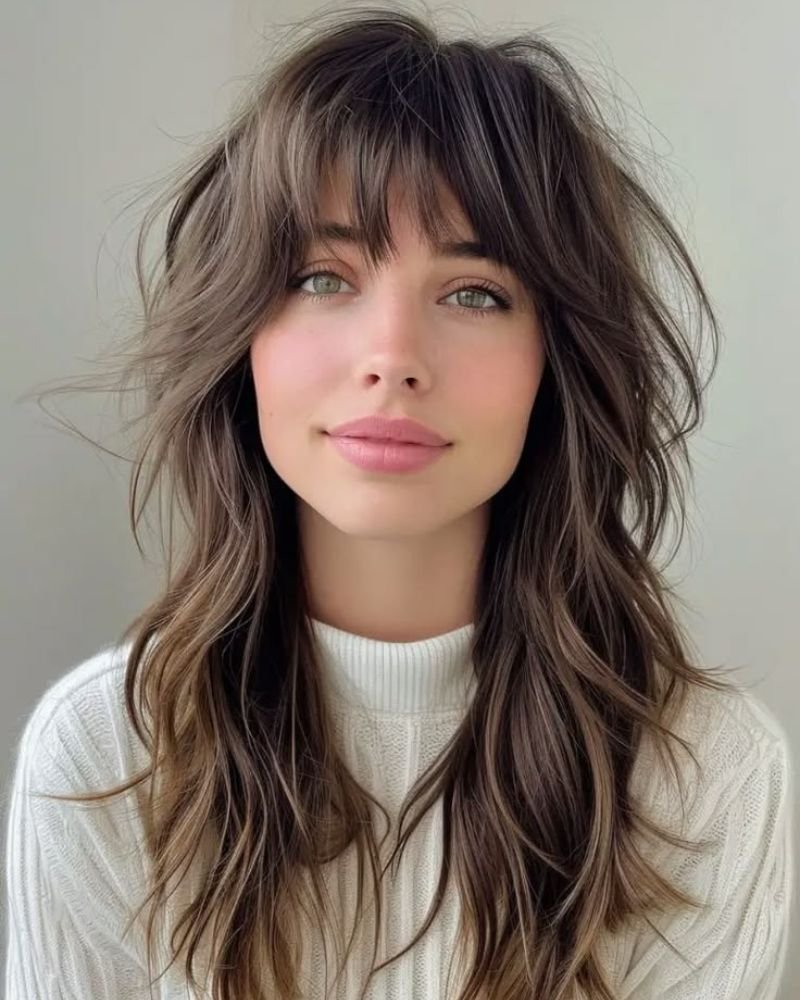
The ultimate low-maintenance combo for thick hair — heavy shag layering throughout, paired with full or curtain bangs — removes weight everywhere while framing the face.
- Best face shapes: Oval, round, heart
- Best texture: Wavy, straight
- Styling difficulty: Easy
- Maintenance: Medium
- Pros: Maximum texture, minimum daily effort, always on-trend
- Cons: Two elements (shag + bangs) both need occasional trims to stay sharp
- Stylist tip: Dry your bangs separately first with a small round brush, then let the rest of your shag air-dry freely.
Best Haircuts by Hair Length
Short: Textured pixie, blunt bob, layered bob, French bob, stacked bob, asymmetrical bob, shaggy pixie, curly pixie crop, chin-length bob with bangs, undercut bob, cropped shag.
Medium: Classic shag, lob, layered lob, curtain bangs lob, wolf cut, butterfly cut, collarbone layers, textured shoulder-length cut, curly shoulder-length lob, blunt shoulder-length cut, face-framing bob-lob.
Long: Long layers, long shag, long layered cut with curtain bangs, V-cut layers, U-cut layers, long feathered layers, long curly layers, long straight blunt cut, long wavy layers with face-framing, long layers with side bangs, long shag with bangs.
Best Haircuts by Face Shape
- Round face: Long layers, asymmetrical bob, V-cut layers — anything that adds length and angles.
- Oval face: Almost everything works, but blunt bobs and pixies show it off best.
- Square face: Curtain bangs, soft layers, and wavy lobs soften strong angles.
- Heart face: Chin-length bobs and side-swept bangs balance a narrower jawline.
- Long face: Collarbone layers, curtain bangs, and side bangs add width and break up length.
Haircuts to Avoid If You Have Thick Hair
Not every trendy cut plays nicely with thick strands. A few to think twice about:
- Blunt cuts with no layers at long lengths — the weight can pull hair into a heavy, shapeless slab.
- Micro layers throughout — on thick hair, this often creates a triangle silhouette instead of movement.
- Very short, tightly cropped pixies with no texturizing — thick hair can look bulky and helmet-like without shaping.
- Blunt bangs on thick, coarse hair — they can look overly dense and hard to style without daily blow-drying.
The common thread: any cut that ignores your hair’s natural volume, instead of working with it, will require more daily effort, not less.
Hair Care Tips for Thick Hair
Great cuts only go so far — healthy hair holds shape better and looks glossier between salon visits.
- Wash 2-3 times a week max; thick hair doesn’t need daily washing and over-washing can cause frizz.
- Use a clarifying shampoo once a month to prevent product buildup, which weighs thick hair down.
- Deep condition weekly, focusing mid-length to ends where hair is oldest and driest.
- Get trims every 6-10 weeks depending on your cut, even if you’re growing length out.
- Sleep on a silk or satin pillowcase to cut down on friction and frizz overnight.
Styling Tips
Blow drying: Use a diffuser or a paddle brush pointed downward to smooth the cuticle without over-drying thick strands.
Air drying: Apply product to soaking-wet hair, not towel-dried hair, for the most even, frizz-free result.
Products: Lightweight creams and mousses work better than heavy oils, which can weigh thick hair flat.
Heat protection: Always use a heat protectant spray before any hot tool — thick hair can handle more heat, but it’s still hair.
Brushes: A wide-tooth comb or wet brush prevents breakage on wet hair; save the boar-bristle brush for dry, finished styles.
Haircut Trends for 2026
Stylists agree that 2026 is the year of “elevated ease” — cuts that look polished but genuinely require less daily work. Texture is doing the heavy lifting instead of heat styling.
The shag and its cousin, the wolf cut, remain dominant because they’re built to remove bulk from thick hair while staying wash-and-go friendly. Expect to see softer, more grown-out versions rather than choppy, aggressive layering.
Curtain bangs and butterfly layers continue trending because they frame the face without demanding a full blowout every morning. The overall mood is glossy, healthy-looking hair with natural movement, not overly styled perfection.
Pixies are also making a comeback after several years of bob dominance, especially textured versions that give thick hair definition without bulk.
Comparison Table
| Haircut | Maintenance | Hair Length | Best Face Shape | Styling Time |
| Textured Pixie | High | Short | Oval, Heart | 5 min |
| Blunt Bob | Medium | Short | Oval, Round | 5-10 min |
| Classic Shag | Medium | Medium | Oval, Square | 5-10 min |
| Long Bob (Lob) | Medium | Medium | Most shapes | 10 min |
| Wolf Cut | Medium | Medium | Oval, Round | 5-10 min |
| Butterfly Cut | Medium | Medium | Oval, Heart | 10 min |
| Long Layers | Low | Long | Round, Square | 10-15 min |
| Long Shag | Low-Medium | Long | Oval, Heart | 10 min |
| Curtain Bangs Lob | Medium-High | Medium | Square, Long | 10-15 min |
| V-Cut Layers | Low | Long | Oval, Round | 10 min |
Expert Tips
- Always tell your stylist your natural drying time — it changes how they cut your layers.
- Ask for a “dry cut and check” at the end of your appointment so they can fine-tune while hair is in its natural state.
- Thick hair needs internal layering, not just perimeter thinning, to actually lose bulk.
- If you color your hair, book your cut a few days after your color for the most accurate length.
- A good haircut should need less product over time, not more.
- Trim schedules matter more for shape-based cuts (bobs, pixies) than for long layered styles.
- Bring reference photos, but also show your natural texture in a photo, not just styled hair.
- Avoid brushing dry hair from root to tip — always start at the ends and work up.
- If your ends look thin and stringy, you may need less layering, not more thinning shears.
- Book a consultation before a dramatic change — five minutes of talking saves months of regret.
Frequently Asked Questions
1. What is the best low-maintenance haircut for thick hair?
The classic shag and long layered lob are two of the most reliable options, since heavy layering removes bulk throughout the head instead of just at the ends.
2. Should thick hair be layered or left blunt?
It depends on texture. Straight thick hair can handle a blunt cut, but wavy or curly thick hair almost always needs layers to avoid a triangle shape.
3. How often should thick hair be trimmed?
Most low-maintenance cuts for thick hair need a trim every 6-10 weeks, with shape-based cuts like pixies and bobs needing more frequent visits.
4. Does short hair make thick hair easier to manage?
Not always. Short cuts remove length but need precise, skilled cutting a poorly cut pixie can actually look bulkier than a well-cut long style.
5. What haircut is best for thick wavy hair?
Long layers, a shag, or a wolf cut all work beautifully because they let the natural wave pattern show without excess weight holding it down.
Conclusion
Thick hair doesn’t have to mean a long, difficult styling routine. The right low-maintenance haircut whether it’s a textured pixie, a classic shag, or long layers with curtain bangs removes bulk in the right places and lets your natural texture do most of the work for you.
Use your face shape, texture, and lifestyle as your guide, bring this list to your next appointment, and talk openly with your stylist about how much time you actually want to spend styling. The best low-maintenance haircuts for thick hair are the ones that look just as good on a rushed Tuesday morning as they do fresh out of the salon.
