
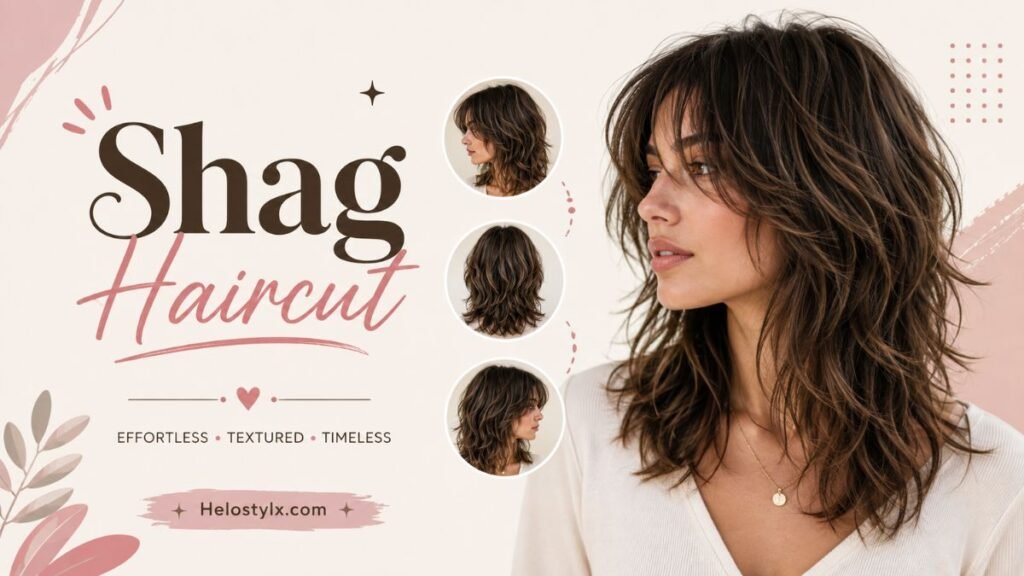
The shag haircut has been through more comebacks than almost any style in modern hairdressing, and in 2026 it is more popular than ever. Loved for its choppy layers, tousled texture and easy, undone finish, the shag suits nearly every hair type and face shape. If you are wondering what a shag haircut actually is, how to ask for one, or whether it will suit you, this guide breaks down everything you need to know before booking your next appointment.
What Is a Shag Haircut?
At its core, a shag is a heavily layered haircut built to create volume, movement and texture. It typically features shorter layers concentrated around the crown, gradually blending into longer pieces towards the ends, with face framing strands cut around the hairline.
Unlike a traditional layered cut, where each length blends smoothly into the next, a shag leaves visible separation between the layers. This is what gives the style its signature piecey, lived in finish. A good shag should never look too polished. A slightly rebellious, slept in quality is part of the appeal.
Three elements typically define a genuine shag:
- Heavy layering concentrated at the crown for lift and volume.
- Some form of fringe or bangs, whether a full curtain fringe, wispy micro bangs, or soft face framing pieces.
- Textured ends, usually achieved through point cutting, razor work or slide cutting.
Without these three working together, you simply have a layered haircut rather than a true shag. The technique matters just as much as the shape, which is why an experienced stylist makes such a difference to the finished result.
The shag first rose to fame in the 1970s, worn by icons such as Jane Fonda, Rod Stewart and David Bowie. Since then it has resurfaced again and again, from the choppy shags of the 1990s to the wolf cuts and modern shags dominating salons and social media today.
What Is a Modern Shag Haircut?
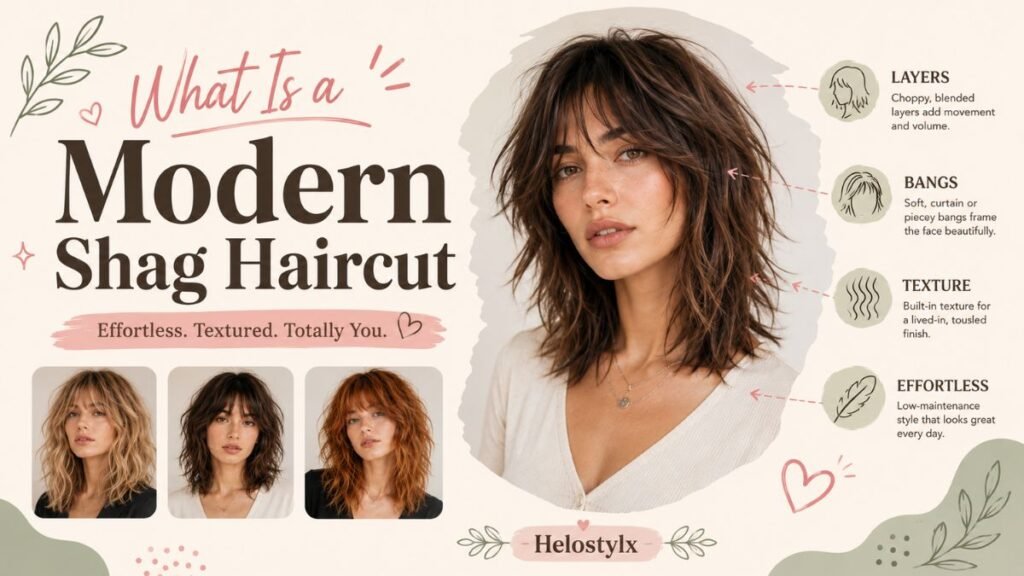
While the original 1970s shag was bold, heavy and dramatic, the modern shag is a far more wearable evolution of the cut. Today’s version is softer, more refined and tailored to individual hair textures, lengths and lifestyles, rather than a single one size fits all silhouette.
A modern shag typically includes:
- Softer, more blended layering compared to the choppier retro versions.
- Curtain bangs or subtle face framing pieces rather than a heavy, blunt fringe.
- A shorter, more textured overall shape, often finishing between the chin and shoulders.
- Styling that works with natural texture instead of fighting against it.
Modern shags are often customised around a client’s natural wave pattern, growth cycle and daily routine. Rather than requiring hours of styling, the goal is a cut that looks intentional whether it is air dried, roughly scrunched, or given a quick blast with a diffuser.
This flexibility is a major reason the modern shag has become such a staple request in salons across London and beyond. It offers the rebellious spirit of the original style with none of the high maintenance upkeep.
Shag Haircuts for Women: Why They’re So Popular
Shag haircuts have become one of the most requested styles among women of all ages, and it is not difficult to see why. The cut manages to be edgy and low key at the same time, which is a rare combination in the world of hairstyling.
Here are some of the main reasons the shag remains so popular.
- It suits almost every hair type. Straight, wavy, curly and coily hair all respond beautifully to shag layering, each producing a slightly different but equally flattering result.
- It works across most face shapes. With the right customisation around the fringe and face framing pieces, the shag can soften angular features or add definition to rounder ones.
- It adds volume without extra product. The layering itself creates lift at the roots, which is especially helpful for anyone with fine or flat hair.
- It photographs beautifully. The textured, imperfect finish looks natural both in person and on camera, which has fuelled its popularity across social platforms.
- It is genuinely versatile. A shag can be worn sleek and polished for the office, or tousled and undone for the weekend, using nothing more than a change in styling technique.
Celebrities including Zendaya, Billie Eilish and Florence Pugh have all been spotted with variations of the shag in recent years, helping cement its status as one of the defining haircuts of the decade.
The Different Types of Shag Haircut
Not all shags look the same. The length, layering pattern and fringe style can all be adjusted to create very different finished looks. Below is an overview of the most common shag variations requested in salons today.
| Type of Shag | Description | Best Suited For |
| Classic Shag | Medium to long length with heavy layering and a full curtain fringe | Those wanting a retro inspired, dramatic look |
| Pixie Shag | Short, close cropped shape combined with textured, piecey layers | Fine hair or those wanting a bold, low maintenance cut |
| Bob Shag | Chin to shoulder length with choppy layers throughout | Anyone wanting texture without committing to long hair |
| Long Shag | Layers concentrated mainly around the crown and face, with length preserved elsewhere | Those who want volume while keeping longer hair |
| Mullet Shag | Shorter layers at the front blending into longer length at the back | Bold personalities wanting a fashion forward statement |
| Curly Shag | Layering tailored to enhance natural curl pattern and reduce bulk | Curly and coily hair types |
Each version relies on the same underlying principle, which is heavy layering combined with textured ends, but the proportions and finishing techniques change to suit the desired outcome.
Hair Types and Face Shapes
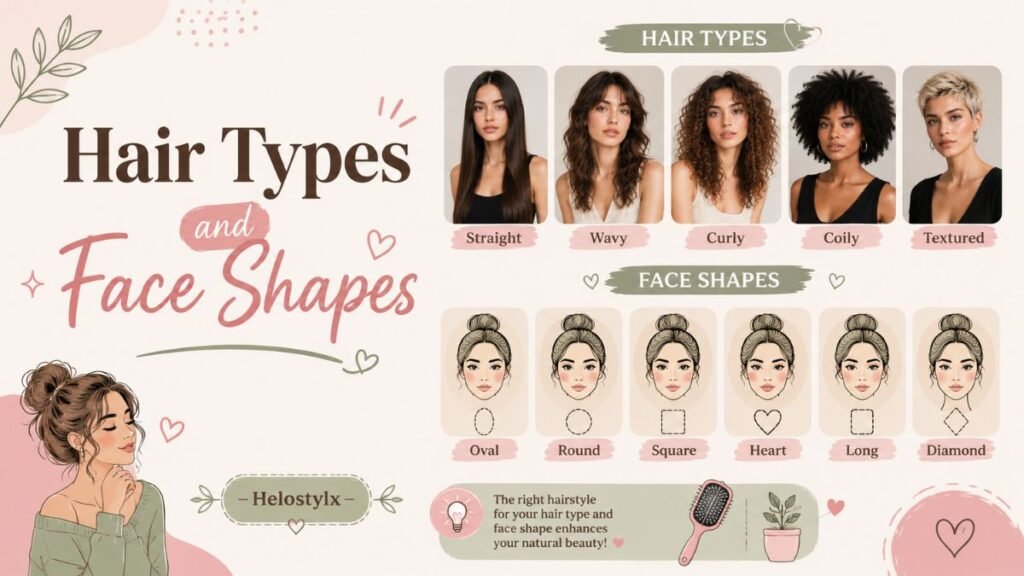
One of the biggest advantages of the shag haircut is how adaptable it is. The right version of the cut can be tailored to flatter almost any hair type and face shape.
| Hair Type | How the Shag Adapts |
| Fine hair | Layering creates the illusion of thickness and adds noticeable volume at the root |
| Thick hair | Weight is removed through the mid lengths and ends to prevent bulk and add movement |
| Wavy hair | Layers allow the natural wave pattern to show through beautifully with minimal styling |
| Curly hair | Careful thinning and shaping reduces bulk while keeping curl definition intact |
| Straight hair | A little texturising product or a light wave can help bring out the choppy finish |
Face shape also plays an important role in how a shag is customised.
- Round faces often suit a shag with longer layers and side swept fringe to add length and definition.
- Oval faces can wear almost any version of the shag, since the proportions are already balanced.
- Square faces benefit from softer, wispy fringes that break up strong jawlines.
- Heart shaped faces look great with curtain bangs that soften a narrower chin.
- Long faces are often flattered by fuller fringes that shorten the appearance of the face.
A skilled stylist will always assess hair type, growth pattern and face shape together during a consultation, rather than applying a generic template to every client.
Trending Shag Variations
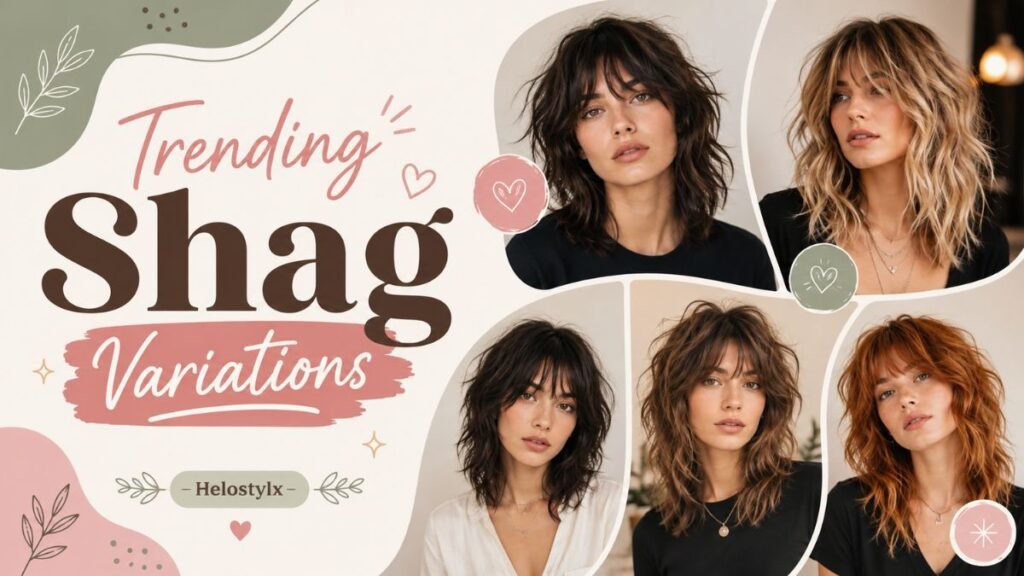
The shag continues to evolve each year, with new variations emerging from runways, red carpets and social media alike. Some of the most talked about trending shag styles right now include:
- The wolf cut, a fusion of shag and mullet with heavy layering and volume at the crown.
- The curtain bang shag, featuring soft, parted fringe pieces framing the face.
- The butterfly shag, known for dramatic face framing layers that curve outward.
- The pixie shag, a cropped, textured take on the cut popular for its low maintenance appeal.
- The bixie shag, sitting between a bob and pixie with plenty of choppy texture.
- The money piece shag, combining subtle face framing highlights with layered texture.
Trends move quickly, but the underlying structure of the shag rarely changes. Most of these variations are simply the same core technique reinterpreted through length, fringe style or colour placement.
Are Shag Haircuts Low Maintenance?
Shag haircuts are generally considered one of the more low maintenance options available, particularly when compared to precision cuts that rely on sharp, blunt lines.
Here is why shags tend to be easier to live with day to day.
- They are designed to look slightly undone, so imperfect styling actually works in your favour.
- Regrowth is far less noticeable thanks to the layered structure and blended lengths.
- Many shags can be air dried or lightly diffused rather than requiring a full blow dry every time.
- Texturising sprays and sea salt sprays can enhance the finish in seconds.
That said, low maintenance does not mean no maintenance. To keep the shape and texture looking sharp, regular trims every six to eight weeks are recommended. This prevents the layers from growing out and losing their definition, particularly around the crown and fringe area.
Shag Haircut Costs
Shag haircut pricing varies depending on your location, the salon’s reputation, the length of your hair and the seniority of the stylist. Below is a general guide to typical pricing in the UK.
| Service | Typical Price Range (UK) |
| Shag haircut, senior stylist | £55 to £90 |
| Shag haircut, creative director | £90 to £140 |
| Shag haircut with fringe trim | £5 to £15 extra |
| Shag haircut and blow dry finish | £70 to £120 |
| Maintenance trim (six to eight weeks) | £25 to £45 |
Prices in central London salons, particularly those with highly experienced colour and cutting specialists, often sit at the higher end of these ranges. It is always worth booking a consultation beforehand, since pricing can shift depending on hair length, density and the complexity of the layering required.
How to Ask for a Shag Haircut
Walking into a consultation with the right language can make a huge difference to your final result. Here is how to communicate what you want clearly.
- Bring reference photos. Images help your stylist understand the exact proportions, fringe style and length you have in mind.
- Mention your hair type upfront. Let your stylist know whether your hair is fine, thick, straight, wavy or curly, since this changes how the layers should be cut.
- Be specific about the fringe. Decide whether you want a full fringe, curtain bangs, or no fringe at all.
- Discuss your daily routine. Explain how much time you realistically want to spend styling, so your stylist can adjust the cut accordingly.
- Ask about maintenance. Find out how often you will need trims to keep the shape looking fresh.
Open communication is essential. A shag relies heavily on personalised layering, so the more information your stylist has, the better the outcome will be.
How to Style a Shag Haircut
Styling a shag is far simpler than it looks, and most versions of the cut are designed to be low effort. Follow these steps for an effortless, salon finish at home.
- Start with damp hair and apply a lightweight mousse or texturising spray from mid length to ends.
- Rough dry your hair with a diffuser attachment, scrunching gently to encourage natural texture and volume.
- Focus extra drying time and lift at the roots and crown, where most of the shag’s volume comes from.
- Once dry, twist small sections around a small barrel curling iron or wand to add movement to the ends, if desired.
- Break up any uniformity by running your fingers through the hair rather than brushing it smooth.
- Finish with a light texturising spray or dry wax, applied only to the ends, for that signature piecey definition.
- Avoid heavy serums or oils through the roots, since these can weigh down the layers and flatten the volume.
For a sleeker finish, a round brush and blow dryer can smooth the shape while keeping the layered silhouette intact. For a more relaxed, undone look, air drying with a little sea salt spray is often all you need.
Also Read This : “20 Short Hairstyles for Thick Hair: Expert Styling Guide
Common Mistakes to Avoid
Even a great haircut can look wrong if it is styled or maintained incorrectly. Here are some common shag related mistakes worth avoiding.
- Skipping regular trims, which allows the layers to grow out and lose their defined shape.
- Overusing heavy products, which can weigh the hair down and remove the natural volume the cut relies on.
- Choosing a stylist without shag experience, since the technique depends heavily on precise layering and texturising.
- Over straightening the hair, which can remove the tousled texture that makes a shag distinctive in the first place.
- Ignoring your natural texture, rather than working with it during the cutting and styling process.
- Requesting a shag without discussing face shape, which can result in a fringe or layering pattern that does not suit your features.
Avoiding these pitfalls will help your shag look intentional rather than simply undone, and will keep the shape fresh between salon visits.
Where to Get a Shag Haircut in London
London is home to countless talented hairdressers, but not every salon has genuine expertise in cutting a proper shag. Because the style relies so heavily on layering technique and texturising skill, it is worth choosing a salon with proven experience in this specific cut.
When searching for where to get a shag haircut in London, look for salons that:
- Showcase real shag transformations across their portfolio or social media.
- Employ senior stylists trained specifically in layering and texturising techniques.
- Offer a proper consultation before any cutting begins.
- Have strong client reviews mentioning shags, wolf cuts or similar layered styles specifically.
Taking the time to research a salon properly will make a significant difference to how well your finished cut suits your hair type, face shape and lifestyle.
Why Choose Strand & Lock for a Shag Haircut
At Strand & Lock, our stylists work with shag haircuts on a daily basis, which means they understand exactly how to tailor the cut to individual hair types, densities and face shapes. As an experienced hair salon in Bermondsey and Borough, we combine technical precision with a genuine understanding of how modern clients want to wear their hair.
Every shag haircut at Strand & Lock begins with a thorough consultation, where your stylist will discuss your hair history, growth pattern, daily routine and styling preferences before a single cut is made. From there, layering and texturising techniques are customised to create a shape that grows out beautifully and remains easy to maintain between visits.
Whether you are after a classic curtain fringed shag, a cropped pixie shag, or a modern wolf cut inspired shape, our team has the experience to bring your vision to life. You can explore our full range of services and book a consultation with one of our stylists to find the shag that suits you best.
Conclusion
The shag haircut has earned its place as one of the most enduring and versatile hairstyles in modern hairdressing, and it shows no sign of slowing down. From its bold 1970s roots to the softer, more wearable modern versions seen today, the cut continues to adapt to every hair type, face shape and personal style.
If you are considering making the switch, take time to research your salon, communicate clearly during your consultation, and commit to regular trims to keep the shape looking sharp. Done well, a shag offers effortless volume, texture and personality with minimal daily upkeep.
