
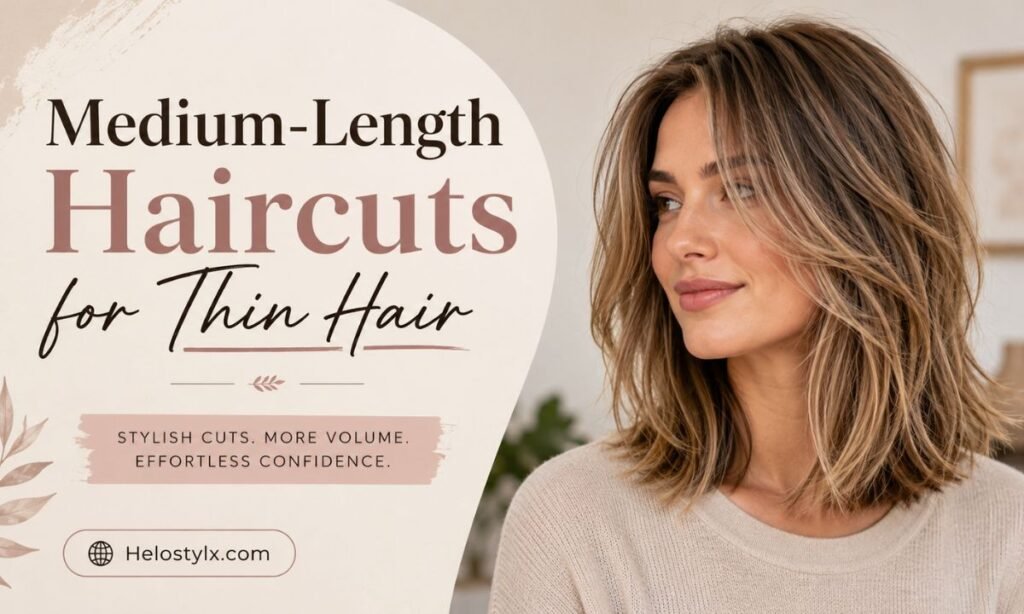
Thin hair has a mind of its own. It falls flat by noon, clings to the scalp after a workout, and rarely holds a curl for more than an hour. If this sounds familiar, you are not alone, and the fix is often simpler than you think. The right medium length haircut can completely change how thin hair moves, catches light, and holds shape throughout the day, without a single extension or thickening product.
This guide walks through the most flattering medium length hairstyles for thin hair, why they work on a strand level, and how to style and maintain them at home. Whether you want soft layers, a bold wolf cut, or a classic blunt bob, you will find a style here that adds real, lasting volume instead of a temporary illusion.
Why Medium Length Hairstyles Are Ideal for Women with Thin Hair
Thin hair is defined by the diameter of each individual strand, not the total number of strands on your head. Fine, thin strands bend easily under their own weight, which is why very long hairstyles often look stringy and lifeless. Medium length cuts solve this problem by removing just enough weight for the hair to bounce back naturally.
The Balance Between Length and Volume
Hair that hits somewhere between the collarbone and shoulders tends to create the most lift at the roots. This happens because there is less overall length pulling the hair down, so each strand can stand up and add fullness instead of collapsing flat. Stylists often recommend this zone specifically for fine and thinning hair because it hits a sweet spot: long enough to still feel feminine and versatile, short enough to avoid dragging the hair down.
Long, unlayered hair is one of the biggest culprits behind a limp, thin look. When every strand runs the full length without a break, the weight concentrates at the ends and pulls the roots flat. A medium cut interrupts that weight distribution, which is exactly why so many thin haired women see an instant difference the moment they go from long to mid length.
Styling Versatility
Medium length hair strikes a practical balance too. It is long enough to pull into a low ponytail, twist into a claw clip bun, or braid for an easy updo, yet short enough that blow drying and styling do not take forever. This versatility matters for thin hair specifically, since frequent heat styling and constant experimenting with volumizing techniques (round brushes, mousse, dry shampoo at the roots) become part of the daily routine. A length that supports all of these techniques without extra effort saves time and protects hair health in the long run.
Medium cuts also photograph well and adapt to different textures. Whether your hair is straight and silky or slightly wavy, this length range gives a stylist plenty of room to work in layers, texture, and movement that visually multiply your strand count.
Best Medium Length Hairstyles for Thin Hair
Below are the most requested and highest performing medium length cuts for thin hair, grouped by category so you can compare options easily.
Layered Cuts
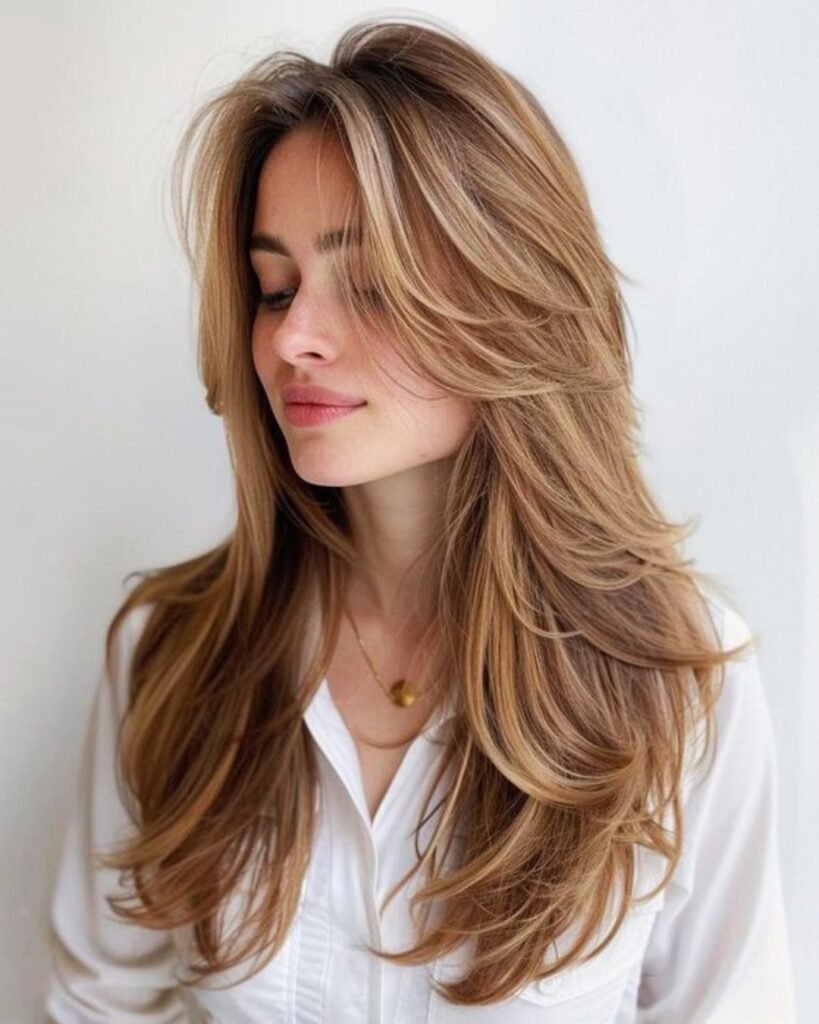
Layers remove weight strategically rather than all at once, which is precisely why they are the single most recommended technique for thin hair. When layers are cut around the crown and mid lengths, the shorter pieces underneath push the top layer up and outward, creating natural lift that a single, blunt length simply cannot achieve.
Wolf Cut
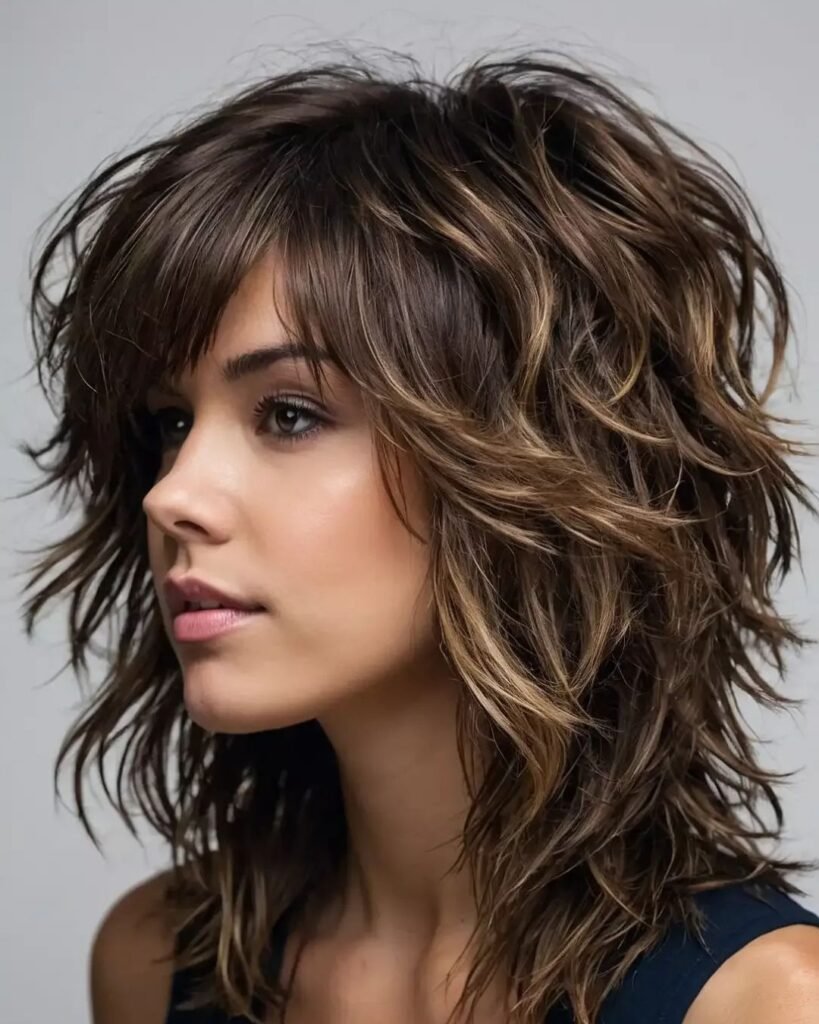
The wolf cut blends a shaggy, textured silhouette with choppy, disconnected layers throughout the crown and ends. It borrows its rebellious energy from both the mullet and the shag, and it is particularly forgiving on fine hair because the heavy layering breaks up the strand pattern and adds visible texture and fullness. A wolf cut styled with a light texturizing spray and tousled with fingers looks intentionally undone in the best way, and it hides thin patches at the crown better than almost any other cut on this list.
Butterfly Cut
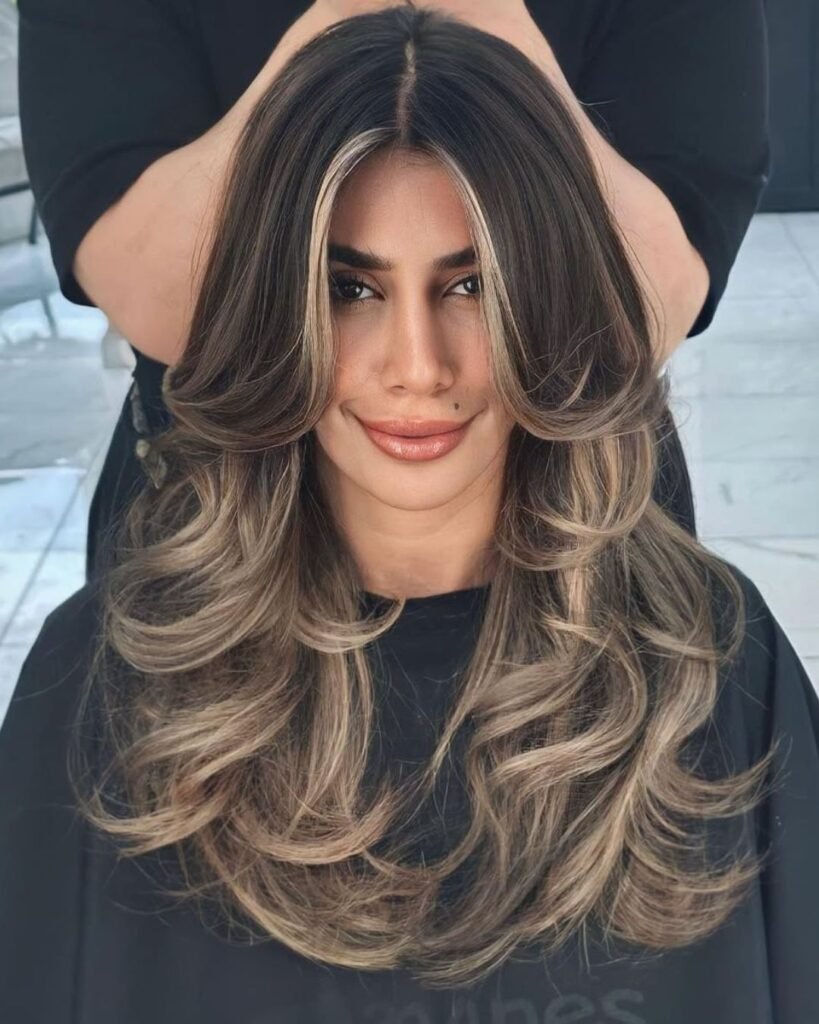
The butterfly cut uses face framing layers combined with longer layers around the crown, so the hair “opens up” like wings when you move your head. It is softer and more romantic than a wolf cut but still delivers serious volume, especially near the roots. This style works beautifully with a soft blowout or loose waves, and it flatters nearly every face shape because the shortest layers are placed strategically around the cheekbones.
Modern Shag
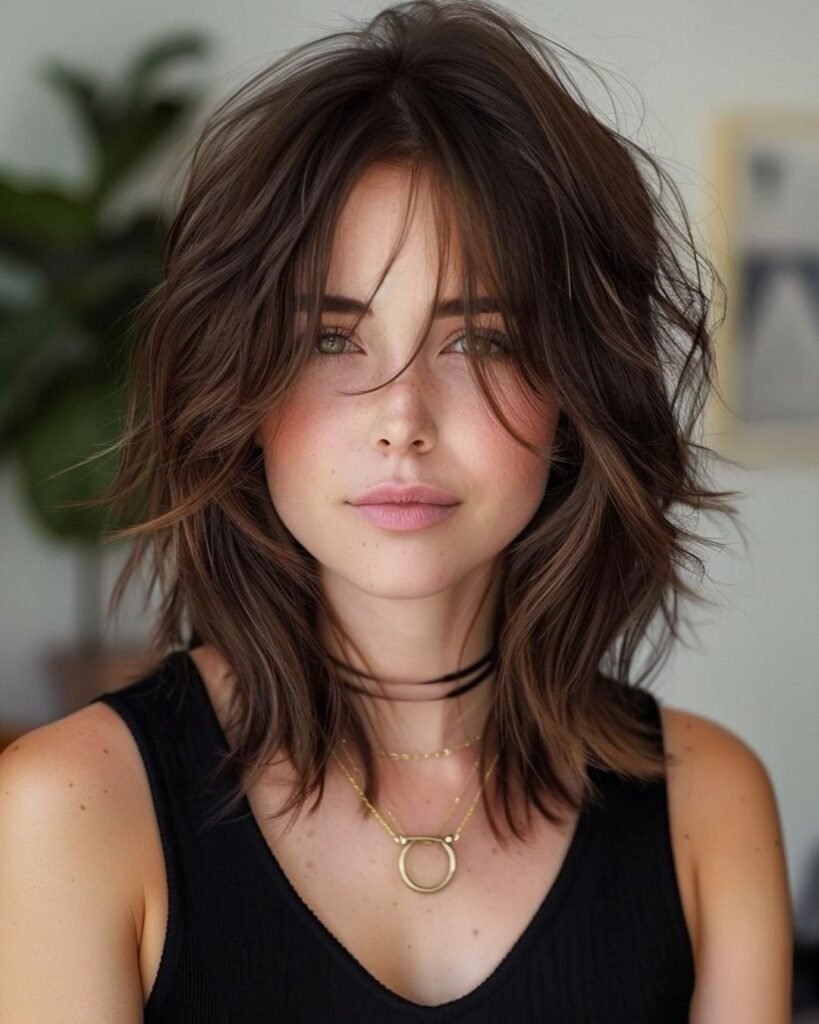
The modern shag is the classic volumizer. Multiple rows of layers, feathered ends, and often a wispy fringe combine to give thin hair the appearance of thickness and depth from root to tip. Unlike older, heavier shag versions, the modern take uses softer, more blended layers so the cut looks polished rather than choppy. A shag is especially useful if your hair tends to look flat specifically at the crown, since layers there create instant lift.
Blunt Cuts
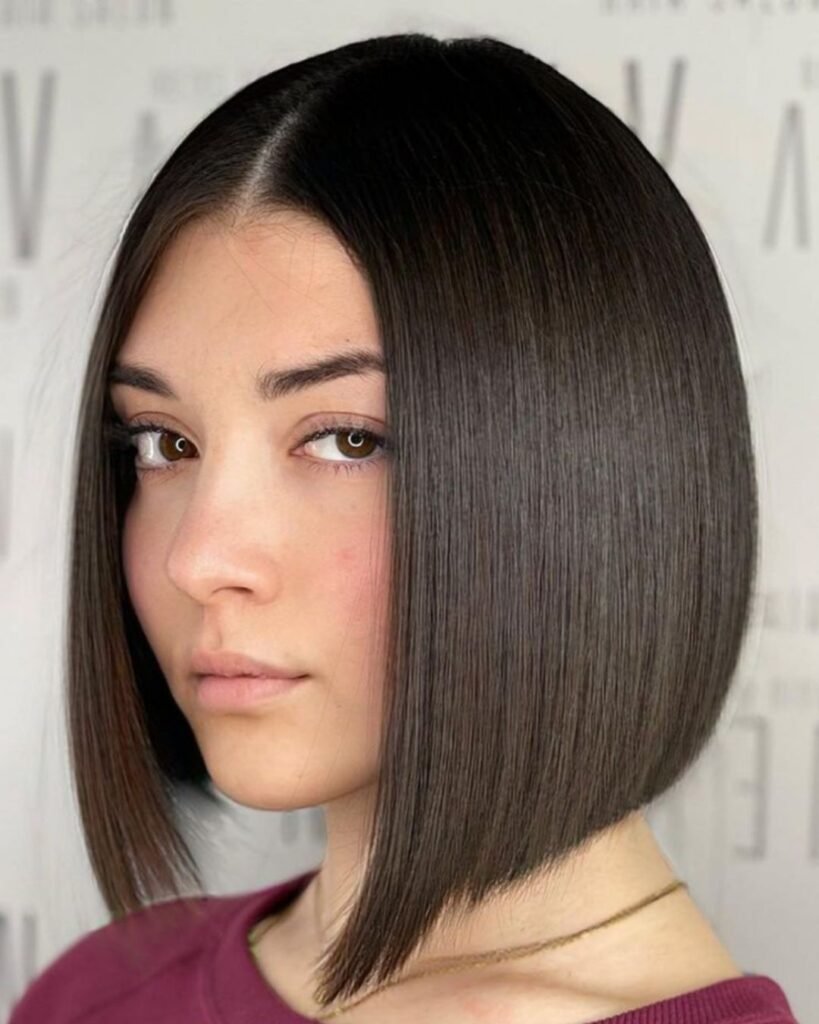
While layers are the go to solution, a well executed blunt cut can be just as effective, particularly for very fine hair that struggles to hold texture. Blunt ends look thicker because the hair is cut in one clean line, which creates the visual illusion of density along the perimeter.
Blunt Bob
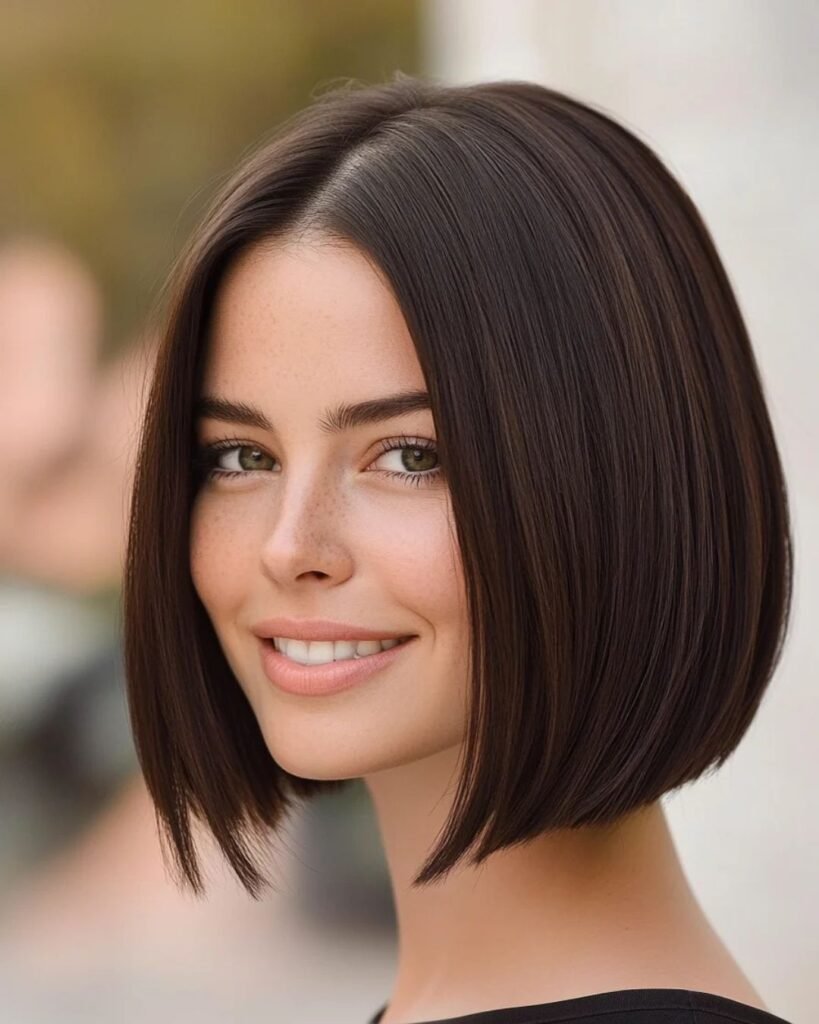
A blunt bob that skims the jawline or collarbone is one of the fastest ways to make thin hair appear noticeably thicker. Because there is no feathering at the ends, the hair reads as one solid, dense shape rather than a wispy taper. This cut pairs especially well with a glossy, one tone color, since shine amplifies the appearance of healthy density.
Textured Bob
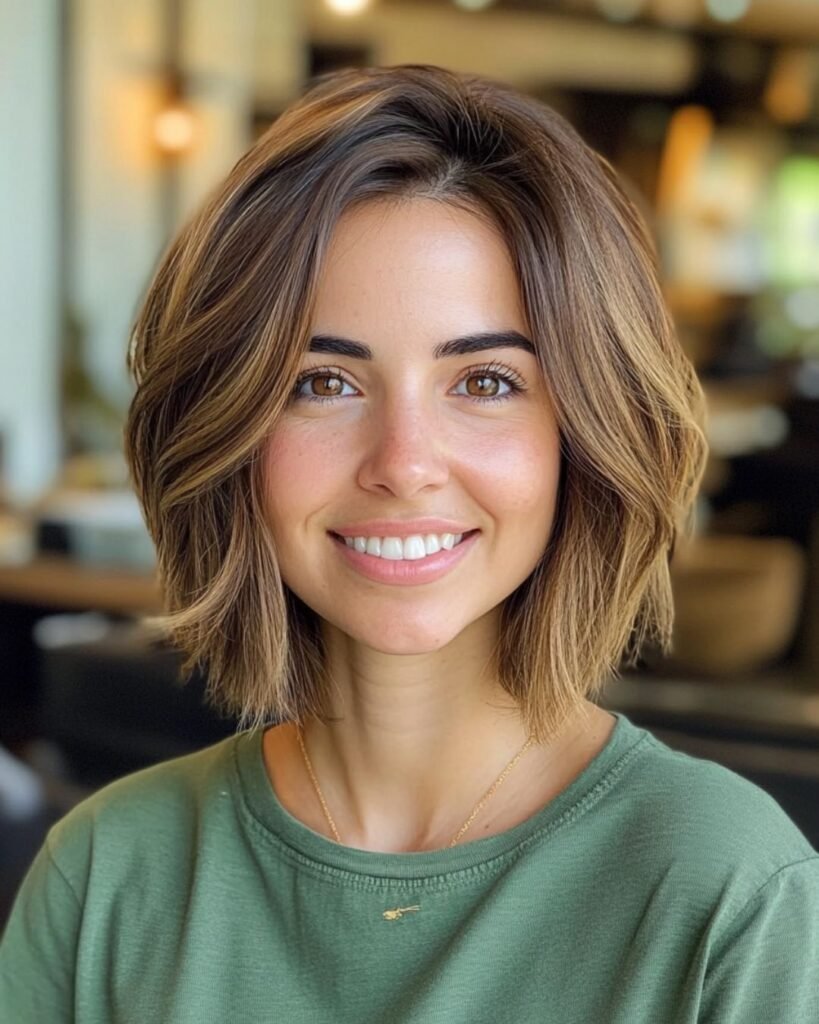
A textured bob takes the same base shape as a blunt bob but adds subtle point cutting or razoring at the very ends, just enough to introduce movement without sacrificing the fullness of a blunt line. This is a great middle ground for anyone who wants a bit of softness without fully committing to heavy layering.
Cuts with Bangs
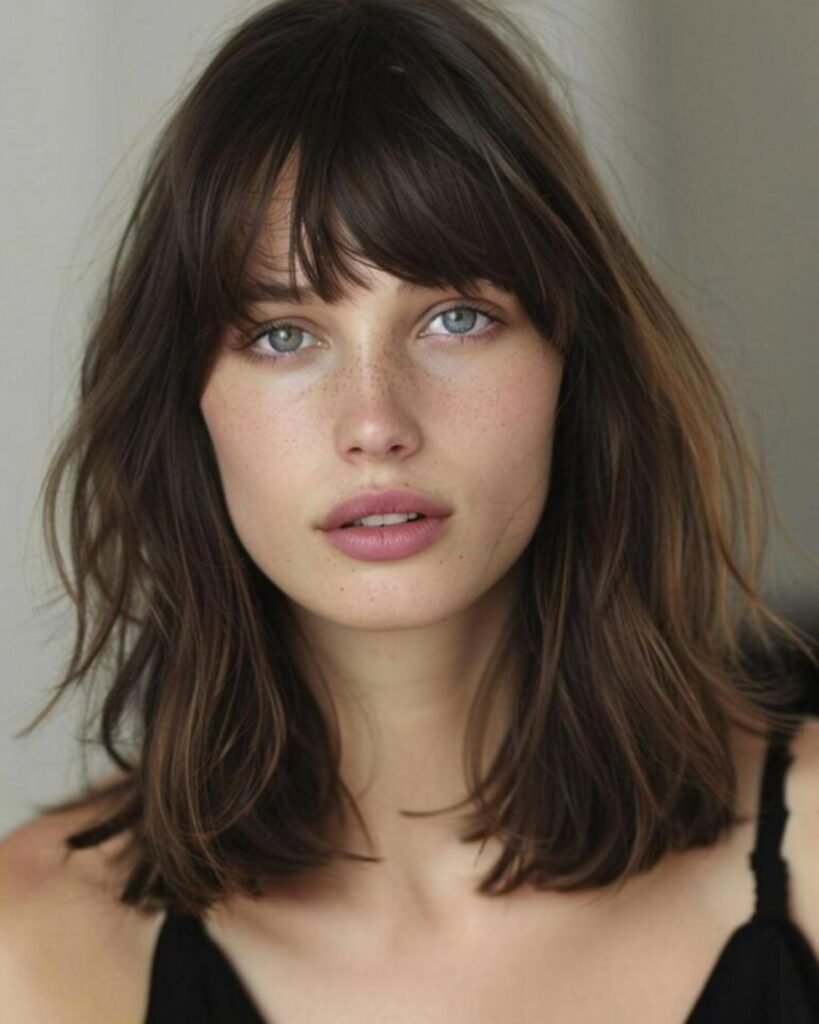
Bangs are an underrated volumizing trick. Choosing to cut fringe signals that there is enough hair to spare in the front, and wispy, face framing bangs draw the eye upward and outward, away from thin patches at the part line.
Bottleneck Bangs
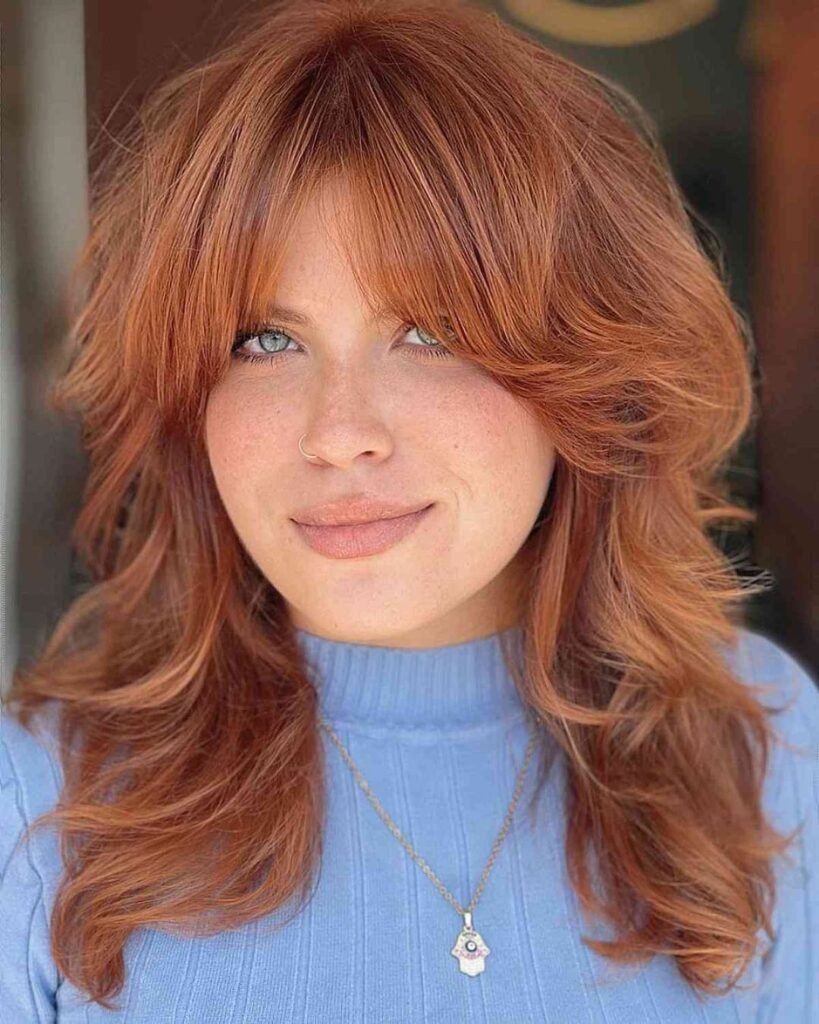
Bottleneck bangs are narrow at the part and flare outward like the neck of a bottle, blending seamlessly into face framing layers on either side. They add softness around the face and create the appearance of extra density at the hairline, which is often the first place thin hair becomes noticeable.
Curtain Bangs with Medium Cut
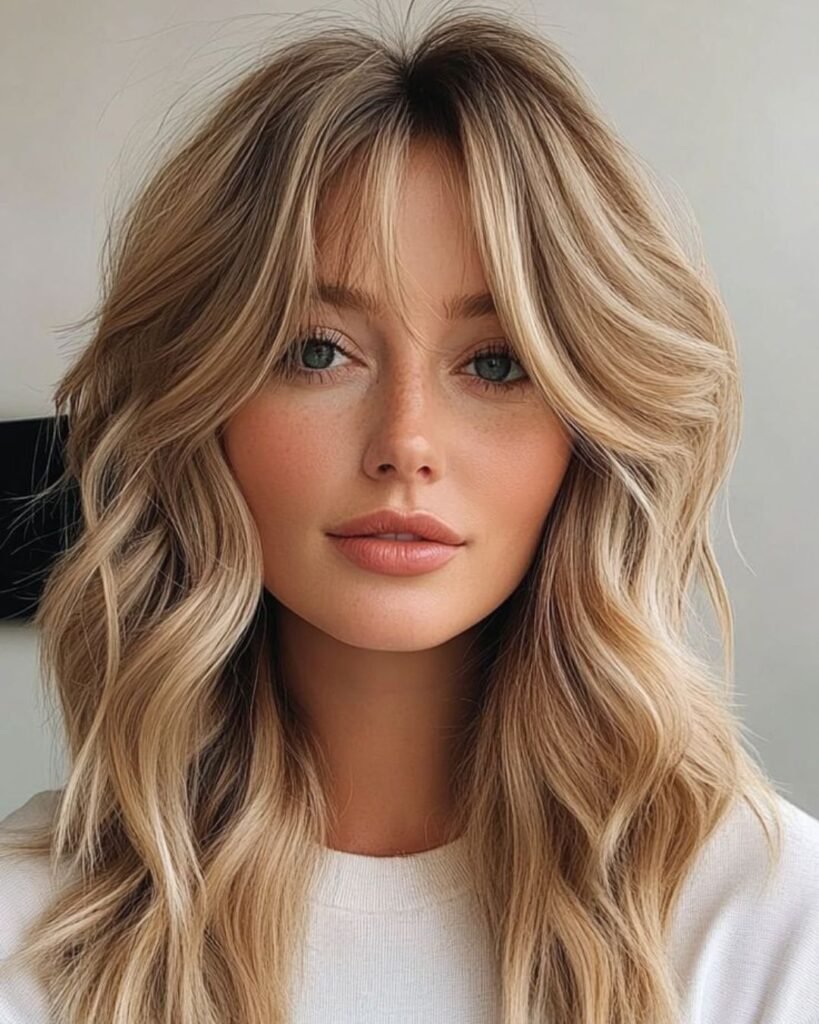
Curtain bangs parted down the middle and swept to either side are one of the most universally flattering styles for thin hair. They are long enough to tuck behind the ears on low volume days and full enough to frame the face beautifully when styled with a round brush. Paired with a layered medium length cut, curtain bangs create a soft, face framing effect that instantly balances out flatness at the crown.
Also Read This : 26 Chic Medium Length Haircuts That Require Minimal Maintenance in 2026
Other Styles
Beach Waves
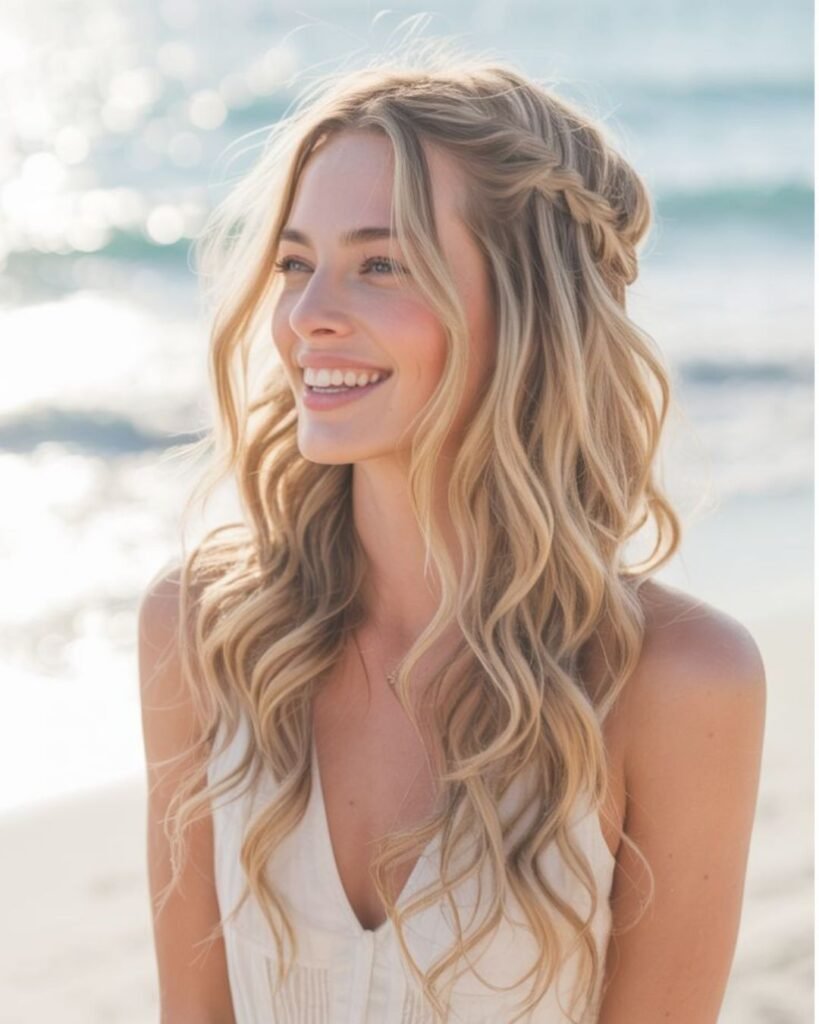
Loose, tousled waves add dimension by creating peaks and valleys throughout the hair, which the eye reads as extra volume and texture. A texturizing spray or salt spray applied to damp, mid length hair before waving with a curling wand or flat iron produces effortless movement that a straight, sleek style cannot replicate on thin strands.
Curly Shag
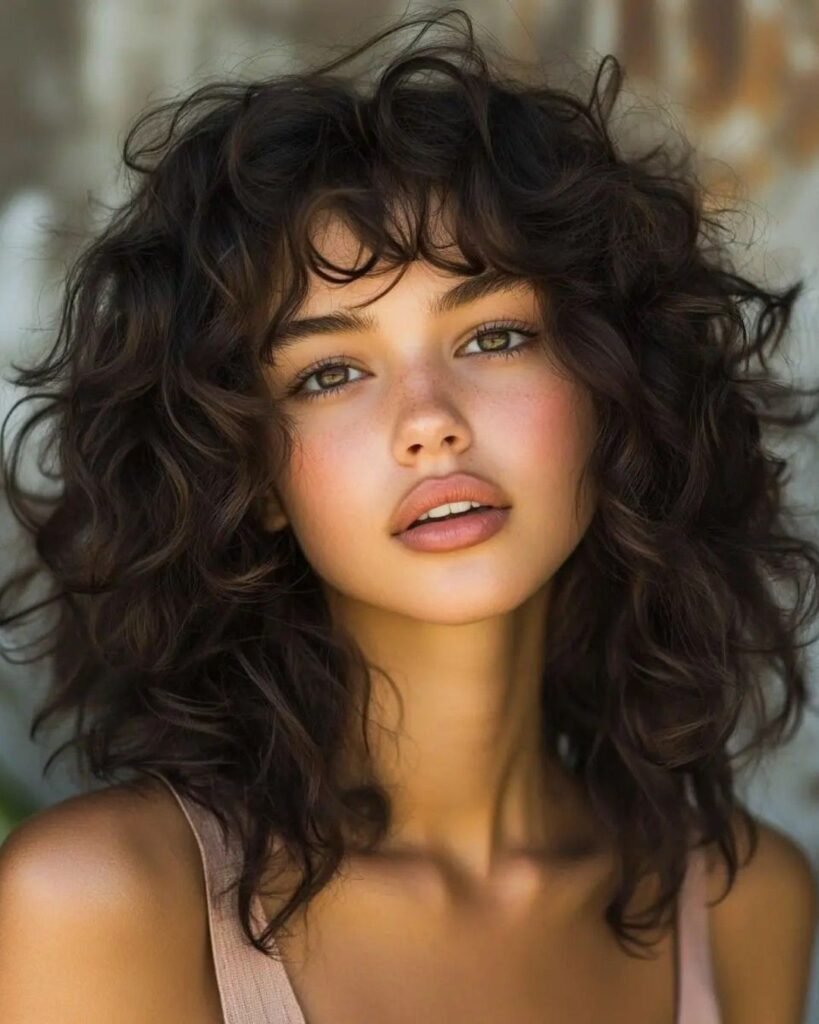
For those with naturally curly or wavy hair, a shag cut enhances the curl pattern rather than fighting it. Layers allow individual curls to spring up and separate instead of clumping together under heavy, uncut length, giving the entire style a fuller, more voluminous shape.
Hush Cut
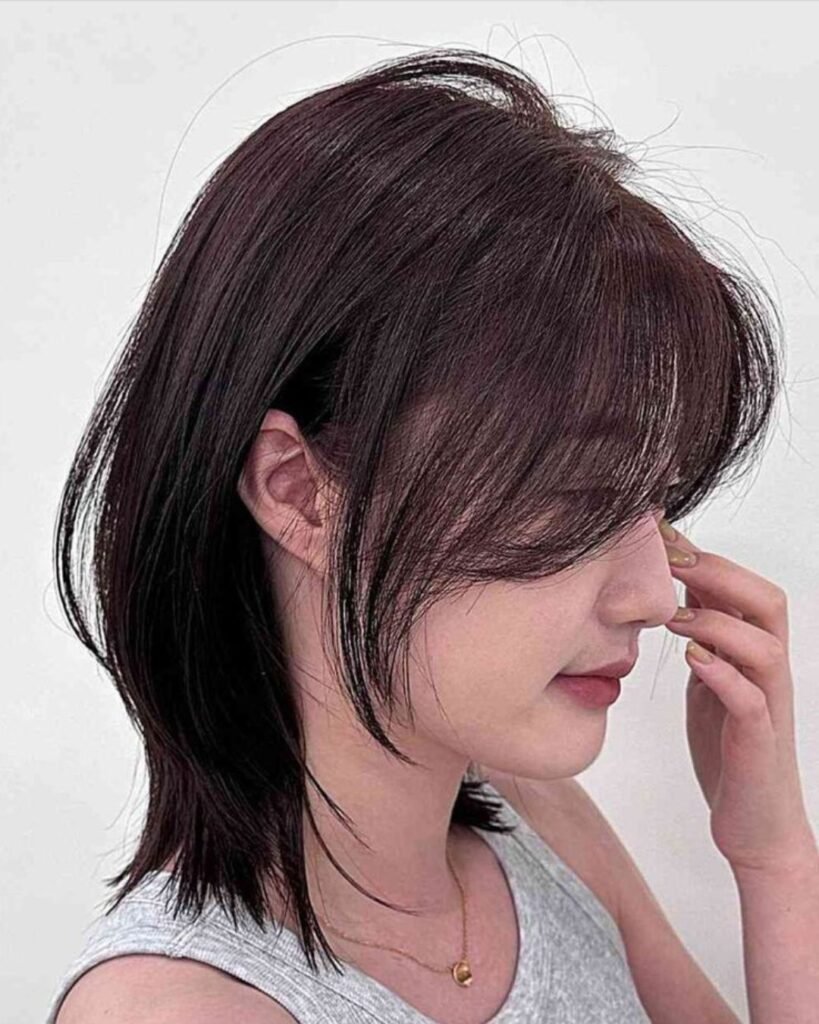
The hush cut is a newer, softer alternative to the wolf cut. It keeps a bit more length and blends the layers more gently, which makes it a great option for anyone who wants the volumizing benefit of heavy layering without looking quite as edgy or high maintenance.
Quick Comparison Table
| Hairstyle | Best For | Volume Level | Maintenance |
| Wolf Cut | Fine, flat hair wanting texture | High | Medium |
| Butterfly Cut | Soft, romantic volume | High | Medium |
| Modern Shag | Root lift and movement | High | Medium |
| Blunt Bob | Fine hair needing density | Medium | Low |
| Textured Bob | Balance of shape and softness | Medium | Low |
| Bottleneck Bangs | Framing thin hairlines | Medium | Medium |
| Curtain Bangs | Everyday versatility | Medium | Low |
| Beach Waves | Adding texture and dimension | High | Medium |
| Curly Shag | Natural curls and waves | High | Medium |
| Hush Cut | A softer take on heavy layers | Medium to High | Medium |
How to Do Medium Length Hairstyles for Thin Hair at Home
You do not need a professional blowout every time to keep a medium length haircut looking full. A few consistent habits make a noticeable difference.
- Start with the right products. Apply a lightweight volumizing mousse or root lifting spray to damp hair before blow drying. Avoid heavy creams or oils near the roots, since these weigh fine strands down.
- Dry upside down or with a round brush. Flipping your head forward while blow drying encourages the roots to dry lifted rather than flat. A round brush used at the crown adds extra bend and body.
- Use a cool shot at the end. Finishing your blowout with a burst of cool air sets the shape and helps the volume hold longer throughout the day.
- Add texture, not weight. A texturizing spray or dry shampoo applied to the roots before styling gives the hair something to grip onto, which is especially useful for silky, thin strands that slide out of curls quickly.
- Curl in sections, away from the face. Whether using a wand or flat iron, curl small sections of hair rather than large chunks. Alternating the curl direction throughout the head prevents the waves from collapsing into one heavy mass.
- Change your part occasionally. A part that has been in the same place for years often looks thinner simply because the scalp has had time to widen along that line. Switching the part, even slightly, instantly reads as fuller.
- Finish with a light hold spray. Heavy, stiff hairsprays can weigh hair down. Choose a flexible, lightweight formula that holds volume without gluing strands together.
Common Mistakes to Avoid with Medium Length Hairstyles for Thin Hair
- Going too long without layers. Length beyond the shoulders, left completely blunt and unlayered, almost always drags thin hair flat, no matter how good the products are.
- Overusing heavy oils and serums. Rich oils are wonderful for thick or dry hair, but on fine strands they can flatten volume within hours of application.
- Skipping regular trims. Thin hair is more prone to split ends, and split, damaged tips make hair look even sparser. A trim every six to eight weeks keeps the shape sharp and the ends healthy.
- Brushing wet hair aggressively. Wet strands are at their weakest point. Rough brushing causes breakage, which only worsens the appearance of thinness over time. Detangle gently with fingers or a wide tooth comb instead.
- Choosing bangs that are too thick or too blunt. A heavy, dense fringe can look disconnected from thin hair elsewhere on the head. Wispy, softly textured bangs blend far more naturally.
- Ignoring scalp health. Volume starts at the root. Neglecting regular scalp massages, gentle cleansing, or a light exfoliating treatment can slow growth and leave hair looking thinner than it needs to.
- Using the same part every single day. As mentioned above, this can create a visibly widened line at the scalp over time, which draws attention to thinness rather than away from it.
Conclusion
Thin hair is not a limitation. It is simply a texture that responds best to strategic cutting, the right length, and a few smart styling habits. Medium length cuts, whether layered, blunt, shaggy, or softened with bangs, give fine strands the structure they need to look fuller, move naturally, and hold style throughout the day. The key is choosing a cut that removes weight where it matters and adds shape where volume is needed most.
Bring a few of these styles to your next salon visit, be honest with your stylist about how your hair behaves day to day, and pair the cut with lightweight, volumizing products at home. With the right combination of length, layering, and care, thin hair can look every bit as full and healthy as any other hair type.
