
Choosing a haircut shape can feel more complicated than picking a length or a color. Two terms that come up again and again at the salon are U-shaped cuts and V-shaped cuts. While they might sound like small technical details, they actually change how your hair moves, falls, and frames your face. This guide breaks down everything you need to know about U-cuts and V-cuts, from their basic definitions to the best styling ideas.
Most people focus on length, color, or bangs when planning a haircut, but the shape of the perimeter at the back often determines how the hair behaves day to day. It affects how layers blend, how much volume the style holds, and how the hair swings when you walk. Whether you have straight, wavy, or coily hair, understanding this difference will help you choose a cut you won’t regret.
What Is a U-Shaped Haircut?
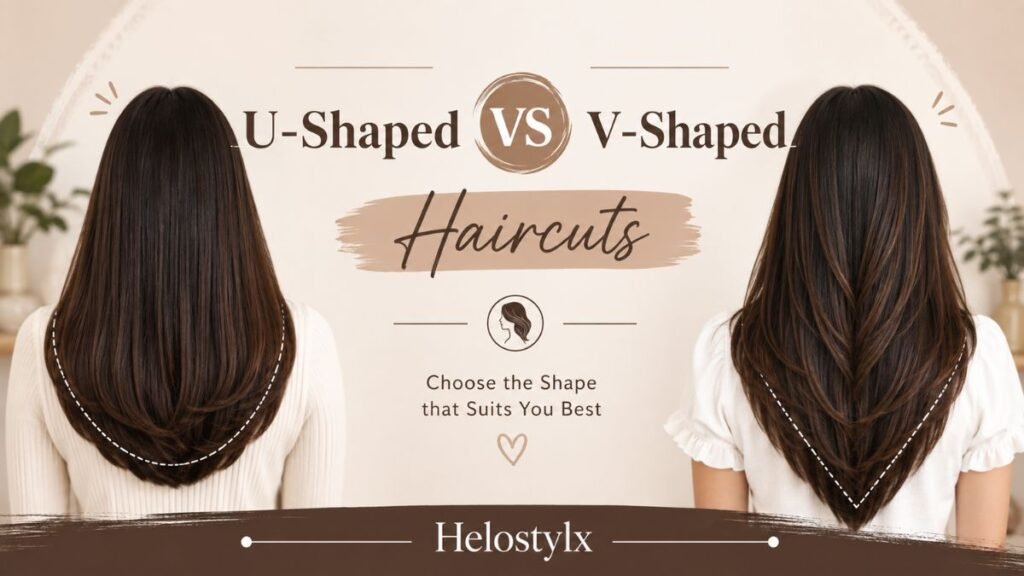
A U-shaped haircut gets its name from the rounded shape created at the back of the hair. The center layers are left the longest, while the sides are gradually cut shorter, curving inward to form a soft “U” silhouette when you look at the hair from behind.
The defining feature of a U-cut is subtlety. Every layer and angle is blended smoothly, so there are no harsh lines or sudden drops in length. The result is a rounded, flowing finish that feels natural rather than sculpted.
Key characteristics of a U-shaped haircut include:
- A rounded, horseshoe-like perimeter at the back
- Soft, blended layers rather than sharp, choppy pieces
- A gradual transition from shorter side pieces to longer center length
- A finish that looks fuller and bouncier compared to blunt cuts
Because the layering is gentle, a U-cut tends to suit people who want low-maintenance styling. The soft curve hides split ends reasonably well and doesn’t require constant touch-ups to keep its shape looking fresh.
Stylists often recommend the U-shape as a starting point for people who are unsure how much layering they actually want. Since the transitions are gradual rather than dramatic, there’s more flexibility to adjust the depth of the layers at your next appointment without completely changing the overall silhouette. This makes it a forgiving choice for anyone growing their hair out, transitioning from a shorter style, or simply testing the waters with layered hair for the first time.
The U-cut also tends to photograph and move beautifully in videos, which is part of why it has become such a popular request in salons. Because the ends curve rather than come to a point, the hair falls in a way that looks intentional from every angle, whether it’s pulled into a ponytail, worn down, or tucked behind the ears.
Is a U-Cut Good for Wavy Hair?
Yes, a U-cut is one of the most flattering shapes for wavy hair. Wavy strands tend to carry a lot of natural volume, and thick waves in particular can start to look heavy or shapeless without the right layering.
A U-shaped cut removes bulk from the underlayers while keeping the overall length intact. This helps waves move more freely instead of sitting in one dense, flat mass. The rounded perimeter also works with the natural bend of wavy hair rather than fighting against it, so curls and waves settle into place with less effort.
For fine or thin waves, a U-cut brings a different benefit. Because it adds soft layers throughout, it creates the illusion of extra volume and texture, which can make thin wavy hair look thicker and more voluminous without any additional styling products.
In short, whether your waves are thick or fine, a U-shaped cut tends to enhance texture rather than fight it, making it a reliable choice for anyone with a wavy hair type.
There’s also a practical, day-to-day advantage worth mentioning. Wavy hair often behaves unpredictably depending on humidity, product, and how it’s dried, and a shape that already works with that unpredictability saves a lot of styling time. Because the U-cut doesn’t rely on a crisp, defined edge to look finished, minor shifts in how the waves fall from one day to the next won’t throw off the overall look the way they might with a more structured shape. This is one of the main reasons hairstylists so often steer clients with natural texture toward the U-shape rather than a sharper alternative.
What Is a V-Shaped Haircut?
If the U-cut is the softer, more relaxed sibling, the V-shaped haircut is the bold, dramatic one. Instead of a rounded curve, the back of the hair is cut at a sharp diagonal angle that meets at a defined point, forming a clear “V” shape.
The layers in a V-cut are typically more pronounced and structured. Rather than blending gradually, the cut is designed to draw the eye toward the point at the center back, creating a striking, angular silhouette.
Key characteristics of a V-shaped haircut include:
- A pointed, angular perimeter that comes to a defined tip
- More visible, structured layering
- A steeper diagonal line from the sides toward the center
- A finish that feels edgier and more fashion-forward
Because the shape is more defined, V-cuts tend to hold their structure well on straight or slightly wavy hair, where the sharp lines can really stand out. This cut is often chosen by people who want a bolder statement or who like the idea of layers that create movement and lift, especially toward the ends of long hair.
One reason the V-shape has stayed so popular is the way it interacts with length. On very long hair, the steep angle can make the ends look thinner and more feathered, which helps prevent that heavy, blunt-edge look that sometimes comes with one-length styles. On medium lengths, the point is usually less extreme but still visible enough to add a bit of edge to an otherwise classic cut.
It’s also worth noting that a V-cut isn’t necessarily a high-maintenance choice for everyone. If your hair is naturally straight and holds its shape well between washes, the point can stay defined for weeks at a time with minimal effort. The extra upkeep mainly comes into play for textured or wavy hair types, where the angle can soften faster and may need more frequent trims to stay sharp.
Which Is Better: A U-Cut or a V-Cut?
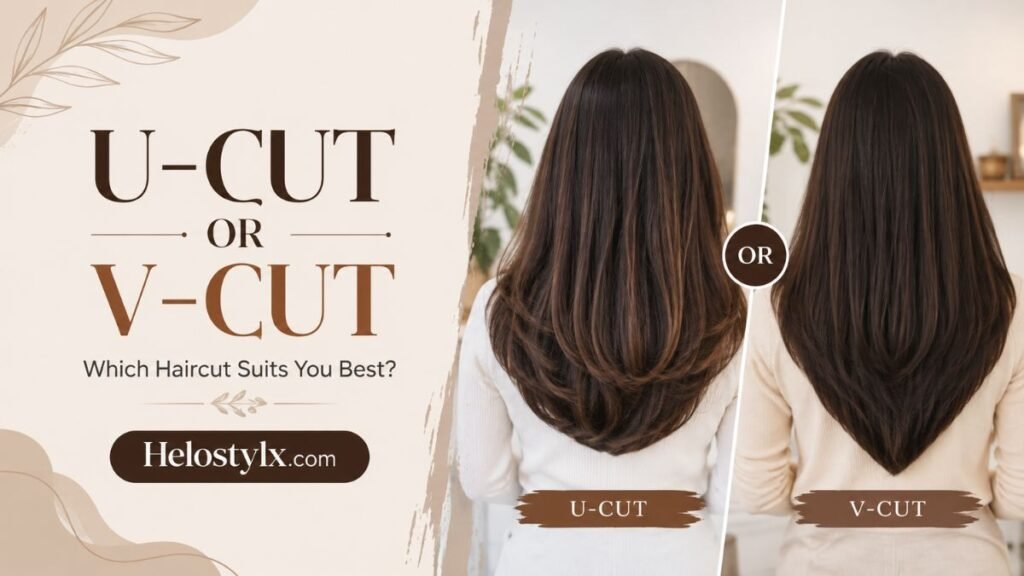
There isn’t a single “better” option between these two cuts. The right choice depends entirely on your hair type, texture, and the overall look you’re going for.
Here’s a side-by-side comparison to help you decide:
| Feature | U-Shaped Cut | V-Shaped Cut |
| Overall shape | Rounded, curved perimeter | Sharp, pointed perimeter |
| Best suited for | Wavy, curly, or thick hair | Straight or lightly textured hair |
| Layering style | Soft, blended layers | Structured, defined layers |
| Visual effect | Soft, romantic, natural | Bold, edgy, dramatic |
| Maintenance | Lower maintenance, grows out gracefully | Requires more frequent trims to keep the point sharp |
| Face-framing | Gentle, gradual transition | Rapid, steep transition |
| Best for face shapes | Round, square, heart | Oval, long, diamond |
If you want a look that feels effortless and forgiving as it grows out, a U-shaped cut is usually the safer bet. If you’re after a more fashion-forward, statement-making style and don’t mind slightly more frequent salon visits, the V-cut is worth considering.
Your natural hair texture also plays a major role here. Curly and wavy hair types generally look their best with the U-shape because the rounded layers work with the hair’s natural movement. Straight hair, on the other hand, can carry the sharp angles of a V-cut without the point softening or blurring over time.
Lifestyle matters just as much as texture. If you’re someone who washes and goes without much daily styling, the U-cut’s forgiving shape will likely serve you better, since it doesn’t rely on precise blow-drying or flat-ironing to look put together. If you enjoy spending a few extra minutes styling your hair each morning and like the idea of a cut that looks a little different depending on how you wear it, the V-cut offers more room to play with sharp, structured looks.
Hair density is another factor worth considering. Thicker hair can usually support the more dramatic layering of a V-cut without looking thin or overly wispy, while very fine hair might benefit more from the volume-boosting effect of a rounded U-shape. If you’re still unsure, bringing both options to a consultation and asking your stylist to assess your hair’s natural fall, density, and texture is the most reliable way to land on the right choice.
Styling a U-Shaped Haircut: Best Looks
A U-shaped cut is versatile enough to work across a wide range of lengths and textures. Here are some of the most popular ways to style it:
- Loose beachy waves – Using a curling wand on the mid-lengths and ends enhances the natural curve of the U-shape and adds effortless texture.
- Sleek and straight – A flat iron paired with a smoothing serum highlights the rounded perimeter for a polished, glossy finish.
- Half-up style – Pulling the top section back shows off the soft layering while keeping length visible at the back.
- Blowout with volume – A round brush blowout at the roots gives the cut extra body, which pairs beautifully with the rounded shape.
- Natural air-dry – For wavy or curly hair, simply air-drying with a curl-defining cream lets the U-cut’s layers do the work on their own.
Because the layers are so well blended, this cut tends to look good with minimal styling, which is one of the main reasons people gravitate toward it for everyday wear.
When it comes to product choice, lightweight formulas tend to work best with the U-shape. A texturizing spray or curl cream enhances the natural movement without weighing the layers down, while heavier oils or creams are better saved for the ends only, where they can smooth flyaways without flattening the volume at the crown. For special occasions, this cut also translates well into soft updos, since the rounded layers create natural face-framing pieces that can be left loose around a low bun or braid.
Styling a V-Shaped Haircut: Best Looks
The V-shaped cut is a bit more particular about styling since the goal is usually to keep that center point crisp and visible. Popular styling approaches include:
- Straight and sleek – Flat-ironing the hair fully highlights the sharp point at the back, making the V-shape the star of the look.
- Voluminous curls – Large barrel curls add drama and movement while still letting the angular shape peek through.
- High ponytail – Pulling hair up into a ponytail shows off the tapered ends and gives the point a chance to stand out even more.
- Textured waves with a diffuser – For those with natural texture, diffusing the hair adds volume without disguising the cut’s structured lines.
- Face-framing layers pushed forward – Bringing the front pieces forward over the shoulders emphasizes the steep angle from face to back.
Because the V-cut relies on precision, regular trims every six to eight weeks help maintain the crispness of the point, especially for those with longer hair where the angle is more pronounced.
Heat styling tools tend to play a bigger role with this cut than with the U-shape. A flat iron is particularly useful for keeping the point looking sharp and intentional, while a smoothing serum applied to the ends helps prevent them from looking wispy or uneven. If you prefer a more natural finish, a light hold hairspray focused only on the perimeter can keep the shape defined without making the rest of the hair feel stiff.
15 Versatile Ways to Rock an Angled Haircut
Angled haircuts, whether U-shaped, V-shaped, or somewhere in between, offer plenty of room for personalization. Below are fifteen popular variations worth considering.
1. Subtle U-Cut
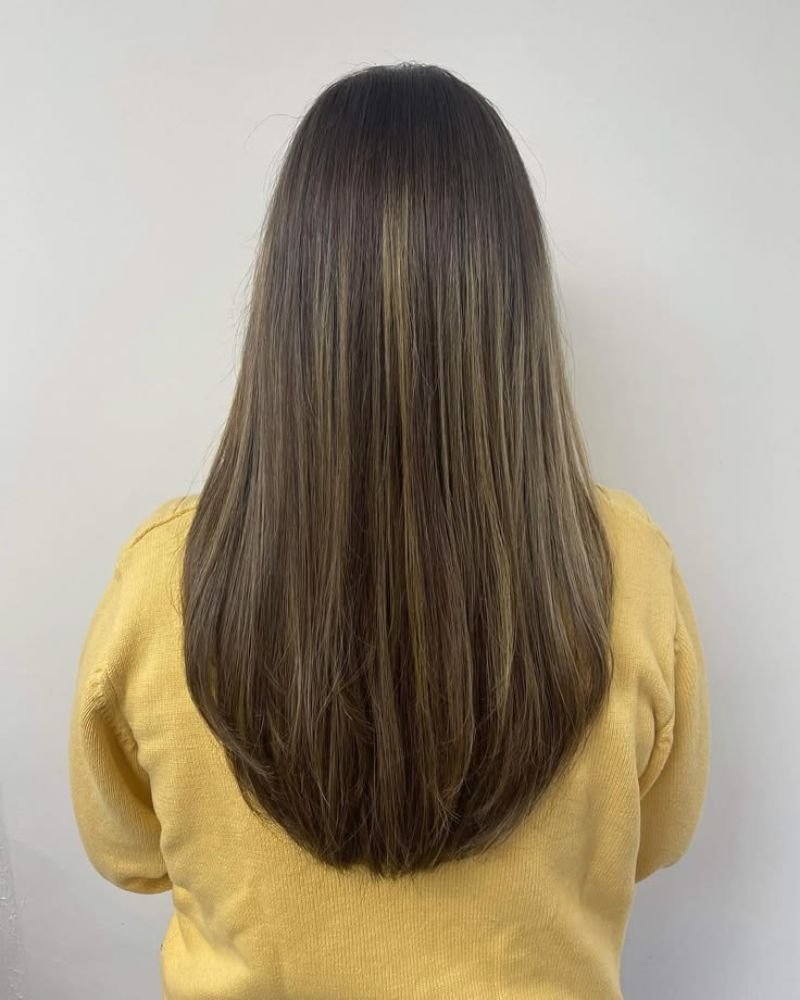
This version keeps the curve gentle and barely noticeable, ideal for anyone who wants light layering without a dramatic shift in shape. It’s a great entry point if you’re trying the U-shape for the first time.
2. Long Layered U-Cut
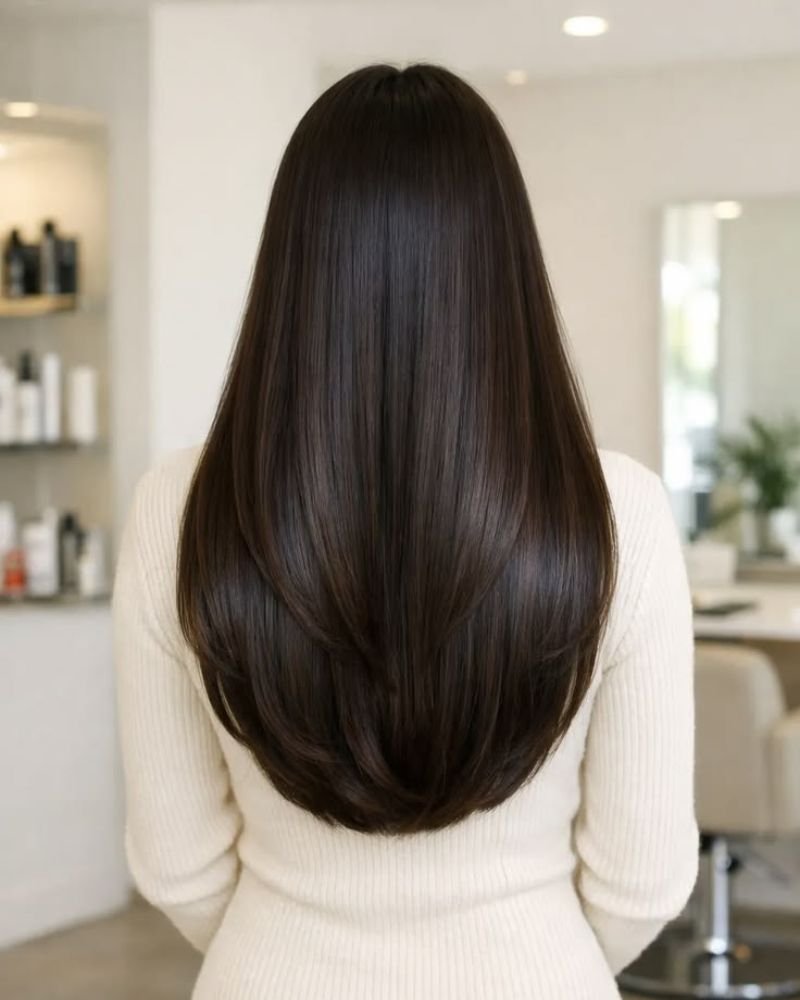
Combining long length with generously blended layers, this style adds movement throughout while keeping the ends looking healthy and full. It works particularly well on medium to thick hair.
3. Calligraphy Cut
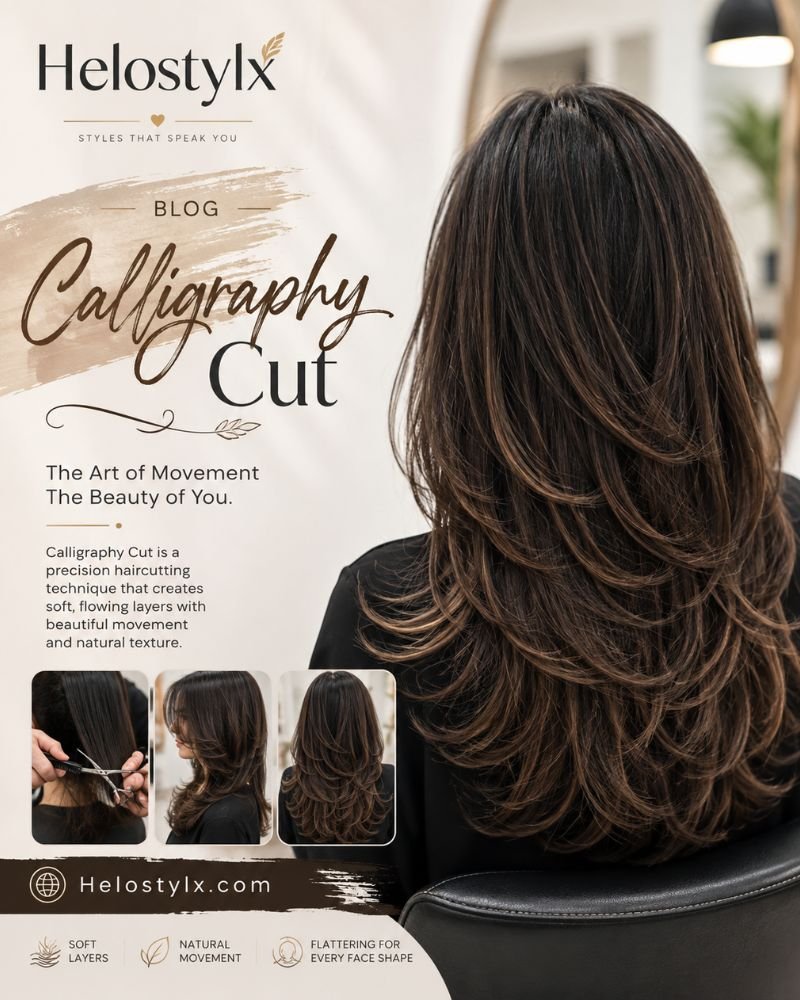
Named for the delicate, pen-stroke-like layers it creates, this technique uses a specialized angled tool to cut hair at roughly a 21-degree angle. The result is a soft, wispy finish with noticeably boosted volume, often paired with face-framing layers for extra flow.
4. Steep U-Cut
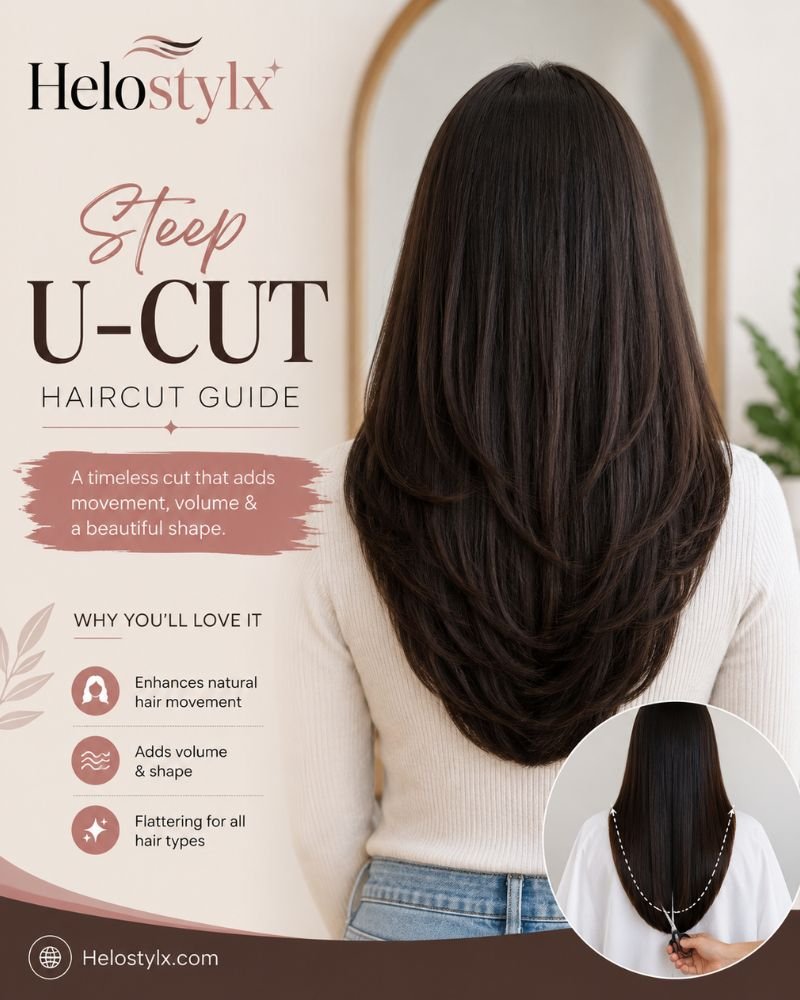
A more pronounced version of the classic U-shape, the steep U-cut still keeps rounded edges but creates a deeper curve for added drama without crossing into V-cut territory.
5. Coily U-Cut
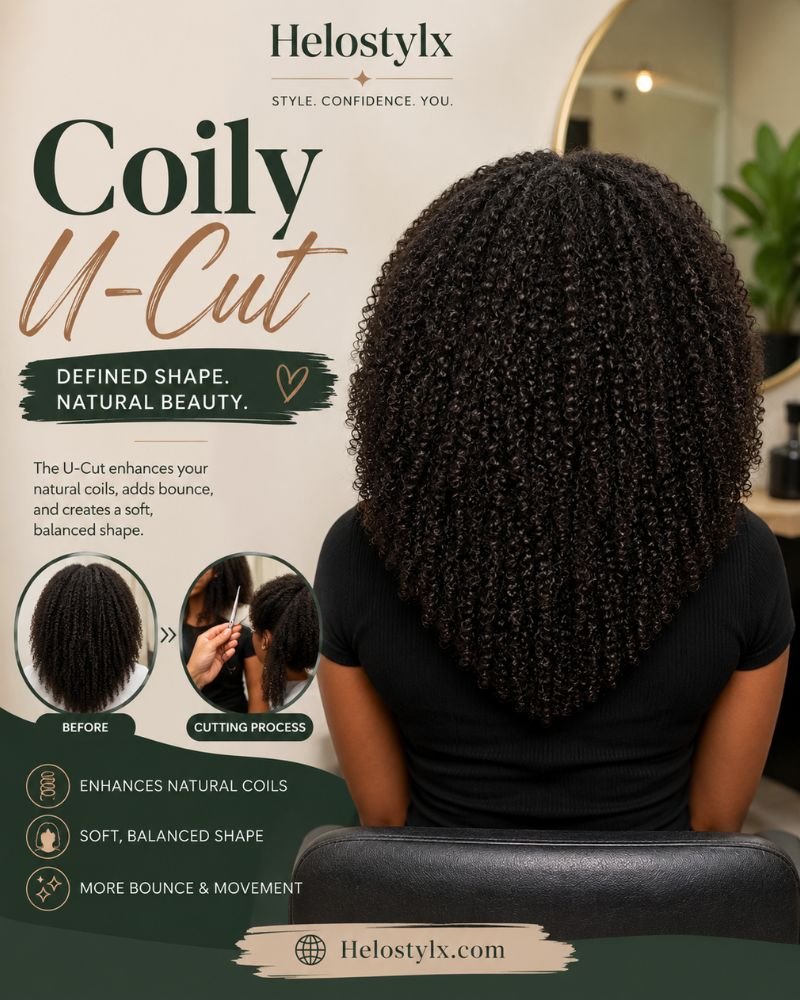
For naturally coily hair, the U-shape helps manage shrinkage and volume while maintaining an even, rounded silhouette once the curls settle into their natural pattern.
Also Read Thsi : Slicked Back Blunt Cut with Flippy Ends: 2026’s Most Requested Chic Haircut
6. Coily U-Cut With Fringe
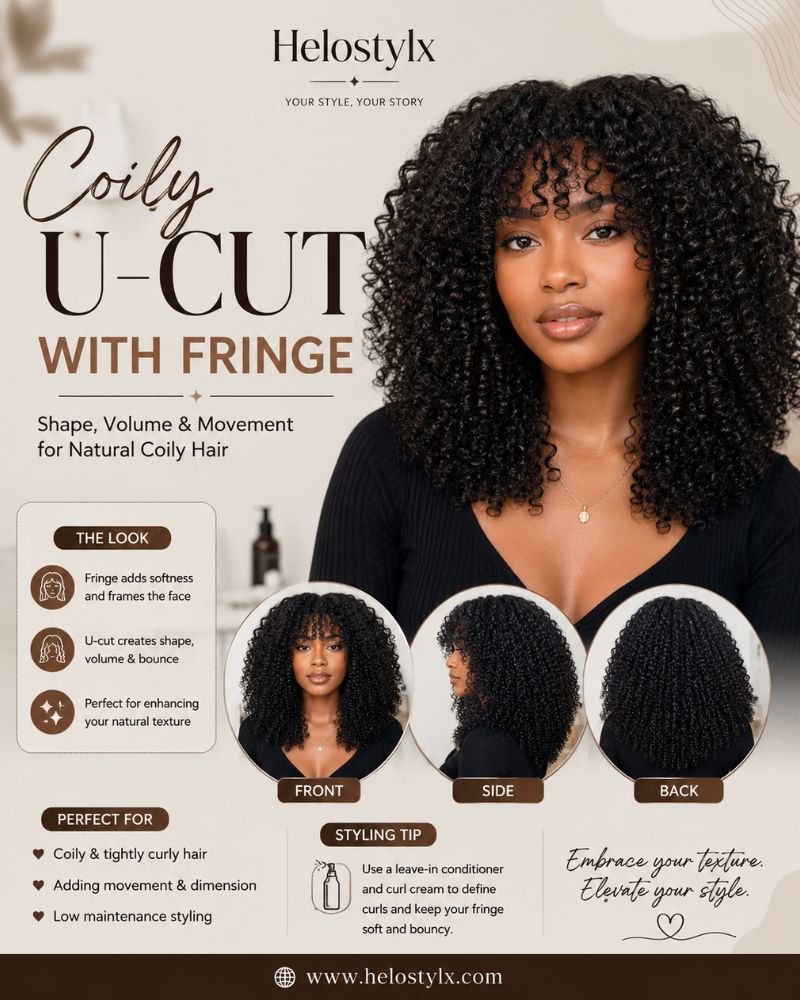
Adding a fringe to a coily U-cut frames the face beautifully and softens the overall look, especially when the fringe is cut slightly longer to blend with natural curl shrinkage.
7. Long Razor Cut
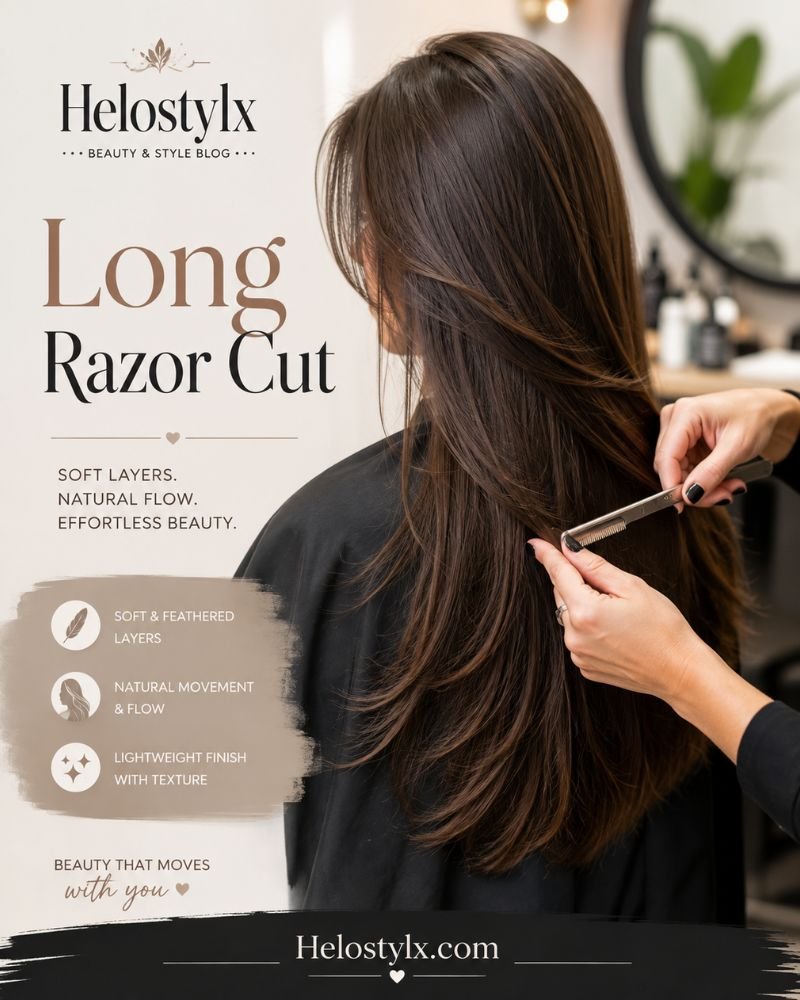
Using a razor instead of scissors creates softer, more textured ends. This technique pairs naturally with the U-shape, giving the hair a wispy, undone quality that still looks intentional.
8. Dramatic V-Cut
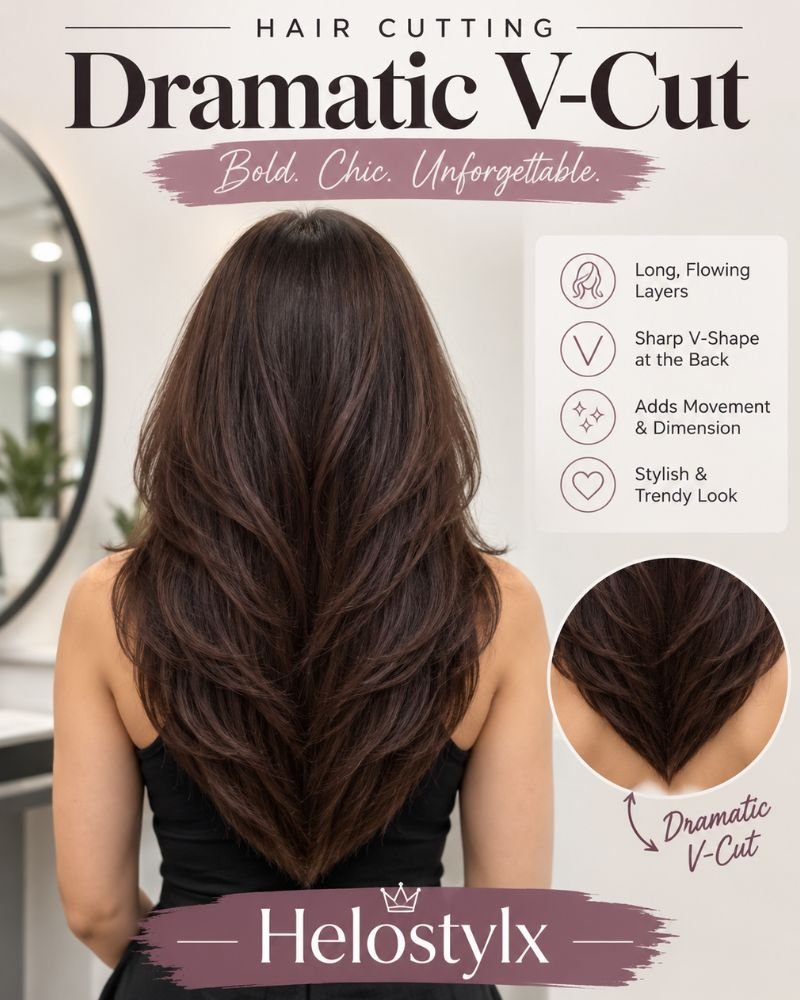
This is the boldest version of the V-shape, with a steep, sharply defined point and heavier layering throughout. It’s best suited for those who want their haircut to make a statement.
9. Rounded Bob U-Cut
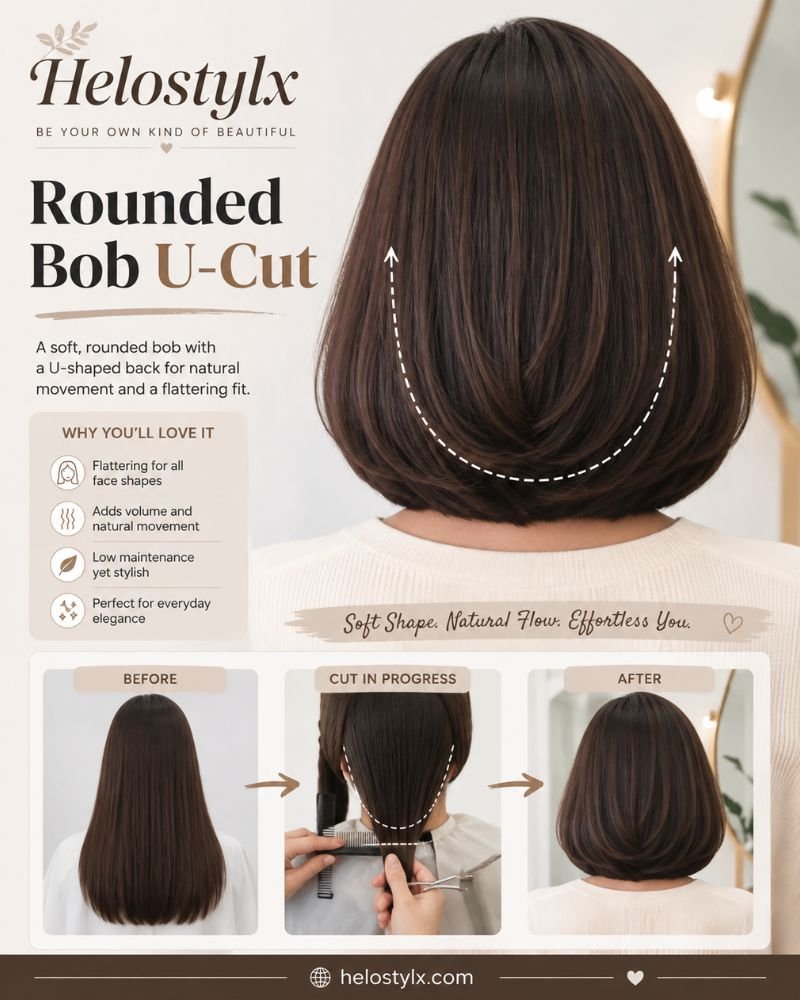
Bringing the U-shape into shorter lengths, this style rounds out the ends of a classic bob for a softer, more youthful finish compared to a blunt-cut bob.
10. U-Cut With Curtain Bangs
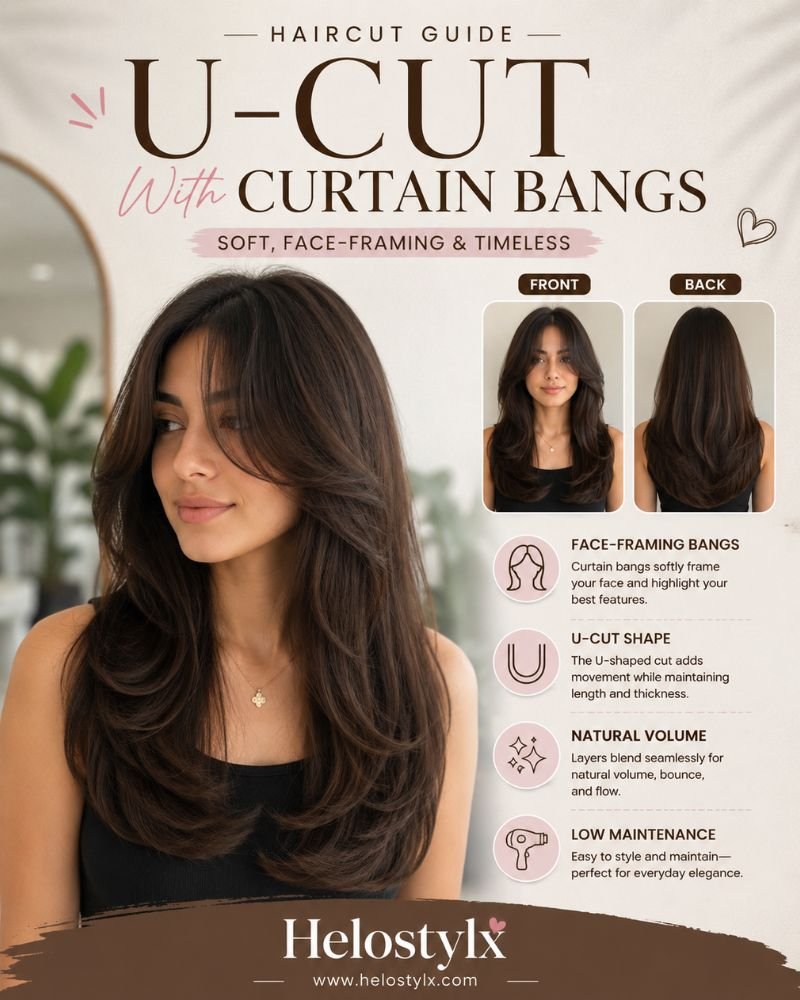
Curtain bangs split down the middle and sweep to either side, complementing the U-shape’s soft curve and adding extra face-framing detail.
11. Mid-Length U-Cut
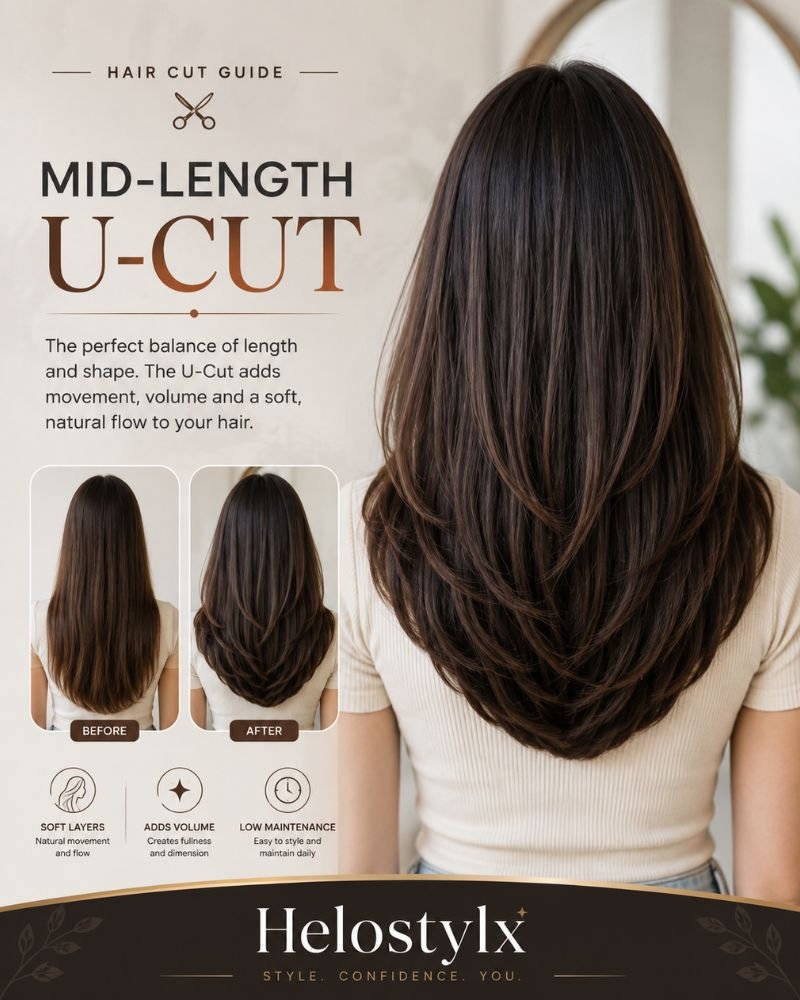
A shoulder-to-collarbone length U-cut offers a practical, everyday option that still carries the soft layering benefits of the longer versions.
12. Reverse V-Cut
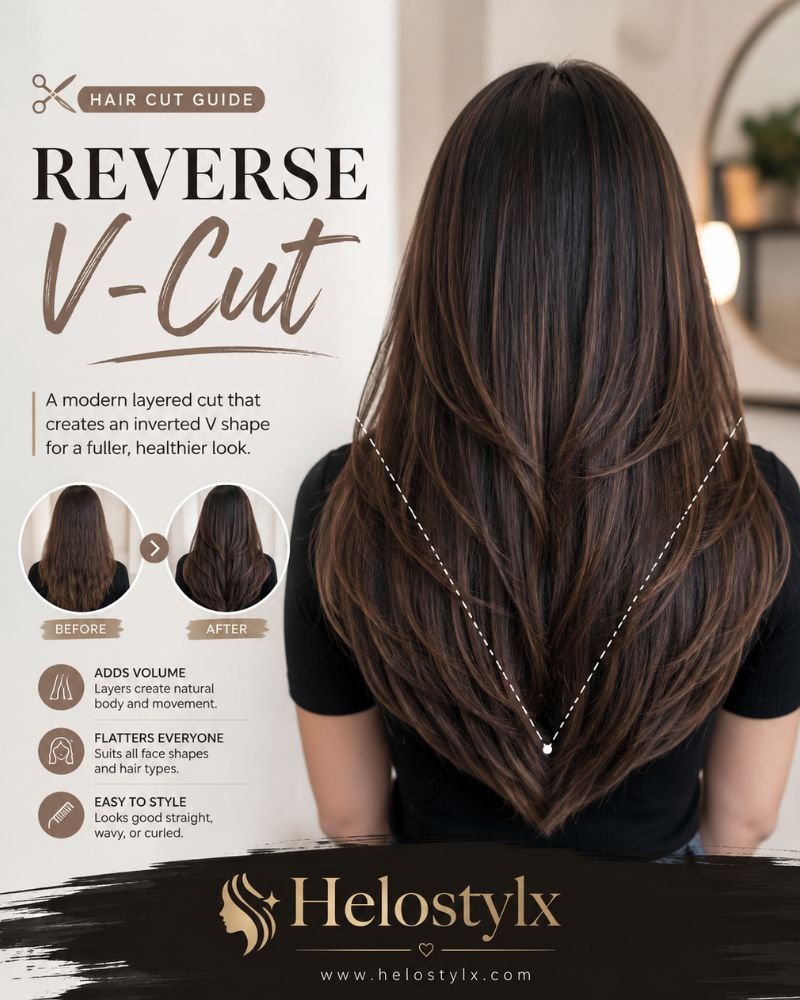
Instead of the point sitting at the center back, this variation shifts the angle so the shortest section falls at the front, creating a unique, asymmetrical face-framing effect.
13. Graphic V-Cut
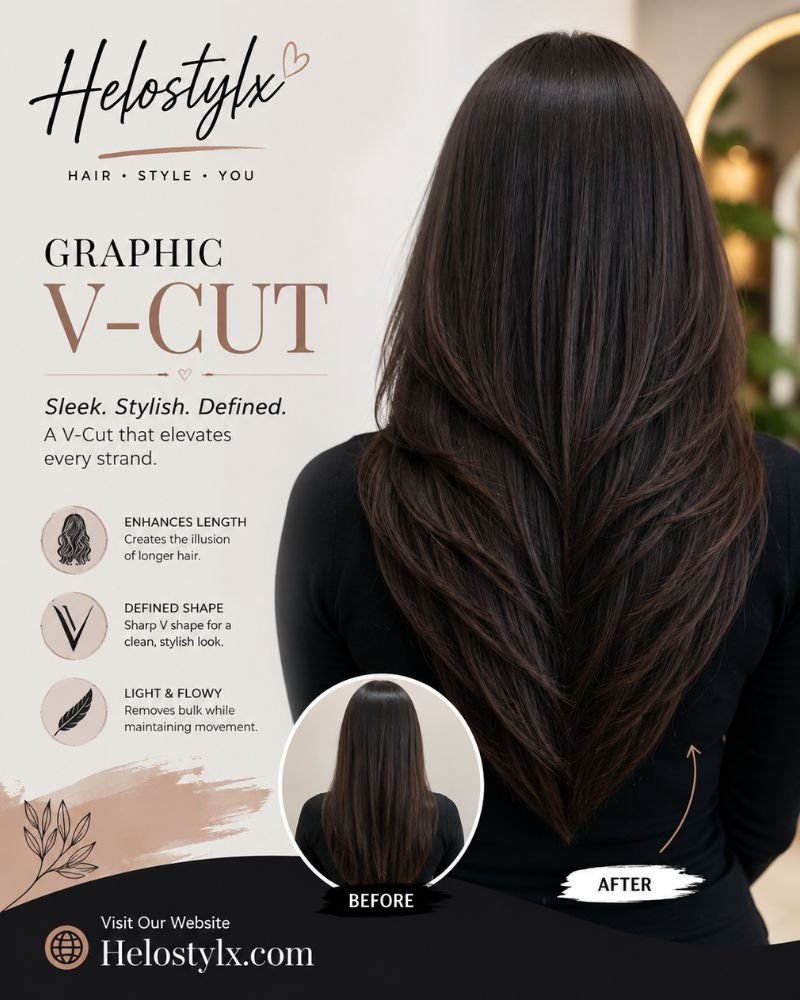
This modern take on the V-shape uses precise, blunt layering combined with the angular perimeter for a bold, editorial-inspired look.
14. Pixie Soft Shag
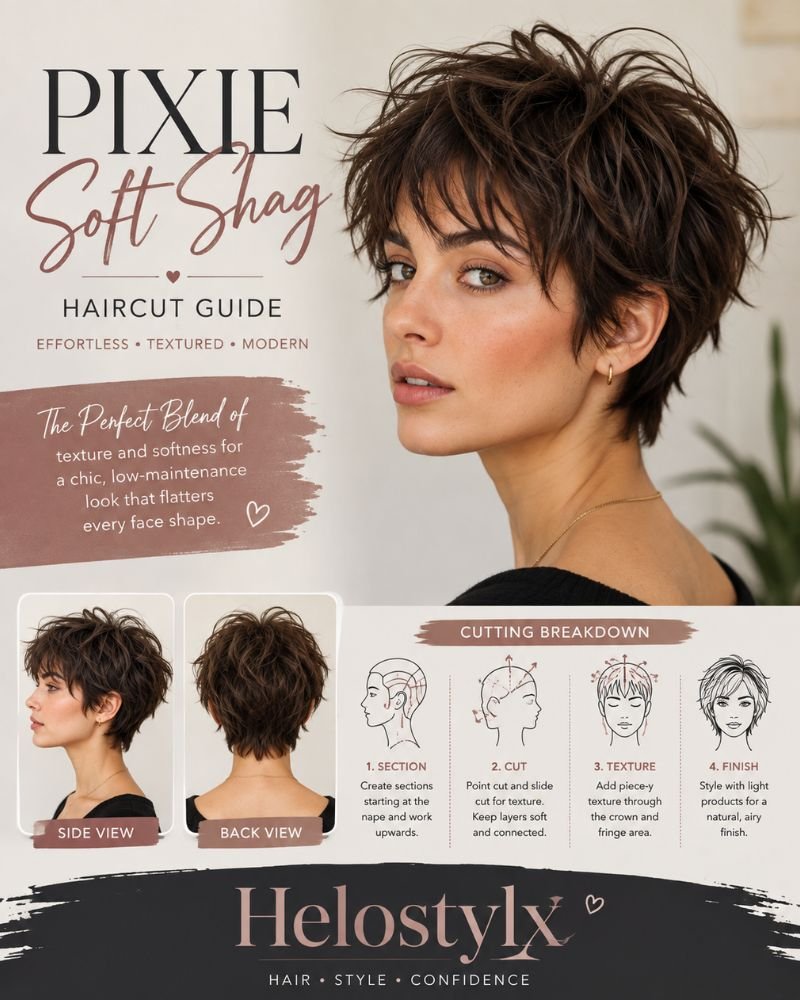
Bringing angled layering into a pixie length, this style softens the typically structured shag with rounded, textured pieces throughout.
15. Layered Bob
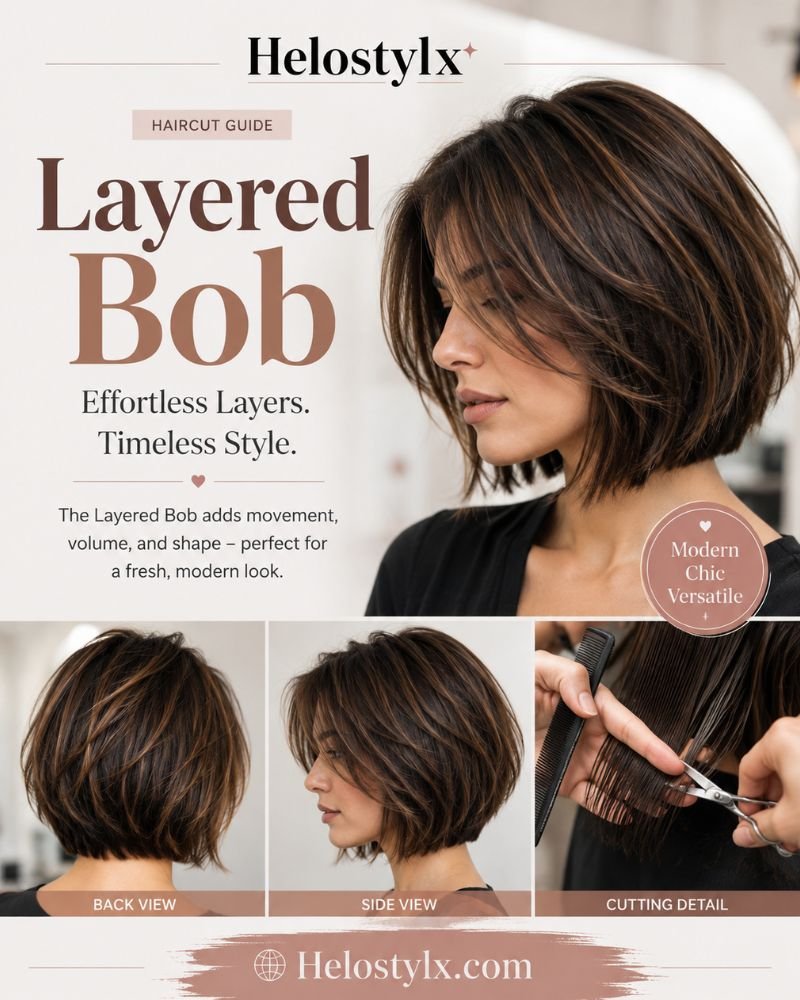
A layered bob incorporates gentle U-shaped layering into a shorter silhouette, adding movement and preventing the classic bob from looking too heavy or block-like.
Each of these variations can be adjusted based on your hair density, texture, and face shape, which is why consulting with an experienced stylist before your appointment is always worthwhile. Bringing a few reference photos and describing how you style your hair on a typical day will help your stylist customize the depth of the angle, whether that’s a barely-there curve or a sharply defined point, so the final result matches your expectations rather than a generic version of the look.
Common Mistakes to Avoid When Choosing a Haircut
Even a well-executed U-cut or V-cut can fall flat if a few key details are overlooked. Here are some common pitfalls to watch for:
- Ignoring your natural texture. A sharp V-cut on very curly hair may lose its defined point once the curls spring up, while a soft U-cut on very fine straight hair might not show enough shape to matter.
- Skipping the consultation. Bringing reference photos and discussing your hair’s natural behavior with your stylist helps avoid miscommunication about how dramatic or subtle the angle should be.
- Choosing a cut based on trends alone. What looks striking on a friend or on social media won’t necessarily suit your face shape, hair density, or lifestyle.
- Underestimating maintenance needs. V-cuts generally need more frequent trims to preserve their sharp point, so it’s worth being honest about how often you’re willing to visit the salon.
- Overlooking face shape. Rounded U-cuts tend to soften angular features, while pointed V-cuts can add definition to softer, rounder face shapes. Choosing the opposite of what your face needs can throw off the overall balance.
- Forgetting about hair health. Heavily layered cuts, especially dramatic V-shapes, can expose more ends to potential damage. Regular deep conditioning helps keep those layers looking healthy rather than frayed.
- Not accounting for growth patterns. Cowlicks and natural partings can affect how symmetrically a U or V shape falls, so it helps to mention these details during your consultation.
Taking the time to think through these factors before your appointment can make the difference between a haircut you love and one you’re waiting to grow out. A quick conversation about your daily routine, how much time you spend styling, and what you liked or disliked about past haircuts gives your stylist the context needed to fine-tune either shape specifically for you, rather than applying a generic version of the cut.
Conclusion
Both U-shaped and V-shaped haircuts offer distinct advantages, and neither is objectively superior to the other. The U-cut brings a soft, rounded finish that suits wavy and curly textures and needs less upkeep. The V-cut delivers a sharper, more dramatic silhouette that tends to shine on straight hair. Your ideal choice comes down to your natural texture, your face shape, and how much time you want to spend on maintenance.
Whichever direction you choose, the fifteen variations above show how much room there is to personalize either shape, from a subtle U-cut with curtain bangs to a bold, graphic V-cut. Bring your ideas to the salon and be honest with your stylist about your hair’s natural habits. That’s how you walk out with a cut that genuinely works for you.
