
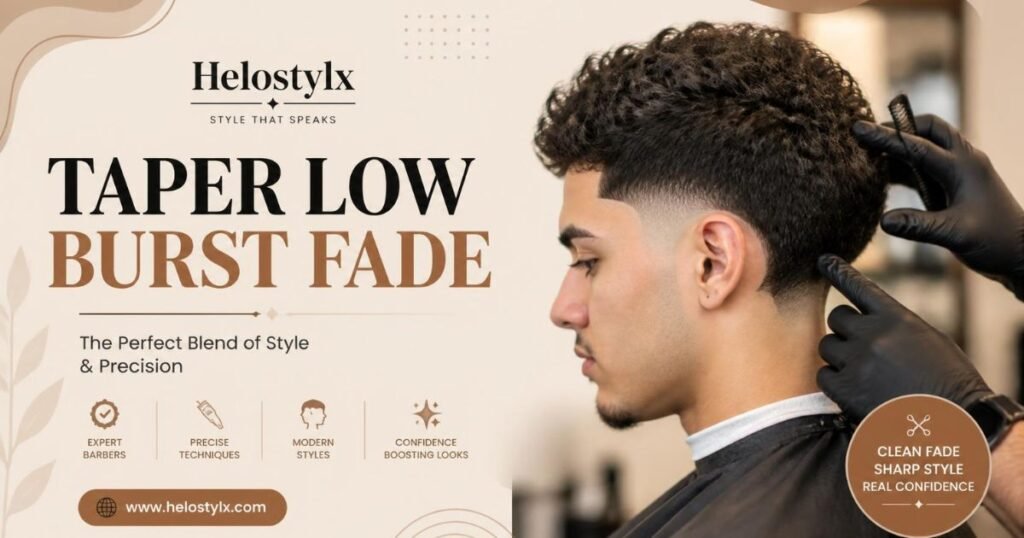
If you’ve been scrolling barber references trying to find the cut that looks sharp but never goes “too much,” the taper low burst fade is probably the answer you’ve landed on. It’s the quiet flex of modern men’s haircuts — clean, low-key, and built to work with almost any hair type, face shape, or dress code.
This guide breaks down exactly what a taper low burst fade is, how it’s different from a regular low fade or a standard burst fade, who it suits best, and how to walk into a barbershop and actually get the cut you pictured. We’ll also cover maintenance, styling, and the mistakes that quietly ruin an otherwise great haircut.
What a Taper Low Burst Fade Is
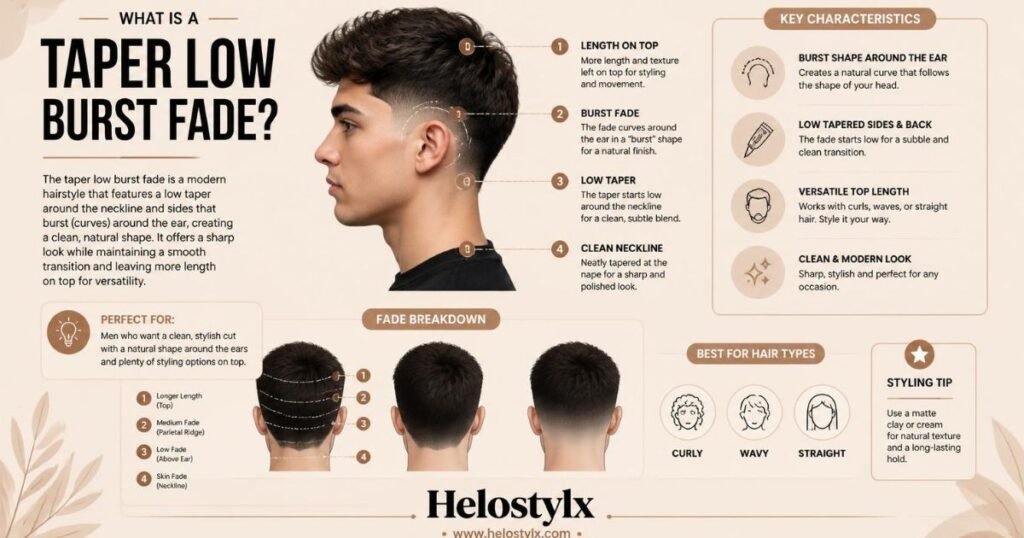
A taper low burst fade combines three specific barbering techniques into one cohesive look. Understanding each piece helps you communicate clearly with your barber instead of hoping they read your mind.
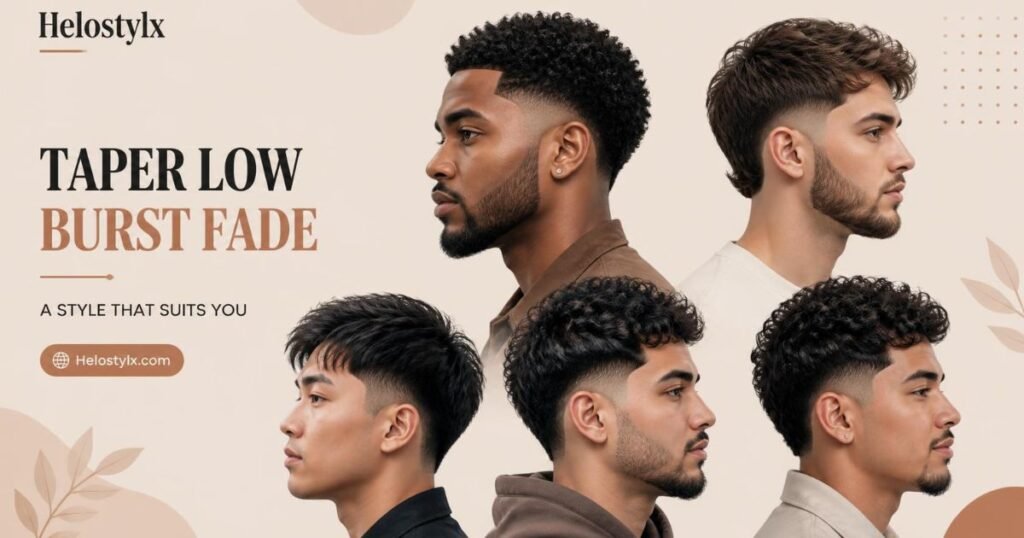
At its core, this is a low fade haircut that starts its blend close to the neckline and ears rather than higher up on the head. The “burst” part refers to a curved fade shape that wraps around the ear in a semicircle instead of running in a straight line down the side of the head. The “taper” part describes how the hair gradually shortens from the top down to the fade, keeping the transition smooth instead of abrupt.
Put together, you get a cut with a rounded side profile, a clean neckline, and hair that fades from full length on top down to skin or near-skin low on the sides — but only around the ear and lower hairline, not sweeping up toward the temple like a high fade would.
This is why the style reads as understated. The fade starts low, so most of your natural hair coverage stays intact. It’s sharp without shouting.
Taper vs Low Fade vs Burst Fade
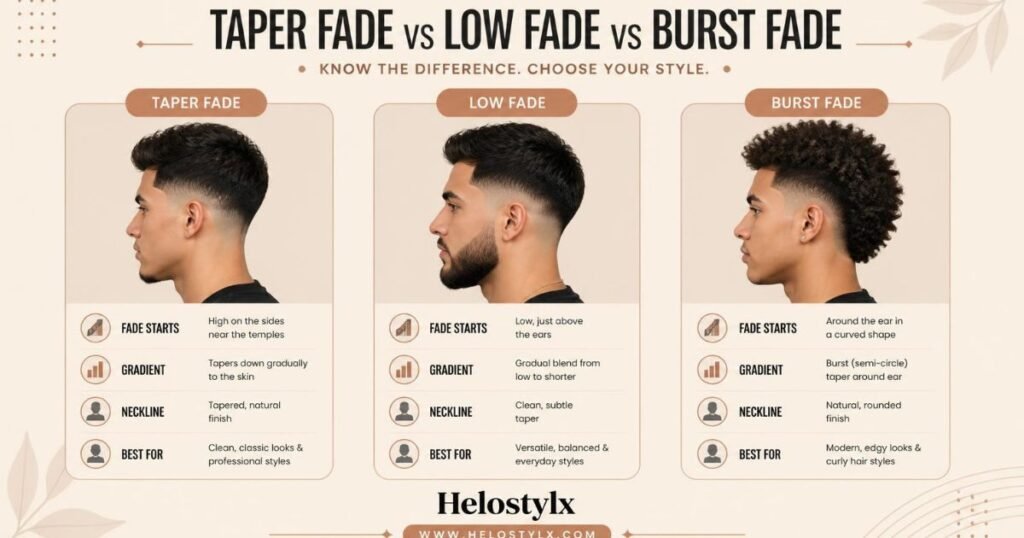
People use these three terms interchangeably all the time, and that’s exactly why so many haircuts come out wrong. Each word describes a different variable in the cut — length, placement, or shape — and a taper low burst fade uses all three at once.
Taper
A taper haircut refers to how the hair gradually decreases in length as it moves down the head, without necessarily going down to skin. Think of it as a gentle gradient rather than a hard line. Tapers can be tight or loose, and they’re often applied to the back and sides while the top stays longer.
A taper on its own doesn’t tell you where the fade sits or what shape it takes — it only tells you the hair gets shorter gradually. That’s why “taper” almost always gets paired with another word, like “low” or “burst,” to complete the picture.
Low Fade
Low placement is the key idea here. A low taper fade keeps the fade — the point where hair gets noticeably shorter — close to the ears and neckline, usually starting an inch or so above the natural hairline. This is different from a mid or high fade, which starts blending much higher, sometimes up near the temple or crown.
The low taper vs low fade debate honestly comes down to semantics more than technique. In most shops, “low taper” and “low fade” describe the same placement — hair fading low on the head — but “taper” implies a softer, more gradual taper with less contrast, while “fade” can go all the way to skin for a crisper finish.
Also Read This:35 Best Military Haircuts for Men: Sharp & Timeless Styles
Burst Fade
The burst fade haircut is defined by its shape, not its height. Instead of a straight fade line running from front to back, a burst fade curves around the ear, creating a rounded shape that “bursts” outward from that point. This is sometimes called a curved fade around the ear.
A curved burst fade works especially well with styles that have longer hair on top, like mohawks or fringes, because the round shape frames the face instead of cutting a hard horizontal line across it.
When you combine all three — a gradual taper, low placement, and that signature curved shape — you get the full taper low burst fade: soft blending, a fade near the neckline and ears, and a rounded finish that looks tailored rather than generic.
Who a Taper Low Burst Fade Suits
One of the biggest advantages of this cut is versatility. It’s not a niche style reserved for one hair type or face shape — it’s closer to a universal template that barbers can adjust in dozens of small ways.
Face Shapes
- Round faces benefit from the added height a taper low burst fade allows on top, since the fade stays low and doesn’t widen the sides visually.
- Square faces pair well with the soft, curved shape around the ear, which slightly offsets sharp jawlines.
- Oval faces can wear almost any variation of this cut without adjustment — it’s considered the easiest face shape to style for.
- Long faces do best when the barber keeps a bit more width on the sides and avoids pushing the fade too high, which a low placement naturally supports.
Hair Types
This is where the taper low burst fade really earns its reputation as a go-to cut, because it adapts across nearly every hair texture.
- Low taper fade for curly hair works beautifully since the curls add natural volume on top while the low fade keeps things controlled underneath.
- Low taper fade for straight hair creates a sleeker, more graphic look, since straight hair shows the fade lines more crisply.
- Low taper fade afro styles keep the round, natural shape of an afro on top while cleaning up the perimeter with a natural hairline and tidy fade.
- Wavy and coily textures both take well to this cut too, since the low placement doesn’t fight against natural curl pattern the way higher fades sometimes can.
It also works across ages. A low taper fade for boys is popular for school settings because it’s neat and low-maintenance, while a low taper fade for Black men is one of the most requested variations in barbershops for how well it complements coilier textures and skin fades around the ear.
Best Styles to Ask For
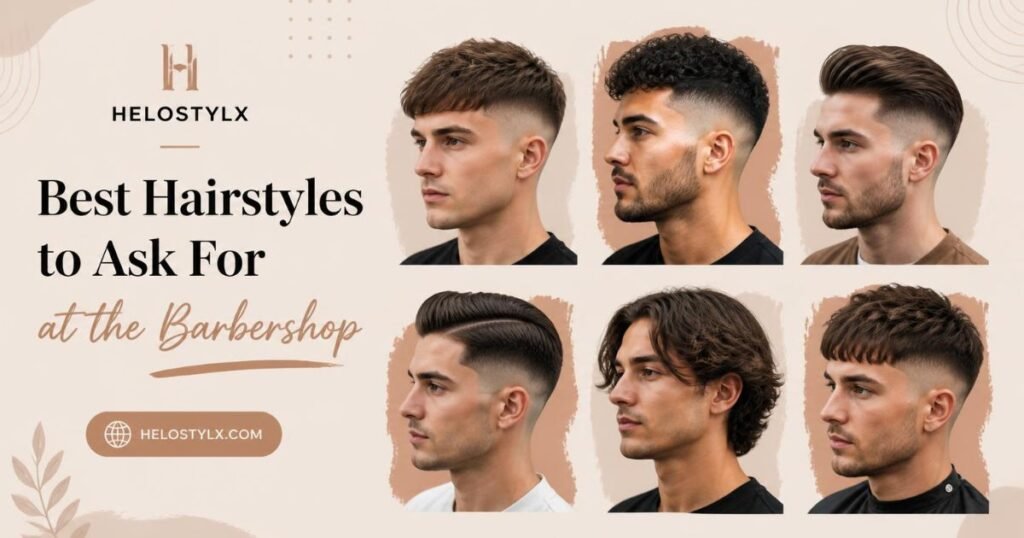
Once you understand the base technique, the fun part is choosing what goes on top. The taper low burst fade is really a foundation — here are the most requested variations built on it.
Burst fade mullet — Longer hair left at the back and shorter, textured hair on top, with the burst fade cleaning up the sides and around the ears. This has become one of the most searched combinations because it balances an edgy silhouette with a genuinely clean fade underneath.
Low taper fade mullet — Similar to the burst fade mullet but with a softer, more gradual taper instead of a sharply curved shape. This version leans slightly more classic.
Low taper fade mohawk — Hair is left longer down the center of the head, and the taper low burst fade handles everything on the sides, creating strong contrast between the top and the fade.
Textured fringe with low taper — A forward fringe (fringe pushed toward the forehead) paired with a low taper keeps the front heavy and textured while the sides stay clean and understated.
Low taper drop fade — Instead of following a straight or curved line, the fade “drops” lower behind the ear, following the natural curve of the head. It’s a more advanced variation that many barbers now default to because it looks natural from every angle.
Low mid taper fade — A slightly higher take on the classic, blending between low and mid placement for a bit more visual fade without losing the understated feel.
360 waves — For textured or coily hair, a low taper fade underneath rotating waves on top is a long-standing combination, especially popular for its clean finish at the neckline and sideburns.
If you have longer hair on top already, styles like long curls left loose on top with a tight burst fade underneath are also trending, giving strong contrast between textured length and a clean, faded base.
How to Ask Your Barber for It
This is the part most guides skip, and it’s the part that actually determines whether you leave the chair happy. Barbers see dozens of clients a week, and vague requests lead to generic results.
A Script That Works
Try something close to this when you sit down:
“I want a taper low burst fade — keep the fade starting low, right around my ear and neckline, not up by my temple. I want it curved around the ear, not a straight line. Leave [X amount] on top and blend it in gradually.”
Being specific about three things makes all the difference:
- Placement — confirm you want a low fade, not mid or high.
- Shape — say “burst” or “curved around the ear” clearly, since some barbers default to a straight fade unless told otherwise.
- Top length — give a rough guide, whether that’s “leave it long enough to style” or a specific clipper guard number if you know it.
What to Show
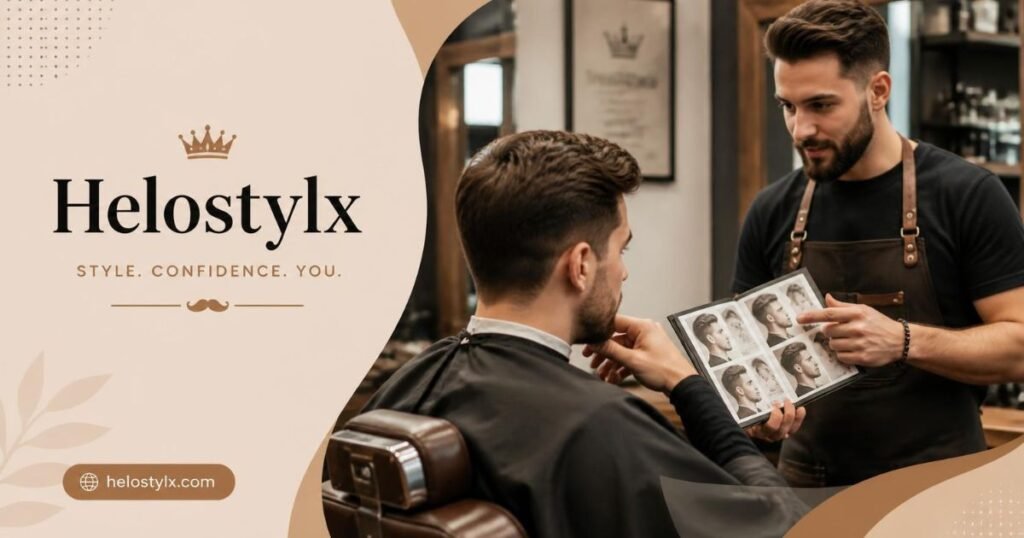
Reference photos genuinely change outcomes. A good barber reference photo should show:
- The side profile, clearly showing the curved shape around the ear
- The back of the head, showing how low the fade sits near the neckline
- The top length and texture you’re going for
Bring two or three angles rather than one flattering front shot — barbers need to see the sides and back just as much, since that’s where the actual work happens. If you’re in the barber chair and unsure how to describe something, pointing at the photo and saying “like this, right here” is completely normal and genuinely helpful for them.
Keeping a Taper Low Burst Fade Sharp
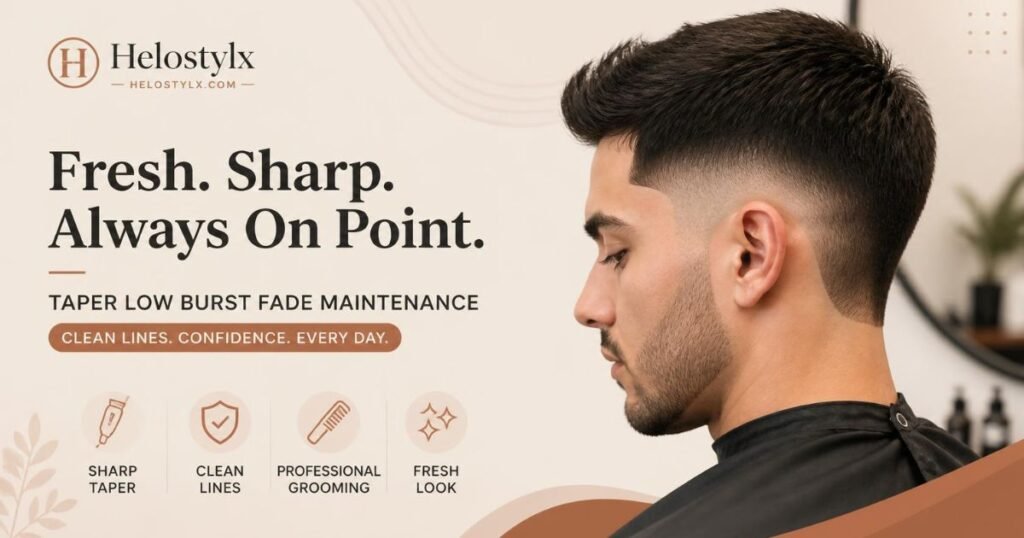
A great haircut is only as good as its upkeep. Fades — especially low ones with curved detailing — grow out faster-looking than looser cuts because the contrast between skin and hair is so visible early on.
Touch-Up Timeline
Most barbers recommend a fade touch-up every two to four weeks, depending on how fast your hair grows and how crisp you want the lines to stay. If you have finer or slower-growing hair, you might stretch closer to four weeks. Thicker or faster-growing hair often needs attention closer to the two-week mark to keep the fade looking intentional rather than grown-out.
A simple way to judge it: once you notice the fade line blurring or the neckline getting fuzzy, it’s time.
Neckline and Sideburn Cleanup
Because this cut relies on a clean neckline and clean sideburns to look finished, at-home upkeep matters more here than with looser styles.
- A trimmer with a fine guard can clean up neckline growth between full appointments.
- Keep sideburns even and avoid letting them creep past the natural line — this is one of the fastest ways a sharp cut starts looking neglected.
- Don’t try to redo the actual fade or burst shape at home. That curved blend takes real skill, and DIY attempts almost always create visible lines instead of a smooth gradient.
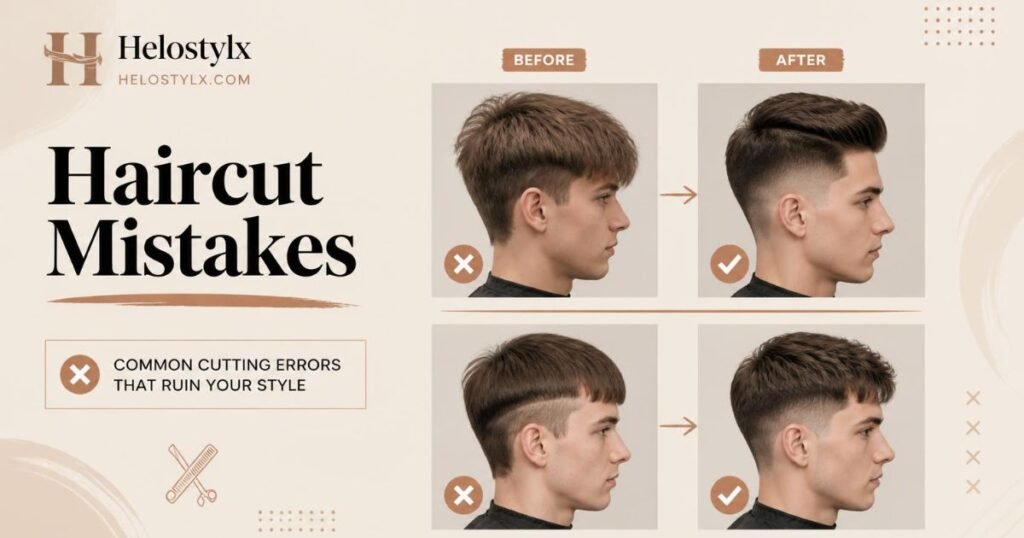
Mistakes That Ruin the Cut
Even a well-executed taper low burst fade can look off if a few small things go wrong. Watch for these:
- Fade placed too high. If the barber blends up near the temple instead of staying low, it stops being a low fade entirely and shifts the whole look.
- Straight lines instead of curves. A burst fade needs that rounded shape around the ear. A straight fade line defeats the purpose and just becomes a standard low fade.
- Overgrown neckline. Letting the back grow out unevenly between visits is the single fastest way this cut starts looking messy.
- Skipping the blend on top. A gradual taper should connect smoothly into the top length. A hard line where the fade meets longer hair looks unfinished.
- Ignoring hair type. A curly or coily fade needs different clipper technique than straight hair. If your barber treats all textures the same, ask questions before they start cutting.
Styling It at Home
Styling stays fairly simple with this cut, which is part of its appeal.
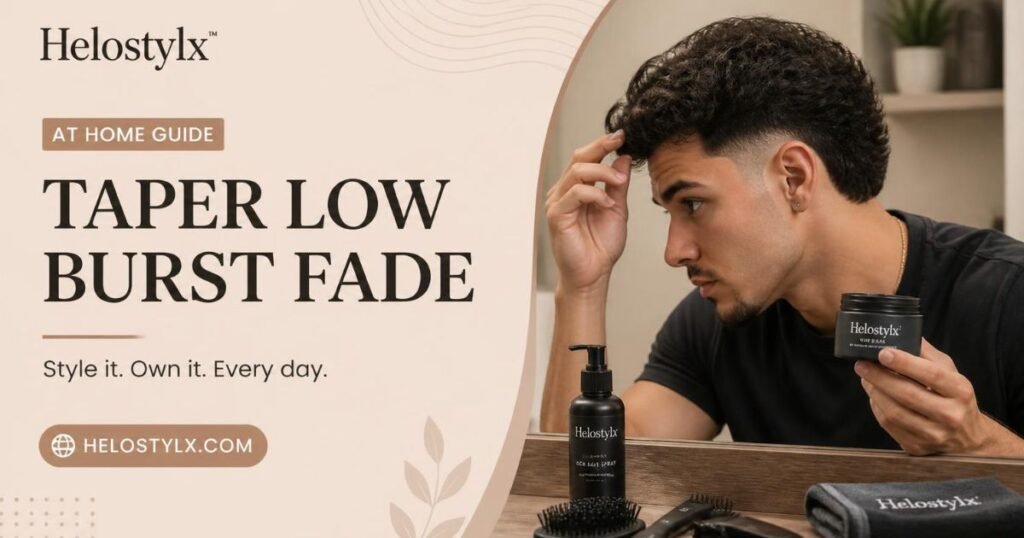
- Matte clay works well for textured tops that need hold without shine — good for cropped or slightly longer styles.
- Light pomade suits straighter hair or looks that want a bit of natural sheen without heaviness.
- Texture powder is useful for adding volume at the root, especially with a textured top or fringe style.
For everyday hair styling, apply product to damp or towel-dried hair, work it through with your fingers rather than a comb for a more natural finish, and avoid overloading — a small amount goes further than expected with short to medium lengths on top.
Taper Low Burst Fade vs Blowout Taper
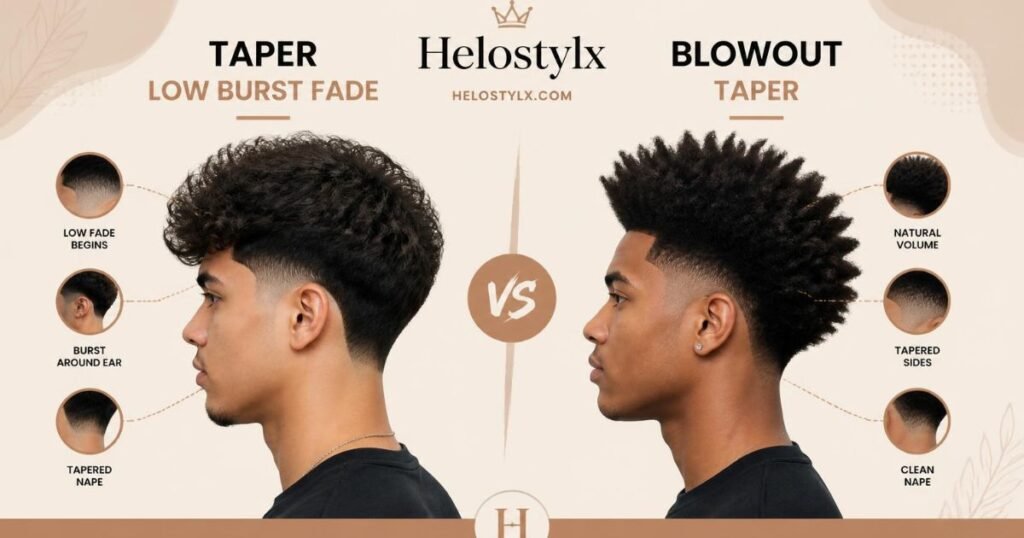
These two styles get compared often because both keep length on top with a controlled fade below, but they achieve very different textures.
A blowout taper uses a blow dryer and pick to push hair upward and outward, creating volume and a rounded, “fluffed” appearance on top — popular in curly and coily hair. The fade underneath supports that volume rather than competing with it.
A taper low burst fade, by contrast, keeps the fade as the visual detail — the curved shape around the ear is the focal point, and the top is usually styled flatter or more textured rather than blown out for height.
If you want maximum volume on top, a blowout taper is the better ask. If you want the fade itself to be the standout feature, the burst version wins.
Is It Okay for School, Work, or Formal Settings?
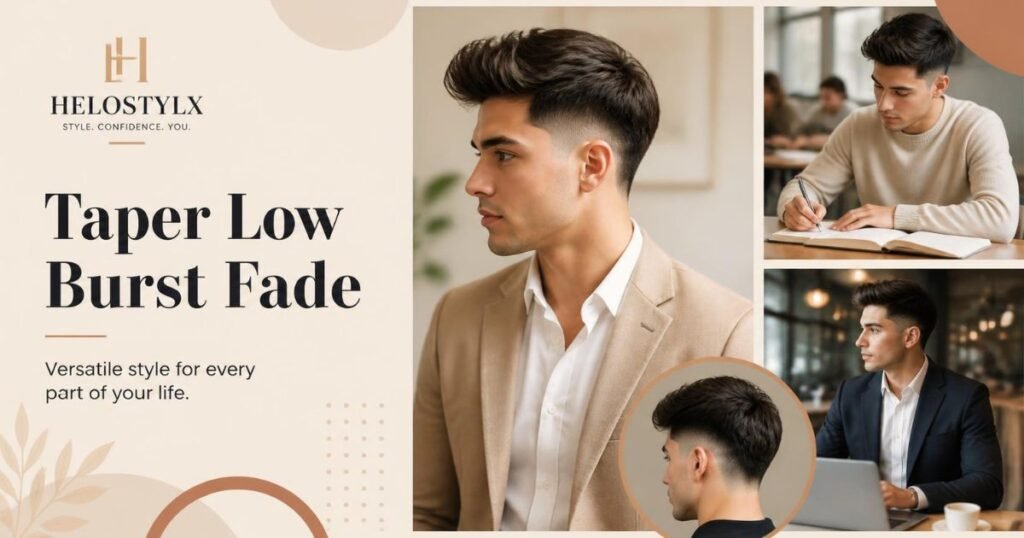
Yes — and this is one of the main reasons the style has stayed popular across such a wide age range. Because the fade starts low and stays close to the natural hairline, it reads as neat and conservative even with more texture or length left on top.
For school settings, a low taper fade for boys is one of the most commonly approved cuts precisely because it avoids the aggressive shaved patterns or high contrast that some dress codes restrict.
For office or formal environments, keeping the top length moderate and the styling minimal (a light pomade rather than heavy texture) keeps the whole look polished without needing to sacrifice the fade detail. It’s genuinely one of the more adaptable cuts for anyone who needs one haircut to work across multiple settings.
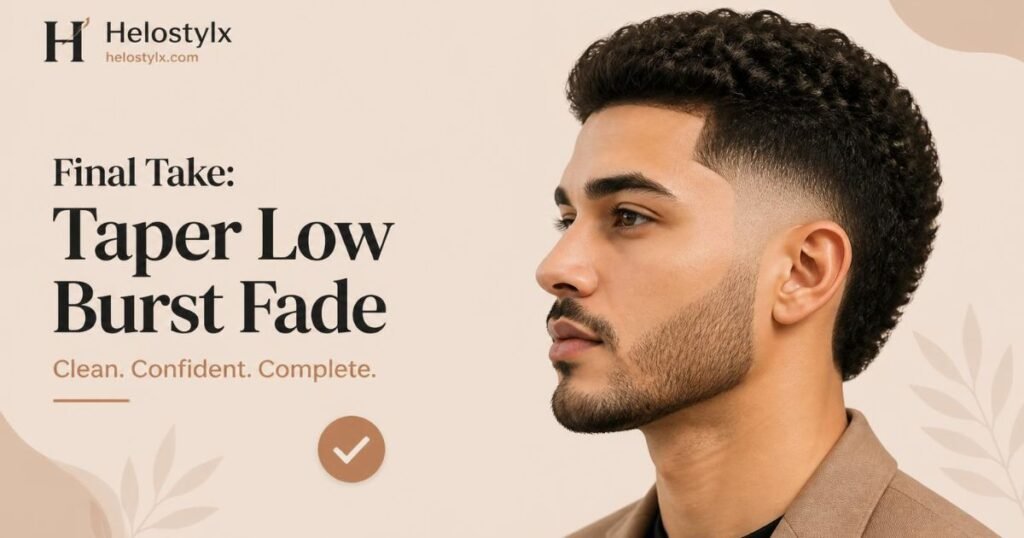
Final Take
The taper low burst fade earns its popularity honestly — it’s flexible across face shapes, hair types, and dress codes, and it gives you room to experiment on top (mullet, mohawk, fringe, waves) without ever feeling like the base cut is fighting the style. The details that matter most are placement, shape, and communication: keep the fade low, ask specifically for that curved burst shape around the ear, and bring reference photos so your barber isn’t guessing.
Maintained well — with regular touch-ups and a clean neckline between visits — this cut holds its sharpness longer than most low-maintenance styles, while still looking effortless day to day.
Go Deeper: Low Taper Fade Guides
If you’re still narrowing down your exact look, it helps to compare this cut against its closest relatives before your next appointment:
- Low taper vs low fade — understanding the subtle difference in blend contrast
- Low taper vs high taper — how placement changes the entire silhouette
- Burst fade taper variations for curly and coily hair specifically
- Low taper burst fade pairings with beards and facial hair
Each of these comparisons digs into one specific decision point, so you can walk in already knowing exactly which version to request.
FAQs About the Taper Low Burst Fade
What is a taper low burst fade?
It’s a low-placed fade with a curved shape around the ear and a gradual blend into longer hair on top.
How is a low taper fade different from a low fade?
A low taper usually blends more gradually, while a low fade can go closer to skin for sharper contrast.
How often should I get a taper low burst fade touched up?
Every two to four weeks, depending on how fast your hair grows.
Does a burst fade work for curly or coily hair?
Yes — it’s one of the most requested fades for curly, coily, and afro-textured hair.
