

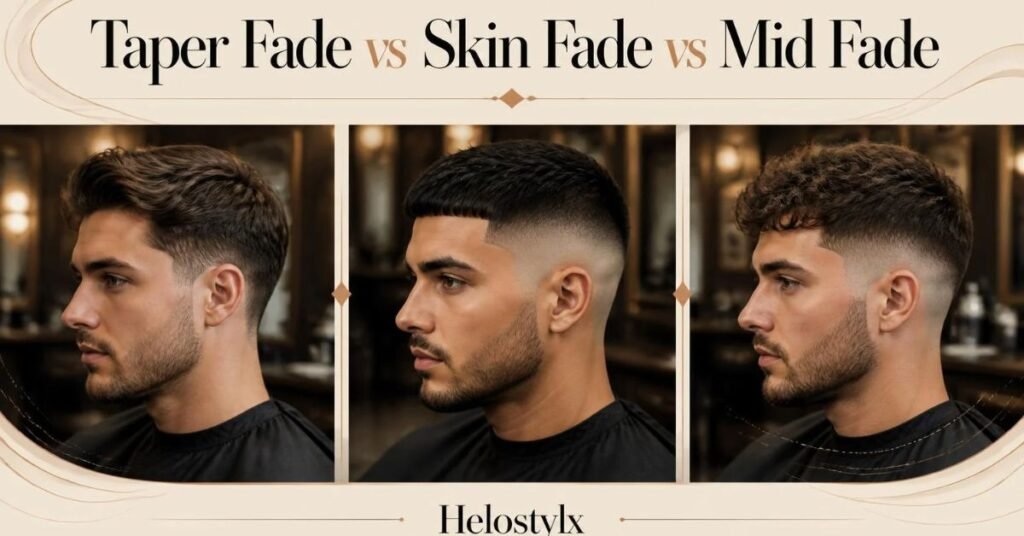
You’ve scrolled through a hundred photos, screenshotted three of them, and still can’t tell which one you actually want. That’s normal. The taper fade vs skin fade vs mid fade debate confuses almost everyone who sits down in a barber’s chair, because the words overlap, the styles blend into each other, and every shop uses slightly different lingo.
Here’s the good news: once you understand two simple variables (how high the fade starts and how short it finishes), the whole system clicks. This guide breaks down every major fade haircut, shows you who each one suits, and gives you the exact words to use with your barber so you walk out with the cut you pictured.
What Is a Fade, Really?
A fade is a haircut where the hair gets gradually shorter as it moves down the sides and back of your head. Instead of a hard line where long hair meets short hair, you get a smooth hair gradient, a soft transition from longer hair on top to very short hair (or bare skin) near the ears and neckline.
Every fade haircut is built from three decisions:
- Fade height: where the shortening begins (low, mid, or high).
- Fade length: how short the hair gets at its shortest point (a taper, a number 1 guard, or skin).
- Fade blend: how smooth the transition looks between those two points.
That’s it. When people argue about “taper vs fade,” they’re usually mixing up height and length. A mid fade describes height. A skin fade describes length. A taper describes a gentler finish. You can combine them, which is why you’ll hear names like “low skin fade” or “mid taper fade.”
Fade vs. taper: the quick distinction
A taper haircut shortens the hair gradually but usually stops at a visible length, often around the sideburns and neckline. A fade keeps going until the hair is extremely short or gone entirely. Think of a taper as a subtle refinement and a fade as a bolder contrast.
Taper Fade vs Skin Fade vs Mid Fade: The Three Main Types, Explained
Let’s take them one at a time, then compare them side by side.
The Taper Fade: Clean and Classic
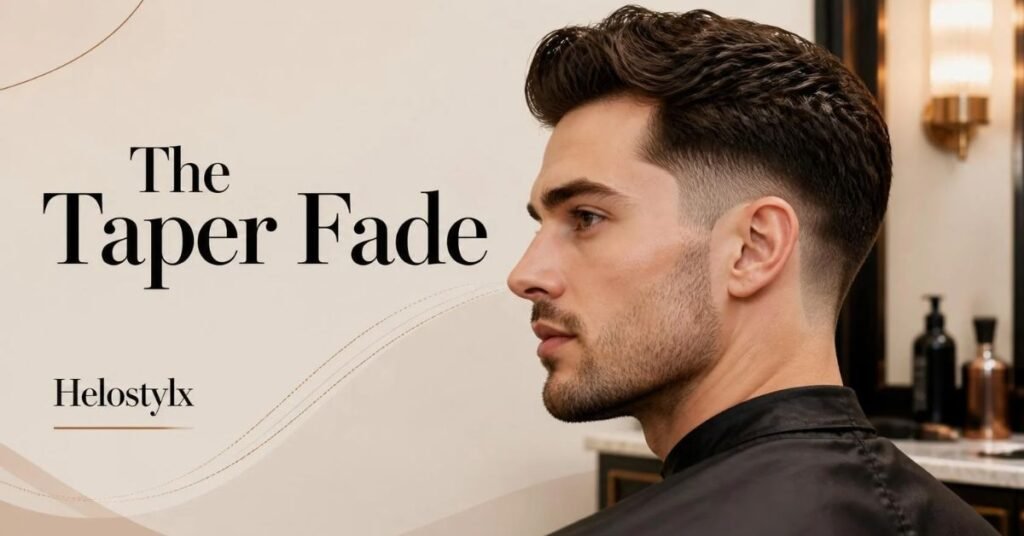
The taper fade is the most conservative option. The hair on the sides and back gets shorter toward the ears and nape, but it doesn’t drop to bare skin. It leaves a soft shadow of length at the bottom edge.
Best for:
- Office environments and formal settings
- First-time fade wearers
- Anyone who wants a polished look that grows out gracefully
Variations you’ll hear:
- Low taper fade: Starts just above the ear and follows the natural hairline. It’s the subtlest version.
- Mid taper fade: Starts around temple height for a little more definition without being dramatic.
- High taper fade: Starts higher up the head, creating stronger contrast while still keeping the bottom edge soft.
The taper is forgiving. If you skip a week or two, it still looks intentional. That makes it a favorite for men who want a sharp look without weekly upkeep.
The Skin Fade: Sharp, Bold, Modern
A skin fade (also called a bald fade) takes the hair all the way down to bare skin at the bottom, using a foil shaver or razor for the final pass. The result is high contrast and a razor-sharp edge.
Best for:
- Men who want a striking, modern fade haircut
- Anyone with a defined jawline or a well-shaped head
- Styles with volume or texture on top, like quiffs, pompadours, and textured crops
A skin fade shows every detail. That means it looks incredible when it’s fresh and less incredible after about two weeks. Expect to visit your barber every 2 to 3 weeks to keep it crisp.
You can also mix height and length: a low fade that hits skin near the ear is subtle but sharp, while a high fade that hits skin looks dramatic and urban.
Also Read This : Mid Taper Fade Edgar: Styles, Tips & Maintenance
The Mid Fade: The Goldilocks Option
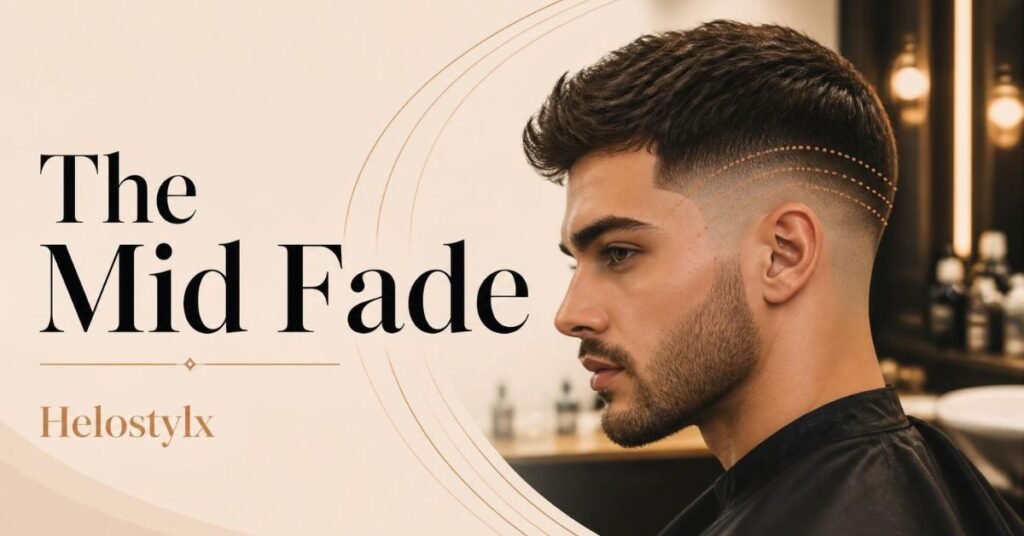
The mid fade starts about halfway up the sides of your head, roughly at the level of your temples. It’s not as subtle as a low fade and not as bold as a high fade, which is why it’s arguably the most popular choice among men’s fade haircut requests.
A mid fade can be finished as a taper or taken to skin. That’s the key point: “mid” tells your barber where the fade starts, not how short it goes.
Best for:
- Men who can’t decide between low and high
- Most face shapes (it’s a safe, balanced starting point)
- Anyone who wants a modern fade haircut that works with both casual and professional outfits
Side-by-Side Comparison
| Feature | Taper Fade | Skin Fade | Mid Fade |
| What defines it | Gentle finish, leaves length | Goes to bare skin | Starts at temple height |
| Contrast level | Low to medium | High | Medium |
| Maintenance | Every 3-4 weeks | Every 2-3 weeks | Every 2-4 weeks |
| Best for | Professional, low-key looks | Bold, sharp looks | Balanced, versatile looks |
| Skill needed | Moderate | High (clean blend is hard) | Moderate to high |
The takeaway: these three aren’t really competitors. They describe different parts of the same haircut. Your final choice is a mix of height and length.
Other Fade Styles Worth Knowing
Before you decide, it helps to know a few more names you’ll see in barbershop galleries.
- Burst fade: A semicircular fade that wraps around the ear and curves behind it, leaving more length at the back of the neck. It pairs beautifully with mohawks, curly tops, and longer styles.
- Drop fade: The fade line “drops” in a curve behind the ear, following the shape of your skull. It adds shape and personality, and it’s a great choice for modern fade haircut lovers who want something less standard.
- Low taper fade: A subtle option for men who want the neckline and sideburns neatened without a dramatic change.
- High fade: Starts near the crown of the head for maximum contrast. Bold, but less forgiving as it grows out.
Any of these can be finished as a taper or taken down to skin, which is why the vocabulary can feel confusing. Keep the two-variable rule (height and length) in mind and it becomes simple.
How to Choose the Right Fade for You
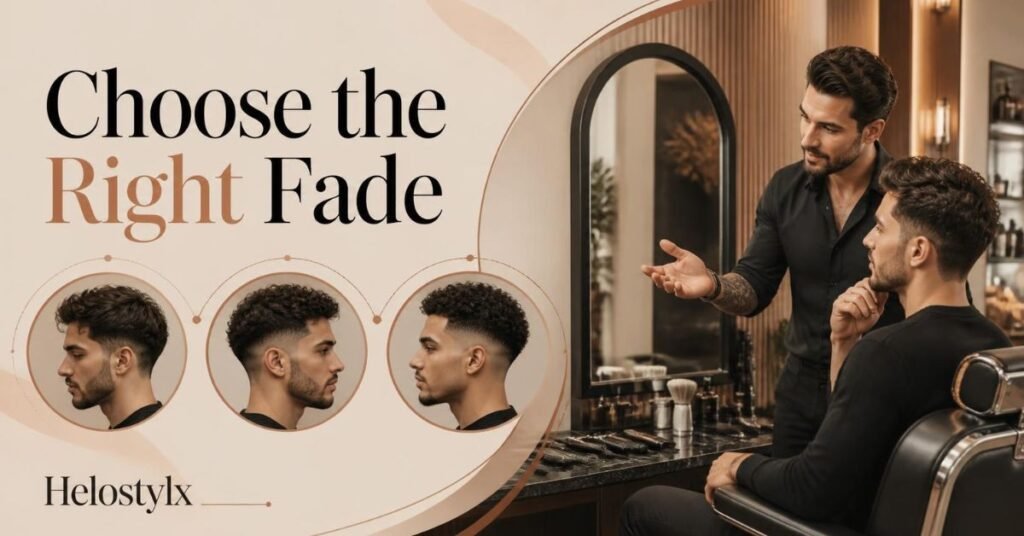
Choosing between a taper fade vs skin fade vs mid fade comes down to four things: your hair type, your face shape, your lifestyle, and how much time you want to spend in the barber’s chair.
Start With Your Hair Type
Your hair’s texture and density change how a fade looks and how well it holds.
Skin fade with curly hair Curly and coily hair thrives with a skin fade. The contrast between tight curls on top and smooth skin on the sides creates a crisp, defined shape. A high or mid skin fade paired with a curly top is a classic combination, and a burst fade adds extra dimension. Tell your barber you want to keep your curl length on top so the pattern stays intact.
Taper fade for thin hair If your hair is fine or thinning, a taper fade for thin hair is often the smartest option. It keeps some length at the sides, which prevents the scalp from showing through too much, and it avoids the harsh contrast that can make thinning areas look more obvious. A low or mid taper with a slightly longer top adds the illusion of fullness. If you’re worried about a receding hairline, ask your barber to keep the temple area soft rather than sharp.
Fade for thick hair Thick hair loves a fade because the fade removes bulk from the sides, which keeps your head from looking boxy. If you have dense hair, a mid fade or high fade is a strong option, since the removal of weight at the sides balances a fuller top. Expect to get more frequent trims, because thick hair grows out visibly faster along the sides.
Straight hair Straight hair shows every line, so the fade blend matters a lot. A skilled barber will use a mix of clippers and shears to avoid harsh stripes. Skin fades on straight hair look sleek and are excellent for classic side parts or slick-back styles.
Consider Your Face Shape
- Round face: A mid or high fade with height on top helps create length and structure.
- Square face: A low or mid taper softens strong angles while keeping a masculine look.
- Oval face: You can wear almost anything. A mid skin fade is a common favorite.
- Long face: Go with a low fade and keep the top shorter to avoid adding extra height.
Think About Your Lifestyle
Ask yourself how you actually live, not how you’d like to live.
- Formal workplace? A low taper fade or mid taper fade gives you polish without standing out.
- Creative or casual environment? A skin fade or a drop fade shows off personal style.
- Play sports or work outdoors? Short sides and back are easier to keep clean and cool. A mid fade is practical and low-maintenance.
- Limited time for barber visits? A taper grows out gracefully. A skin fade needs a fresh cut more often.
A Simple Decision Guide
If you’re still stuck, use this shortcut:
- Want the safest option? Go with a low taper fade.
- Want a balanced, everyday cut? Go with a mid fade, finished as a taper.
- Want a sharp, bold look? Go with a mid or high skin fade.
- Want something with personality? Try a burst fade or drop fade.
Taper Fade vs Skin Fade vs Mid Fade: What to Say to Your Barber (The Phrasebook)
Barbers can work miracles, but they can’t read minds. The clearer your request, the better the result. Use this phrasebook to get the cut you want.
The Three-Part Formula
Structure your request in this order:
[Height] + [Length/Finish] + [Top]
For example:
- “I’d like a mid fade, taken down to skin, with about two inches left on top.”
- “Low taper fade, natural neckline, keep the length on top.”
- “High skin fade with a curly top. I’d like to keep the curls long.”
Words That Help
| If you want… | Say this |
| Subtle and clean | “Low taper fade” or “low fade, not to skin” |
| Noticeable contrast | “Mid fade” or “mid skin fade” |
| Maximum contrast | “High fade” or “bald fade” |
| A curved shape | “Drop fade” or “burst fade” |
| No harsh lines | “Blend it smooth, no visible lines” |
| Very short sides | “Short sides and back, tight on the sides” |
| A softer neckline | “Tapered neckline” instead of a “squared” or “blocked” one |
Guard Numbers, in Plain English
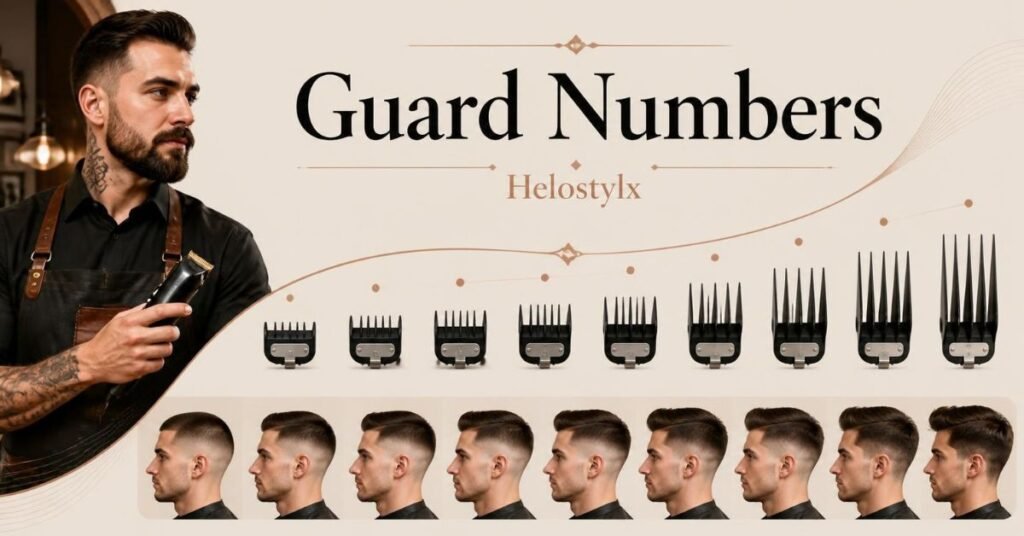
Clipper guards control fade length. Lower numbers mean shorter hair.
- Skin (foil shaver or razor): Bare skin. The shortest possible finish.
- #0 or #0.5: A hair’s-breadth of stubble. Almost skin, but with a soft shadow.
- #1: About 3mm (1/8 inch). A very short, clean finish.
- #2: About 6mm (1/4 inch). Short but visible hair.
If you’re unsure, ask your barber to start with a #1 and go shorter if you like it. It’s much easier to take hair off than to put it back.
Bring a Photo
A picture removes all ambiguity. Show your barber two or three photos, ideally from the front, side, and back. Also tell them what you don’t like about a photo. “I like the top, but I don’t want the sides that short” is incredibly useful information.
Mistakes to Avoid
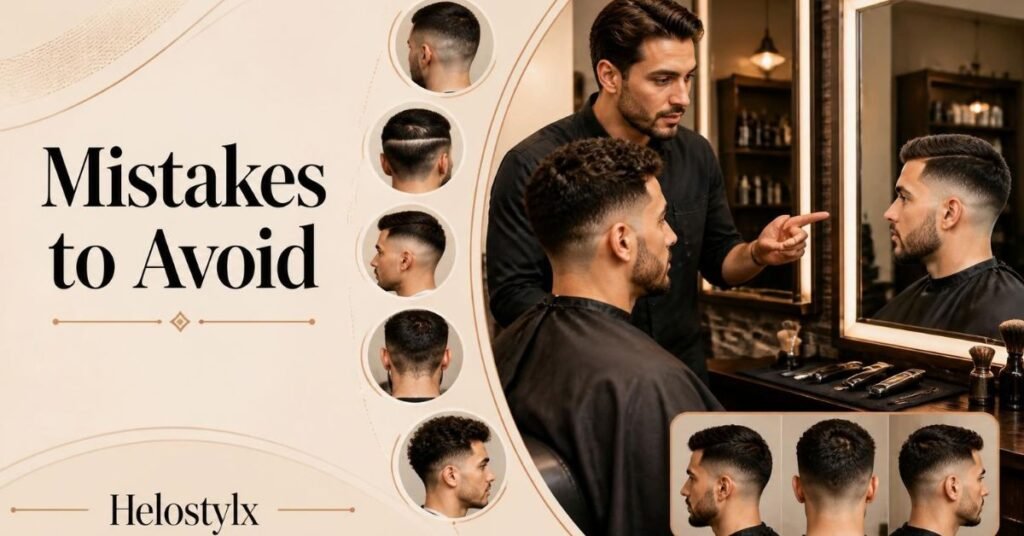
- Saying only “a fade.” That’s like ordering “coffee.” Height and length matter.
- Not mentioning your hair type. Curly, thin, and thick hair all need different approaches.
- Skipping the mirror check. Review the back and sides before the final touches, and speak up while your barber can still adjust.
Frequently Asked Questions
What is the difference between a taper fade and a skin fade?
A taper fade leaves soft visible length at the edges, while a skin fade goes all the way down to bare skin.
Is a mid fade better than a low fade or high fade?
Neither is better; a low fade is subtle, a high fade is bold, and a mid fade is the balanced choice for most men.
Which fade is best for thin or thick hair?
A low or mid taper fade suits thin hair, while a mid or high fade removes bulk and suits thick hair.
How often do I need to get my fade touched up?
Skin fades look best every 2 to 3 weeks, and taper fades every 3 to 4 weeks.
Final Thoughts: Choosing Between a Taper Fade vs Skin Fade vs Mid Fade
The taper fade vs skin fade vs mid fade question isn’t really a competition. It’s a menu. Height, length, and blend combine to create your perfect fade haircut, and once you know how those pieces fit together, you can order with confidence.
Here’s the short version to remember:
- Choose a taper fade for a soft, professional finish that grows out gracefully.
- Choose a skin fade for sharp contrast and a bold, modern look.
- Choose a mid fade for the balanced middle ground that works on almost everyone.
- Mix and match with a burst fade, drop fade, or low, mid, or high variation to make it your own.
Bring a photo, describe the height and finish you want, and trust a skilled barber to handle the blend. Ready to try one? Book your appointment at The Kinsman and walk out with a cut that fits your hair, your face, and your life.
