

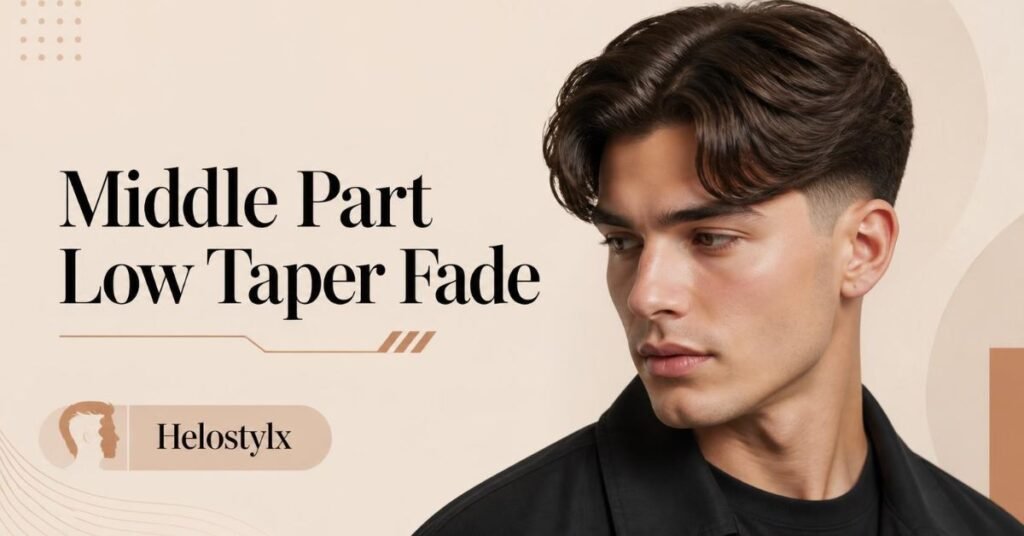
The middle part low taper fade has become one of the most requested men’s haircuts of 2026, and it’s easy to see why. It gives you a clean, tidy perimeter with enough length on top to move, flow, and show some personality. You get a polished look for the office and an easygoing one for the weekend, all from a single cut.
If you’ve been scrolling through photos and wondering whether this style suits your hair, face, and lifestyle, this guide covers it. You’ll learn what the cut is, who it flatters, how to ask for it, and how to style it at home, step by step.
What Is a Middle Part Low Taper Fade?
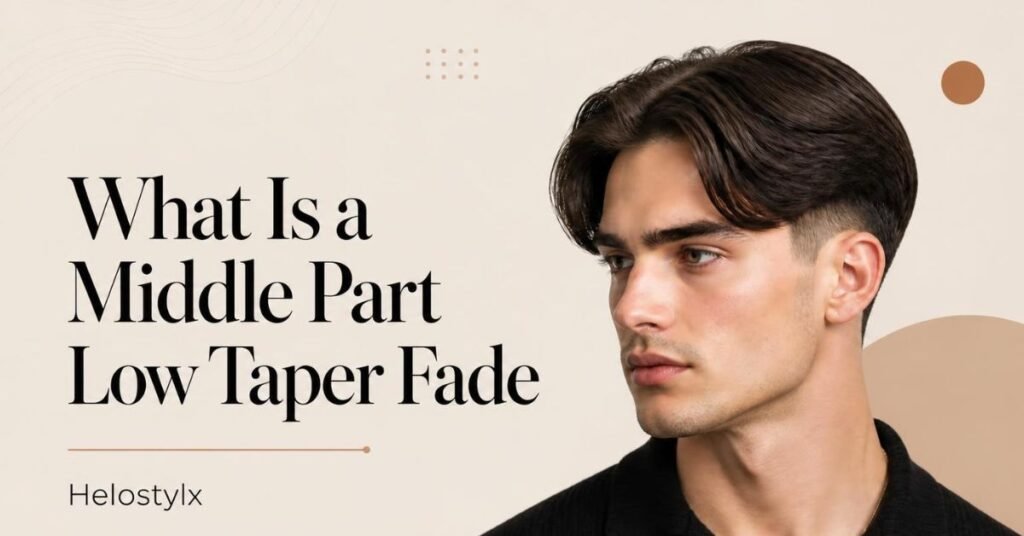
A middle part low taper fade combines two classic ideas. The first is a center part, where the hair on top is split down the middle and falls to both sides. The second is a low taper, where the sides and back gradually get shorter as they approach the hairline, starting low near the ears and neckline.
The result is a pleasing contrast. The top stays longer and softer, while the edges stay neat and close. Many people know the top half as the curtains hairstyle or a men’s curtain haircut, because the hair hangs on either side of the part like drapes.
Unlike a high fade or a skin fade, the taper doesn’t climb up the head. It stays subtle, which makes this cut more forgiving, more versatile, and easier to grow out.
Key features of the cut:
- A visible center part, either sharp or soft
- Top length that usually sits between 3 and 6 inches
- A gradual taper around the ears and the nape
- Natural, textured movement rather than a stiff, slicked finish
Why the Middle Part Low Taper Fade Is So Popular in 2026
Trends come and go, but this one has staying power. Several things explain why the middle part hairstyle for men keeps climbing in popularity.
It’s a modern take on a 90s classic. Curtain hair returned a few years ago, and barbers have refined it. Instead of the shaggy, uneven version from decades past, today’s modern middle part haircut pairs the length with a precise taper.
It suits real life. You can wear it messy, tucked behind your ears, or neatly combed. It doesn’t demand a daily styling routine, and it grows out gracefully.
It borrows from Korean grooming. The Korean middle part hairstyle popularized soft, airy, face-framing hair. Its influence shows in the lighter texture and natural movement most people now ask for.
It works across professions. A low taper keeps the sides clean enough for conservative workplaces, while the longer top keeps things relaxed.
It’s flexible. From a short, tidy version to a shoulder-grazing flow, the same basic structure adapts to nearly any taste.
Best Face Shapes for a Middle Part Low Taper Fade
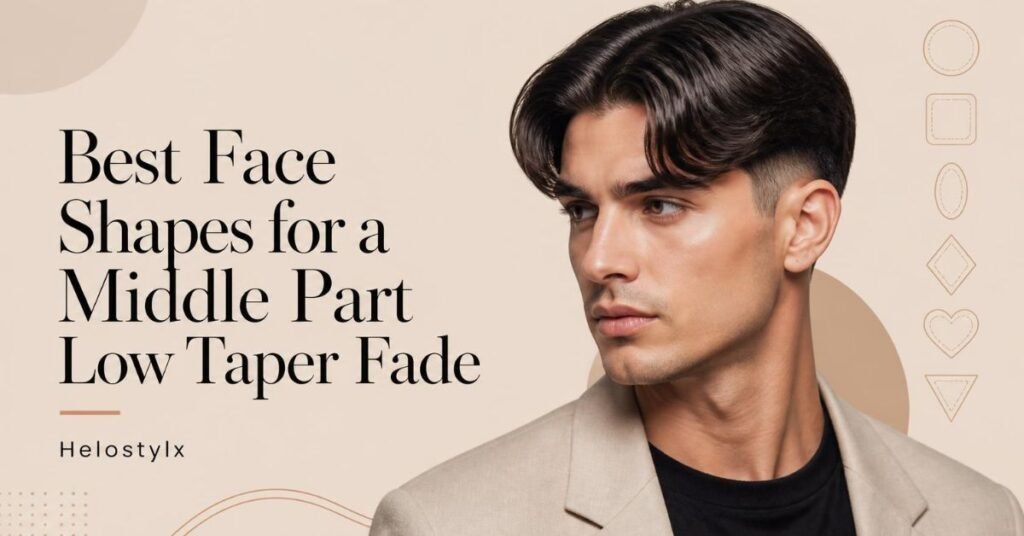
A center part is symmetrical, so it tends to highlight your bone structure. That’s great for some face shapes and needs a little adjustment for others. Here’s how to tailor the cut.
Oval Faces
Oval faces are the easiest match. The balanced proportions mean nearly any version of the middle part low taper fade works. Experiment with length freely, and choose the top length based on your hair texture rather than your face.
Round Faces
Go a little longer on top and keep the sides tight. The vertical lines of the hair draw the eye down and elongate your face. Add some volume at the roots, and avoid letting the sides puff out.
Square Faces
A square jaw pairs beautifully with soft, layered hair. Choose a textured top to soften the angles, and keep the taper clean and low for a sharp, balanced profile.
Oblong or Long Faces
Be careful with excess length. Keep the top at a moderate length with plenty of side volume, so the hair adds width rather than height. A softer, wavier finish helps.
Heart-Shaped Faces
A medium-length middle part that sweeps across the forehead balances a wider brow and a narrower chin. Don’t go too short on the sides, or the shape can look top-heavy.
Quick rule: if your face is wide, add length. If it’s long, add width. A good barber will adjust the part’s softness and the layering to match.
How the Middle Part Low Taper Fade Looks on Straight, Wavy, and Curly Hair
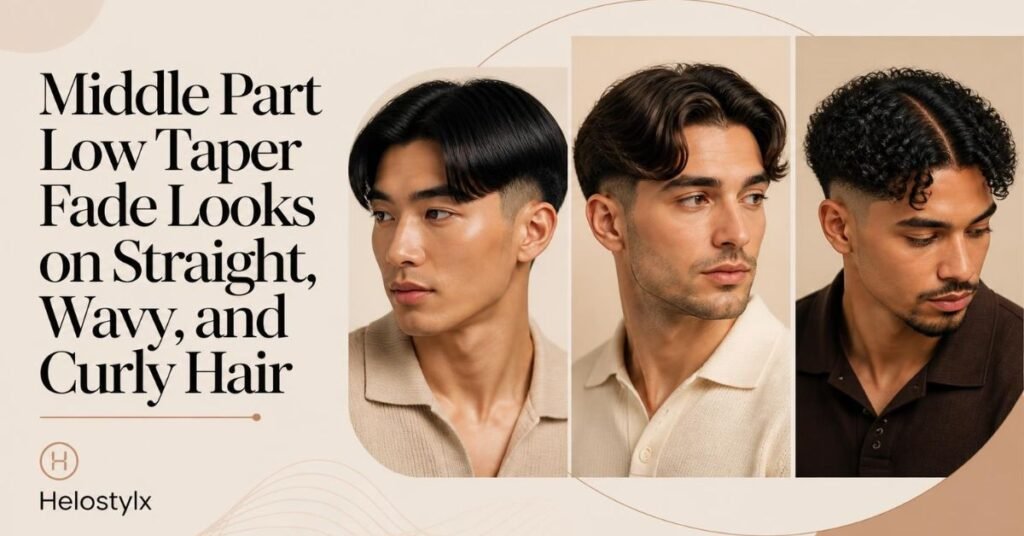
Your hair’s natural pattern changes how the cut falls, so it’s worth planning around it.
Middle Part Haircut for Straight Hair
Straight hair gives you the sleekest, most Korean-inspired result. A middle part haircut for straight hair hangs cleanly and frames the face with minimal effort.
The challenge is that straight hair can fall flat or look heavy. Ask for light layering or point cutting to add movement. A bit of texture spray gives it grip and lift.
Fine straight hair benefits from a slightly shorter top, around 3 to 4 inches, so it doesn’t collapse.
Middle Part Haircut for Wavy Hair
Wavy hair is arguably the best canvas for this style. A middle part haircut for wavy hair forms natural curtains with built-in bend and volume.
The waves add that effortless, lived-in look people try to fake with products. Keep the layers soft, avoid over-thinning, and let the texture do the work. A light cream or sea salt spray will enhance the pattern without weighing it down.
Curly and Coily Hair
Curly hair can carry a middle part low taper fade confidently, but it needs a skilled hand. Curls shrink when dry, so the cut should be planned with that shrinkage in mind.
Your barber may suggest cutting the top slightly longer than you think you need. The part may be less defined, and that’s fine. A softly parted, defined-curl look with a clean taper around the ears is striking.
If your hair is thick, you’ll also want some internal thinning to avoid a bulky shape. We cover that in the variations section below.
Choosing the Right Top Length for Your Middle Part Haircut
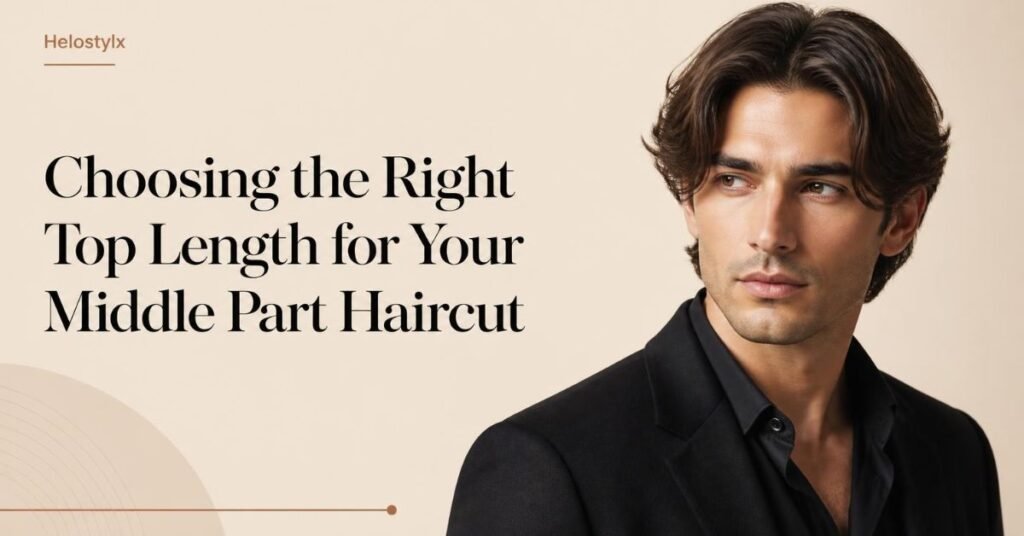
Top length defines the vibe of the whole cut. Here are the main ranges.
- Short (2 to 3 inches): Tidy and low maintenance. Best for fine hair or conservative offices. The part is subtle.
- Medium (3 to 5 inches): The sweet spot for most guys. It falls into clear curtains, stays manageable, and styles quickly.
- Long (5 to 8 inches): A true flow look. This is the middle part flow haircut many people picture, with hair reaching the cheekbones or jawline.
If you’re growing out your hair, a low taper fade with long hair works especially well. The tapered sides keep things clean during the awkward in-between stage, so you don’t look overgrown while you wait.
Pro tip: Hair grows about half an inch per month on average. Plan accordingly if you’re aiming for the longer flow version.
How to Ask Your Barber for a Middle Part Low Taper Fade
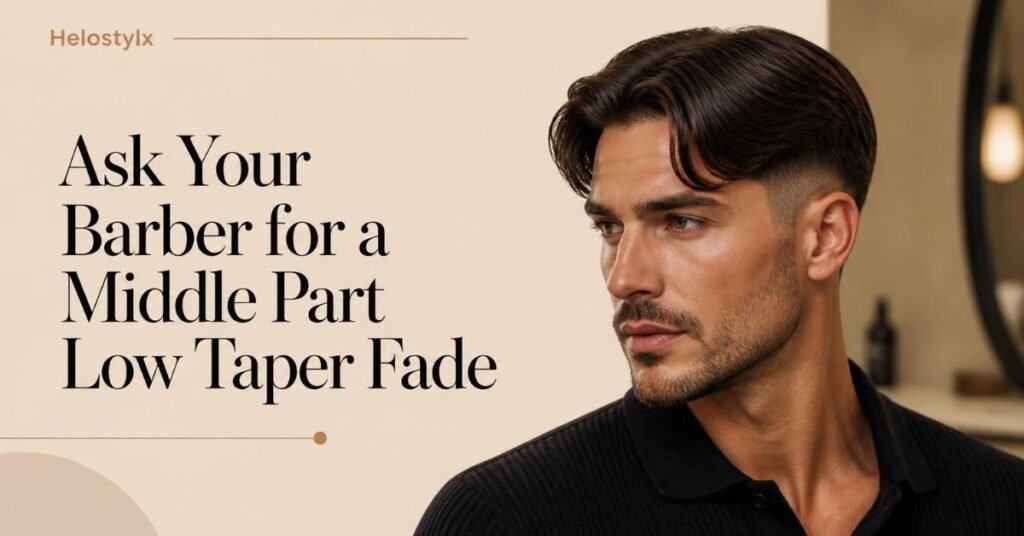
Most disappointing haircuts come down to miscommunication. Bring a photo, but also use clear language. Here’s a simple script you can follow.
Say something like:
“I’d like a low taper fade on the sides and back, starting just above the ears and following the natural neckline. Leave the top about 4 inches, cut with layers so it falls into a center part. Keep it textured, not blunt.”
Details worth mentioning:
- Taper placement: Ask for a low taper fade around the ears and neckline, so the shortest length sits low.
- Guard numbers: Many barbers start around a 1 or 2 at the very bottom and blend up. Ask what they recommend for your hair.
- Part type: Tell them if you want a sharp, defined part or a soft, natural one.
- Texture: Mention whether you want a textured middle part hairstyle with choppy movement, or a smoother finish.
- Cutting method: For a softer, more refined shape, request a scissor-cut middle part, where the top is cut with shears instead of clippers.
Finally, show where your part naturally falls. Some people have a cowlick that fights the center. A good barber will cut with that in mind.
Also Read This ; Long Buzz Cut Fade: Guards, Fades & Styling Guide
Low Taper vs. Mid Taper Fade: Which One Is Better?
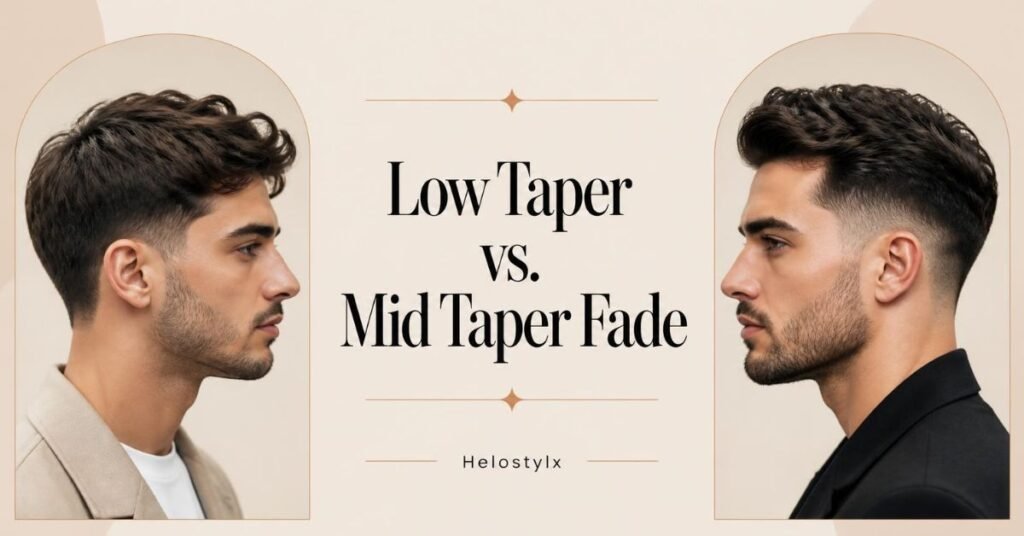
Both are tapered cuts, but they sit at different heights on the head.
| Feature | Low Taper | Mid Taper |
| Starting point | Near the ears and nape | Around the temples |
| Look | Subtle, soft, natural | Cleaner, more defined |
| Maintenance | Grows out gracefully | Needs more frequent trims |
| Best for | Longer tops, relaxed styles | Shorter, sharper looks |
For a middle part, the low taper is usually the stronger choice. The higher a fade sits, the more dramatic the contrast becomes, which can overpower soft curtains. A low taper fade haircut keeps the proportions balanced and the overall look cohesive.
That said, if you have a longer face or prefer a sharper edge, a mid taper can work. Just discuss it with your barber first.
Styling Products That Work for a Middle Part Haircut
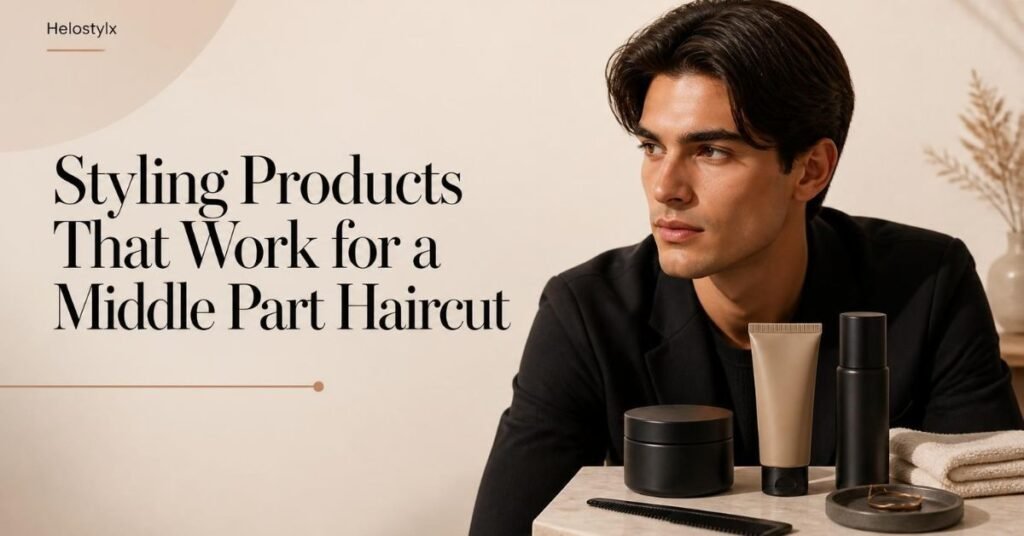
The right product depends on your hair type and how polished you want to look. Less is almost always more.
- Sea salt spray: Great for adding grit and beachy texture to fine or straight hair. Spray on damp hair before blow-drying.
- Texture or volumizing powder: Gives lift at the roots. This is a go-to for achieving a middle part hairstyle with volume.
- Light styling cream: Ideal for wavy and curly hair. It defines the pattern and tames frizz without making it greasy.
- Matte clay or paste: Offers hold without shine. Use a tiny amount for a messier, separated finish.
- Lightweight hairspray: A flexible-hold spray locks in your shape without crunch.
What to avoid: heavy gels and high-shine pomades. They flatten the hair and clump the curtains, which works against the natural flow this cut depends on.
How to Style a Middle Part Low Taper Fade at Home
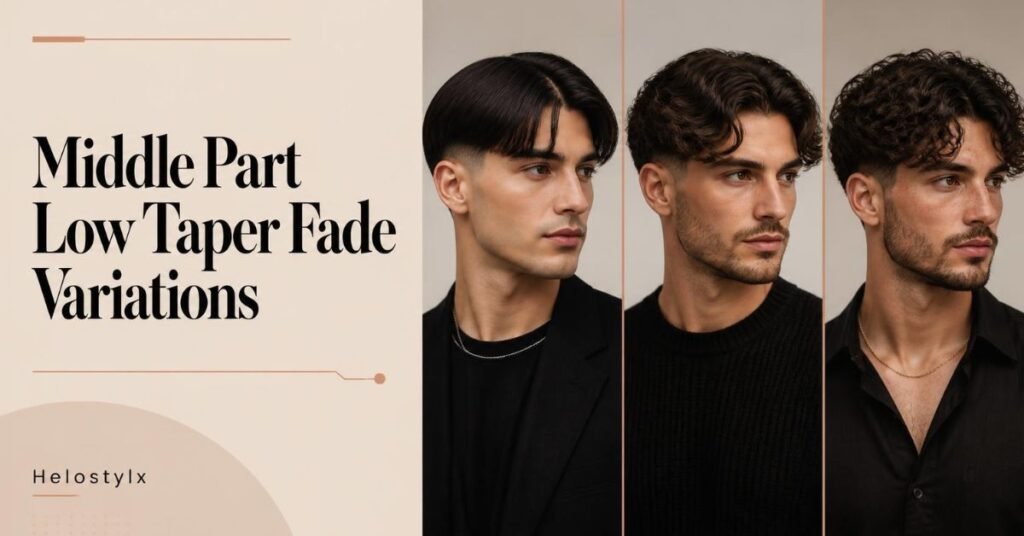
Good news: you don’t need a long routine. These middle part haircut styling tips take about five to ten minutes.
- Start with clean, damp hair. Towel-dry until it’s no longer dripping.
- Apply a pre-styler. Work a small amount of sea salt spray or volumizing mousse through the roots.
- Find your part. Use a comb to draw a line from the center of your forehead back. Don’t force a perfectly straight line if your hair resists.
- Blow-dry with direction. Dry the roots first, pulling the hair away from the part with your fingers or a round brush. This builds lift and sets the curtain shape.
- Add texture. Rub a pea-sized amount of paste or cream between your palms and run it through the mid-lengths and ends.
- Shape and set. Sweep the sides outward and slightly back. Finish with a light mist of hairspray if needed.
Quick troubleshooting:
- Hair splits too much? Use a bit more product at the front and tuck the sides behind your ears.
- Cowlick at the part? Blow-dry that spot in the opposite direction first, then switch back.
- Falling flat by midday? Apply texture powder at the roots, then tousle.
How Often Should You Maintain a Middle Part Low Taper Fade?
The fade is the high-maintenance part. Because the sides are short, regrowth shows quickly.
- Every 3 to 4 weeks: Ideal if you want the taper to stay crisp and the neckline clean.
- Every 5 to 6 weeks: Fine for a relaxed look, especially with a low taper that grows out softly.
- Every 8 to 10 weeks: Possible if you’re growing the top long. Pop in for a quick neckline cleanup in between and a full trim as needed.
Between visits, keep the hair healthy. Use a gentle shampoo, condition the lengths, and avoid overusing hot tools. Trimming split ends keeps the curtains looking full rather than frayed.
Middle Part Low Taper Fade Variations to Try
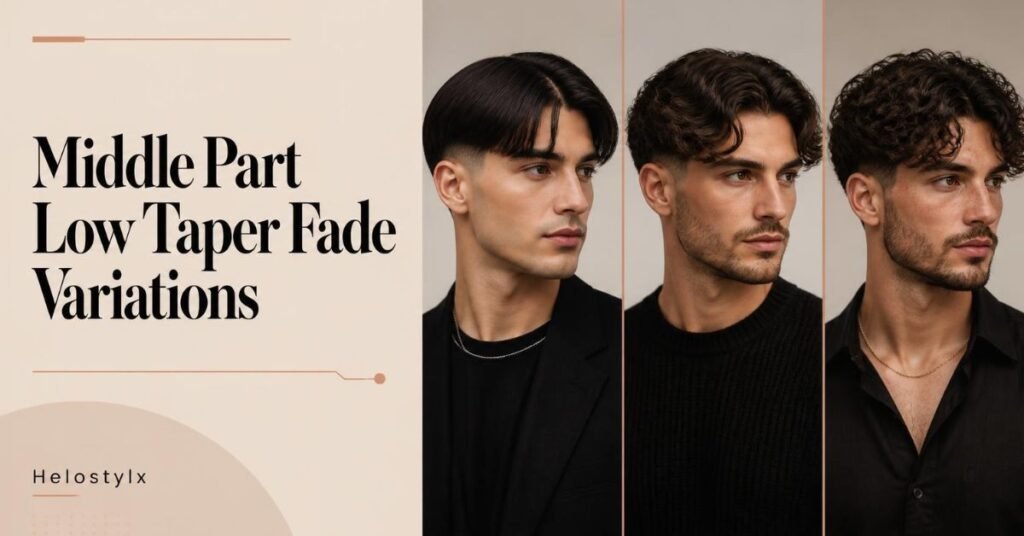
Once you’ve got the basics down, there’s plenty of room to personalize.
Low Taper Fade With Curtains
The most classic version. The hair parts in the middle and drapes on either side, with a clean, low taper behind. This low taper fade with curtains is a safe starting point and works on most hair types.
Textured Middle Part With Choppy Layers
Ask for visible, piecey layers throughout the top. The finish is messy and lived-in, and it looks great on straight and fine hair that needs movement.
Korean-Inspired Soft Middle Part
Lighter, airier, and often with slightly longer fringe pieces. This Korean middle part hairstyle emphasizes a soft curve around the face and a smooth, natural finish.
Middle Part Flow With a Longer Taper Blend
For the middle part flow haircut, keep the length past the ears and let the taper blend seamlessly into the longer sides. Perfect for guys committed to growing it out.
Scissor-Cut Middle Part
A refined, hand-crafted look. A scissor-cut middle part keeps the top soft and natural, avoiding the blunt edges clippers can leave. Pair it with a barely-there taper.
Middle Part With Tapered Sides and a Beard
If you wear facial hair, blend the beard into the taper for a seamless transition. A middle part haircut with tapered sides and a neatly trimmed beard looks sharp and intentional.
Thick-Hair Adaptation
For a middle part haircut for thick hair, your barber should remove bulk with texturizing shears or razor-cutting. Otherwise the curtains can poof outward. Keep the taper clean so the volume stays on top rather than at the sides.
Frequently Asked Questions
What is a middle part low taper fade?
A middle part low taper fade is a men’s haircut with a center-parted top and sides that gradually shorten from the ears down to the neckline. It pairs curtain-style length with a clean, subtle taper, so it feels modern but not extreme.
Is a middle part low taper fade good for thin or fine hair?
Yes, with a few tweaks. Choose a shorter to medium top length of around 3 to 4 inches, ask for light layering, and use volumizing powder or sea salt spray. Avoid heavy products that weigh the hair down.
How long does my hair need to be for a middle part haircut?
For a defined part and visible curtains, aim for at least 3 inches on top. Shorter hair can still be parted in the middle, but it won’t fall in the same flowing way. If you’re growing it out, a low taper keeps the sides neat in the meantime.
How do I stop my middle part from splitting too much or looking flat?
Blow-dry your roots in the direction you want the hair to fall, apply a lightweight texture product, and finish with a flexible-hold spray. Tucking the sides behind your ears can help. A skilled barber can also layer the hair to improve how it separates.
Final Thoughts: Is the Middle Part Low Taper Fade Right for You?
The middle part low taper fade earns its popularity. It’s adaptable, flattering, and kind to your schedule, and it works on straight, wavy, curly, and thick hair with the right adjustments.
Start by choosing a top length that fits your face shape and hair texture. Then bring a clear reference photo and use the barber script above. Pick a few products you’ll actually use, and book regular trims to keep the taper clean.
Whether you go soft and Korean-inspired or longer and flowing, this cut gives you a polished look without a high-maintenance routine. If you’re looking for the best look for 2026, the middle part low taper fade is a smart, stylish place to start.
