
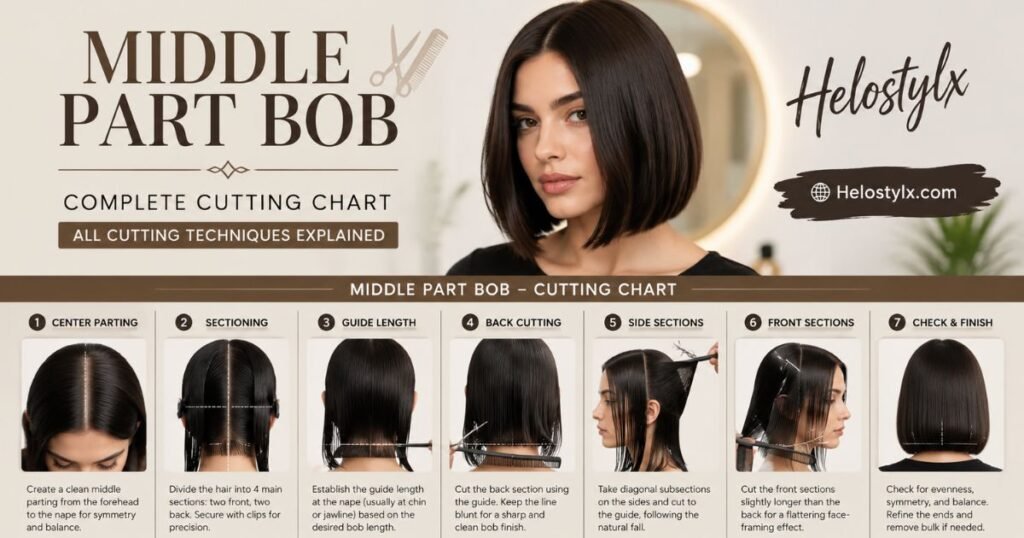
If you’ve been scrolling through hair inspiration and keep stopping on the same sleek, symmetrical style, you’ve probably landed on the middle part bob. It’s one of those cuts that looks effortless in photos but leaves a lot of people asking the same question: will it actually work for my face, my hair, my life? This guide answers that honestly — no generic “it suits everyone!” fluff, just real, practical guidance from someone who’s spent years studying what makes a bob work and what makes it fall flat.
By the end, you’ll know exactly whether a center part bob fits your features, your texture, and your styling routine — and exactly what to say to your stylist so you walk out of the salon with the cut you pictured, not a rough approximation of it.
Try a Middle Part Bob on Your Own Photo
Before you commit to scissors, it’s worth seeing the shape on your actual face rather than imagining it. A quick, low-risk way to do this:
- Pull your hair back, then use a free virtual try-on tool or hairstyle app and upload a front-facing photo.
- Test both a blunt middle part bob and a slightly layered version — the difference in how they frame your face is often bigger than you’d expect.
- Take the photo in good, even lighting so you can actually judge the jawline and cheekbone effect, not just the haircut shape.
This isn’t a substitute for a stylist consultation, but it’s a genuinely useful gut-check. Many salons also offer digital previews during your appointment — more on that later.
Key Takeaways
- A middle part bob is a chin-to-shoulder length haircut with hair divided down the exact center of the head, rather than to one side.
- It flatters oval, heart, and diamond face shapes most easily, but round and square faces can absolutely wear it with the right adjustments.
- Hair texture — not just face shape — determines how polished (or how frizzy) this cut looks day to day.
- The length, the amount of layering, and the part itself are three separate decisions; get them wrong and even a “trendy” cut looks off.
- A center part bob needs less daily styling than a side-part version once cut correctly, but it is unforgiving of uneven hairlines or cowlicks if the stylist doesn’t account for them.
What Is a Middle Part Bob?
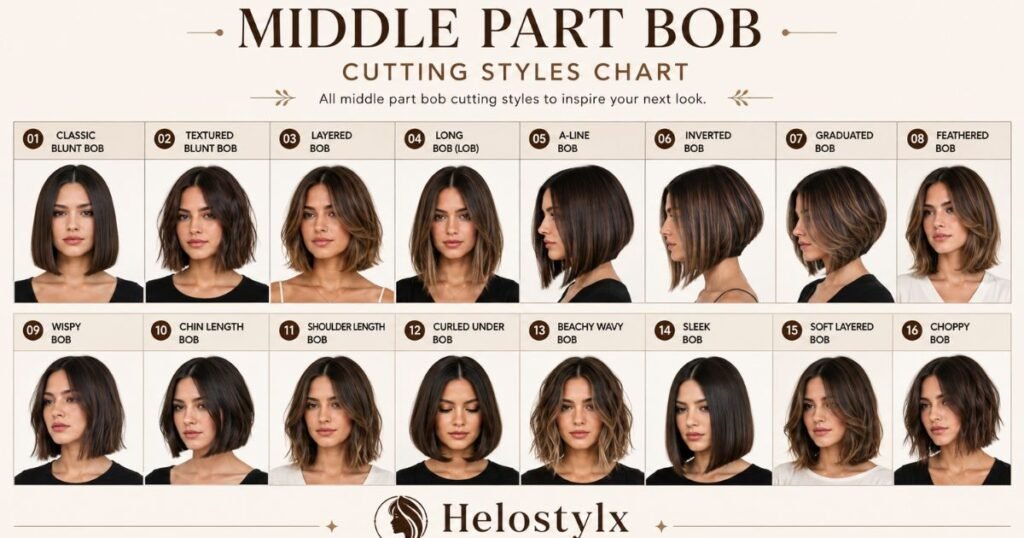
A middle part bob is exactly what it sounds like: a bob haircut — generally falling anywhere from chin-length to just past the shoulders — styled with the hair parted straight down the center of the scalp instead of off to one side.
That single change in parting has an outsized effect. A side part naturally creates asymmetry and volume on one side, which softens the face and hides a lot of small imperfections. A middle part does the opposite — it’s symmetrical, structured, and exposes the full forehead and hairline. That’s exactly why it reads as so chic and modern, and also why it’s less forgiving than a side-swept bob.
This bob hairstyle has surged back into popularity alongside the broader return of ’90s and early 2000s minimalism — think clean lines, no-fuss texture, and a slightly undone finish rather than a heavily blow-dried one.
Which Middle Part Bob Should You Choose?
Not all center part bobs are the same haircut wearing a different part. There are a few distinct variations, and picking the right one matters more than picking the trend photo.
Blunt middle part bob. One length, straight-across ends, no layers. This version is the most graphic and modern-looking, and it works best on straight to slightly wavy hair with decent density.
Layered middle part bob. Soft, face-framing layers built into the length. This softens the symmetry of the center part and is the most flexible option for wavy or fine hair.
Long middle part bob (lob-adjacent). Falls closer to the collarbone. It gives you more length to play with and is a gentler entry point if you’re nervous about going short.
Textured or wispy middle part bob. Choppy ends and movement throughout. This hides thinner hair well and adds the illusion of volume at the part line, which tends to look flattest in a plain blunt cut.
If you’re unsure which of these fits you, a simple rule helps: the finer or wavier your hair, the more you benefit from layers and texture; the thicker and straighter it is, the better a blunt version will hold its shape.
There’s also a fifth variation worth mentioning: the asymmetric-length middle part bob, where the part stays perfectly centered but one side is cut a touch longer than the other. It’s a small tweak that can soften a very structured, symmetrical look without sacrificing the overall silhouette — a good middle ground for anyone who loves the idea of this cut but worries a fully blunt, fully even shape will feel too severe on their features.
Think of these variations less as separate haircuts and more as dials your stylist can turn — length, blunt versus layered, symmetrical versus slightly asymmetric — all while keeping the defining feature, the center part, exactly where you want it.
Face Shape Notes
This is the section most people skip to first, and fair enough — face shape genuinely changes how a middle part hairstyle reads.
Oval faces can wear almost any version of this cut without adjustment. The balanced proportions of an oval face mean the symmetry of a center part complements rather than competes with your features.
Heart-shaped faces (wider forehead, narrower chin) do well with a layered or textured middle part bob that hits at or just below the jaw. The layers add width near the chin, balancing the wider forehead.
Diamond faces (narrow forehead and jaw, wider cheekbones) tend to look striking in a middle part bob because the straight line down the center draws attention upward and downward, softening the width at the cheekbones.
Round faces can absolutely wear this cut, but go for a slightly longer length (grazing or below the collarbone) with some layering. A very short, very blunt version can emphasize width; length and movement counteract that.
Square faces benefit from a softer, textured edge rather than a razor-sharp blunt line, which can echo the angularity of the jaw. A little wave or a slight layer at the ends softens the overall shape.
Oblong or rectangular faces (longer than they are wide) generally look best with a middle part bob that hits at the jaw rather than below it, since a shorter length adds visual width at the point where the face needs it most. Avoid pairing this length with a completely flat, straight styling — a little wave or curl at the ends helps break up the vertical line of the face.
None of these are hard rules — they’re starting points. A skilled stylist adjusts weight distribution and length within any face shape, which is part of why the consultation matters so much (more on that below). Bring a couple of photos that show your face from different angles, not just straight-on, since a center part changes how light and shadow fall across your cheekbones and jawline in ways a single flat photo won’t fully capture.
It’s also worth noting that face shape isn’t static day to day — puffiness, hairstyle history, and even how you’re currently parting your hair can all make your face look rounder or narrower than it actually is. If you’ve worn a heavy side part for years, don’t be surprised if your first reaction to a center part in the mirror feels unfamiliar; that’s often more about habit than about the cut being wrong for you.
Hair Texture Matters More Than the Trend Photo
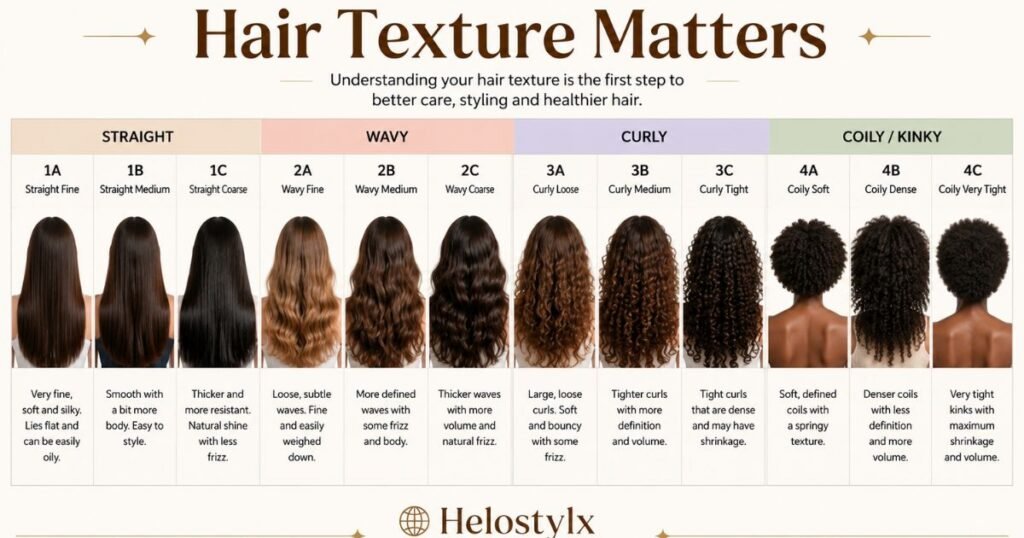
Here’s the part most articles skip, and it’s arguably the most important one: the photo you’re using as inspiration was very likely shot on hair with a texture different from yours, styled with tools and products you may not use daily.
Straight, thick hair holds a blunt middle part bob beautifully and needs the least daily effort — a rough blow-dry and a light smoothing product is often enough.
Wavy hair looks fantastic in a layered or textured version but can appear uneven or “lopsided” in a strict blunt cut, since waves rarely fall identically on both sides of a center part.
Curly hair absolutely works with this bob haircut, but it should be cut dry or with significant attention to shrinkage, and layers are almost always necessary to prevent a triangular shape.
Fine or thinning hair benefits from texture and slightly shorter length, since length alone can drag fine hair flat and expose more scalp along that visible center line.
If your hair has a natural cowlick at the crown, tell your stylist before they start cutting — a center part sits directly on top of many people’s cowlicks, and an unadjusted cut can leave the part looking stubborn and difficult to control.
Also Read This : 15 Blunt Bob Haircut Ideas to Bring to Your Next Hair Stylist Appointment
How Short Should the Bob Be?
Length is its own decision, separate from the part and the layering. A few benchmarks:
- Chin-length — the most classic, most graphic version. Best for straight to wavy hair and oval, diamond, or heart face shapes.
- Jaw-to-collarbone — the most universally flattering length range, offering enough weight to control frizz and enough shortness to stay low-maintenance.
- Long bob (lob) at or near the shoulders — the safest option if you’re transitioning from long hair, and easiest to grow out or adjust later.
A general guideline: the rounder your face, the more length helps; the more angular your jaw, the more a shorter length works in your favor by echoing that structure rather than fighting it.
What to Ask Your Stylist For
Bring more than a single photo. Specific language helps your stylist translate a trend into a cut suited to your head shape and hair behavior.
- “I want a middle part bob that hits at [specific length] — can we check how that sits with my part and my hairline?”
- “My hair is [texture] — would layers or a blunt line hold up better day to day?”
- “I have a cowlick near my part — how will that affect how this style falls?”
- “How much daily styling will this actually need to look like the reference photo?”
That last question is the one people forget, and it’s often the one that prevents disappointment. A stylist who’s honest about maintenance will save you weeks of frustration.
How to Preview the Cut Before You Commit
You don’t have to walk in blind. A few low-risk ways to test the look first:
- Ask your stylist for a consultation-only appointment. Many salons will section and pin your hair to approximate the length and part before any cutting happens.
- Try a clip-in fringe or temporary center part styling at home for a week to see how you feel about the forehead exposure.
- Use a virtual try-on app, as mentioned earlier, to compare a blunt versus layered version on your own face.
- Start slightly longer than your target length. A long bob can always be shortened at your next appointment; a too-short cut can’t be undone.
This kind of gradual approach is especially useful if you’ve worn a side part for years — the exposed forehead and symmetry of a middle part hairstyle can feel like a bigger change than the haircut itself.
Care and Styling Without Overworking the Hair
One underrated appeal of this bob hairstyle is that, once cut well, it needs less daily manipulation than most other trending cuts.
- Air-dry when you can. A middle part bob styled with natural texture and a light curl-defining or texturizing spray often looks more current than one that’s heavily blow-dried straight.
- Use a lightweight leave-in on the ends only. Product buildup right at the part line tends to look greasy faster than anywhere else on the head.
- Rough-dry with fingers, not a round brush, if you want movement rather than a flat, glassy finish.
- Trim every 6–8 weeks. Bobs grow out faster in appearance than in actual length because the shape relies on precise proportions.
- Sleep on a silk or satin pillowcase to reduce the frizz that tends to show up first right along an exposed center part.
Avoid daily heat styling if you can help it — this cut is popular precisely because it looks intentional with minimal effort, and heavy styling routines undercut that low-maintenance appeal. If you do reach for heat, a low-temperature setting on a flat iron is usually enough to smooth flyaways along the part without stripping the natural texture that makes the cut feel current in the first place.
Common Mistakes
Choosing the length based on the photo alone. The same “chin-length” cut sits differently depending on your hairline and how your hair falls when dry versus wet.
Ignoring a cowlick or double crown. These will fight a center part daily unless the cutting angle accounts for them from the start.
Going blunt with very wavy or curly hair. Without layers, waves and curls often create an uneven, box-like silhouette rather than the sleek line shown in most reference photos.
Skipping the consultation conversation about maintenance. A cut that looks perfect on day one but takes 20 minutes to recreate every morning isn’t the low-effort style most people are hoping for.
Cutting too short too fast. Especially for anyone new to a center part bob haircut, going shoulder-length first is a safer, more reversible starting point than jumping straight to chin-length.
Middle Part Bob FAQ
Does a middle part bob suit round faces?
Yes — go slightly longer (near the collarbone) with soft layers instead of a short blunt cut.
Is a middle part bob high-maintenance?
No, it’s actually low-effort once cut right — air-dry with a light texturizing product and you’re set.
Can I get a middle part bob with wavy or curly hair?
Yes — just ask for a layered/textured version, and get it cut dry if your hair is curly.
What’s the difference between a middle part bob and a regular bob?
Same haircut, different part — a regular bob is often side-parted, this one is deliberately centered.
How do I know if a middle part hairstyle will suit me specifically?
Match it to your face shape and hair texture above, then preview it with a consultation or try-on app.
Conclusion
A middle part bob isn’t a one-size-fits-all trend — it’s a genuinely flexible cut that can flatter nearly every face shape and hair type when the length, layering, and part are chosen deliberately rather than copied wholesale from a photo.
The real work happens before you sit in the chair: understanding your texture, being honest about your maintenance routine, and having a specific conversation with your stylist about how the cut will actually behave on your head.t.
