

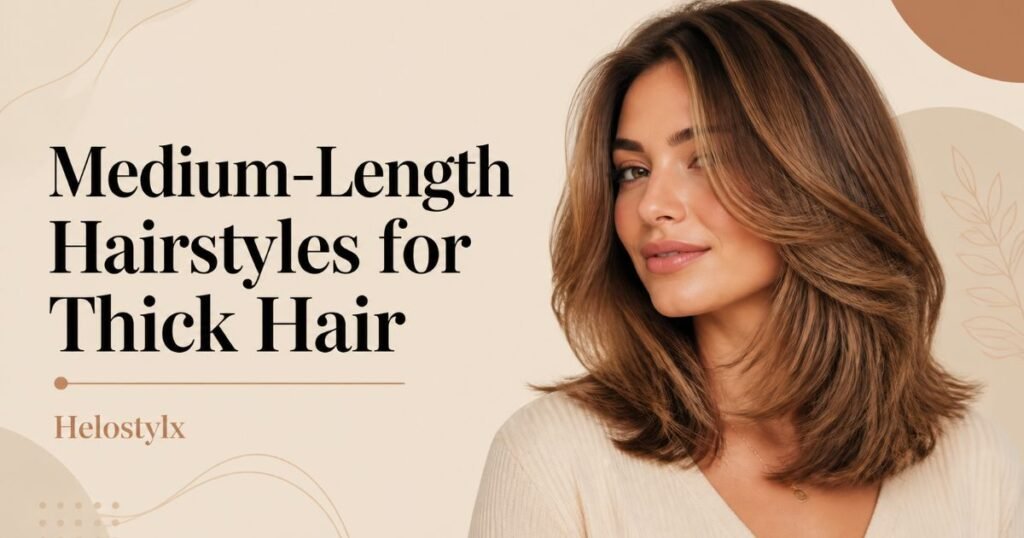
Thick hair is a gift that rarely feels like one. It takes forever to dry, expands in humidity, and can turn a simple bob into a triangle by lunchtime. If you have dense hair, you already know that the wrong cut costs you time every single morning.
The good news is that medium-length hairstyles for thick hair solve most of those problems at once. The length is heavy enough to keep your strands from puffing out, yet short enough to skip the endless blow-dry. What matters is how the cut is built inside: where the weight is removed, where it is kept, and how the ends are shaped.
In this guide, you will learn why shoulder and collarbone lengths work so well, whether you need layers or a blunt line, and which of 11 expert-approved haircuts fits your texture, face shape, and routine. You will also find a quick comparison table, a maintenance plan, and a product list built for dense hair.
Why Medium-Length Is the Sweet Spot for Thick Hair
Medium length sits between two extremes. Very long thick hair carries a lot of weight, which can feel heavy on your scalp and take 45 minutes or more to dry. Very short thick hair has the opposite problem: once the weight comes off, the hair can spring outward and demand daily styling to look neat.
A cut that lands between the chin and the collarbone gives you a useful balance. Here is what that balance looks like in practice:
- Enough weight to behave. The length pulls hair downward, which helps control puffiness and flyaways.
- Faster styling. Less hair to dry means a shorter blow-dry, and air-drying becomes realistic for many textures.
- More styling options. You can still wear it in a low ponytail, a half-up style, or a claw clip, which short cuts rarely allow.
- Easier upkeep. Medium cuts grow out gracefully, so you can stretch appointments longer than you could with a sharp bob.
- Room for shape. There is enough length to build layers, face-framing pieces, and texture without losing the style entirely.
There is one catch. Medium length is also where thick hair most often goes wrong. If the hem hits right at the top of the shoulders, the ends tend to flick outward against your body. The fix is usually a slightly shorter or slightly longer length, plus internal shaping, and we will cover that below.
Layered or One Length? What Thick Hair Actually Needs
This is the question that decides whether your haircut looks sleek or bulky. The short answer is that most thick hair benefits from some layering, but the type of layering matters more than the amount.
What layers do for thick hair
Layers remove weight from specific areas and give your hair places to move. On dense hair, that means less bulk at the ends and a more flowing shape. Without them, thick hair tends to stack up in one heavy mass.
When one length works
A one-length cut can look stunning on thick, straight, healthy hair. The blunt edge makes density look intentional and polished. It works best when the hair is also thinned internally, which means the stylist removes bulk from inside the haircut without changing the outer line. If you skip that step, you will likely end up with a heavy, boxy shape.
Surface layers versus internal layers
Short, choppy layers on top can add volume to thin hair, but on thick hair they can cause a pouffy, fluffy look. Longer layers and internal layering are usually safer. Internal layering, sometimes called debulking, releases weight from underneath, so the top stays smooth and the shape collapses inward rather than outward.
Use this quick guide to decide:
| Your hair type | What it needs | What to avoid |
| Thick, straight | Long layers or a blunt cut with internal thinning | Short, stacked layers that stand out |
| Thick, wavy | Soft, blended layers and textured ends | Heavy blunt lines that flip out |
| Thick, curly | Shape-focused layers cut dry or curl by curl | Razor-thinned, frizz-prone ends |
| Thick, coily | Carefully graduated layers that respect shrinkage | Over-layering that removes curl pattern |
| Thick and coarse | Weight removal plus moisture and smoothing | Thinning shears on the ends |
One more point stylists repeat: ask whether your cut will be done dry or wet. Thick wavy and curly hair shrinks as it dries, so a cut made on soaking-wet hair can end up much shorter than you expect.
Try These 11 Medium-Length Haircuts for Thick Hair
Each cut below includes who it suits, what to say at the salon, and a styling tip. Bring a photo to your appointment, because the words “shoulder-length with layers” can mean ten different things to ten different stylists.
1. The Layered Lob (Collarbone Long Bob with Long Layers)

The layered lob is one of the most reliable options for dense hair. It grazes the collarbone, which keeps the weight low enough to stay down, and the long layers release bulk without making the shape look choppy. It also reads as modern and polished rather than fussy.
Best for: Straight to wavy thick hair, and most face shapes.
Ask your stylist for: A collarbone-length lob with long, blended layers starting around the chin, and soft thinning inside the lengths.
Pro Tip: Blow-dry with a round brush and turn the ends slightly under or leave them straight. If the hair at the collarbone flips out, ask for the length to be taken up half an inch, since the exact spot where hair hits your shoulders makes a big difference.
2. The Shoulder-Length Cut with Long Layers
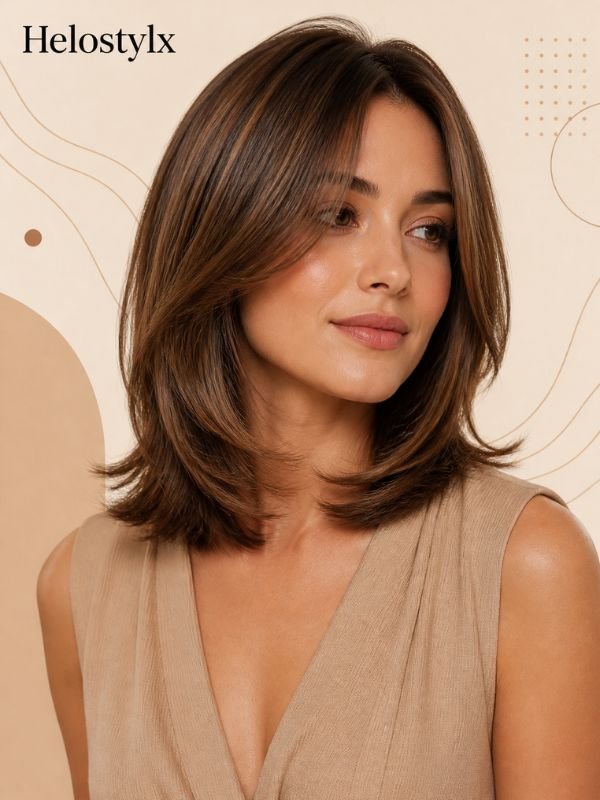
This is the classic option for people who want a change without a dramatic one. The length lands around the shoulders and the layers begin low, which keeps the overall outline full and healthy. You get movement through the ends and a soft, flowing shape.
Best for: Thick hair that feels heavy at the bottom, and anyone moving from longer hair.
Ask your stylist for: Long, invisible layers that start below the chin, plus internal thinning only where the hair feels bulky.
Pro Tip: Style with a light mousse on damp hair and diffuse or air-dry. Then run your fingers through it rather than brushing, which keeps the layers from separating into stringy pieces.
3. The Butterfly Cut
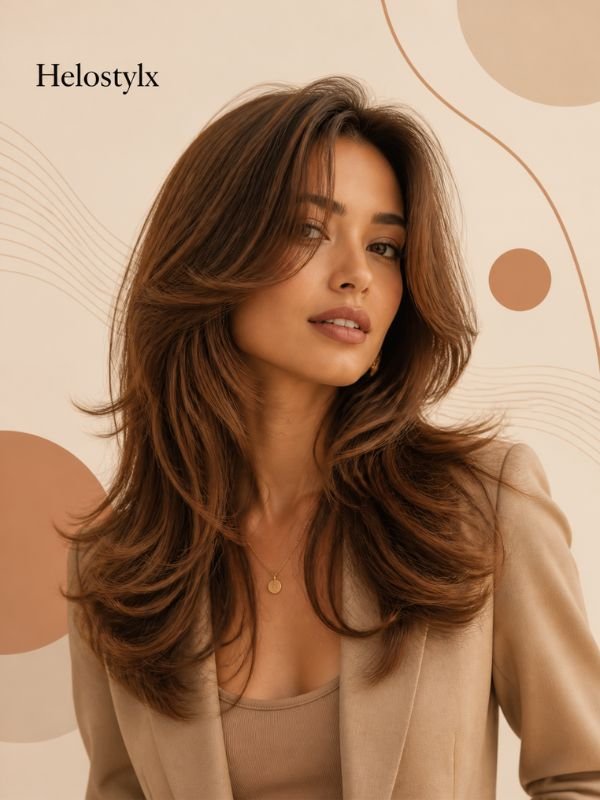
The butterfly cut blends long layers underneath with shorter, face-framing layers on top. The result is a bouncy, voluminous shape that looks like a layered blowout even on regular days. On thick hair, it removes plenty of weight while still keeping length.
Best for: Thick straight or wavy hair, and people who like volume around the face.
Ask your stylist for: A butterfly cut at shoulder or just past, with face-framing layers that start near the cheekbones and blend into longer layers behind.
Pro Tip: Because the top layers are shorter, the shape relies on a quick blow-dry to stay lifted. Use a round brush on the front pieces and a little heat protectant. Without that, the layers can look flat.
4. The Modern Shag

The shag has been a favorite on thick hair for years because dense strands hold the texture so well. The modern version is softer than the old-school, heavily choppy shag. Layers are blended, the top has some lift, and the ends are wispy rather than razor-sharp.
Best for: Thick wavy hair, and people who love a lived-in, undone look.
Ask your stylist for: A soft, blended shag at medium length, with layers cut mostly with scissors rather than a razor to avoid frizz.
Pro Tip: Apply a texturizing spray to the mid-lengths and ends, then scrunch. If your hair is coarse or prone to frizz, add a smoothing cream first so the texture looks soft instead of puffy.
5. The Wolf Cut
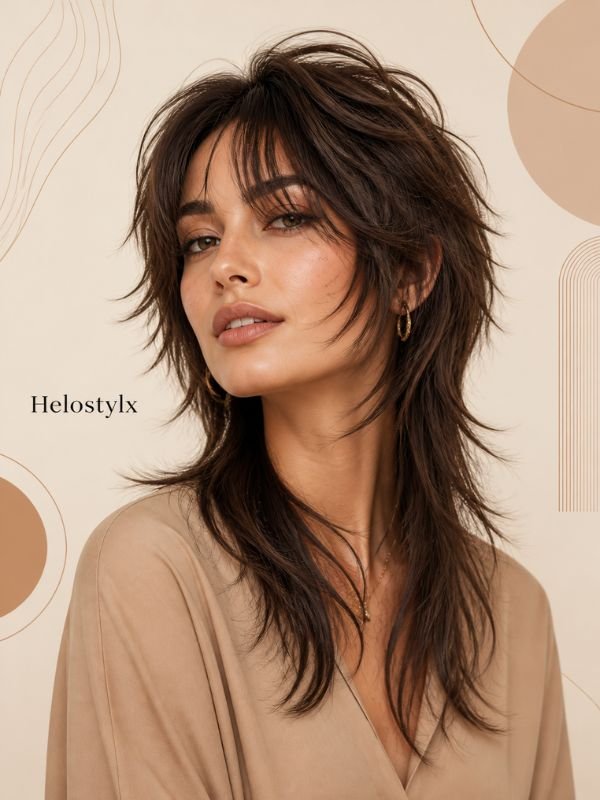
The wolf cut mixes shag layers with a mullet-inspired shape: shorter, shaggy layers at the crown and longer pieces through the back. On thick hair, it gives dramatic volume at the top and keeps the weight of the length at the nape.
Best for: Wavy or curly thick hair, and anyone who wants a trendy, edgy shape.
Ask your stylist for: A medium-length wolf cut with softer, blended layers so it does not become overly short on top.
Pro Tip: Ask for the layers to be cut gradually rather than in big chunks. A harsh jump between the short and long layers is the most common reason a wolf cut looks heavy instead of airy on dense hair.
6. The U-Cut

The U-cut leaves the back of the hair in a soft, rounded curve, with longer pieces at the sides that frame the face. It feels softer than a V-shape and keeps more weight in the center of the back, which helps thick hair look balanced.
Best for: Thick straight or slightly wavy hair, and those who like a clean, feminine outline.
Ask your stylist for: A U-shaped hem at the back with gentle layers that blend into the front, and light thinning in the interior.
Pro Tip: Trim every eight to ten weeks. The rounded line is easy to see, so uneven growth shows quickly, and dense hair tends to lose shape faster than people expect.
7. The Textured Mid-Length with Internal Layering (for Thick Wavy Hair)
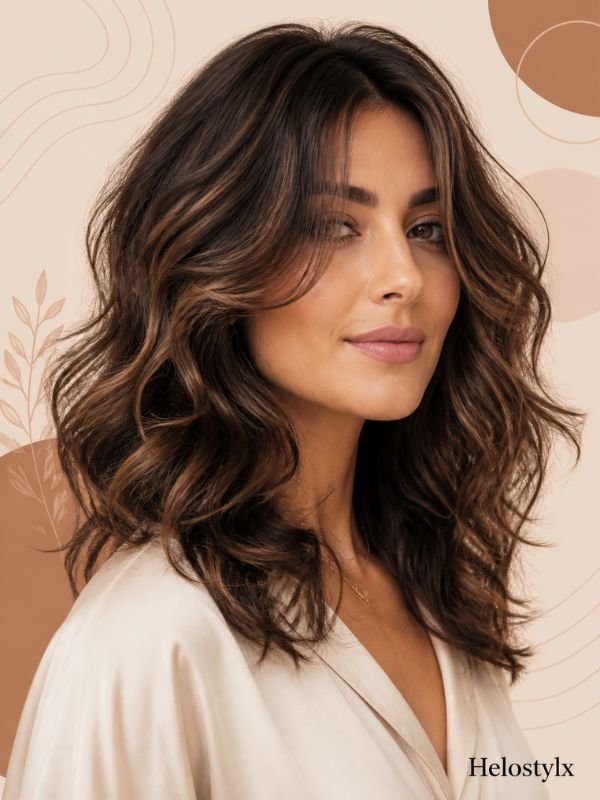
This cut is built for people whose waves create a pyramid shape. Instead of cutting visible layers, the stylist removes weight from underneath so the waves stack neatly and the outline stays slim. It is the most forgiving option for humid days.
Best for: Thick wavy hair that expands outward, especially on the sides.
Ask your stylist for: Internal layering or channel cutting through the mid-lengths, with slightly textured ends to encourage the wave.
Pro Tip: Shake off water gently, apply a curl cream or lightweight gel while the hair is still wet, and avoid touching it until it is dry. Touching the hair while it dries breaks up the waves and invites frizz.
8. The Long Face-Framing Layers with a Curtain Bang
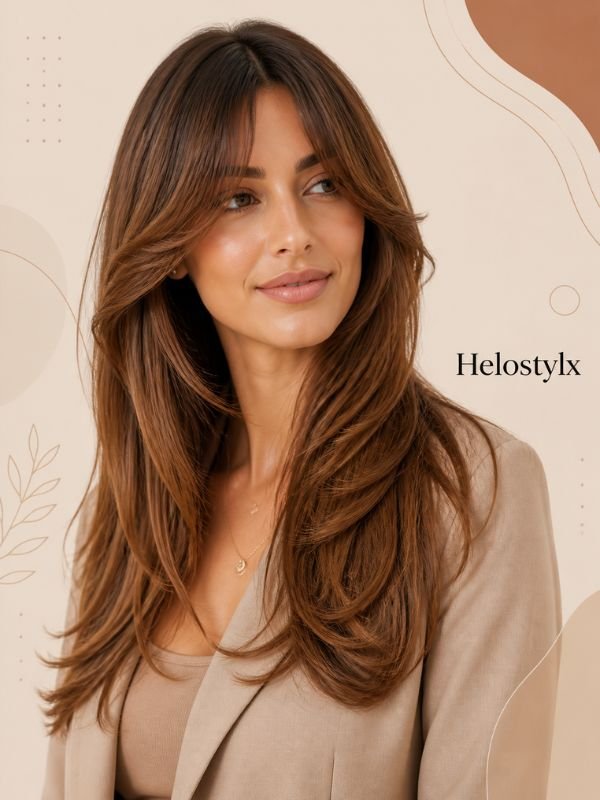
Curtain bangs part in the center and sweep to each side, which makes them one of the easiest fringe options on thick hair. The long layers around the face blend them into the rest of the cut, so there is no sharp line where the bang begins.
Best for: Straight to wavy thick hair, and most face shapes, especially round, square, or long ones.
Ask your stylist for: Curtain bangs that start at the cheekbone or eyebrow and blend into long face-framing layers, with the rest of the hair at shoulder length.
Pro Tip: Check your hairline before committing. A strong cowlick or a very low, thick hairline may need a slightly longer bang. Style the fringe with a small round brush while the hair is slightly damp.
9. The Layered Medium Cut for Thick Curly or Coily Hair
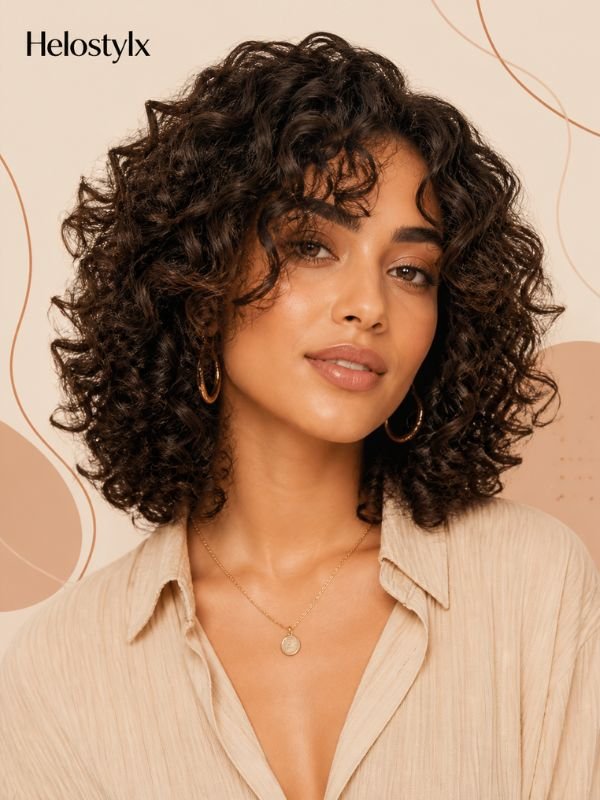
Thick curls need shape more than anything else. Without layers, the hair stacks into a triangle. With the right layers, the curls bounce upward and the weight spreads more evenly. Cutting dry or curl by curl helps the stylist see how each spiral actually falls.
Best for: Thick curly and coily textures, from 3A to 4C.
Ask your stylist for: A medium-length layered cut shaped around your natural curl pattern, ideally cut dry or on dry-looking, styled curls.
Pro Tip: Choose a stylist with specific experience in curly cutting. Detangle gently with conditioner and a wide-tooth comb, and never brush curls dry, as that is the fastest way to turn defined curls into frizz.
10. The One-Length Blunt Lob (with Internal Thinning)
A blunt lob shows off thickness better than almost any other cut. The line is clean, the ends look full, and the style feels expensive. The key word is internal: without hidden weight removal, a blunt lob on dense hair becomes heavy and wide.
Best for: Thick, straight, healthy hair, and people who prefer a sleek, minimal look.
Ask your stylist for: A blunt, collarbone-grazing lob with the bulk removed from the inside, and no visible layers.
Pro Tip: Use a flat iron or a smoothing blow-dry brush and a good heat protectant. A blunt cut shows every split end and uneven edge, so keep your trims regular and your ends well moisturized.
11. The Low-Maintenance Long-Layered Medium Cut
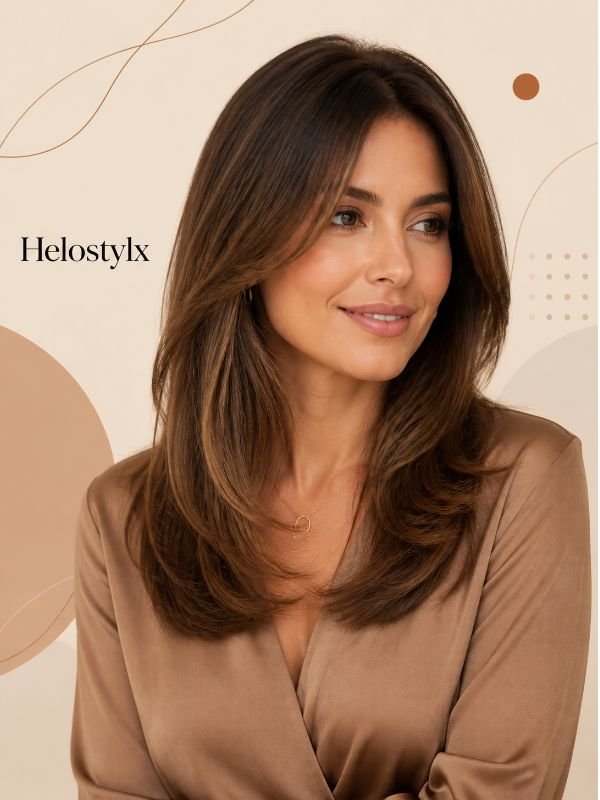
If you want a haircut that looks good with very little styling, this is the one. Long, soft layers add movement, and the mid-length hem keeps the cut easy to air-dry. The shape grows out well, so you can go longer between appointments.
Best for: Busy people, thick hair of any texture, and anyone who dislikes daily heat styling.
Ask your stylist for: Long layers, a soft rounded hem, and light internal thinning. Skip bangs if you want true low maintenance.
Pro Tip: Wash, apply a leave-in conditioner, and let it dry naturally in a loose twist or braid for a softer wave. A single smoothing serum on the ends is usually enough.
Also Read This : 14 Best Hairstyles for Thin Hair to Add Volume and Fullness
Keeping a Medium Thick Cut Sharp
A great haircut can fall apart without maintenance. Thick hair holds its shape longer than fine hair, but the weight starts building back as the hair grows, which is when the shape turns bulky again.
Follow these habits to keep your cut working:
- Trim on schedule. Aim for every eight to ten weeks for sharper cuts such as blunt lobs and U-cuts, and every ten to twelve weeks for layered or shag styles.
- Ask for a bulk check. At each appointment, ask whether the interior needs another round of thinning. Do not thin the ends of coarse hair, as that can make it look frayed.
- Dry gently. Squeeze water out with a microfiber towel or cotton T-shirt instead of rubbing. Rough towel drying causes frizz in thick hair.
- Use heat protection. Dense hair often needs more heat and more time, which means more risk. Apply a protectant every time, and keep your tools at the lowest effective temperature.
- Moisturize the lengths. Thick hair is often dry at the ends because natural oils take longer to travel down. Use a conditioner or mask weekly.
- Sleep smart. A silk or satin pillowcase, or a loose braid, helps reduce friction and keeps the shape intact.
- Section when you style. Dividing the hair into four parts makes blow-drying faster and the result smoother.
If your hair feels heavy again between appointments, a quick visit for a debulking session can refresh the shape without cutting more length.
Which Cut for Which Thick Hair
Use this table to narrow down your choices before the salon. Each recommendation is a starting point, so confirm it with your stylist after they see your growth patterns and density.
| Haircut | Best texture | Face shape it flatters | Styling effort | Maintenance |
| Layered lob | Straight to wavy | Oval, square, heart | Low to medium | Every 8–10 weeks |
| Shoulder-length with long layers | Straight to wavy | Most shapes | Low | Every 10–12 weeks |
| Butterfly cut | Straight to wavy | Oval, round, long | Medium | Every 8–10 weeks |
| Modern shag | Wavy to curly | Oval, heart, long | Low to medium | Every 8–12 weeks |
| Wolf cut | Wavy to curly | Oval, round, square | Medium | Every 8–10 weeks |
| U-cut | Straight to wavy | Oval, long | Medium | Every 8–10 weeks |
| Textured mid-length with internal layering | Wavy | Most shapes | Low | Every 10–12 weeks |
| Face-framing layers with curtain bangs | Straight to wavy | Round, square, long | Medium | Every 6–8 weeks for the bangs |
| Layered cut for curly or coily hair | Curly to coily | Most shapes | Medium | Every 10–12 weeks |
| Blunt lob with internal thinning | Straight | Oval, long, heart | Medium to high | Every 6–8 weeks |
| Low-maintenance long-layered cut | Any | Most shapes | Very low | Every 10–12 weeks |
Quick picks by goal
- Least styling time: Low-maintenance long-layered cut or the shoulder-length cut with long layers.
- Most volume: Butterfly cut or modern shag.
- Sleekest finish: Blunt lob with internal thinning.
- Best for humidity and frizz: Textured mid-length with internal layering.
- Best for curls: Layered cut shaped around your curl pattern.
Recommended Products for Thick Hair
The right products make a good haircut look better and a great one last longer. Thick hair usually wants moisture, slip, and light hold, rather than heavy product that weighs it down. Here is what to look for.
| Product type | What it does | Best for |
| Hydrating shampoo and conditioner | Adds moisture and softness to dense, dry-prone strands | All thick hair, especially coarse |
| Weekly deep conditioning mask | Restores the ends, where thick hair tends to dry out first | Wavy, curly, and heat-styled hair |
| Leave-in conditioner | Detangles and smooths without heaviness | Wavy, curly, and coily textures |
| Heat protectant spray | Shields strands from blow dryers and flat irons | Straight and blow-dried styles |
| Smoothing serum or cream | Tames flyaways and seals the ends | Blunt cuts and coarse hair |
| Curl cream or lightweight gel | Defines waves and curls and reduces frizz | Wavy, curly, and coily hair |
| Texturizing or sea salt spray | Adds grip and separation to layers | Shags, wolf cuts, and layered cuts |
| Wide-tooth comb or detangling brush | Detangles without breaking or pulling | Wet hair of any texture |
| Microfiber towel or cotton T-shirt | Reduces friction and frizz when drying | All thick hair |
| Blow-dryer with a diffuser or nozzle | Speeds drying and controls airflow | All thick hair |
Two buying tips: check ingredient lists for lightweight oils such as argan or jojoba, and avoid products that leave a heavy film. If you have a sensitive scalp or color-treated hair, patch test new products and choose formulas made for your needs.
Final Word from Haiirology
Thick hair does not have to be a daily battle. The best medium-length hairstyles for thick hair share three traits: a length that keeps the weight where it helps, layers or internal thinning that remove bulk where it hurts, and a hem that suits your texture.
Start with your hair type, then match it to a cut from this list. If you are unsure, begin with long layers at the collarbone or shoulder, because that shape is forgiving and easy to adjust. Take photos to your appointment, ask whether the stylist will cut wet or dry, and request internal thinning only where you need it.
A good haircut should feel lighter the moment you leave the salon and stay manageable for weeks. Choose the one that fits your routine, and let your natural density do the work.
