

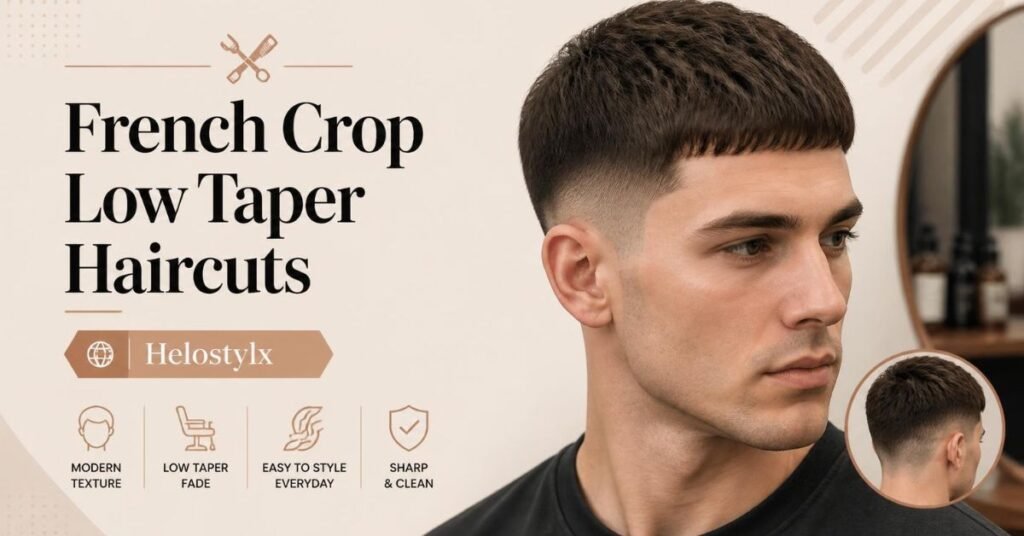
If you want a cut that looks sharp on day one and still looks good on day twelve, the French crop low taper is the haircut to book next. It pairs a short, textured top with tapered sides that fade low near the ear and neckline, giving you a clean silhouette without the harsh, high-and-tight look of a skin fade.
This style has quietly become one of the most requested cuts at barbershops in 2026, and for good reason — it works on straight hair, curly hair, thick hair, and fine hair alike. Below, you’ll find everything you need to know about the French crop low taper, plus 25 real-world variations to bring to your next appointment.
What Is a French Crop Low Taper?
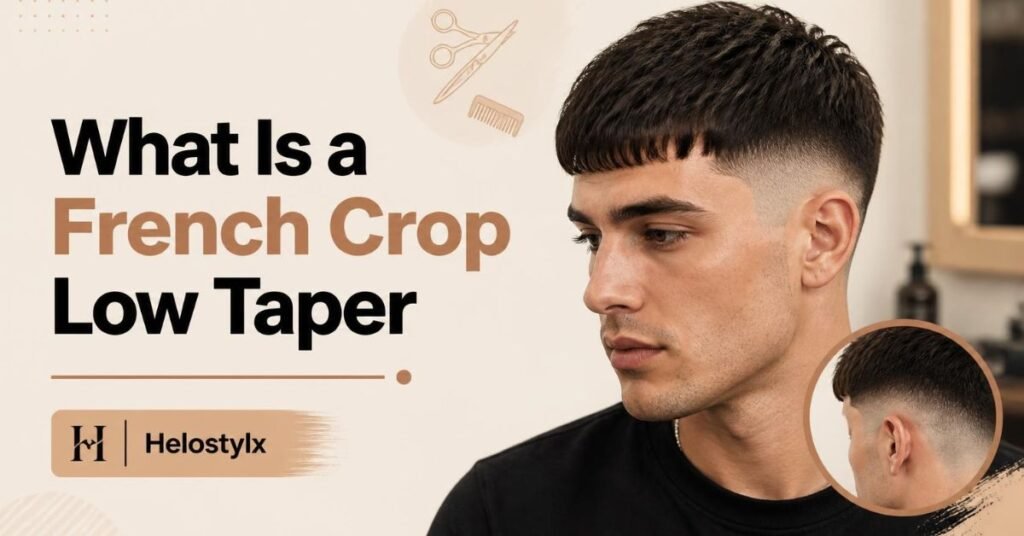
A French crop low taper combines two classic barbershop elements into one modern haircut.
The French crop part refers to the top: short length, heavy texture, and a blunt or slightly textured fringe that falls forward over the forehead. It’s a European-inspired style that trades length for structure.
The low taper part refers to the sides and back. Instead of fading high up near the crown (like a high or mid fade), a low taper haircut keeps length longer through the mid-section and only tapers down to skin near the temple area and neckline. This creates a softer transition between the top and sides.
Together, the combination gives you:
- A textured top with movement and volume
- Tapered sides that stay close to natural hair length until near the ear
- A tapered neckline that looks groomed without looking over-styled
Unlike a low taper fade that goes all the way to skin, some barbers keep the taper soft and blended — it depends on how sharp you want the sides to look.
Why Is the French Crop Low Taper So Popular?
The French crop low taper checks almost every box men look for in a modern barber haircut.
It’s genuinely low-maintenance. Because the fade sits low, regrowth is less noticeable between visits. You can stretch out your barber appointments by a week or two compared to a high skin fade.
It flatters most face shapes. The forward fringe and textured top add visual weight to the upper half of the face, which balances out longer or narrower face shapes while the tapered sides slim down rounder ones.
It works with your natural texture. Whether you have straight, wavy, or curly hair, a skilled barber can adapt the crop to work with your hair texture instead of fighting it.
It’s versatile across ages and settings. This isn’t a trend cut limited to one demographic — it reads as professional in an office and sharp on a night out.
It photographs and styles easily. A textured top with a defined fringe holds product well and looks intentional, even on second- or third-day hair.
25 Sharp Styles of French Crop Low Taper Every Man Should Try
Here are 25 ways to wear the French crop low taper in 2026, from barbershop classics to bold statement cuts.
1. Classic French Crop Low Taper
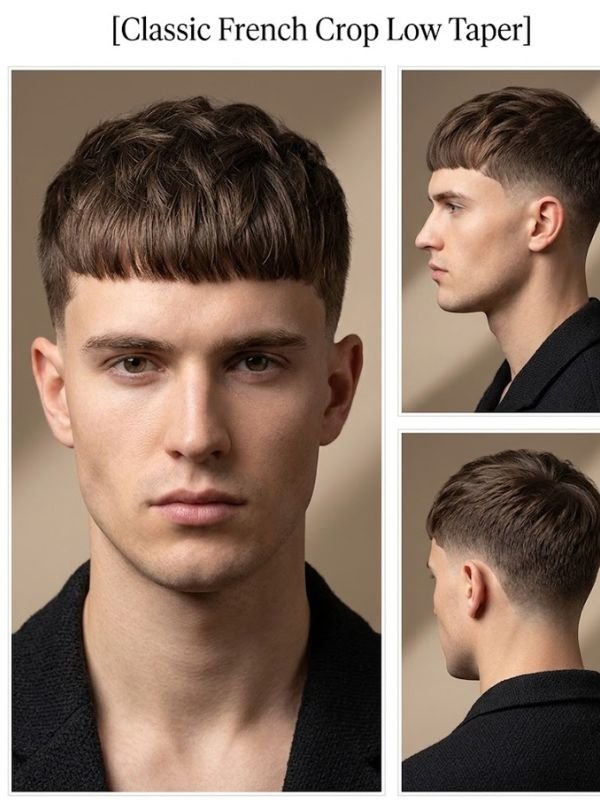
The original blueprint: a short textured top with a blunt fringe cut straight across, paired with tapered sides that blend gently into the neckline. This version skips heavy disconnection and instead relies on a soft, seamless taper — ideal for first-timers who want something clean without commitment to an aggressive fade.
2. French Crop Low Taper Fade
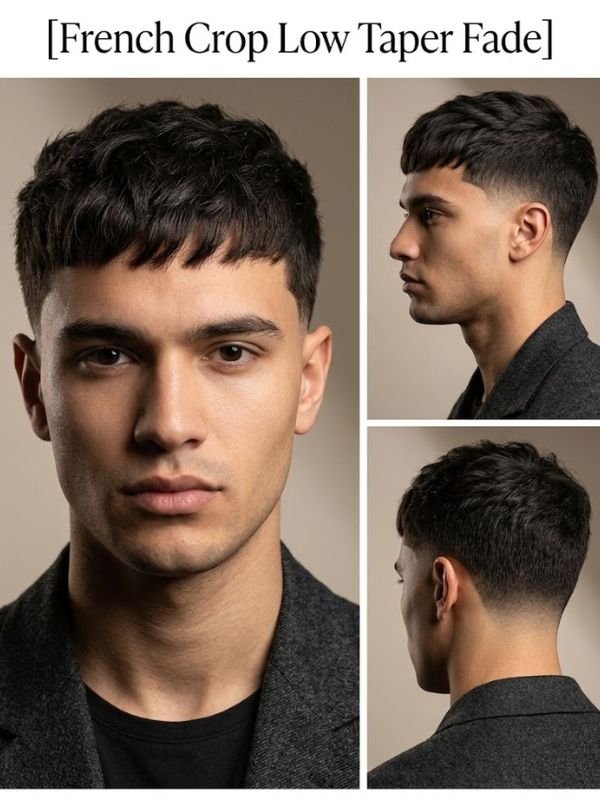
This variation pushes the taper slightly further, blending into a subtle fade near the temple area. The top stays short and textured, but the sides get crisper definition. It’s a great middle ground between a soft taper and a full skin fade.
3. Textured French Crop Low Taper Fade
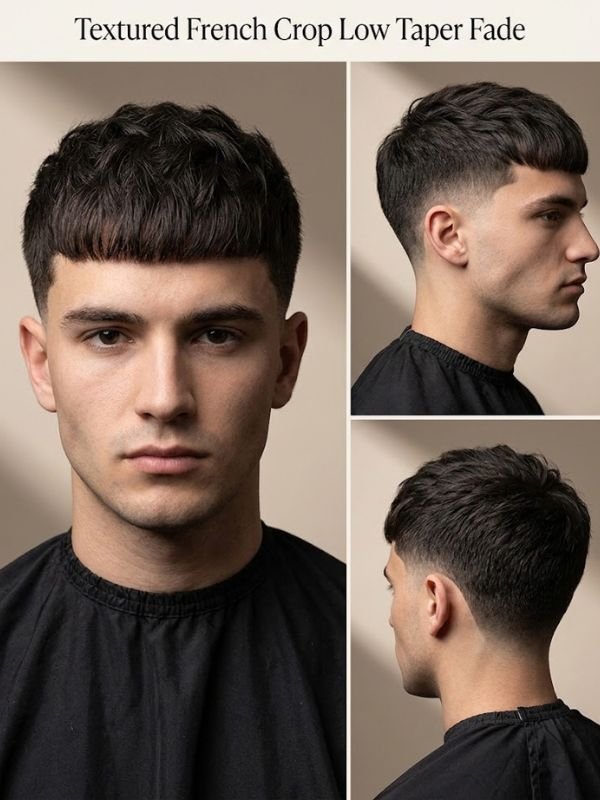
Here, the top is cut with heavier texturizing shears to create separation and movement between individual sections of hair. Combined with a low taper fade on the sides, this style has more visual texture and works especially well for men with medium-to-thick hair density.
4. Messy French Crop Low Taper Fade
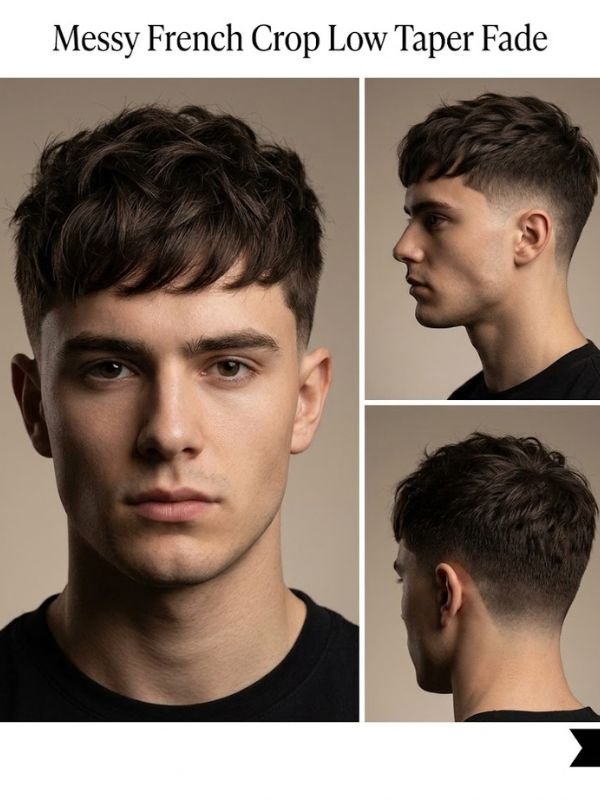
For a lived-in, effortless look, ask your barber to leave slightly more length on top and finish with a matte styling product. The choppy fringe falls naturally instead of sitting in a rigid line, while the low taper keeps the sides tidy underneath the mess.
5. Short French Crop Low Taper
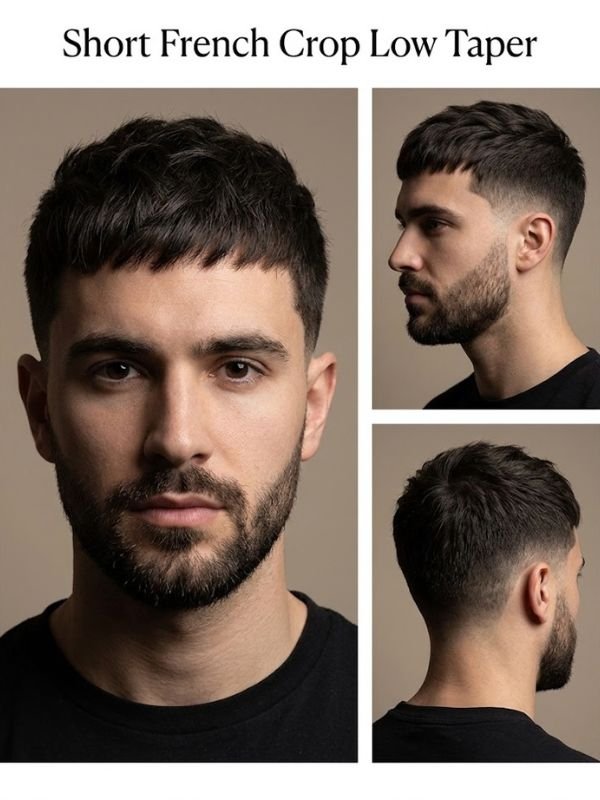
If you prefer minimal styling time, this cropped-down version keeps the top at half an inch or less. The short textured top still has enough length to add texture with your fingers, and the tapered sides stay close and clean — perfect for gym-goers and low-fuss routines.
6. French Crop Low Taper for Wavy Hair
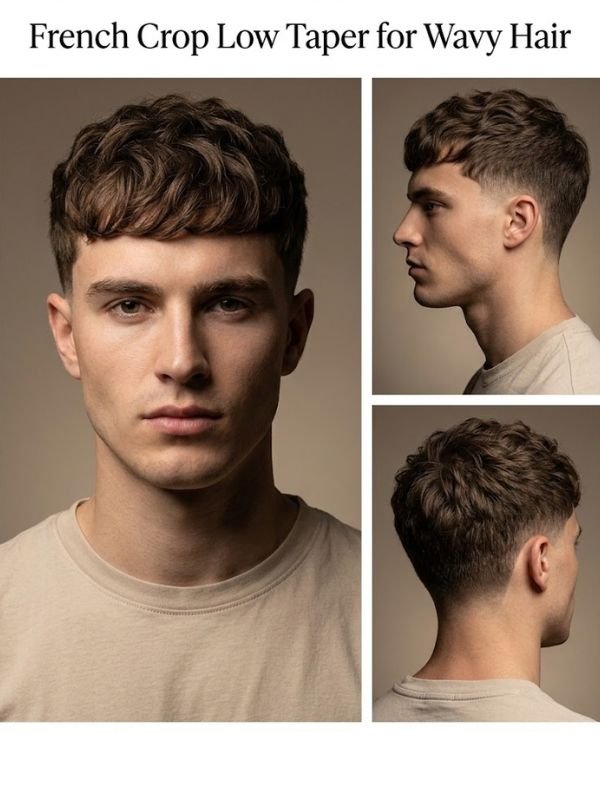
Wavy hair adds natural movement to the fringe without any extra product. Barbers typically point-cut the top to enhance the wave pattern and keep the taper soft, letting the natural texture do most of the styling work.
7. French Crop Low Taper for Straight Hair
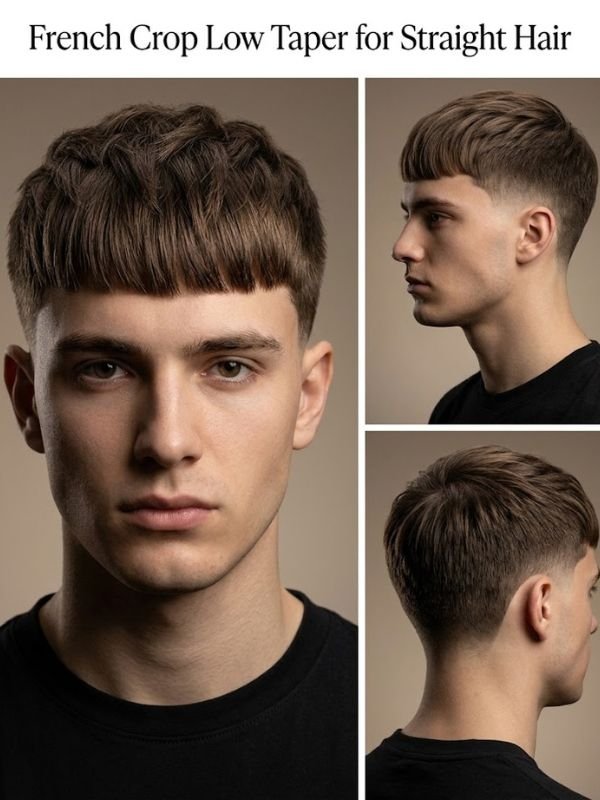
Straight hair holds a blunt fringe beautifully, making this one of the crispest-looking versions of the cut. A slightly heavier fringe line paired with a precise tapered neckline gives straight-haired men a sharp, structured finish.
8. French Crop Low Taper for Curly Hair
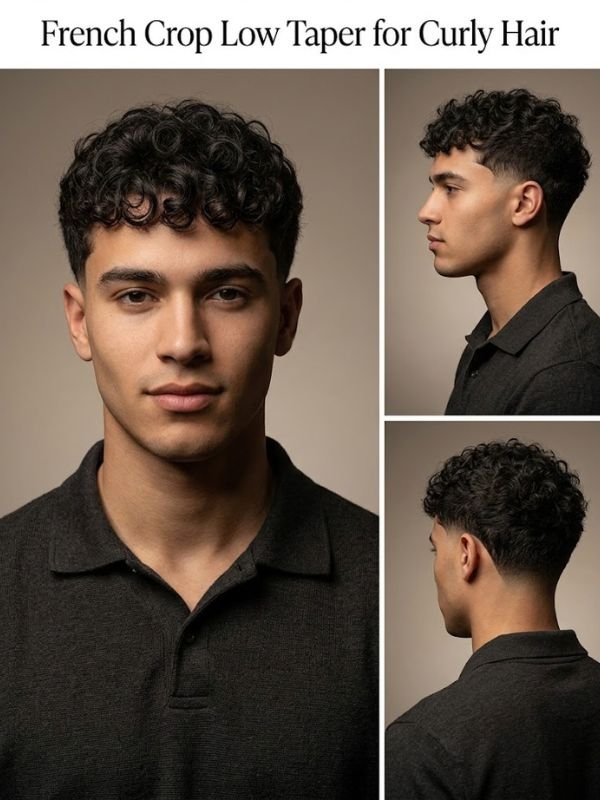
Curly hair thrives with this cut when barbers cut with the curl pattern rather than against it, using scissor-over-comb techniques on top. The low taper on the sides keeps curls from looking bulky while preserving spring and volume up top.
9. French Crop Low Taper for Thick Hair
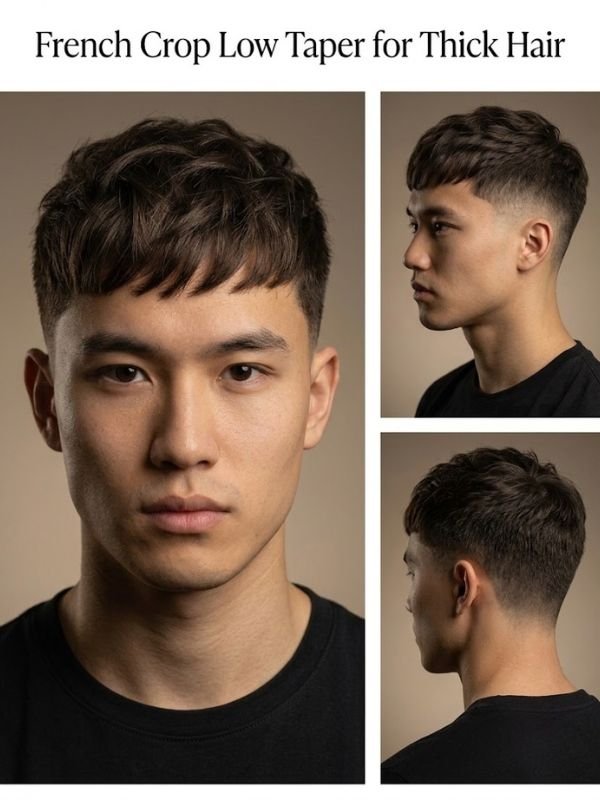
Thick hair benefits from heavy thinning and texturizing on top to prevent the fringe from looking bulky. The low taper removes weight gradually from the sides, balancing out the density without making the cut look flat.
10. French Crop Top Low Taper
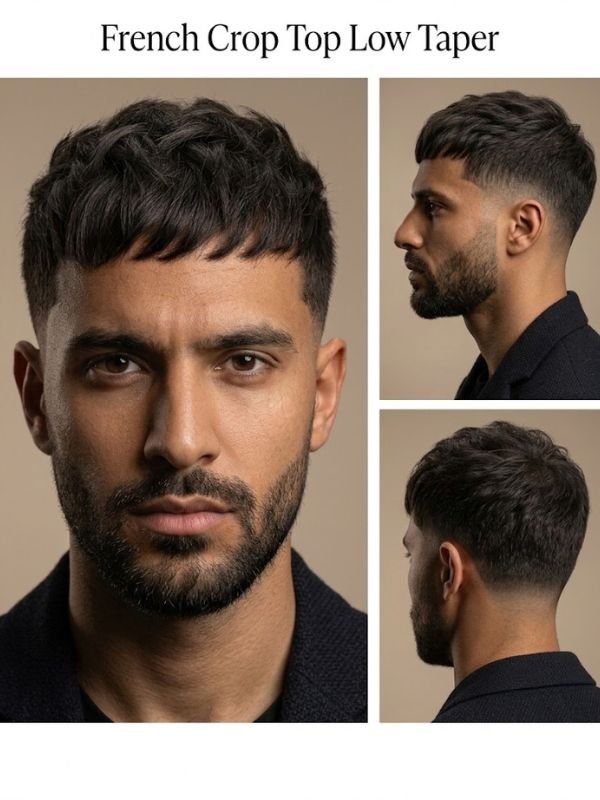
A slightly longer take on the classic, this version keeps more length through the crown for extra styling versatility — you can push it forward for a fringe-forward look or comb it back for something dressier, all while the low taper stays consistent underneath.
11. French Crop Low Taper with Textured Fringe
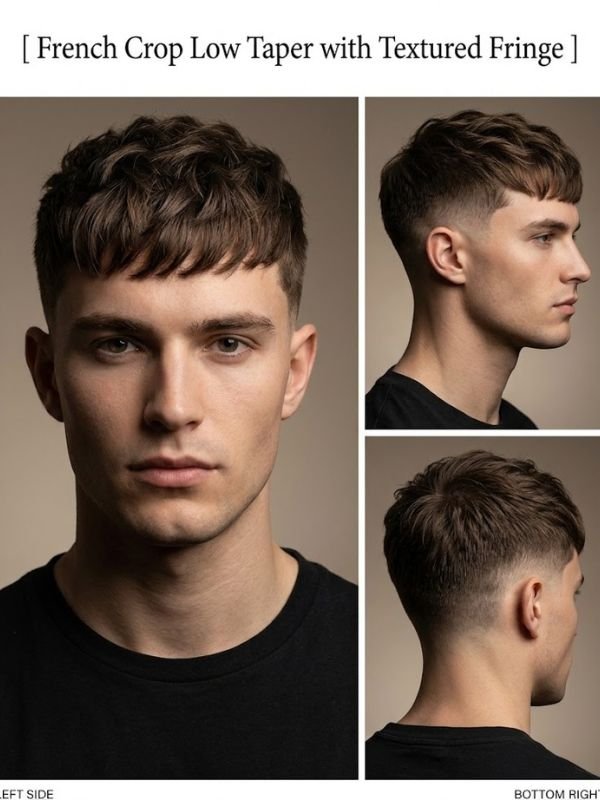
Instead of a blunt, straight-across fringe, this style uses point-cutting to create a textured fringe with soft, jagged ends. It’s a more casual, modern take that photographs well and works great with matte clay or paste.
12. Low Taper Mullet French Crop
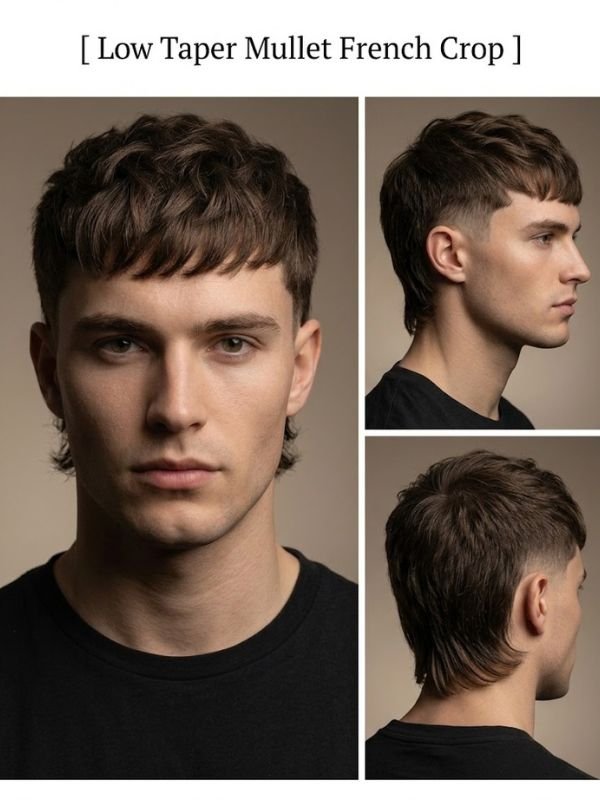
A bold hybrid for men who want an edge: short textured crop on top and sides, but slightly more length left at the back. The low taper keeps the sides refined so the longer back doesn’t look sloppy — a balanced way to try the mullet trend.
13. Modern French Crop Low Taper
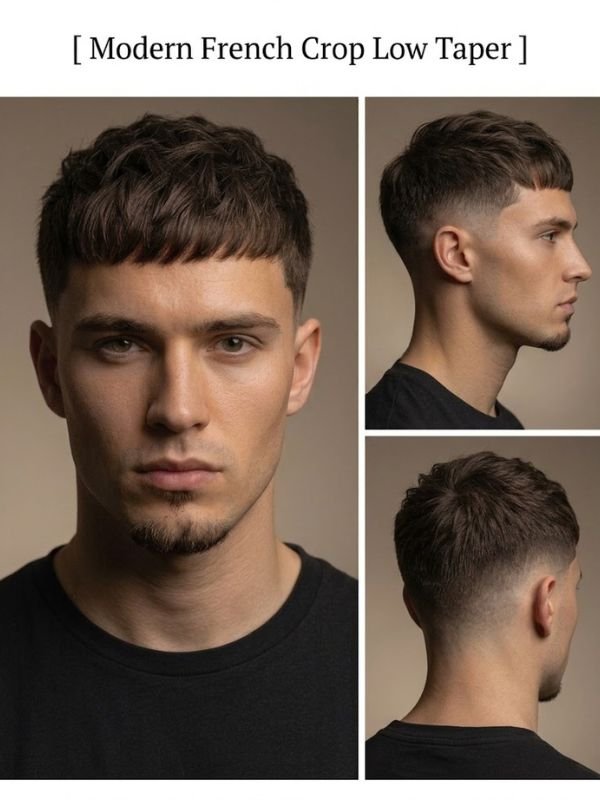
This version leans into current barbershop trends with a slightly disconnected top, sharper line up, and a crisp low taper fade. It’s the go-to choice for men who want the classic silhouette with a fresher, 2026-appropriate finish.
14. Long French Crop Low Taper
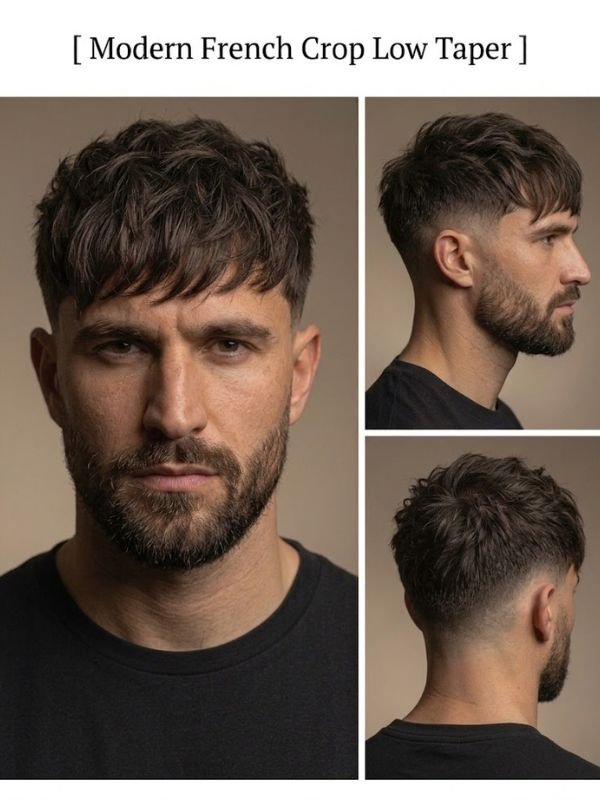
For those not ready to go too short, this variation keeps two to three inches on top while maintaining the low taper underneath. It offers more styling options — slicked back, textured forward, or side-swept — without losing the core crop structure.
15. French Crop Low Taper with Beard
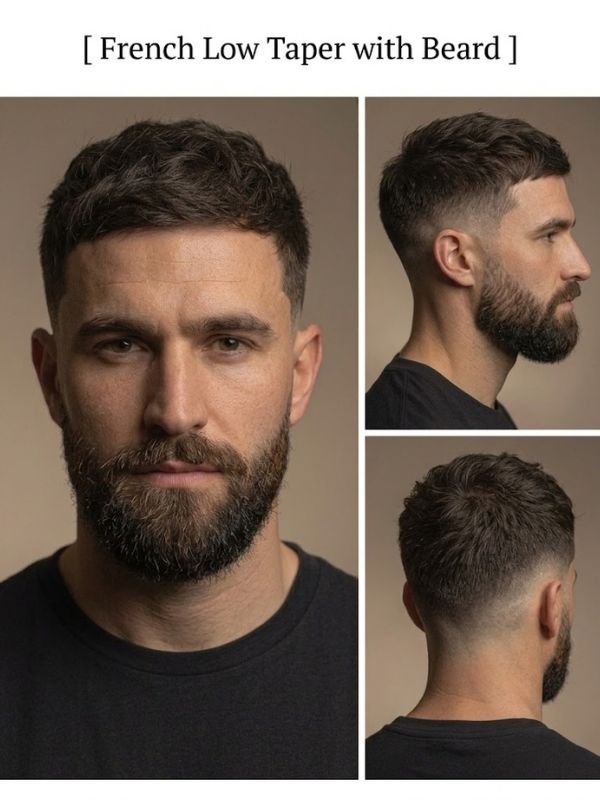
Pairing this cut with a well-groomed beard creates a complete, polished look. Barbers often blend the beard fade into the same low taper line along the jaw and neckline so the entire silhouette feels connected and intentional.
16. French Crop Low Taper for Round Face
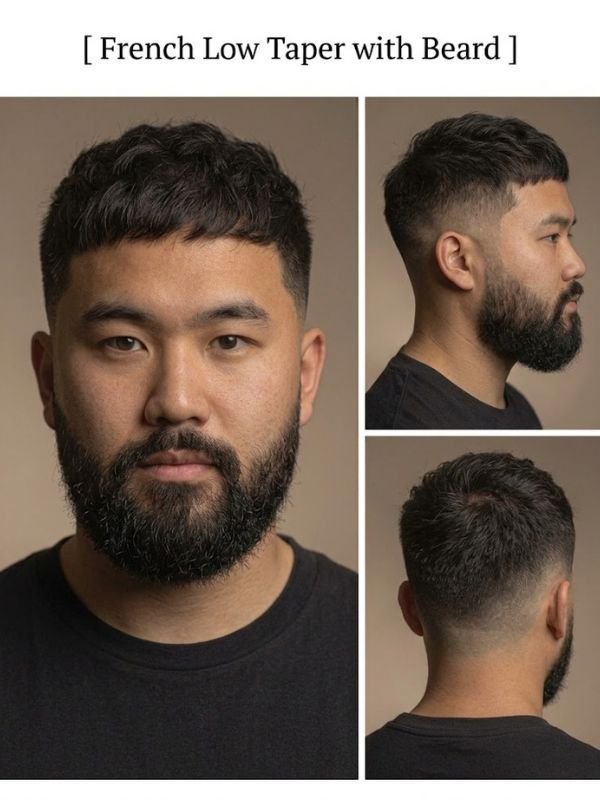
For round face shapes, height on top is key. Ask your barber for extra volume through the crown and a slightly angled fringe to elongate the face, while keeping the tapered sides close to avoid adding width.
Also Read This : Low Taper Fade Mullet: Styles for Every Hair Type & Face
17. French Crop Low Taper with Skin Fade
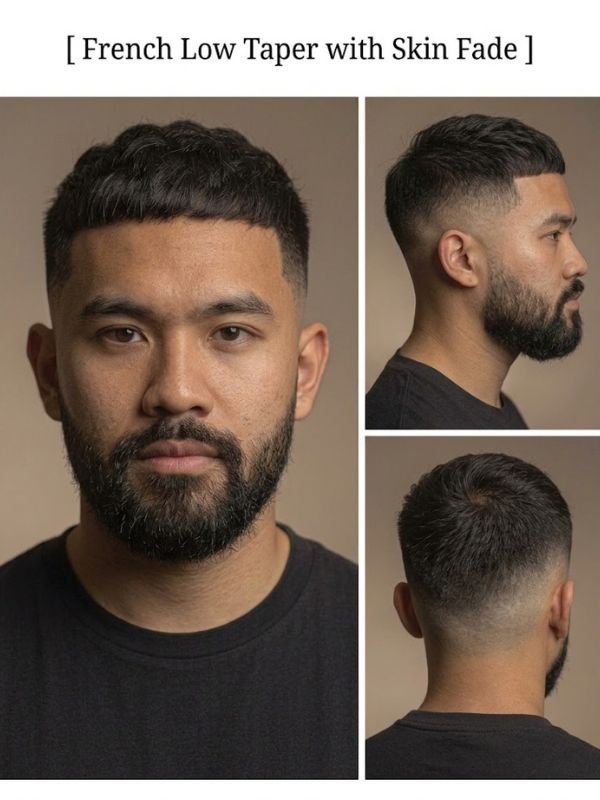
For men who want maximum contrast, the sides taper all the way down to skin near the temple area, while the taper stays low rather than climbing up to a high or mid fade. This delivers sharp definition without an overly aggressive silhouette.
18. French Crop Low Taper with Line Up
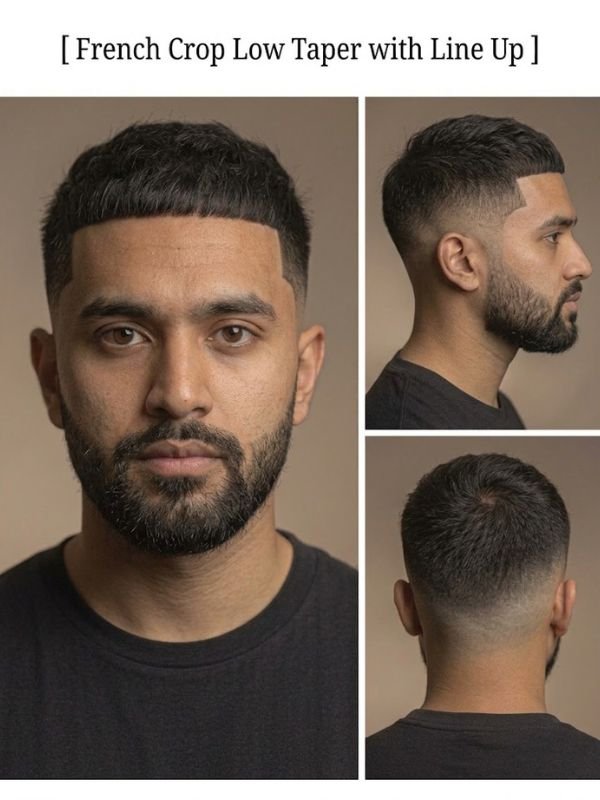
A crisp line up along the hairline and temples instantly sharpens this cut. Combined with the low taper, the line up creates clean geometric edges that make the whole style look fresh straight out of the chair.
19. French Crop Low Taper for Receding Hairline
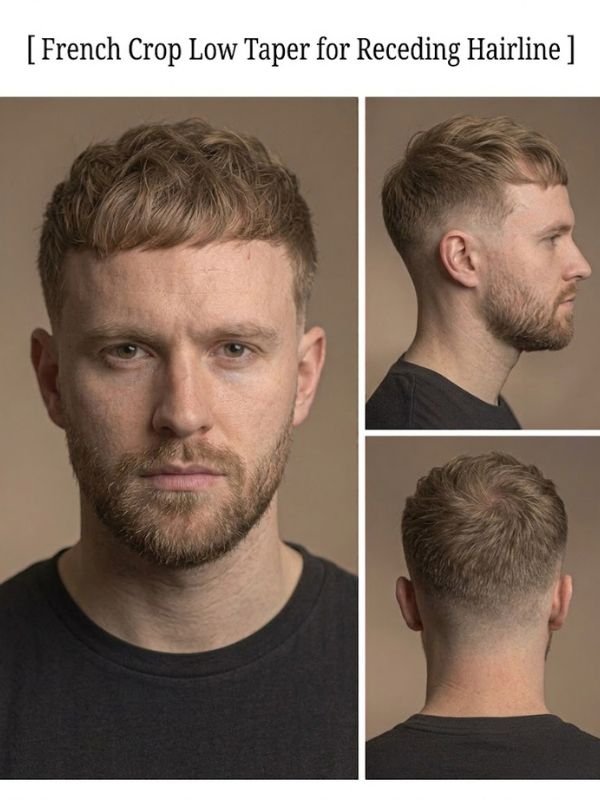
If your hairline has started to recede, a shorter, textured fringe worn slightly forward can soften and disguise the recession. Keeping the sides low-tapered rather than faded high draws less attention to the hairline itself.
20. French Crop Low Taper with Design
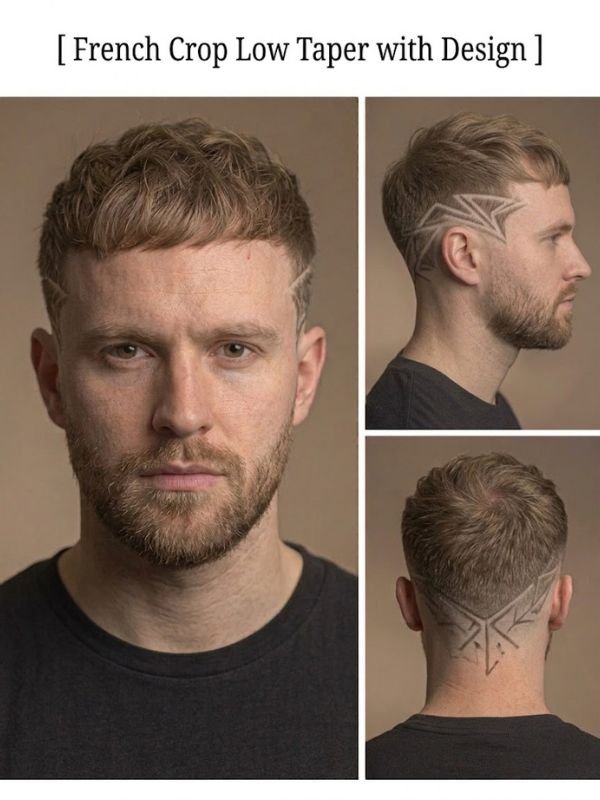
For a more expressive option, add a shaved design — a line, part, or pattern — into the tapered side or temple area. It’s a way to personalize a classic cut without altering the core crop-and-taper structure.
21. Blonde French Crop Low Taper Fade
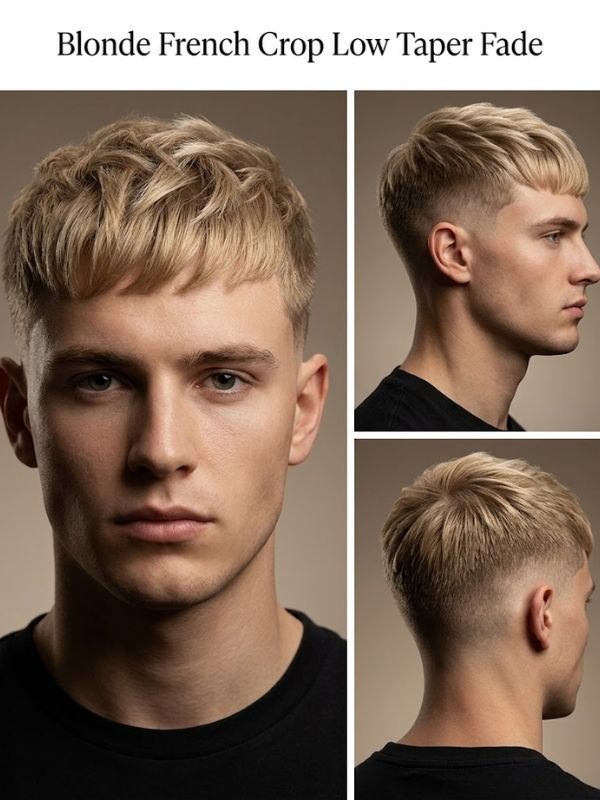
Lightening the top to blonde while keeping the sides natural creates striking contrast against a low taper fade. This look demands more upkeep from a color standpoint but delivers serious visual impact.
22. French Crop Low Taper with Soft Fringe
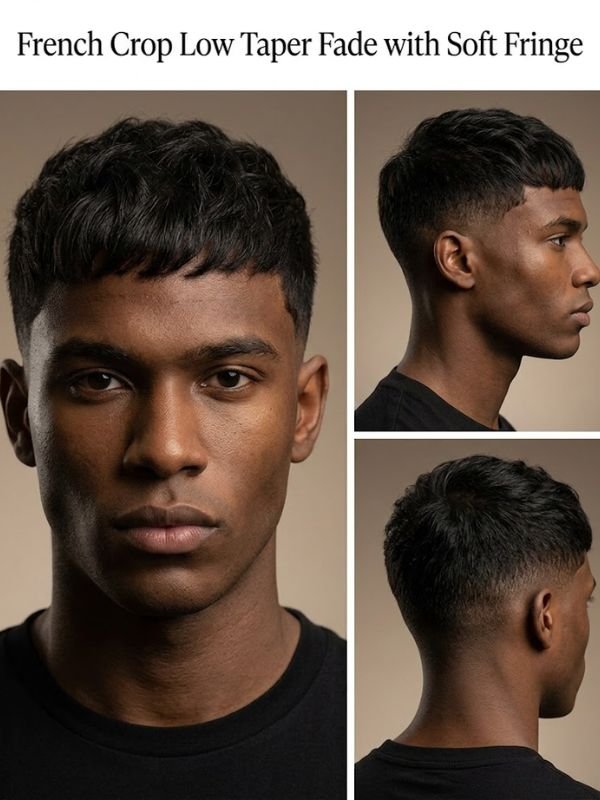
Rather than a sharp, blunt line, this version softens the fringe with light layering so it grazes rather than sits heavy on the forehead. It’s a subtler, more versatile everyday option.
23. French Crop Low Taper with Disconnected Top
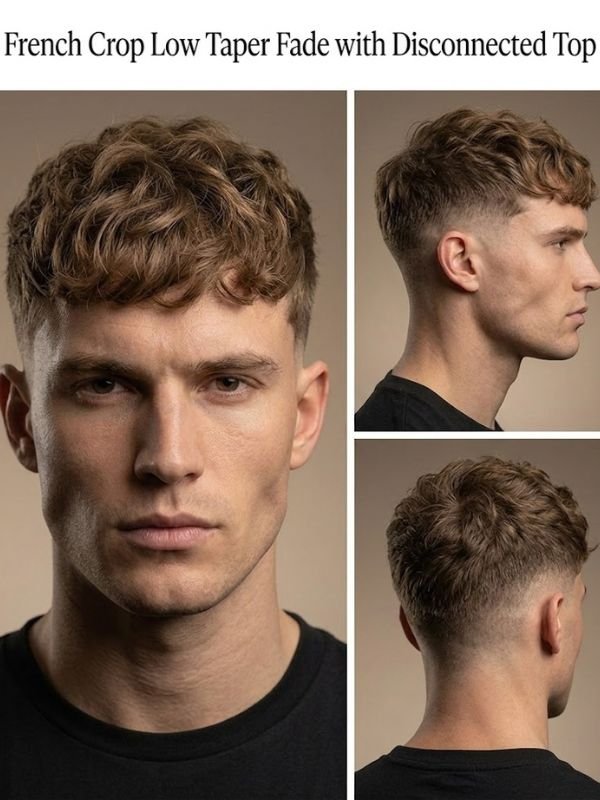
A disconnected top creates a deliberate contrast between the length on top and the tapered sides, skipping the gradual blend for a bolder, more graphic effect. It’s a favorite among men who want their haircut to make a statement.
24. French Crop Low Taper for Fine Hair
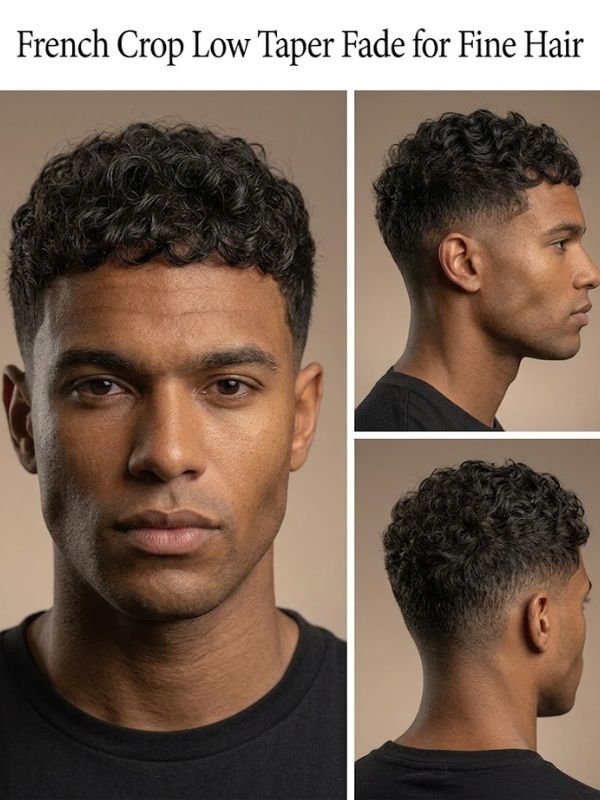
Fine hair needs strategic texturizing to avoid looking thin or flat. Barbers keep the top slightly longer and use minimal thinning, relying on the tapered sides to create the illusion of fuller density up top.
25. French Crop Low Taper with Natural Texture
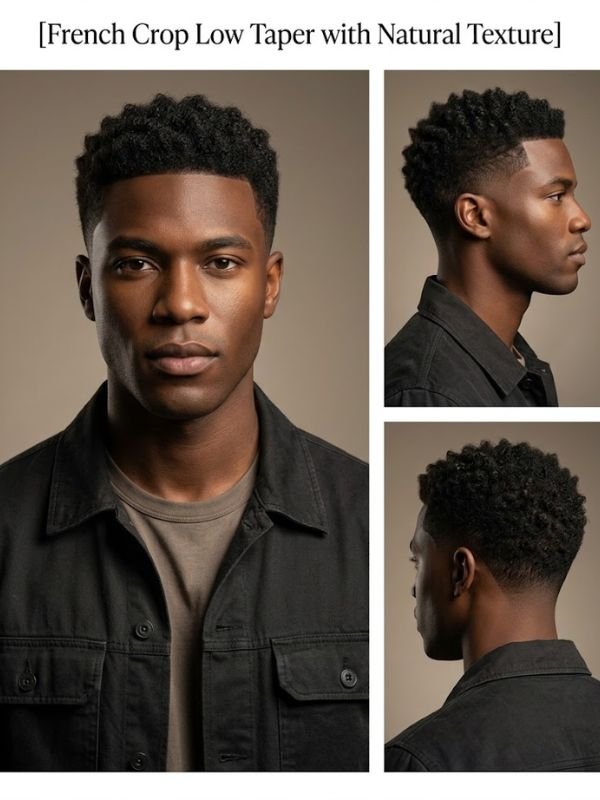
This version works entirely with your natural texture — no heavy product, no rigid styling. The cut is designed so your hair falls into place after a towel-dry, making it one of the most low-maintenance options on this list.
French Crop vs Low Taper Fade: Which One Should You Choose?
These two terms often get used interchangeably, but they describe different parts of the same haircut.
A French crop specifically describes what happens on top: short length, blunt or textured fringe, minimal layering. A low taper fade, on the other hand, describes what happens on the sides: hair gradually shortens from mid-length down to skin or near-skin, starting low near the ear rather than up near the temple.
Here’s how to decide:
- Choose a standalone low taper fade if you want more length and flexibility on top with simple, subtle tapering on the sides.
- Choose a French crop low taper if you want the structured, textured top of the crop combined with the clean, low-maintenance sides of the taper.
- If you’re unsure, the combined French crop low taper is the safer starting point — it’s easier to grow out or adjust than a more aggressive high fade.
Most barbers agree the combination gives you the best of both: definition on the sides, texture and personality on top.
How to Ask Your Barber
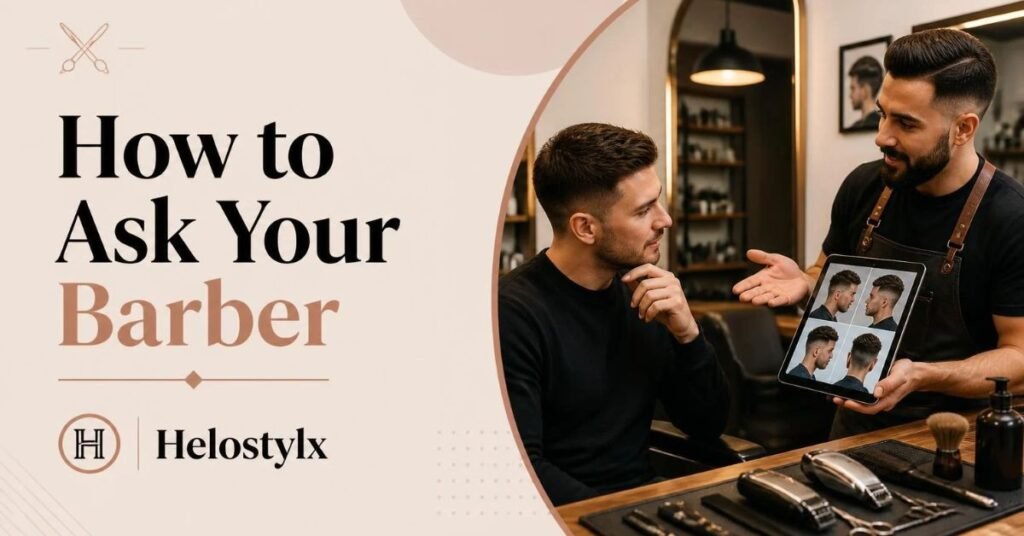
Walking in with the right vocabulary makes a huge difference in getting the cut you actually want. Try this:
- “I’d like a French crop on top — short with texture, and a fringe that falls forward.”
- “For the sides, I want a low taper — start the fade near my ear, not up by my temple.”
- “Keep the tapered neckline clean, but not a hard shaved line unless I ask for one.”
- Bring a reference photo. Even with the right terminology, visuals help your barber match your exact hair length and texture expectations.
It also helps to mention your face shape and lifestyle — how often you can get back in the chair, and how much daily styling you’re willing to do.
Styling Tips
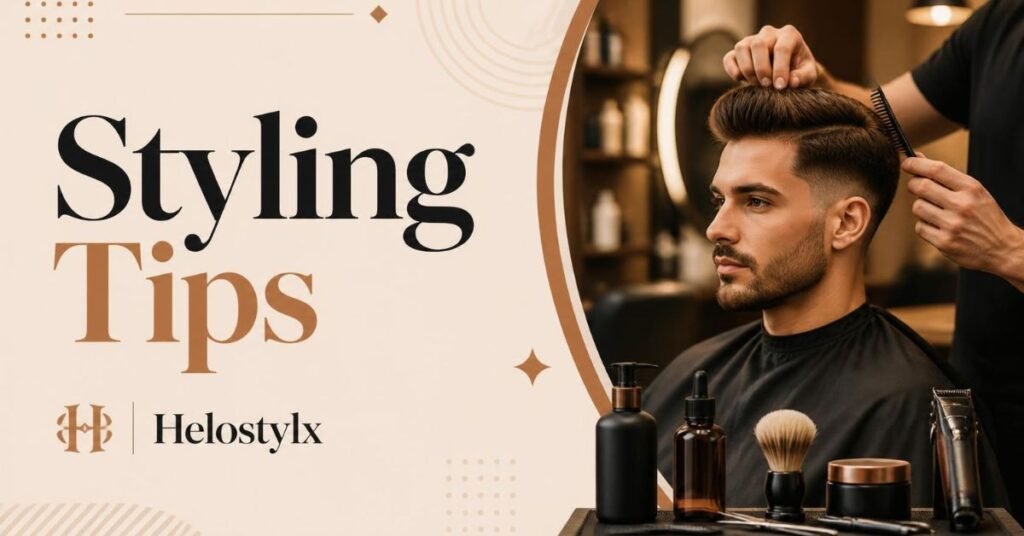
Getting the cut is only half the equation — styling it well at home keeps it looking barbershop-fresh.
- Start with damp hair. Apply a small amount of matte clay, paste, or cream to towel-dried hair for the most natural finish.
- Work product through with your fingers, not a comb, to preserve the choppy, textured look rather than flattening it.
- Push the fringe forward for the classic French crop shape, or use a blow dryer on low heat to add lift at the root first.
- Avoid overloading with product — a little goes a long way on short, textured hair, and too much will weigh the top down.
- Sleep on a slightly damp pillow-safe texture if you want to reduce morning restyling; some men simply wet and re-scrunch the top instead of full restyling.
Additional Things to Consider Before Your Next Cut
A few practical points to keep in mind before you sit in the chair:
- Fade height matters. Double-check with your barber that “low taper” means starting near the ear/neckline, not partway up the side — terminology can vary slightly between barbershops.
- Hair texture changes the outcome. The same request can look different on curly versus straight hair, so trust your barber to adjust technique, not just length.
- Maintenance schedule. Even a low-maintenance haircut needs a trim every 3-4 weeks to keep the taper clean and the fringe from growing out unevenly.
- Growing it out. Because the taper is low, this cut grows out more gracefully than high fades, giving you a bit more flexibility between appointments.
- Product investment. A quality matte clay or paste makes a noticeable difference in how well the textured top holds shape throughout the day.
Conclusion
The French crop low taper earns its popularity honestly — it’s sharp, adaptable, and doesn’t demand hours of daily upkeep. Whether you go classic and blunt, textured and messy, or add a skin fade and line up for extra definition, there’s a version of this haircut suited to your face shape, hair texture, and lifestyle.
Pick two or three styles from this list, save the photos, and bring them to your next barbershop visit. A great low taper haircut starts with clear communication — and now you’ve got the vocabulary to get exactly what you want.
FAQs
What is the difference between a French crop and a low taper fade?
The French crop is the short, textured top with a fringe; the low taper fade is how the sides taper down to skin starting near the ear.
Is a French crop low taper high-maintenance?
No — the low fade height hides regrowth well, so it’s a genuinely low-maintenance haircut.
Does the French crop low taper work for curly or wavy hair?
Yes, barbers simply adjust their cutting technique to work with curly or wavy natural texture instead of against it.
How often should I get my French crop low taper trimmed?
Every 3 to 4 weeks keeps it sharp, though the low taper lets you stretch it a bit longer than a high fade.
