
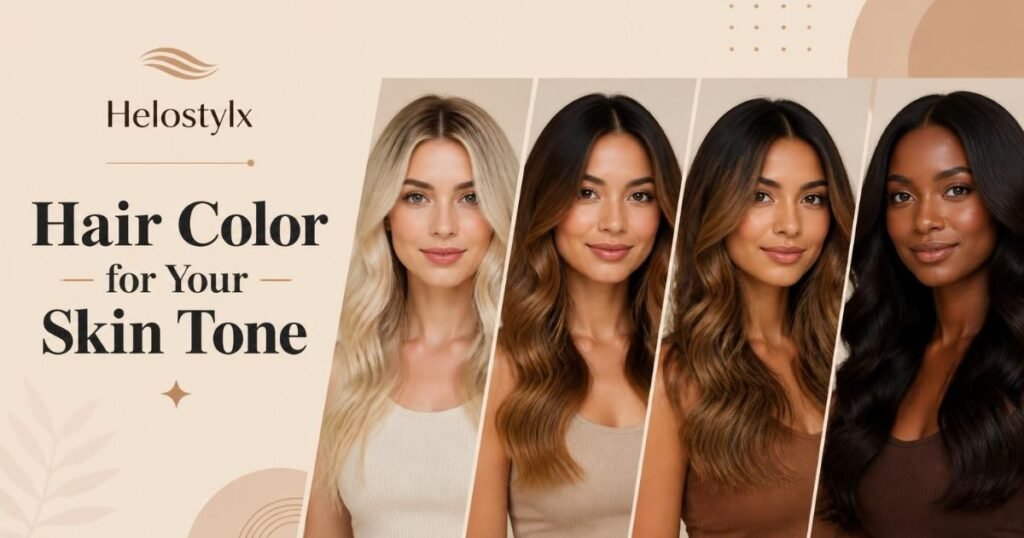
Ever walked out of the salon with a color you were excited about, only to catch your reflection and think, “something’s off”? You’re not imagining it. The shade itself might be gorgeous — just not on you. Finding the best hair color for your skin tone isn’t about chasing trends; it’s about understanding a handful of simple rules that make any color look like it was made for your face.
In this guide, you’ll learn exactly how to figure out your undertone, which shades will make your skin glow, and which ones to approach with caution. No guesswork, no expensive trial-and-error — just a clear roadmap you can actually use before your next color appointment.
Why Skin Tone Matters When Choosing Hair Color
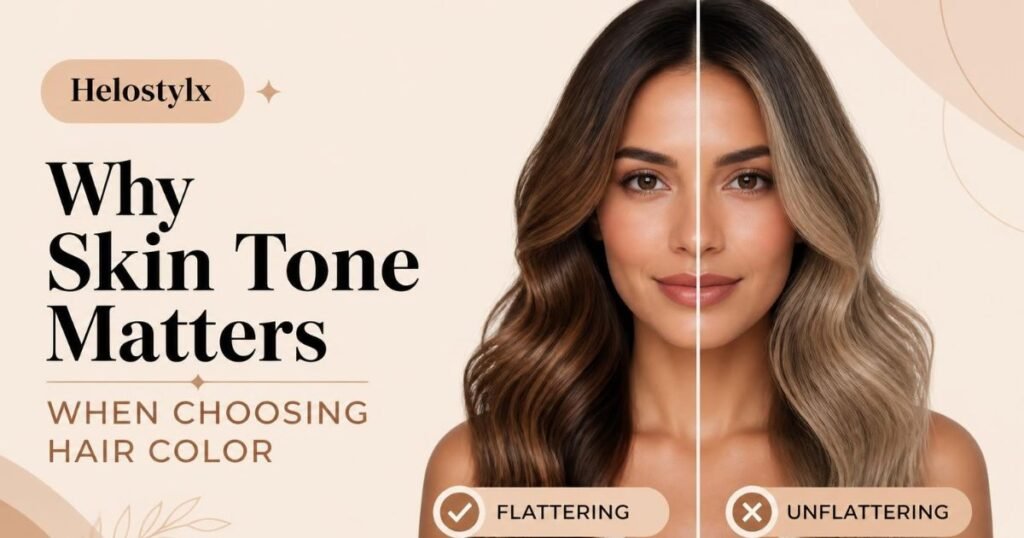
Hair color doesn’t exist in isolation. It sits right next to your face, and your skin reflects light back onto it constantly. That’s why the exact same shade of red can look stunning on one person and slightly harsh on another.
Choosing hair color for skin tone correctly does three things instantly:
- Brightens your complexion instead of washing it out
- Softens features you’d rather not emphasize (like redness or dark circles)
- Makes your eyes and smile the focal point, not your hair
On the flip side, the wrong shade can make skin look sallow, tired, or overly pale — even if your skin is perfectly healthy. This is why colorists always ask about your undertone before they ask about your favorite celebrity’s hair.
Think of your skin tone as the frame around a painting. A great frame doesn’t compete with the art — it enhances it. That’s exactly the job your hair color should do for your face.
How to Find Your Skin’s Undertone
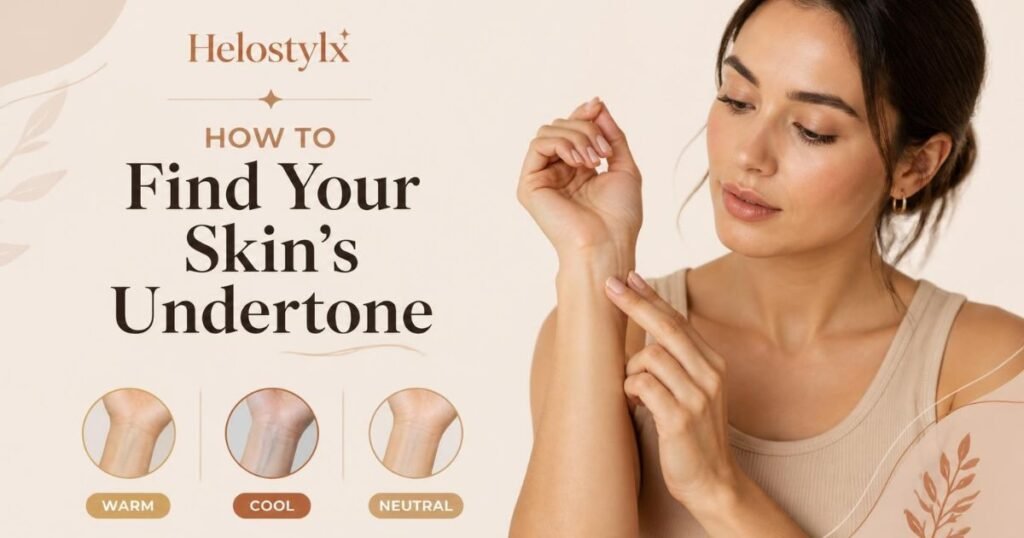
Before you can pick hair colors for different skin tones, you need to know your undertone. Skin tone refers to the surface color (fair, medium, deep), while undertone is the subtle hue beneath the surface — and undertone is what actually determines which colors flatter you.
There are three main undertones: warm, cool, and neutral. Here’s how to identify yours in under two minutes.
The Vein Test
Look at the veins on the inside of your wrist in natural light.
- Greenish veins → warm undertone
- Blue or purple veins → cool undertone
- A mix of both, or you genuinely can’t tell → neutral undertone
The Jewelry Test
Think about which metal looks better against your skin.
- Gold jewelry looks richer on you → warm undertone
- Silver jewelry looks brighter on you → cool undertone
- Both look equally good → neutral undertone
The White Paper Test
Hold a plain white sheet of paper next to your bare face in daylight.
- Skin looks yellow or golden by comparison → warm
- Skin looks pink or rosy by comparison → cool
- Skin doesn’t shift much either way → neutral
The Sun Test
Think about how your skin reacts to sun exposure.
- You tan easily and rarely burn → often warm
- You burn quickly and tan minimally → often cool
- You do a bit of both → often neutral
Run through two or three of these tests together for the most accurate read. Once you know your skin undertone, hair color selection becomes far less overwhelming.
The Best Hair Colors for Each Undertone
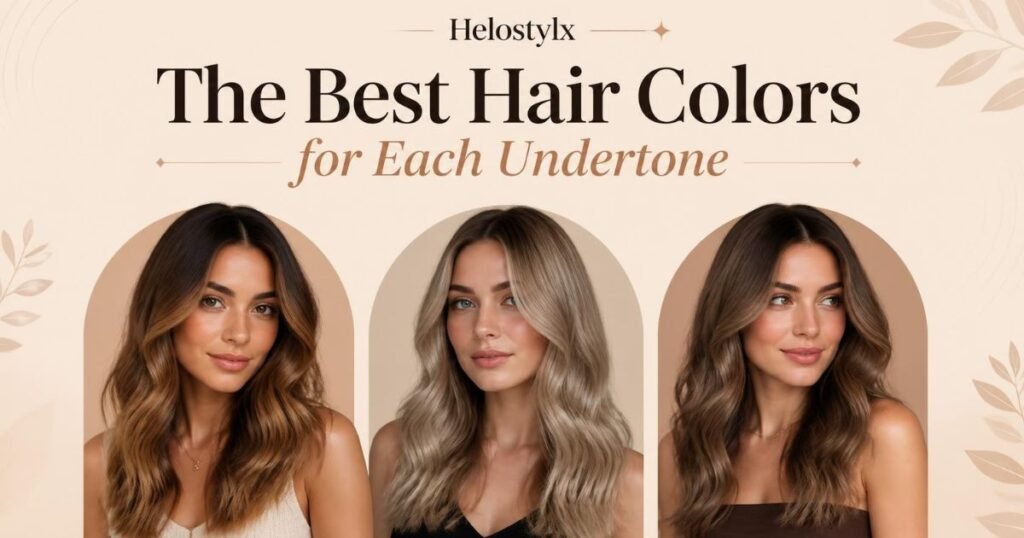
This is where things get practical. Below is a breakdown of the best hair color for your skin tone, organized by undertone so you can jump straight to your category.
Best Hair Colors for Warm Undertones
If you lean warm, your skin has golden, peachy, or yellow-based hues. The goal with hair colors for warm undertones is to complement that warmth rather than fight it with overly ash or cool shades.
Flattering options include:
- Honey blonde – adds warmth without looking brassy
- Caramel brown – rich, glossy, and universally warm-friendly
- Copper red – practically designed for warm undertones
- Golden brown – soft and natural-looking
- Chestnut – deep warmth with dimension
If you’re chasing the best hair color for warm skin tone, copper and caramel tones consistently top the list because they mirror your skin’s natural glow instead of clashing with it.
Shades to approach carefully: Ash blonde, platinum, and jet black can sometimes overpower warm undertones, making skin look pale or tired. If you love these shades, ask your colorist about a soft, customized version rather than the most extreme take.
Best Hair Colors for Cool Undertones
Cool undertones carry pink, red, or blue-ish hues beneath the skin. The best hair color for cool skin tone typically leans ashy, cool, or jewel-toned to match that underlying coolness.
Flattering options include:
- Ash blonde – crisp and cool without being harsh
- Platinum blonde – striking against cool, fair skin
- Burgundy or plum – jewel tones that pop beautifully
- Cool brunette / espresso – deep and rich with blue undertones
- Blue-black – dramatic and cohesive with cool skin
Among hair colors for cool undertones, ash and cool-toned brunettes are especially popular because they create a seamless, natural-looking blend rather than a stark contrast.
Shades to approach carefully: Very golden blondes, orange-based coppers, and warm honey tones can sometimes make cool skin look flushed or uneven. A colorist can neutralize warmth in the formula if you still want to try one of these shades.
Best Hair Colors for Neutral Undertones
Lucky you — neutral undertones sit right in the middle, which means you have the widest range of options. The best hair color for neutral skin tone can lean slightly warm or slightly cool without looking wrong.
Flattering options include:
- Balayage with mixed tones – blends warm and cool beautifully
- Soft brown – a safe, elegant, universally flattering base
- Rose gold – trendy and surprisingly versatile on neutral skin
- Mocha or toffee – warm enough to glow, neutral enough to blend
- Dimensional highlights – mixing warm and cool pieces for depth
With hair colors for neutral undertones, the real advantage is flexibility. You can experiment more freely, though very extreme warm or cool tones may still tip the balance slightly, so subtlety tends to work best.
Also Read : Hair Color Level Chart: A Pro Guide to Hair Levels
Hair Color by Skin Depth
Undertone isn’t the only factor — how light or deep your skin is also plays a role.
Hair color for fair skin tends to look best when it doesn’t create too much contrast. Soft blondes, light browns, and gentle coppers keep the look balanced, while jet black or extremely dark shades can sometimes overpower fair complexions (though when done well, dark hair on fair skin can also look dramatic and striking).
Hair color for medium skin has more room to play. Caramel, chestnut, honey blonde, and rich auburn all tend to look natural and sun-kissed against medium skin tones.
For deeper skin tones, rich, saturated colors — think deep burgundy, espresso, warm caramel, or vibrant copper — tend to look the most luminous, since deeper skin can carry bold pigment beautifully.
Should You Go Lighter or Darker?
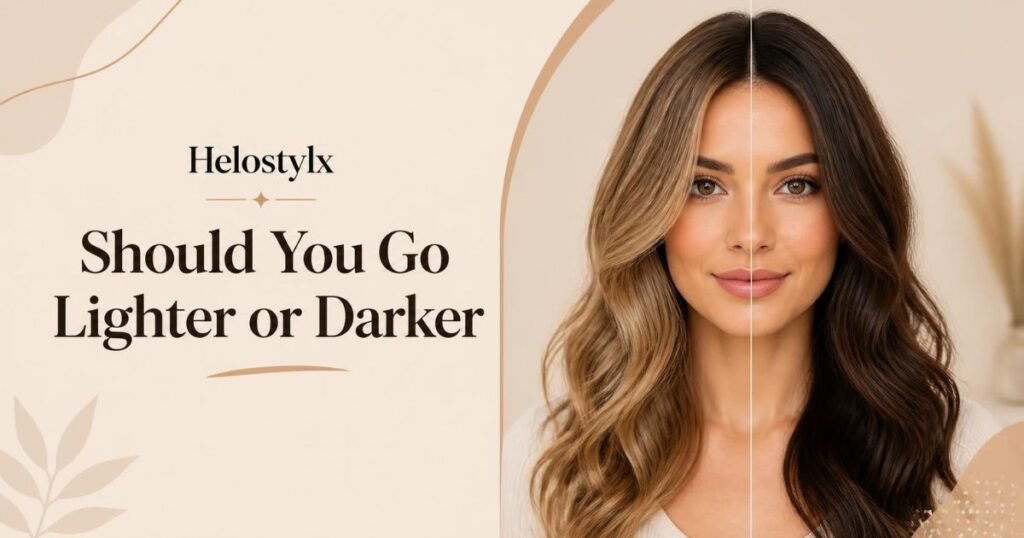
Once you’ve nailed down your undertone, the next question is depth: lighter or darker than your natural shade?
Signs You Might Suit Going Lighter
- You have fair to medium skin with warm or neutral undertones
- You want a softer, more youthful appearance
- Your natural hair is already on the lighter side, so the maintenance gap is smaller
- You’re drawn to sun-kissed, effortless-looking color
Going lighter tends to soften facial features and can brighten the overall look, especially with warm-toned skin.
Signs You Might Suit Going Darker
- You have cool undertones and want striking contrast
- You want a polished, sophisticated look
- Your skin has a lot of natural pigment or depth
- You’re after a low-maintenance color that grows out gracefully
Darker shades tend to add definition and can make eye color pop, particularly for cooler or deeper skin tones.
A Simple Rule of Thumb
As a general guideline, stay within two to three shades of your natural hair color for the most seamless, low-maintenance result. Dramatic changes can look incredible, but they usually require more upkeep, more damage repair, and a colorist who really understands matching hair color to skin tone — not just achieving the trendiest shade.
Common Mistakes to Avoid
Even with the right undertone knowledge, a few common missteps can derail an otherwise great color choice.
- Ignoring your undertone completely. Picking a color purely because it’s trending on social media, without checking if it suits your skin undertone, is the single biggest mistake people make.
- Going too extreme, too fast. Jumping from black to platinum in one session often damages hair and skips the gradual blending that looks most natural.
- Forgetting about eyebrows. Your eyebrows should generally stay within one to two shades of your new hair color, or the look can feel disconnected.
- Not accounting for skin changes over time. Sun exposure, seasons, and even aging can shift how a shade reads on your skin. What worked five years ago might need a small tweak now.
- Choosing based on a photo alone. Lighting, filters, and the model’s unique undertone all affect how a color photographs. Always ask your colorist to translate a photo into a formula suited to your specific undertone.
- Skipping the consultation. A five-minute conversation with your colorist about your undertone and skin depth can save you from a color correction appointment later.
- Overlooking maintenance reality. The most flattering hair colors on paper aren’t worth much if you can’t commit to the touch-up schedule they require. Be honest with yourself about maintenance before committing to high-upkeep shades like platinum or vivid reds.
FAQs
What is the best hair color for warm skin tones?
Warm, golden shades like caramel, honey blonde, and copper typically look the most flattering on warm undertones.
How do I know if my skin undertone is warm or cool?
Check your wrist veins: greenish means warm, blue or purple means cool, and a mix means neutral.
Can neutral undertones wear any hair color?
Yes, neutral undertones are the most versatile and can wear both warm and cool shades successfully.
Does hair color for fair skin need to be light?
Not necessarily — fair skin can wear both light and dark shades well, as long as the undertone is matched correctly.
Conclusion
Finding the best hair color for your skin tone really comes down to one thing: understanding your undertone before you fall in love with a shade. Warm undertones glow with honey, caramel, and copper. Cool undertones shine with ash tones, platinum, and jewel-toned hues. Neutral undertones get to enjoy the best of both worlds.
Take a few minutes to run through the vein, jewelry, and white paper tests, then use this guide as your starting point for your next salon conversation. The right color doesn’t just change your hair — it enhances the skin you’re already in.
