

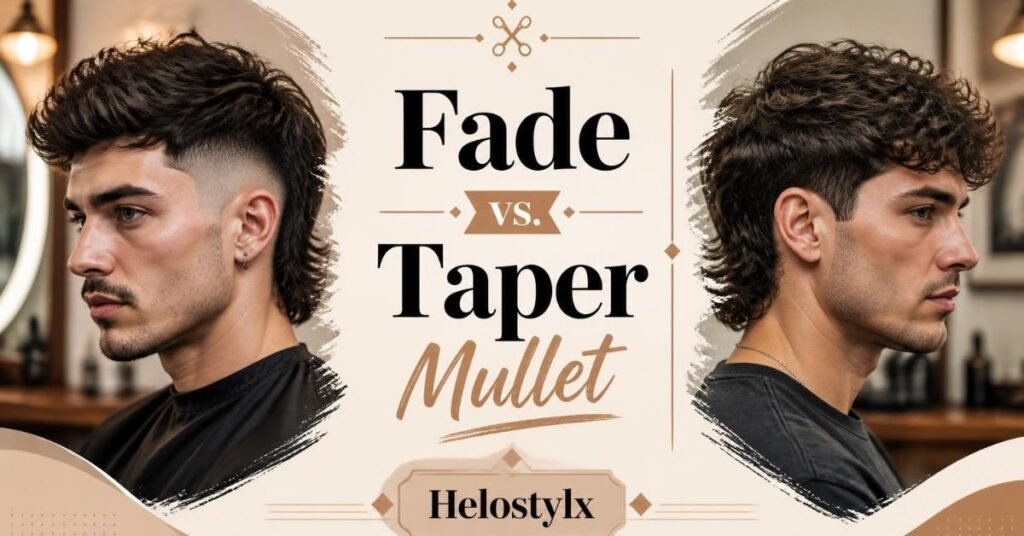
Picking between a fade vs taper mullet comes down to one question: how sharp do you want your sides to look? Both styles keep the classic short-sides-long-back shape that makes a mullet a mullet. But the way they handle your hairline, your fade height, and your overall hair contrast changes the whole vibe of the cut.
This guide breaks down every version of the mullet sides debate. You’ll learn how a mid fade mullet differs from a low taper mullet, which option suits curly or thick hair, and how to keep your cut sharp between barber visits. By the end, you’ll know exactly which sides work for your face, your hair texture, and your lifestyle.
What Is a Mullet Fade?
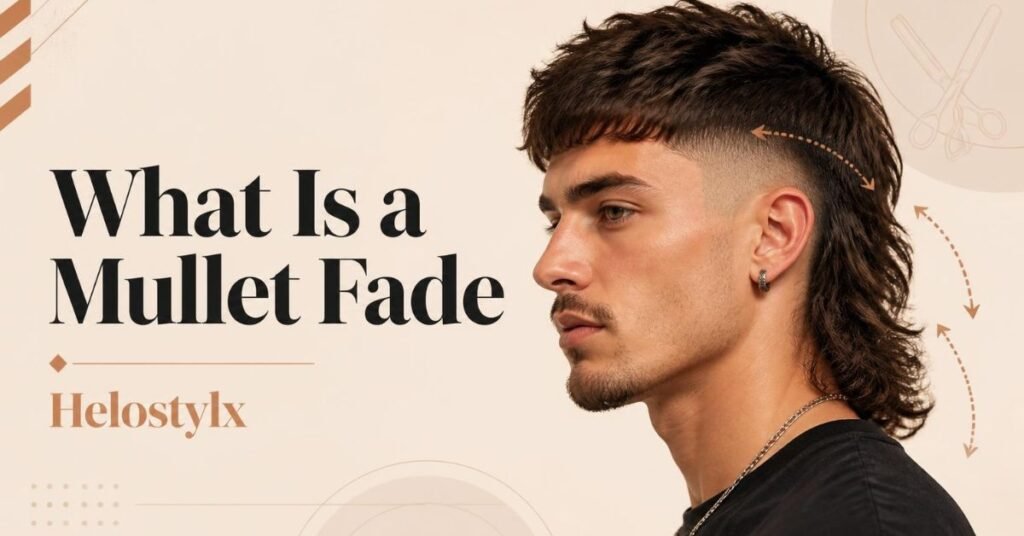
A mullet fade blends your sides from skin or near-skin at the bottom up to your natural hair length. The transition is fast and crisp. That’s what separates a faded mullet from a softer, gradual cut.
Fades work by shaving the hair progressively shorter as you move down toward the neckline and sideburns. Your barber uses clippers with different guard sizes, moving from a longer guard up top to a zero or skin blade at the base. The result is a clean line that pops against the long, textured hair on top and back.
Why fades work so well with mullets. The long back is the star of a mullet. A fade gives that length something to contrast against. Without sharp sides, the whole cut can look shapeless or overgrown. With a fade, your longer hair at the back reads as intentional, not messy.
Fade height matters here. A fade that starts too high can look disconnected from a mullet’s laid-back energy. A fade that starts low keeps things more subtle, letting the length do the talking.
Common Fade Mullet Variations
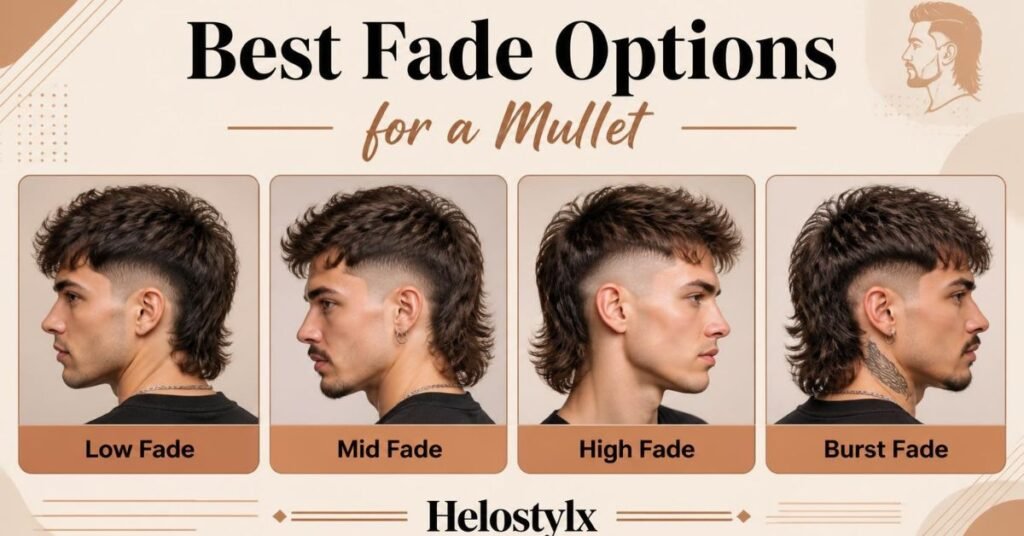
- Low fade mullet — Starts just above the ears, keeps more length overall, and suits guys who want an easier transition into the style.
- Mid fade mullet — Starts around the temple area, balances edge and versatility, and works for most face shapes.
- Burst fade mullet — Curves around the ear in a rounded shape instead of a straight line, adding a more artistic, textured finish.
Each of these gives you a different level of hair contrast. The higher the fade, the bolder the statement.
Best Fade Options for a Mullet
Not every fade suits every guy, and that’s fine. Your hair texture, face shape, and how bold you want to go should guide the choice.
Low fade mullet. This is the safest entry point into fade mullets. It keeps more hair around your ears and temples, so the transition from short sides to long back feels gradual. Guys with straight hair mullet styles often gravitate here because the subtlety pairs well with sleek, non-textured hair on top.
Mid fade mullet. This is the crowd favorite for a reason. It hits a sweet spot: bold enough to look modern, tame enough for office life or family gatherings. A mid fade mullet also photographs well from a side profile, since the fade line sits right where the eye naturally lands.
Burst fade mullet. If you want your mullet to feel a little rebellious, this is your pick. The rounded fade around the ear creates a unique shape that stands out at any barbershop. It works especially well with curly mullet or wavy mullet textures, since the curved line echoes the natural movement of the hair.
High fade mullet. Less common but growing in popularity, a high fade mullet pushes the short section further up the head. This creates maximum contrast and pairs beautifully with thick hair on top, since the fullness up there balances the skin-tight sides.
A quick note on hair type: thick hair holds a fade’s crisp lines longer than fine hair, which can look wispy against a hard edge. If your hair is on the finer side, a mid or low fade will age better between cuts than a high one.
What Is a Taper Mullet?
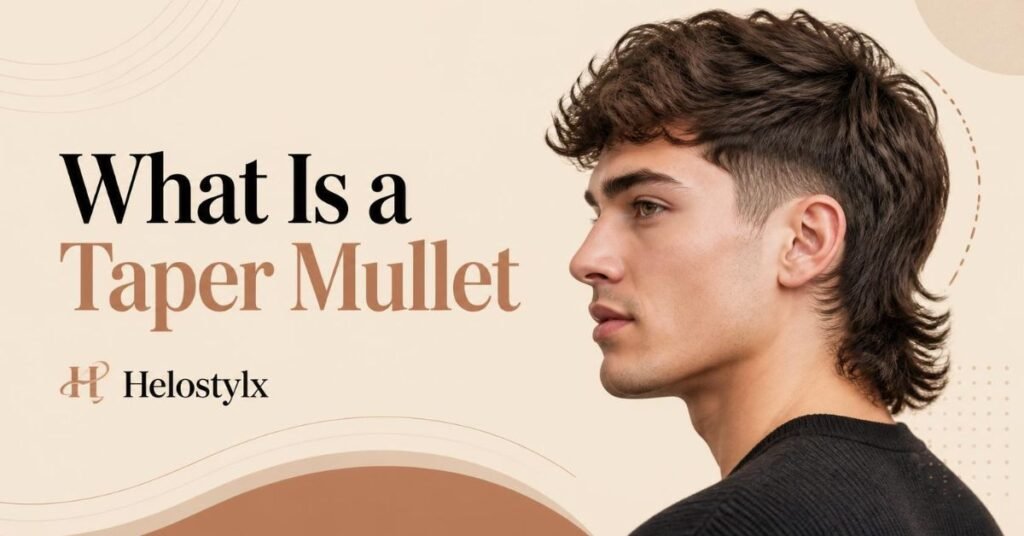
A taper mullet trims your sides gradually, without ever hitting skin. Think of it as the fade’s calmer cousin. The hair thins out as it moves down, but it never disappears completely.
This softer approach gives a taper mullet a more natural, grown-out feel. There’s no hard line separating your scalp from your hair — just a smooth decrease in length. That subtlety is exactly why so many guys choose tapered sides over faded ones.
Why taper mullets work. Tapers suit guys who want the mullet shape without drawing too much attention to their sides. The neckline stays clean and the sideburns keep some length, so the overall look reads as tidy rather than edgy.
Taper height changes the personality of the cut just like fade height does. A taper that starts low keeps things understated. One that starts higher gives a bit more definition without going full skin fade.
Common Taper Mullet Variations
- Low taper mullet — Barely touches the length near the ears, ideal for guys easing into shorter sides for the first time.
- Mid taper mullet — A balanced option that still shows clear shape without looking severe.
- High taper mullet — Trims more aggressively up top while still avoiding a skin-tight finish.
Taper mullets tend to suit workplaces with conservative dress codes better than fades do. The gradual blend looks polished instead of edgy, which matters if you’re presenting client-facing or sitting in client meetings all week.
Best Taper Options for a Mullet
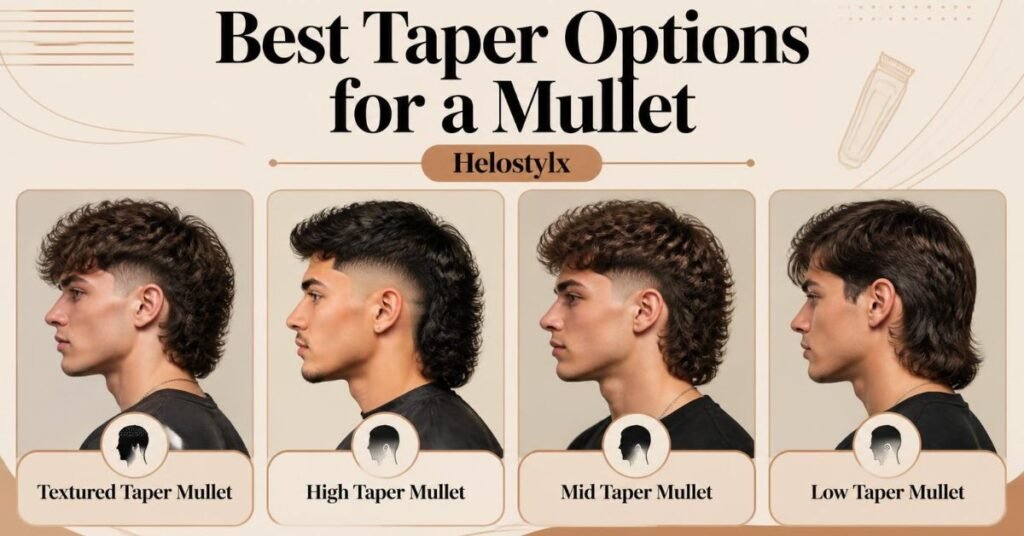
Choosing the right taper depends on how much length you want to keep and how much shape you want to show.
Low taper mullet. This is the go-to for guys who want subtlety above everything else. It barely changes the hair around your ears, which means less maintenance and a longer stretch between barber visits. If you have wavy mullet texture, a low taper lets the waves flow naturally into the shorter sides without any harsh break.
Mid taper mullet. This version balances shape and softness. It’s a strong pick if you’re not fully sold on a dramatic cut but still want your sides to look deliberate. A mid taper mullet also flatters most face shapes, since the gradual blend doesn’t pull focus toward your jawline or cheekbones the way a fade can.
High taper mullet. For guys who want more definition without going full fade, this is the middle ground. It shows off more of the mullet’s short-sides-long-back structure while keeping that soft, no-hard-line finish tapers are known for.
Textured taper mullet. If your hair has natural texture — think curly mullet or heavily wavy strands — a textured taper lets your barber work with the hair’s natural pattern instead of against it. This avoids the flat, pasted-down look that can happen when curly hair meets an overly precise fade line.
Burst Fade Mullet vs. Low Taper Mullet
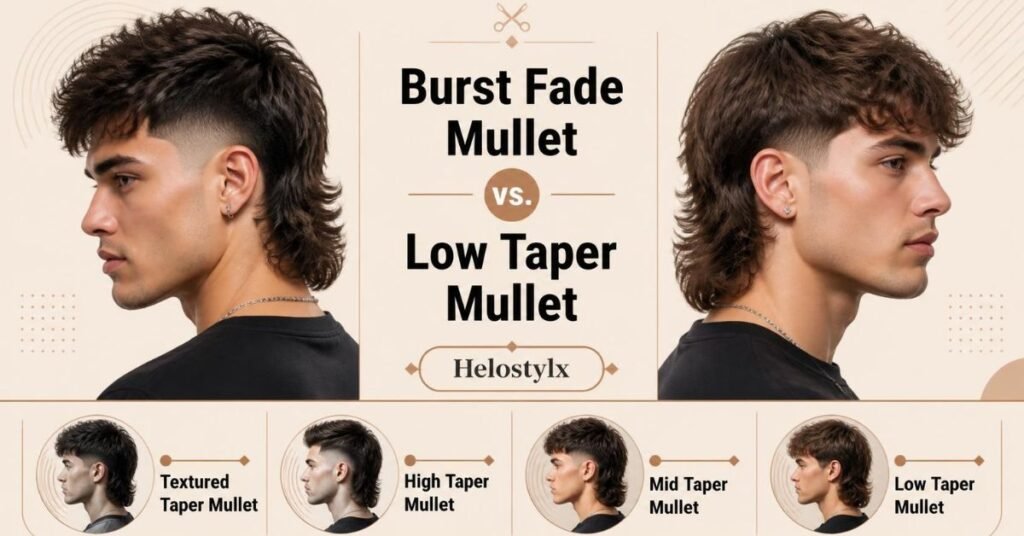
These two get compared constantly because they sit at opposite ends of the boldness scale. Here’s how they actually stack up.
Visual impact. A burst fade mullet is loud. The rounded shape around the ear grabs attention and gives the cut a distinct, almost sculpted look. A low taper mullet is quiet. It barely alters your natural silhouette, letting the long back do all the visual work.
Maintenance needs. Burst fades need regrowth touch-ups every two to three weeks to keep that rounded line sharp. Low tapers can stretch to four or five weeks before they start looking uneven, since there’s no hard edge to grow out awkwardly.
Face shape suitability. Burst fades tend to flatter round or square faces, since the curved line softens strong angles or adds shape to fuller cheeks. Low tapers are more forgiving across the board — oval, oblong, heart-shaped faces all wear them well because there’s no dramatic line competing with your features.
Styling commitment. A burst fade mullet says you’re comfortable standing out. A low taper mullet says you want the mullet’s rebellious spirit without the loud sides. Neither is better. It’s about what matches your personality and your daily routine.
If you’re torn, ask yourself this: do you want people to notice your sides, or just your length? That answer usually settles the debate.
Also Read This : Mid Taper Fade Edgar: Styles, Tips & Maintenance
Fade or Taper: How to Choose
Here’s where the fade vs taper mullet decision gets personal. A few factors should guide your pick.
Hair texture. Curly and wavy hair tends to look fuller and more textured with a taper, since fades can expose scalp unevenly through tight curls. Straight hair mullet styles handle fades better because the hairline stays crisp and even.
Hair contrast preference. If you want a dramatic difference between your long back and short sides, go with a fade. If you’d rather the transition feel smooth and unified, a taper is your answer.
Lifestyle and workplace. Client-facing jobs, conservative offices, or family-heavy environments usually lean toward tapers. Creative industries, music, or anywhere with more relaxed dress codes give you room to experiment with fades.
Face shape. Fades create strong lines that can sharpen round faces or add definition to square jaws. Tapers soften things and suit most shapes without much risk.
Commitment level. Fades need more frequent barber visits. If you’re not ready for that schedule, a taper gives you more breathing room.
A good barber haircut always starts with a real conversation. Bring photos, mention your hair type, and be honest about how often you can realistically get back in the chair. That conversation matters more than any online guide.
Which Is Easier to Maintain?
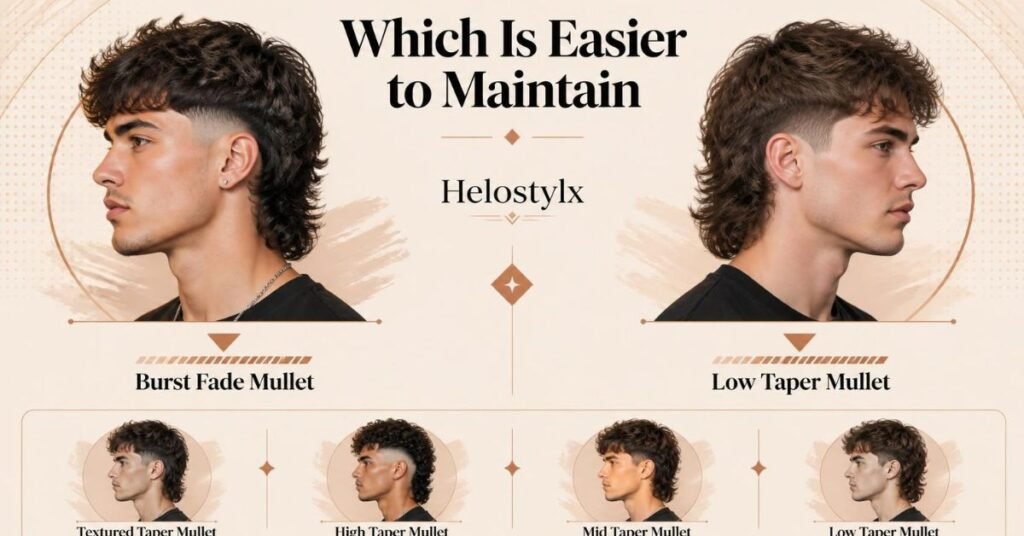
Short answer: tapers win on convenience, fades win on sharpness.
Fade maintenance. A fade grows out fast, especially near the neckline and sideburns. What starts as skin-tight will show visible regrowth within two weeks. By week three, most fades look patchy rather than intentional. That means committing to visits every two to three weeks if you want the look to stay sharp.
Taper maintenance. Because tapers never hit skin, regrowth is far less noticeable. You can usually stretch taper maintenance to four, sometimes five weeks before the shape starts to soften too much. This makes tapers the practical pick for guys with busy schedules or tighter barbershop budgets.
Daily upkeep. Both styles need some at-home care. A light pomade or texturizing spray helps keep the top and back looking deliberate rather than flat. For curly mullet or wavy mullet types, a curl cream helps define texture without weighing hair down.
Cost over time. More frequent fade appointments add up. If you’re getting a fade every two weeks compared to a taper every four, you’re paying roughly double over a year. Factor that into your decision if budget is part of the equation.
Bottom line: if convenience matters more than maximum sharpness, taper mullet maintenance is the easier road.
Make Your Mullet Work From Every Angle
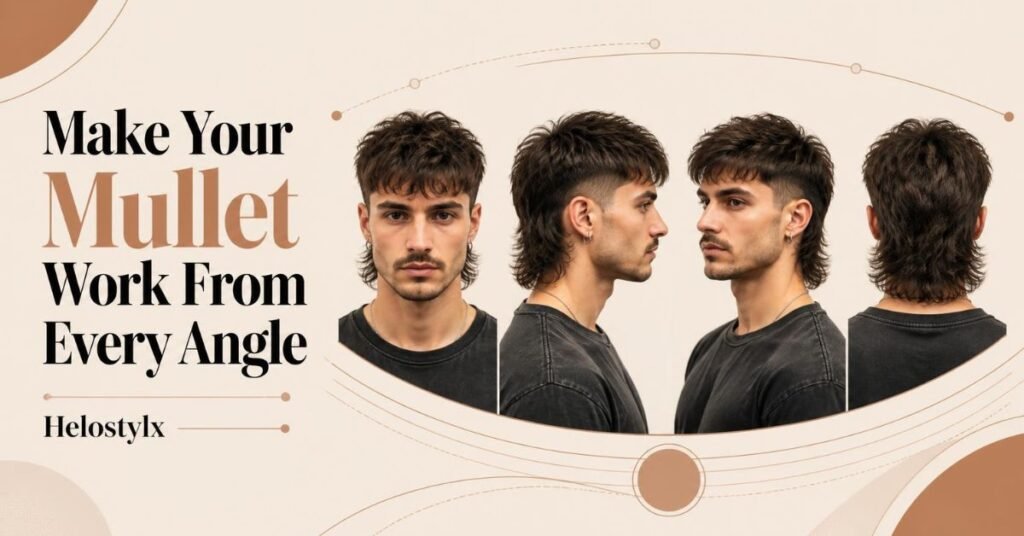
A mullet lives or dies by its side profile. This is the angle most people actually see when you walk past them, so it deserves real attention.
Check the blend from the side. Whether you choose a fade or taper, ask your barber to check the transition while you’re facing sideways in the mirror. A cut that looks great from the front can still show a choppy line from the side if the blend wasn’t finished properly.
Mind your neckline. A clean neckline finishes the look. Whether your sides are faded or tapered, the back-bottom edge should look tidy, not jagged. This is especially true since the neckline sits right at the base of your longer back hair — any sloppiness there stands out fast.
Watch your sideburns. Sideburns anchor the whole cut. Fades often taper sideburns down thin. Tapers usually leave a touch more length here. Either way, keep them symmetrical and trimmed in line with your fade or taper height.
Consider hair length up top. The longer your top and back hair, the more your sides need to hold shape to keep the whole cut balanced. If you’re growing out length for a dramatic mullet, lean toward a taper for a longer stretch between trims, or commit to more frequent fade touch-ups if you want that sharp contrast throughout.
A modern mullet fade or taper isn’t just about the sides in isolation. It’s about how those sides support everything happening on top.
What Can Go Wrong, and How Do You Fix It?
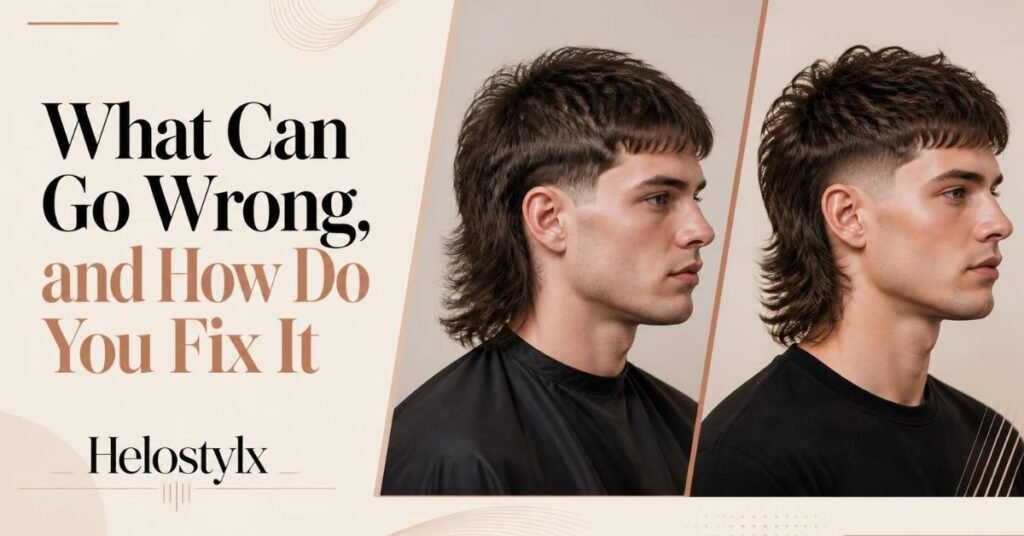
Even a great cut can go sideways. Here’s what to watch for.
Problem: The fade grows out unevenly. This happens fast with fades, especially in the first two weeks. Fix it by scheduling a “dust” appointment — a quick clean-up rather than a full fade — around the ten-day mark to keep lines sharp between full sessions.
Problem: The taper looks too subtle to notice. Some tapers blend so gently they barely register as a style choice. If that’s not what you wanted, ask your barber to raise the taper height slightly or add more contrast at the neckline for a look that still reads as deliberate.
Problem: Curly hair looks patchy after a fade. Tight curls can create gaps or uneven density through a fade line. The fix is simple: switch to a scissor-over-comb taper instead of clippers-only, which respects the curl pattern better than a hard fade.
Problem: The cut looks disconnected from the long back. This usually means the fade or taper height doesn’t match the volume of hair up top. A thicker back needs a slightly lower fade or taper to avoid looking top-heavy. A thinner back can handle a higher one.
Problem: Regrowth makes the sides look “boxy.” This is common with tapers left too long between visits. A quick trim every four weeks, even just a light one, prevents the taper from losing its shape entirely.
Problem: Hair texture fights the style. Straight, thick hair can sometimes resist the soft blend of a taper, looking almost fade-like anyway. If that’s happening, lean into it and ask your barber to formalize the look as an actual low fade instead of fighting your natural texture.
Most of these fixes come down to one thing: communicating clearly with your barber about what’s not working, rather than just living with a cut that isn’t quite right.
Frequently Asked Questions
What’s the main difference between a fade and a taper mullet?
A fade drops to skin at the bottom; a taper thins gradually and never hits skin.
Which suits curly hair better, a fade or a taper mullet?
Curly and wavy hair usually looks fuller and more even with a taper.
How often do I need to get a mullet fade touched up?
Every two to three weeks for a fade, versus four to five for a taper.
Can I switch from a taper mullet to a fade mullet later?
Yes, your barber can push a taper into a fade anytime you want more contrast.
Conclusion
Choosing between a fade vs taper mullet comes down to contrast and commitment. Fades bring sharp lines and bold statement sides. Tapers bring ease and a softer, low-maintenance blend.
