
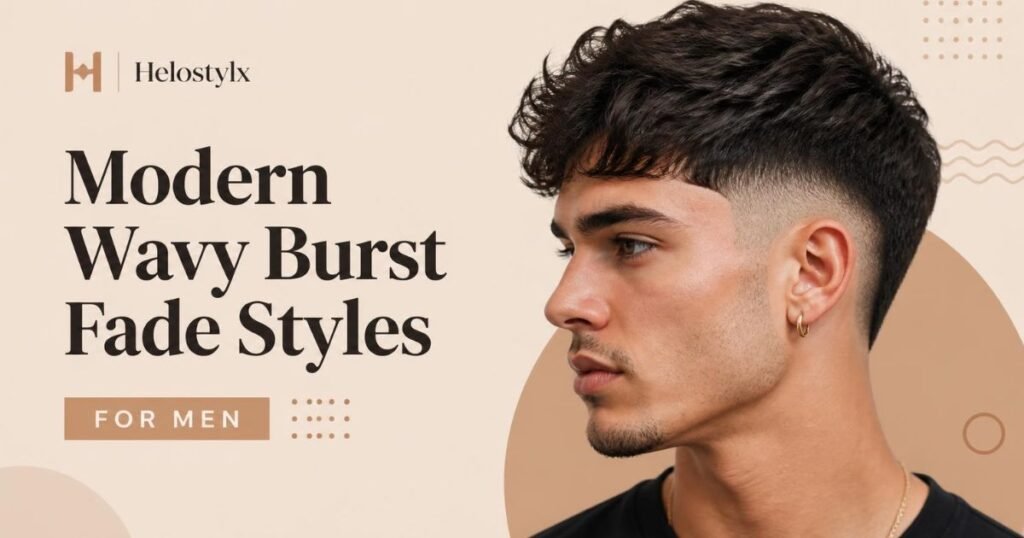
If your hair naturally waves, twists, or refuses to lie flat, you’ve probably struggled to find a haircut that works with it instead of against it. That’s exactly why the wavy hair burst fade has become one of the most requested cuts of 2026. It takes the texture you already have and turns it into the main event, while the fade does the tidying up around it.
This guide breaks down 21 real-world variations of the wavy burst fade, who each one suits, and how to keep it looking sharp between barber visits. No fluff — just the details you need to walk into your next appointment and know exactly what to ask for.
Quick Answer
A wavy burst fade blends short, rounded sides that curve around the ear with longer, textured waves left on top. It’s low-maintenance compared to a full taper, works with almost any wave pattern, and can be dressed up or down depending on length and styling. If you want one cut that handles busy mornings and still looks intentional, this is it.
What Is a Wavy Hair Burst Fade?
A burst fade is a fade pattern that fans out in a semi-circle around the ear instead of running in a straight line across the back and sides like a traditional fade. The word “burst” refers to that circular blending motion — it bursts outward from the ear rather than cutting a hard horizontal edge.
When you pair that fade with naturally wavy hair on top, you get a wavy burst fade haircut that looks textured, dimensional, and a little more relaxed than a typical fade-and-part combo. The waves catch light differently at every angle, so the style never looks flat or stiff.
Barbers love this combination because the burst fade is forgiving. It doesn’t demand a perfectly straight hairline, and it flatters most head shapes since the blending is rounded rather than boxy.
Below are 21 ways to wear it, organized by fade height, texture, and overall vibe.
1. Classic Wavy Hair Burst Fade
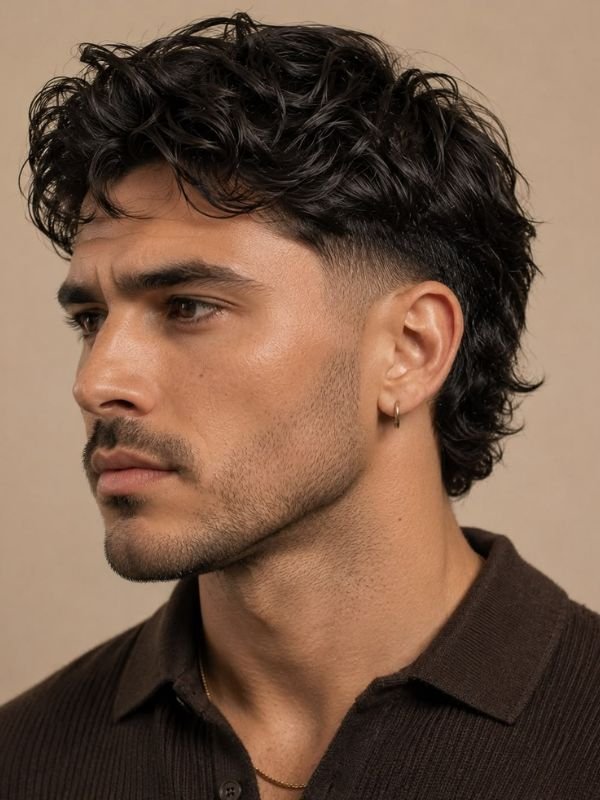
This is the baseline everyone starts with: a mid-length burst fade around the ears with natural waves left untouched on top. No heavy styling, no hard lines — just clean blending and texture that moves.
It works for almost any hair length between 2 and 4 inches and suits nearly every face shape. If you’re new to the style, ask your barber for this version first.
2. Low Burst Fade with Natural Waves
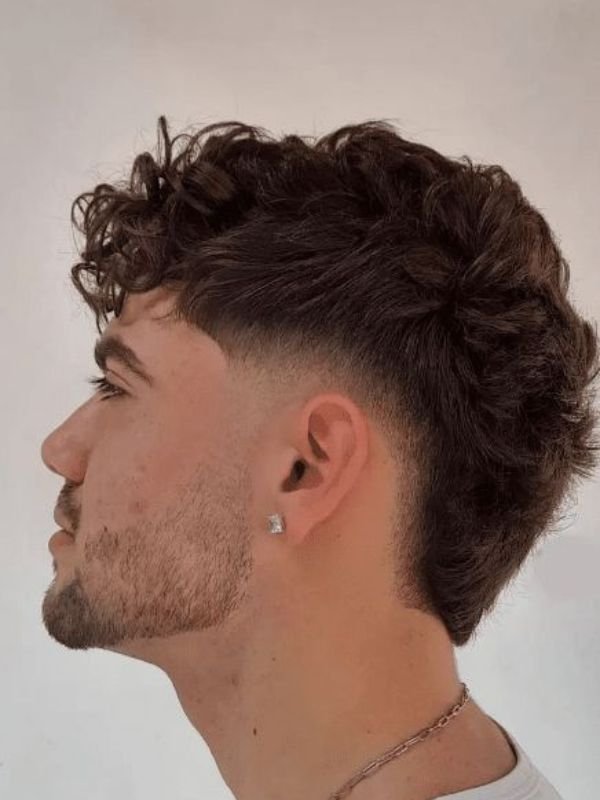
A low burst fade wavy hair style keeps the fade close to the ear and doesn’t climb up toward the temple. This is the most subtle version of the cut — great for offices, formal settings, or anyone who wants a fade without it being the focal point.
Because the blending stays low, your natural waves get more visual real estate. This is one of the best options if you’re growing your hair out but still want tidy sides.
3. Mid Wavy Burst Fade
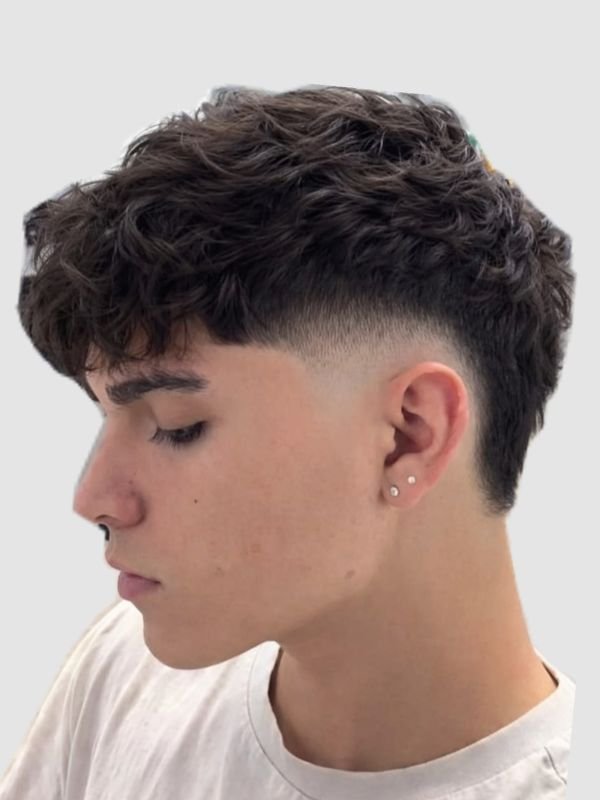
The mid burst fade wavy hair combination is the most popular request among barbers in 2026. It strikes a balance: noticeable enough to look sharp, subtle enough to wear anywhere.
The fade typically starts around the temple and blends down past the ear, leaving plenty of length on top for waves to form naturally.
4. High Burst Fade with Wavy Top
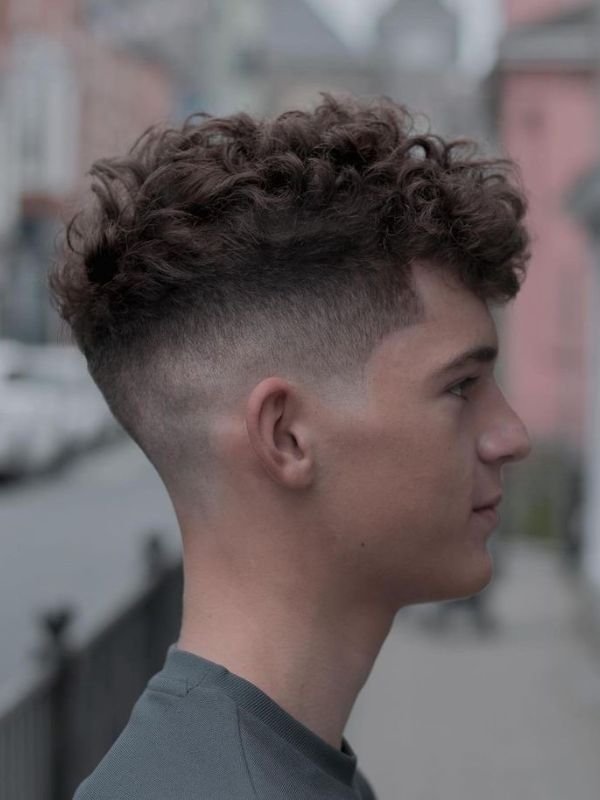
Want more contrast? A high burst fade wavy hair style pushes the blend higher up the head, creating a bolder line between the short sides and the wavy top.
This version reads as more modern and edgy. It’s a strong pick if you want your waves to stand out dramatically against closely cropped sides.
5. Textured Crop Wavy Burst Fade
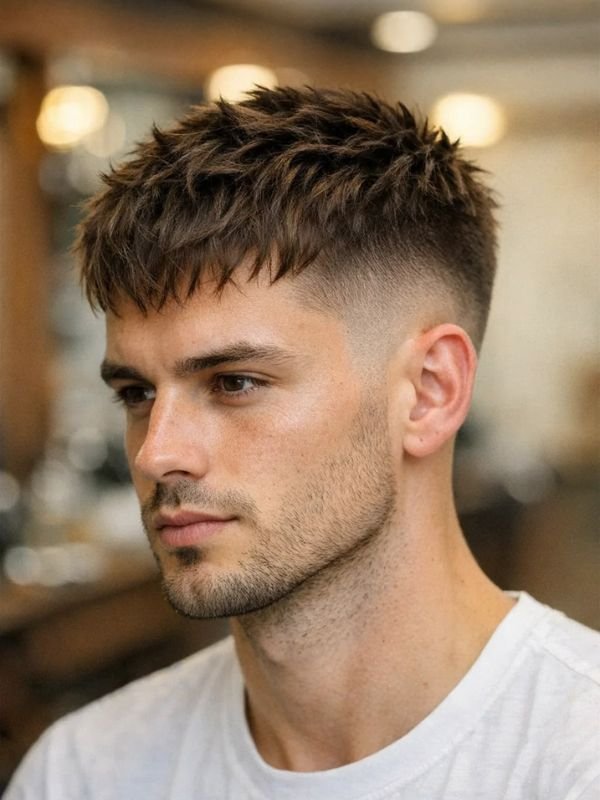
This style crops the top shorter — usually 1.5 to 2.5 inches — and relies on texturizing scissors to break up the waves into a choppy, piecey finish. The result is a textured burst fade that looks effortless but is actually carefully cut.
It’s ideal for guys who want wave definition without much length to manage.
6. Messy Wavy Burst Fade
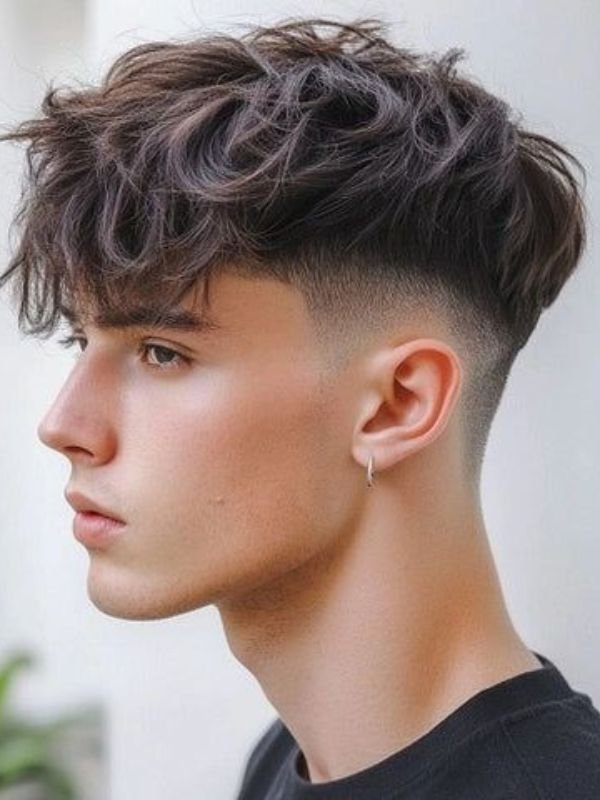
Some of the best haircuts look like you didn’t try too hard. The messy version leans into that idea: waves are left loose, slightly tousled, and styled with minimal product for a lived-in finish.
This is a great everyday option and pairs well with a natural wavy burst fade approach, where you’re working with your hair’s texture instead of forcing it into a shape.
7. Wavy Burst Fade with Fringe
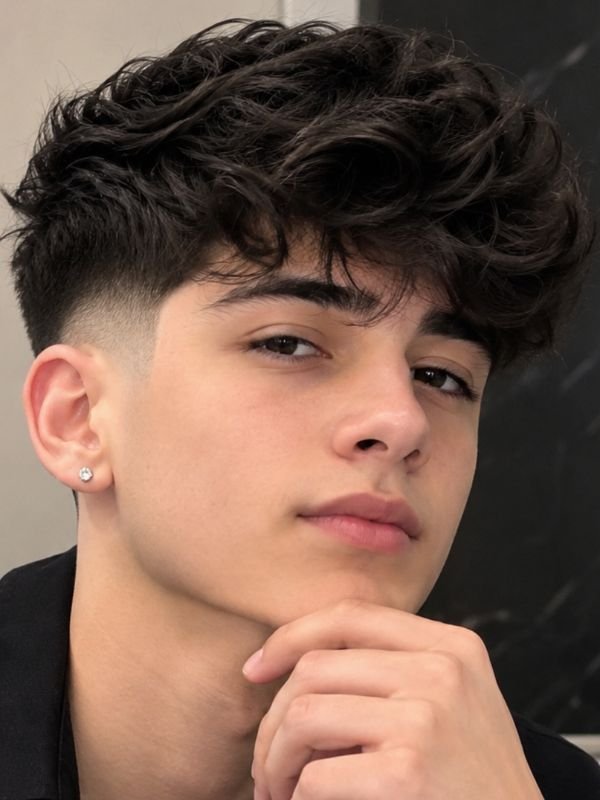
Bringing the waves forward into a soft fringe across the forehead adds a youthful, on-trend edge to the classic burst fade. This works especially well with looser wave patterns that fall naturally rather than standing up.
Keep the fringe slightly longer than the rest of the top so it has enough weight to lie forward.
8. Side-Part Wavy Burst Fade
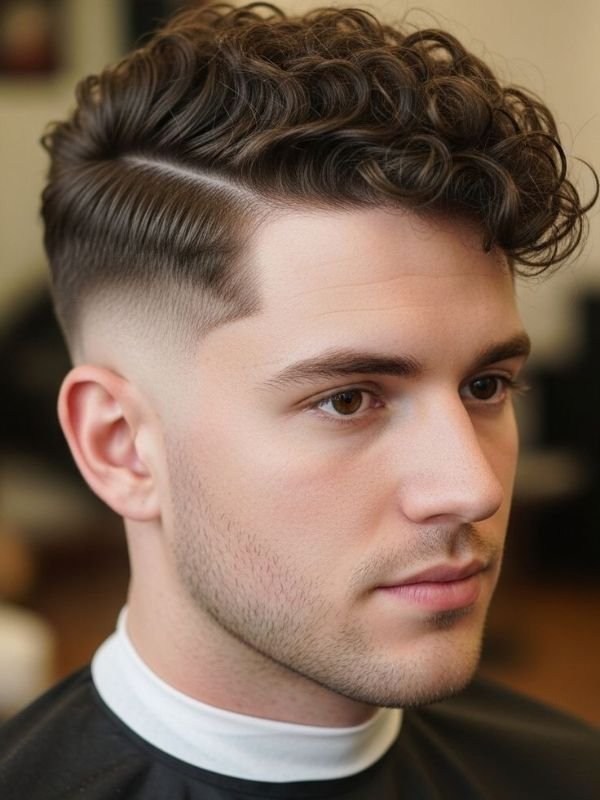
A defined side part adds structure to an otherwise loose, wavy top. This is one of the more polished takes on the wavy fade haircut, and it photographs well for professional settings.
Ask your barber for a “soft part” rather than a hard shaved line if you want something that still feels casual.
9. Wavy Burst Fade with Beard
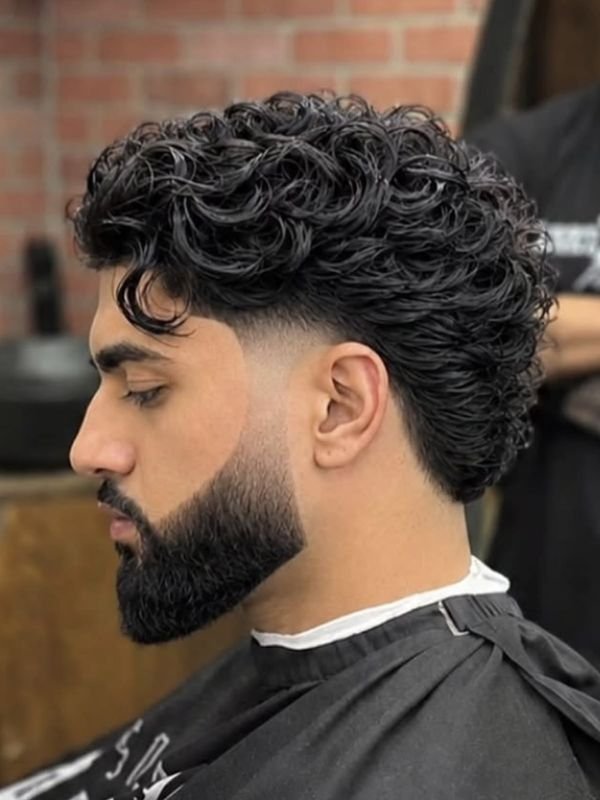
Pairing a wavy burst fade with beard styling creates one of the most balanced, masculine looks in this list. The rounded fade around the ear mirrors the rounded shape of a well-groomed beard, so the two elements complement each other instead of competing.
Keep beard length proportional to your hair length — if your waves are short, keep the beard tight too.
10. Faux Hawk Wavy Burst Fade
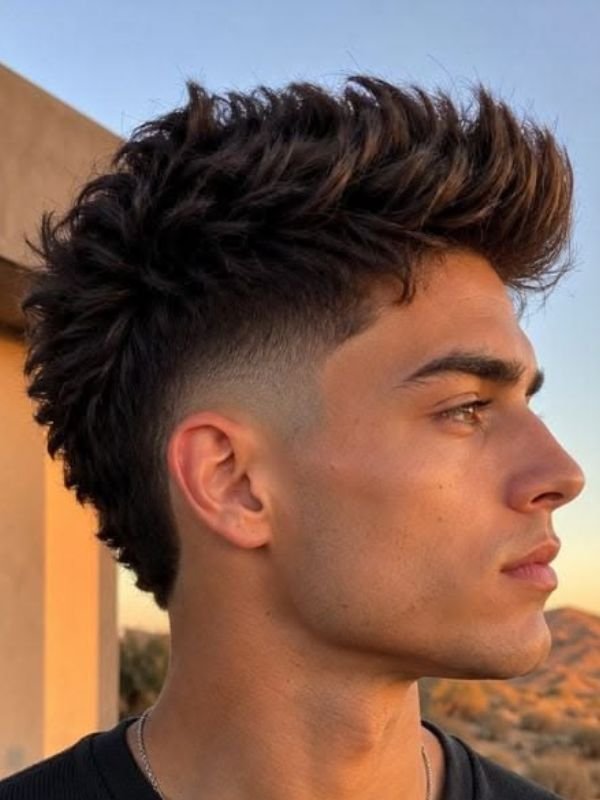
This version pushes the top hair upward and inward to create height down the center, similar to a faux hawk, while keeping the sides in a classic burst blend. It’s bold, but the waves soften what would otherwise be a very sharp silhouette.
Best suited for thicker wavy hair that can hold volume without heavy product.
11. Wavy Burst Fade Mullet
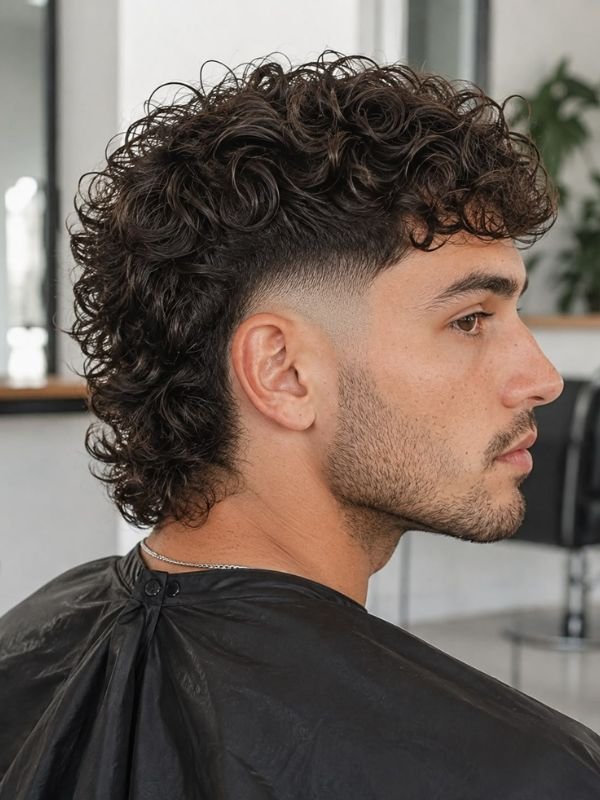
The wavy burst fade mullet is one of the standout trends of 2026. It combines short, faded sides with length left at the back, letting natural waves flow past the collar.
This style takes commitment to grow out properly, but it’s become a favorite among guys who want something distinct from the standard fade.
12. Slicked-Back Wavy Burst Fade
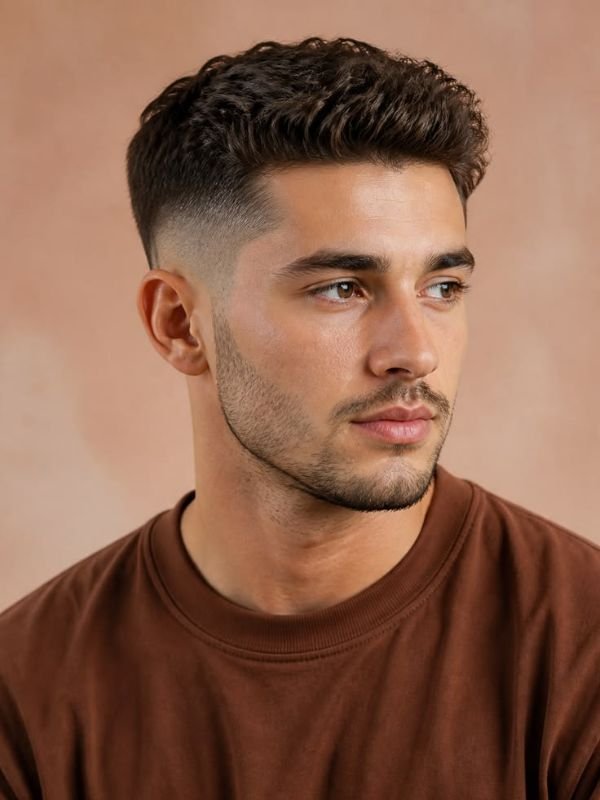
Using a light pomade or gel, the top is combed straight back while the sides stay in a clean burst fade. The waves still show through the slicked finish, giving you texture with a more put-together look.
This works well for weddings, interviews, or any occasion where you want polish without losing your natural texture entirely.
13. Long Wavy Burst Fade
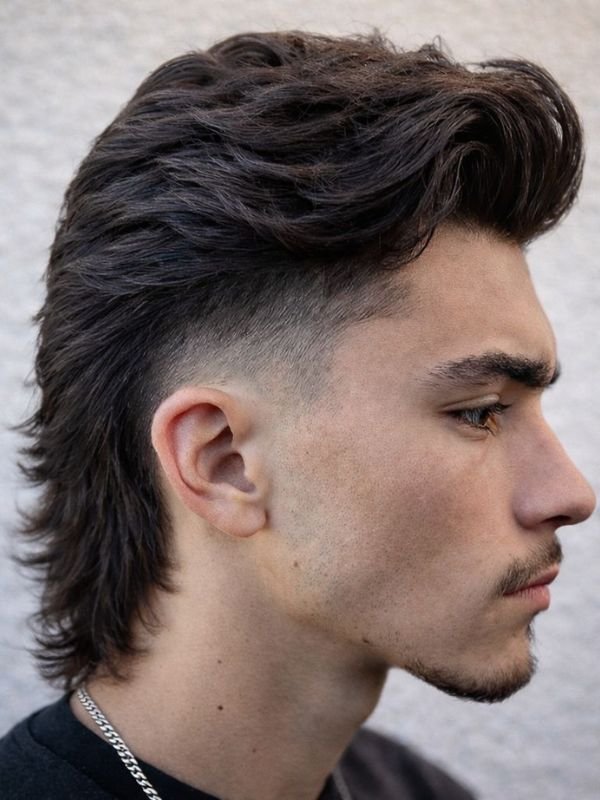
If you’re not ready to commit to short length on top, the long wavy burst fade lets you keep 4+ inches of hair while still enjoying a clean, faded perimeter. The waves get more room to develop into loose curls or S-shaped patterns.
This length requires more product and drying time but gives you the most versatility for daily styling.
14. Short Wavy Burst Fade
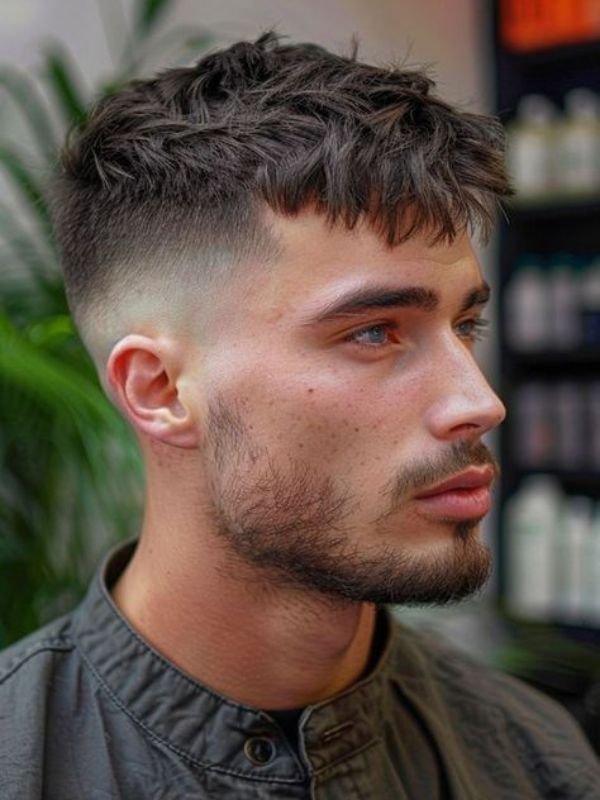
On the opposite end, the short wavy burst fade keeps everything close-cropped — usually under 2 inches on top. It’s the lowest-maintenance version in this entire list and dries in minutes.
Great for athletes, guys with busy schedules, or anyone who prefers a clean, no-fuss look.
15. French Crop Wavy Burst Fade
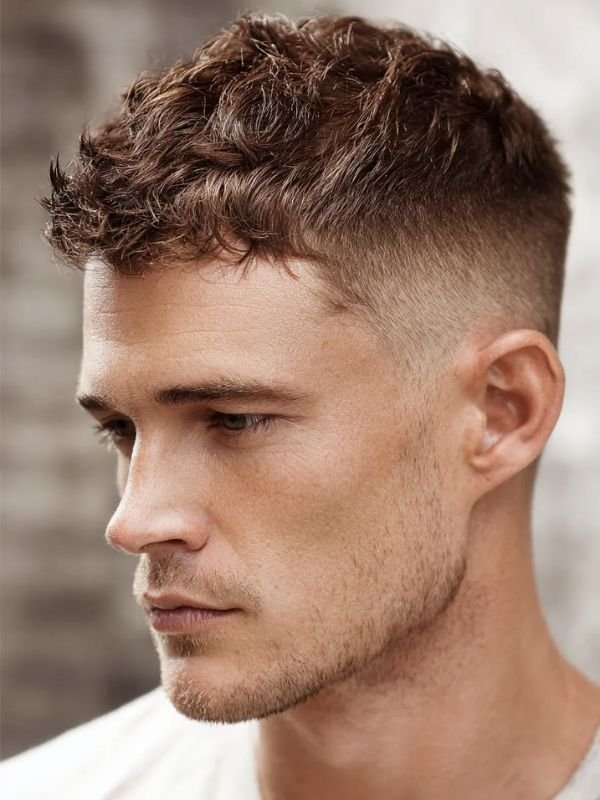
The French crop adds a straight, textured fringe across the front while keeping the rest of the top short and choppy. Combined with a burst fade, it creates a sharp, contemporary silhouette that’s been trending heavily on social media.
This cut suits guys with straighter foreheads and works especially well with medium-density wavy hair.
16. Curly-Wavy Burst Fade
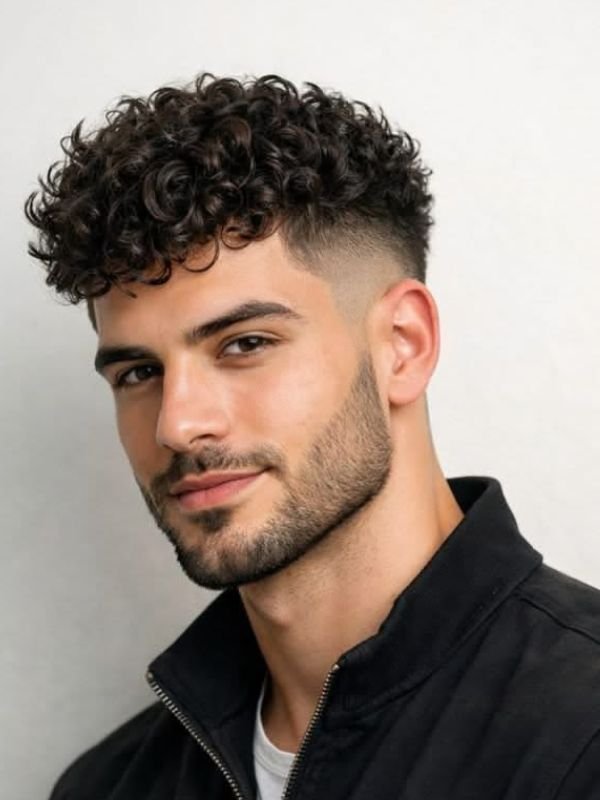
For hair that sits between wavy and curly, this version leans into the curl pattern rather than trying to smooth it out. It’s technically still a burst fade for wavy hair, but styling focuses on curl definition using cream-based products instead of pomade.
If your hair coils when it dries, this is likely your best-fitting option on this list.
17. Brush-Up Wavy Burst Fade
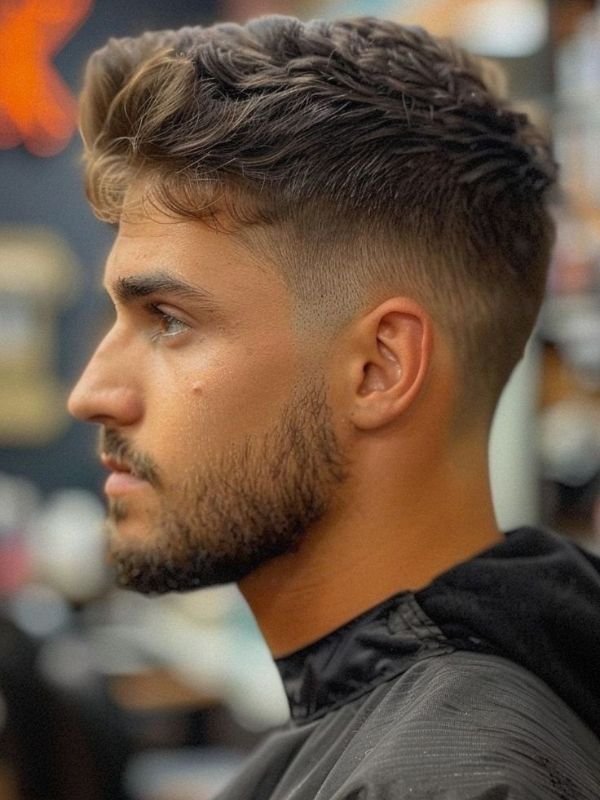
Using a round brush or a vent brush while blow-drying, the top hair is lifted and brushed upward and back, creating volume at the roots. This adds height and movement to waves that might otherwise sit flat.
It pairs especially well with fine or thin wavy hair that needs a styling boost.
18. Modern Pompadour Wavy Burst Fade
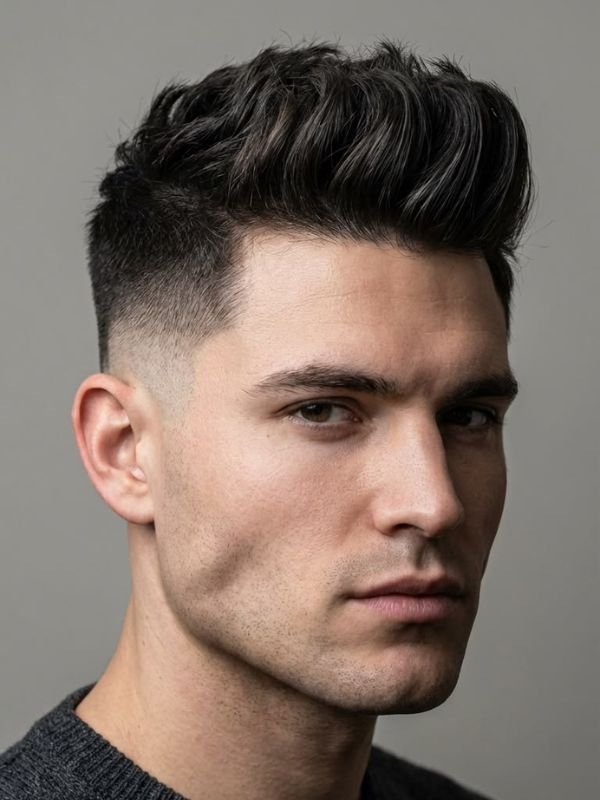
A more structured take, this style combines volume at the front (classic pompadour shape) with a clean burst fade at the sides. The waves add texture to what would otherwise be a smooth, formal pompadour.
This is one of the more high-maintenance options here, requiring daily styling with a strong-hold product.
19. Textured Quiff Wavy Burst Fade
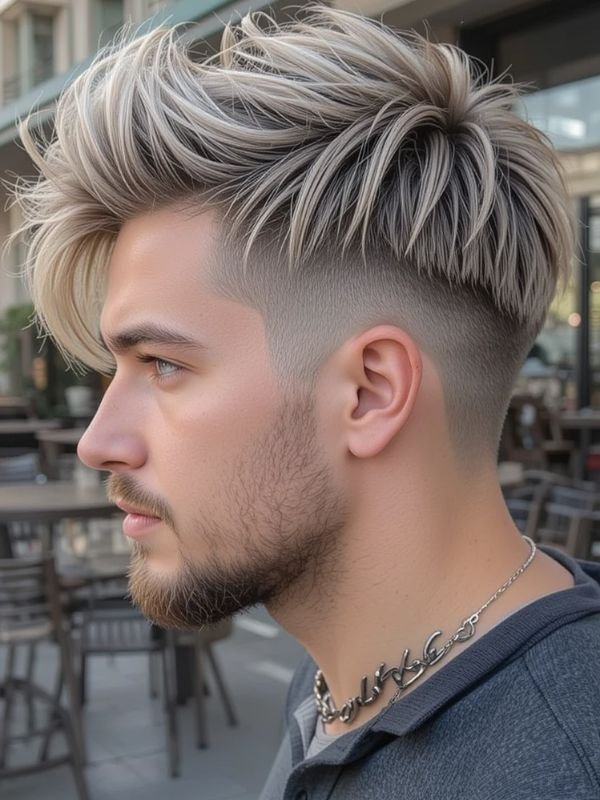
Similar to the pompadour but shorter and less structured, the quiff version pushes hair up and slightly forward at the front. The waves give it natural texture without needing much product to hold shape.
This is a great middle-ground option between the low-maintenance crop and the high-maintenance pompadour.
Also Read : 15 Best Burst Fade Fringe Haircuts for Men in 2026
20. Comb-Over Wavy Burst Fade
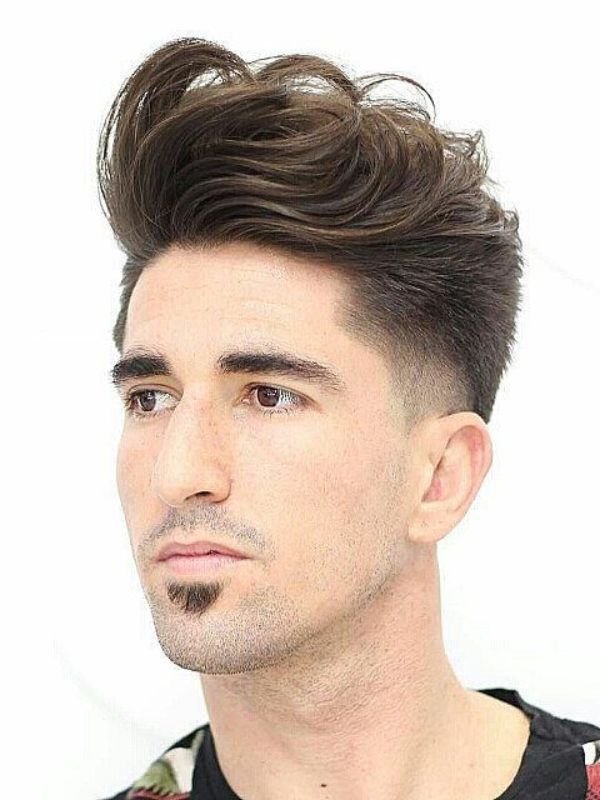
A comb-over directs the top hair to one side using a defined part, while the burst fade handles the sides. The waves add texture along the comb-over line instead of a flat, straight finish.
This is a versatile option that works for both formal and casual settings, depending on how much product you use.
21. Modern Natural Wavy Burst Fade
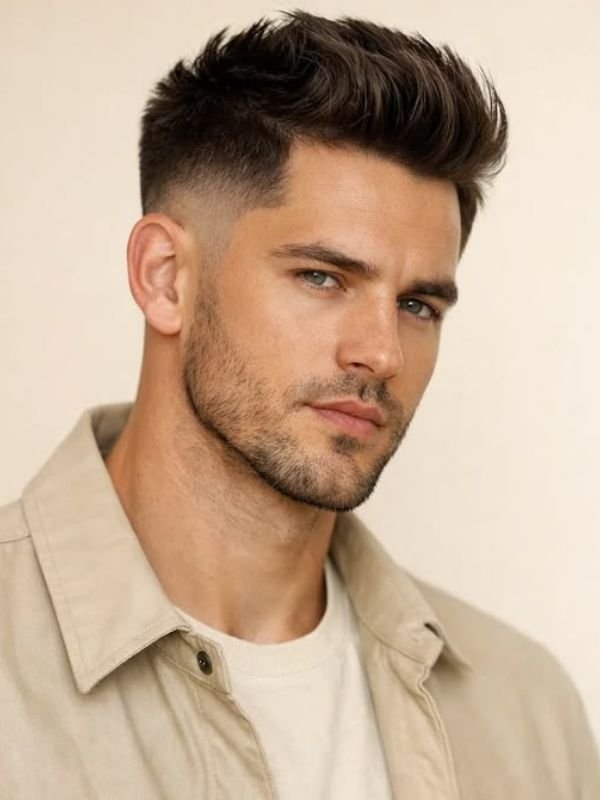
The final style on this list is also the most low-key: minimal product, minimal styling, just clean fade work paired with hair left to dry and fall naturally. It’s the truest expression of a modern burst fade built around texture rather than shape.
If you want a haircut that requires almost no daily effort, this is the one to request.
Why the Wavy Hair Burst Fade Is Trending in 2026
A few things are driving the popularity of this cut right now:
- Texture-first styling has replaced the ultra-slick, heavily gelled looks of the past decade.
- Low daily maintenance appeals to guys who don’t want a 15-minute styling routine every morning.
- Versatility — the same base cut can look casual or formal depending on length and product.
- Social media influence, where textured, wavy cuts consistently outperform flat, straight styles in engagement.
Barbers have also gotten better at cutting burst fades specifically for wavy and curly textures, which wasn’t as common a decade ago when most fade techniques were built around straight hair.
Who Should Get a Wavy Hair Burst Fade?
This cut is a strong fit if:
- You have naturally wavy, curly, or textured hair and want to work with it, not against it.
- You want a fade that doesn’t require constant touch-ups to stay sharp.
- You’re comfortable with a barber who understands rounded fade techniques (not every barber specializes in burst fades).
- You want a style that transitions well between casual and slightly dressed-up settings.
Who Should Avoid It?
It’s not the right call for everyone:
- If you have very straight, fine hair with no natural wave, you’ll need heat styling or product every day to fake the texture — at which point a different cut may serve you better.
- Guys who need extremely low-maintenance grooming (think: shave-and-go) may find even the low-maintenance versions here require more upkeep than a buzz cut.
- If you’re not able to visit a barber every 3-4 weeks, the fade will grow out and lose definition faster than the top.
Best Face Shapes for a Wavy Hair Burst Fade
Because the burst fade is rounded rather than angular, it flatters a wide range of face shapes:
- Oval faces — nearly any version works well here.
- Square faces — the rounded fade softens strong jawlines.
- Round faces — opt for more height on top (faux hawk, pompadour, or quiff versions) to add length visually.
- Diamond faces — mid or high fades balance out wider cheekbones.
Best Hair Types for a Wavy Hair Burst Fade
Medium Wavy Hair
The easiest texture to work with. Holds shape well and adapts to nearly every style on this list.
Fine Wavy Hair
Benefits from shorter lengths and lightweight products — too much weight will flatten the waves.
Coarse Wavy Hair
Handles longer lengths and bolder styles like the pompadour or faux hawk without losing shape.
Loose Waves
Best suited to natural, messy, or brush-up styles that let the movement show.
Strong Waves
Works well with textured crops and curly-wavy variations that emphasize definition.
Wavy Hair Burst Fade Maintenance Guide
Keeping this cut sharp comes down to a simple routine:
- Trim every 3-4 weeks to maintain the fade — it grows out fastest around the burst area.
- Wash 2-3 times a week with a sulfate-free shampoo to avoid stripping natural oils that help define waves.
- Deep condition weekly, especially if you have coarse or dry wavy hair.
- Avoid daily heat styling — it can loosen your natural wave pattern over time.
- Sleep on a satin or silk pillowcase to reduce frizz and preserve wave definition overnight.
Wavy Hair Burst Fade Styling Tips
- Apply product to damp, not soaking wet hair for the best texture hold.
- Scrunch, don’t rub when drying to avoid disrupting the wave pattern.
- Use a diffuser attachment on your blow dryer for faster drying without frizz.
- Less is more with product — start with a small amount and build up if needed.
- Reshape with fingers, not a comb, to keep the texture looking natural rather than combed flat.
Best Products for a Wavy Hair Burst Fade
- Sea salt spray — adds texture and a natural, beachy finish to loose waves.
- Curl cream or wave cream — defines pattern without stiffness, ideal for curly-wavy styles.
- Matte clay — good for textured crops and messy styles that need light hold.
- Pomade (light hold) — better suited for slicked-back or comb-over variations.
- Leave-in conditioner — helps manage frizz, especially in coarse or dry wavy hair.
What to Tell Your Barber
Walking in with the right language saves time and avoids miscommunication. Try:
- “I want a burst fade — blended in a circle around my ear, not a straight line.”
- Specify height: “Keep it low/mid/high” depending on how much contrast you want.
- Bring a reference photo — burst fades vary a lot, and showing an example avoids surprises.
- Mention your hair type: “My hair is wavy, so please cut with the natural texture in mind, not straight.”
- If you want length retained, say so clearly: “Take the sides down, but don’t touch the length on top.”
Pros and Cons of a Wavy Hair Burst Fade
Pros:
- Works with natural texture instead of fighting it
- Rounded fade flatters most face shapes
- Highly versatile — dozens of styling variations
- Lower daily maintenance than many trending cuts
- Ages well as hair grows out between appointments
Cons:
- Requires a barber skilled specifically in burst fade technique
- Needs touch-ups every 3-4 weeks to stay sharp
- Coarse or very curly hair may need extra product to manage frizz
- Not ideal for those who want a completely styling-free routine
Common Wavy Hair Burst Fade Mistakes
- Skipping regular trims — the fade grows out unevenly and starts looking messy fast.
- Overloading with product — weighs waves down and kills natural movement.
- Going to a barber unfamiliar with burst fades — the rounded blend takes more skill than a standard fade.
- Ignoring hair health — dry, damaged wavy hair won’t hold shape or shine, no matter how good the cut is.
- Using the wrong brush or comb — fine-tooth combs disrupt wave clumps; use fingers or wide-tooth combs instead.
FAQs
What is a wavy hair burst fade?
It’s a haircut with a rounded, semi-circular fade around the ear paired with longer, natural waves left on top.
How often should I get a wavy burst fade trimmed?
Every 3 to 4 weeks keeps the blend looking sharp.
Does a burst fade work for all types of wavy hair?
Yes — it adapts to fine, medium, and coarse textures, and both loose and strong wave patterns.
Can I get a wavy burst fade with a beard?
Yes, it’s one of the most popular combinations, since the rounded fade lines pair naturally with a groomed beard.
Key Takeaways
- The wavy hair burst fade is built around a rounded, ear-hugging fade paired with natural texture on top.
- There are 21+ ways to wear it, from low-maintenance crops to bold pompadours and mullets.
- It suits most face shapes and wave patterns, though hair type should guide length and product choice.
- Regular trims every 3-4 weeks and the right lightweight products keep the style looking sharp.
- Finding a barber experienced with burst fade technique matters more than the specific style you choose.
Conclusion
The wavy hair burst fade earns its popularity honestly — it’s flexible, low-maintenance relative to how good it looks, and it finally gives guys with natural texture a cut built for their hair instead of against it.
Whether you go short and clean, long and loose, or somewhere in between with a beard or mullet twist, there’s a version on this list that fits your face shape, hair type, and lifestyle. Bring a photo, describe your texture honestly, and let your barber do the rest.
