
If you’ve scrolled through a barbershop’s Instagram lately, you’ve probably seen it: choppy layers on top, tight sides, and a finish that looks effortlessly undone. That’s the Warrior Cut, and it’s quietly become the most requested men’s haircut of 2026.
This isn’t a fad born from a filter. The Warrior Cut is a modern reinterpretation of 90s grunge hair, rebuilt with precision cutting techniques that actually work with how men’s hair grows today. It’s textured, it’s masculine, and it’s a lot easier to maintain than it looks.
In this guide, we’ll break down exactly what the Warrior Cut is, why barbers can’t stop cutting it, and how to get (or give) one that actually holds up between salon visits.
What Exactly Is the Warrior Cut?
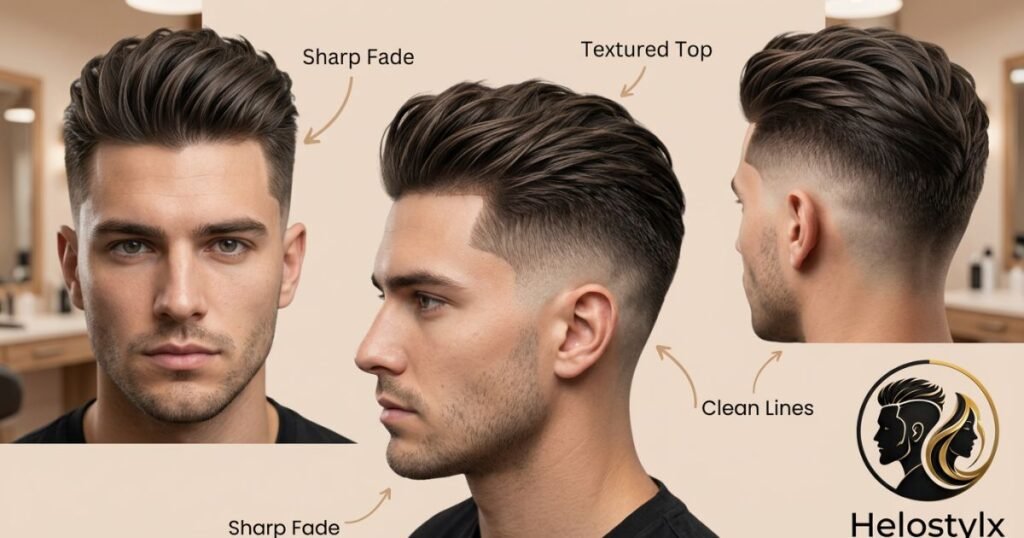
The Warrior Cut is a medium-length men’s haircut built around one core idea: a heavily textured top paired with softer, tighter sides. Think choppy layers, natural movement, and a longer fringe that falls forward instead of standing rigid.
Unlike a classic crop or a slicked-back style, this haircut leans into imperfection. The layers are cut to create internal movement rather than a flat, uniform shape. The result is a haircut that looks like it happened naturally, even though it took real technical skill to get there.
A few defining features set the Warrior haircut apart from other trending styles:
- A textured top with visible, choppy layers
- Softer sides that blend rather than contrast sharply
- A longer fringe that can be pushed forward, up, or to the side
- Deliberate messy styling that still looks intentional
- Volume and height at the crown without looking stiff
It’s essentially the haircut equivalent of a well-worn leather jacket — rugged, lived-in, and somehow still stylish. That’s exactly why the Warrior Cut hairstyle has taken over so many barber chairs this year.
Why Are Clients Asking for the Warrior Cut?
Every few years, a men’s hairstyle comes along that just clicks with the cultural mood. Right now, that’s the men’s Warrior Cut.
Part of the appeal is nostalgia. We’re in the middle of a full-blown 90s haircut revival, and this style captures that grunge-meets-skate energy without looking like a costume. It borrows the shag-like volume of 90s men’s hairstyles but tightens up the sides for a cleaner, more contemporary silhouette.
But nostalgia alone doesn’t explain the demand. Clients keep coming back to this cut for a few very practical reasons:
It suits almost every face shape. The textured top adds height and softens angles, which flatters square, round, and oval faces alike.
It’s genuinely low-maintenance. Once cut correctly, the natural texture haircut requires minimal daily styling — a huge draw for men who don’t want a 20-minute morning routine.
It photographs well from every angle. Because the layers create dimension rather than a flat shape, the cut holds its structure whether it’s styled up, forward, or left to air-dry.
It bridges “edgy” and “professional.” This is a rare style that reads as an edgy men’s hairstyle in a night-out setting but still looks polished enough for the office.
In short, the Warrior haircut for men delivers the rebellious energy of grunge hair with the flexibility modern lifestyles demand. That combination is hard to beat.
Also Read This : Taper Low Burst Fade: Best Styles & Barber Tips
How to Achieve the Warrior Cut
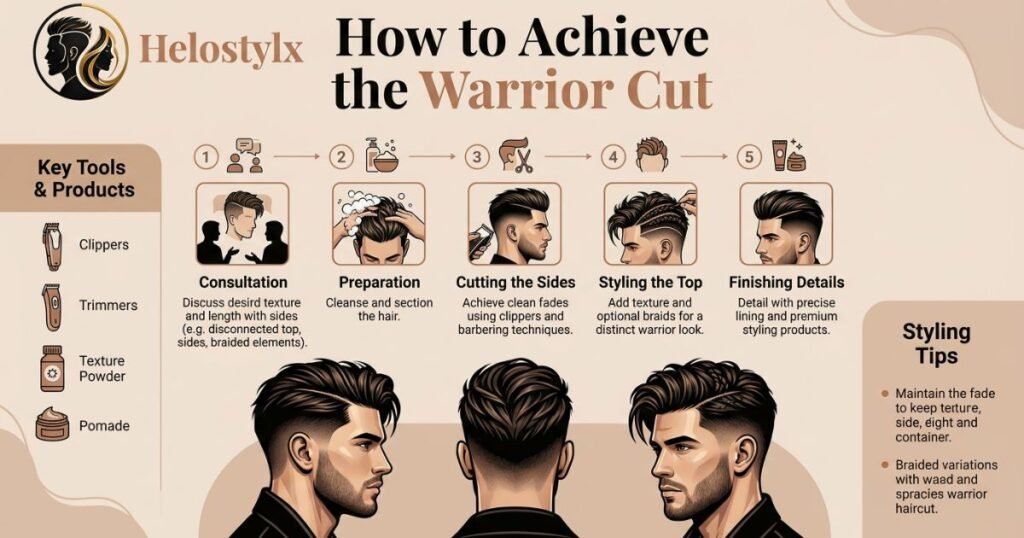
Getting this haircut right isn’t about following a single formula — it’s about technique. Here’s how skilled barbers approach it, step by step.
Sectioning
Every great haircut starts with clean sectioning, and the Warrior Cut is no exception.
The barber typically parts the hair into distinct zones: the crown area, the parietal ridge (the sides of the head), and the lower occipital (the back, near the nape). This separation matters because each zone is cut with a different technique and elevation to build the layered, textured final shape.
A central guide is established first, usually running from the crown to the front hairline. This guide becomes the reference point for every other section, ensuring the choppy layers stay balanced instead of uneven.
Cutting the Sides
Next comes the sides — and this is where the “soft” in soft masculine haircut comes from.
The sides are cut shorter and tighter than the top, usually with clipper blending to create a smooth, gradual transition rather than a hard line. Barbers often work from the lower occipital upward, blending guard lengths so there’s no visible demarcation line.
This tighter side section does double duty:
- It creates contrast that makes the top look fuller and more voluminous
- It keeps the overall style low-maintenance and easy to grow out cleanly
Creating Texture at the Top
This is the heart of the textured men’s haircut technique.
The top sections are cut using 90-degree elevation, meaning the hair is held straight up from the scalp before cutting. This elevation angle is what builds the volume and height that defines the Warrior Cut.
Barbers frequently use over-directing as well — pulling sections of hair in a different direction than they naturally fall before cutting them. This technique is what creates the layered, slightly asymmetrical texture that makes the cut look effortlessly undone rather than mechanically uniform.
The longer fringe at the front is usually left with more length and cut using vertical, choppy sections so it has enough weight to be styled forward or swept to the side.
Connect the Top to the Sides
A haircut is only as good as its transitions, and this is where many attempts at the Warrior Cut fall apart.
Barbers use scissor-over-comb work along the connection points to soften the line between the longer top and the shorter sides. Rather than a sharp step, the goal is a gradual build-up of length as you move from the sides toward the crown.
This blending step is what separates a genuinely well-executed layered men’s haircut from one that just looks like “short sides, long top” without any real cohesion.
Texturising
The final — and arguably most important — step is texturising.
Using point cutting, the barber cuts into the ends of the hair at an angle rather than straight across. This breaks up blunt lines and creates that signature choppy, piece-y texture.
Texturising also serves a functional purpose: it helps remove excess weight from thicker hair types, allowing the layers to move more freely and sit with natural texture instead of falling flat.
By the end of this process, the cut should already look great even before any product is applied — a good sign that the underlying structure is solid.
Popular Warrior Cut Men Variations
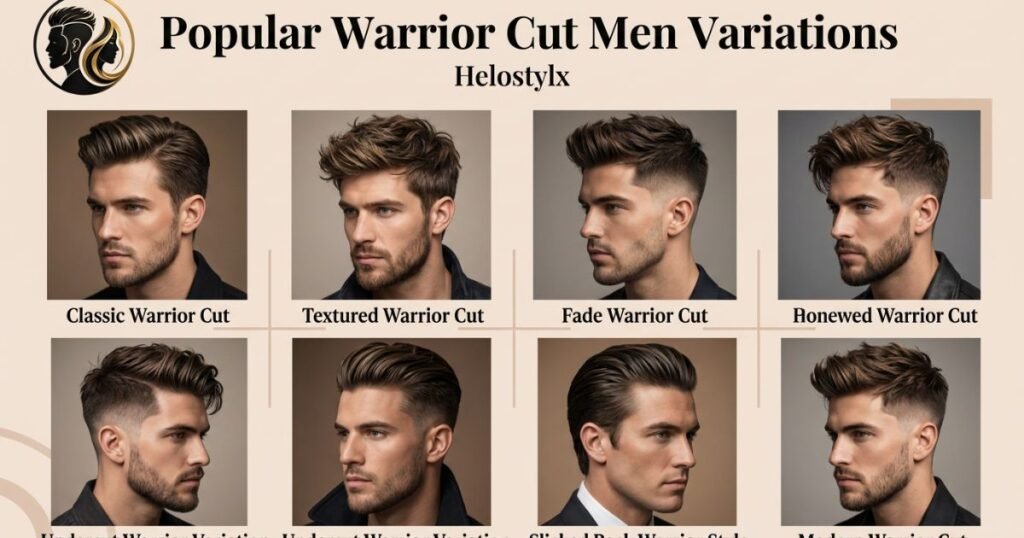
One of the best things about this style is its flexibility. There isn’t just one “correct” version — there are several Warrior Cut variations depending on hair type, length preference, and personal style.
- Classic Warrior Cut — Balanced volume, medium-length top, softer sides. The most versatile option and a great starting point for first-timers.
- Spiky Warrior Cut — Leans into spiky textured hair with more product and upward styling for a bold, high-volume finish.
- Grunge Warrior Cut — A deeper nod to the modern grunge haircut aesthetic, with a longer fringe and looser, more relaxed styling.
- Curly Warrior Cut — Adapted for curly or wavy textures, where natural curl pattern does much of the texturising work already.
- Fade Warrior Cut — Pairs the textured top with a skin or mid fade on the sides for a sharper, more contrast-heavy finish.
Each variation still follows the same core cutting principles — textured top, softer sides, choppy layers — just adjusted in proportion and finish to suit the individual.
How to Style the Warrior Cut
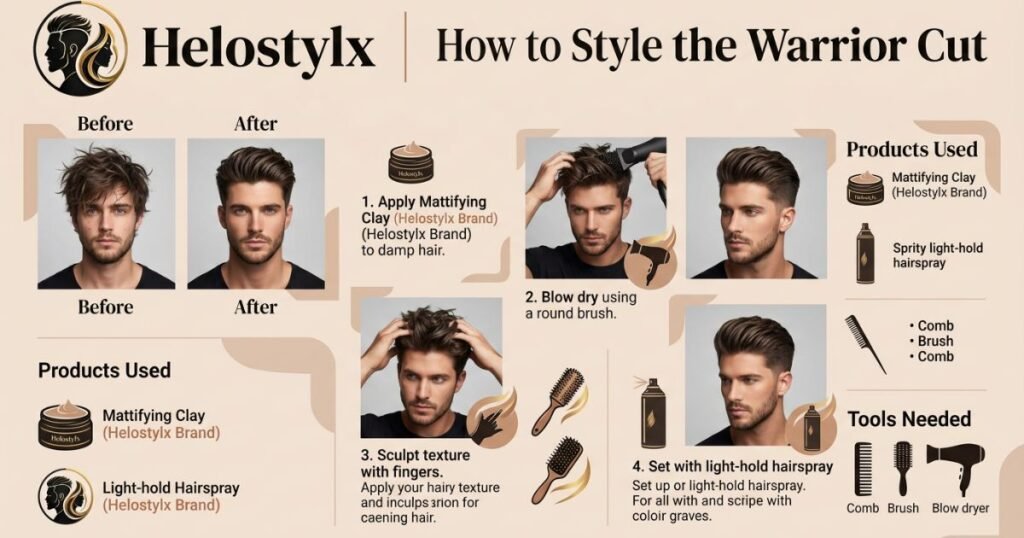
Here’s the good news: styling this cut is far simpler than it looks.
- Start on towel-dried hair. Product grips better on slightly damp hair than on fully dry or dripping-wet hair.
- Apply a texturising product through the mid-lengths and ends, focusing on the top sections rather than the roots.
- Use your fingers, not a brush. Tousle and lift the roots to build volume and height, then twist small sections of the fringe for extra texture.
- Let it air-dry or diffuse on low heat. Over-drying with high heat can flatten the natural texture you’re trying to preserve.
- Finish with a light texturising spray if you want extra hold without stiffness.
The goal at every step is deliberate messy styling — structured enough to look intentional, loose enough to look natural. Avoid over-combing or slicking the top down; that defeats the entire purpose of the cut.
For a quicker version, many men simply rough-dry with their fingers and apply product straight after showering, making this one of the more genuinely low-maintenance men’s haircut options on the market despite its high-impact look.
Best Hair Products to Use for This Haircut
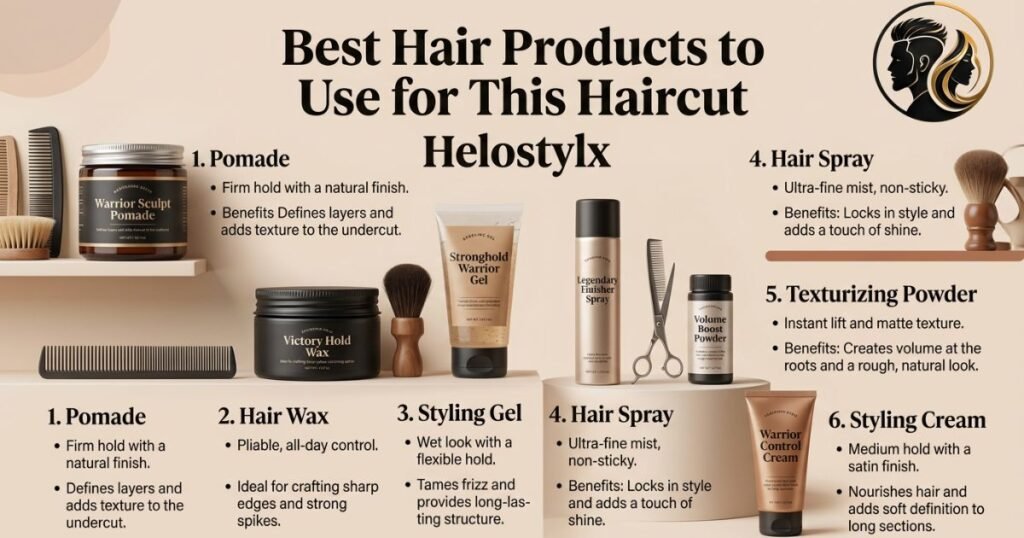
The right products make or break the finished look. Here’s what actually works for a Warrior Cut hairstyle:
- Texturising clay or paste — Provides matte hold and definition without looking greasy or overly styled.
- Sea salt spray — Great for adding grit and natural texture, especially on second- or third-day hair.
- Volumising mousse — Ideal for finer hair types that need extra lift at the roots before the texturising product goes in.
- Light-hold pomade — Useful for controlling the fringe without weighing down the rest of the top.
- Dry shampoo — Doubles as a texturiser and refreshes the roots between washes, extending the life of the style.
A simple rule of thumb: thicker hair usually needs less product, while finer hair benefits from a mousse base plus a light clay on top for staying power.
The Must-Have Male Haircut of 2026
It’s not an exaggeration to call this the defining men’s haircut with texture of the year.
Salon trend reports and social platforms alike point to the same pattern — searches for “trending men’s haircuts 2026” and “popular men’s hairstyles 2026” consistently surface the Warrior Cut near the top. Barbers report it as one of the most frequently requested styles across age groups, from teenagers chasing the grunge revival to professionals wanting a fashion-forward men’s haircut that still reads as polished.
Its staying power comes down to versatility. It works on straight, wavy, and curly hair. It transitions well between casual and formal settings. And it grows out gracefully, meaning fewer emergency salon trips between appointments.
In an era where most trends burn out within a season, a haircut that’s both stylish and practical tends to stick around — and that’s exactly what’s happening with the Warrior Cut.
Final Thoughts
The Warrior Cut earns its place as 2026’s standout men’s hairstyle by combining two things that don’t always go together: bold, edgy style and everyday practicality.
It draws on the best of 90s hairstyling — volume, movement, a bit of rebellious energy — while using modern cutting techniques like point cutting, over-directing, and precise clipper blending to keep it wearable and low-maintenance.
Whether you go for the classic version, a spikier take, or a fade-paired variation, the underlying formula stays the same: textured top, softer sides, and a finish that looks effortless because the technique behind it isn’t. If you’re due for a change, this is the haircut worth bringing to your next salon appointment.
FAQs
What is a Warrior Cut haircut?
A medium-length men’s haircut with a choppy, textured top, softer blended sides, and a longer fringe, inspired by 90s grunge hairstyles.
Is the Warrior Cut good for thick or curly hair?
Yes — texturising and point cutting remove bulk from thick hair, while curls naturally enhance the cut’s built-in texture.
How do I maintain a Warrior Cut between salon visits?
Trim every 6–8 weeks and style daily with just a texturising product and your fingers.
Can I style the Warrior Cut without heat tools?
Yes — apply product to damp hair, finger-style for lift, and let it air-dry.
