
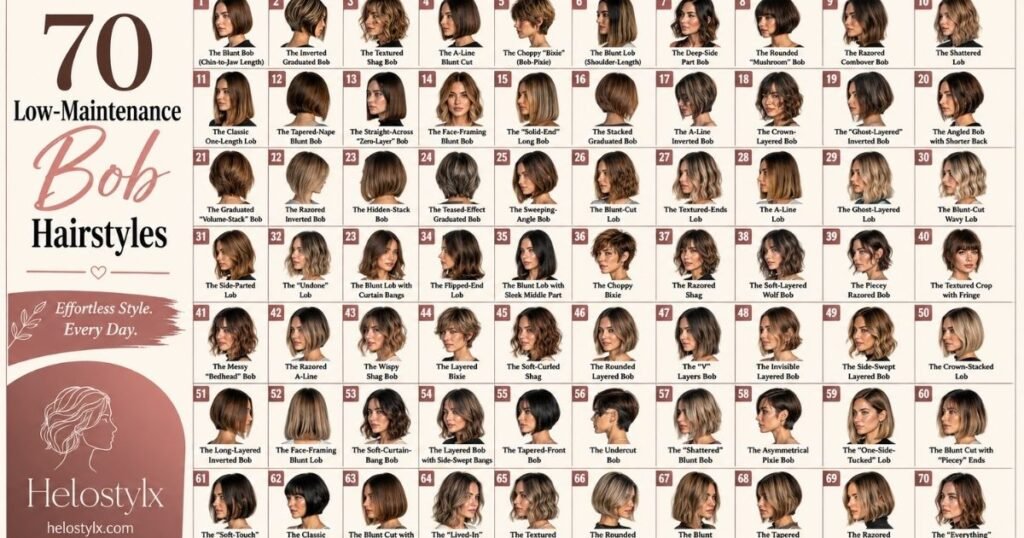
If you’re scrolling through hairstyle inspiration at midnight while your toddler finally sleeps, you already know the struggle. Fine, thinning hair doesn’t need more length — it needs a smarter cut. That’s exactly why low-maintenance bob hairstyles have become the go-to solution for women who want thicker-looking, easier-to-style hair without spending an extra 20 minutes in front of the mirror every morning.
As someone who has tested (and lived through) more haircuts than I can count while raising two kids, I built this guide around one goal: real styles that actually work for real, busy lives. No gimmicks. No 45-minute blowouts. Just 70 bob options that make thin hair look full, healthy, and effortlessly styled.
The Bob Mindset: Shifting from Loss of Length to Gain of Style
Cutting your hair short can feel like a loss, especially if you’ve had long hair your whole life. But here’s the mindset shift that changes everything: a bob isn’t about losing inches — it’s about gaining density.
Long, thin hair stretches out what little volume you have. Every strand gets pulled down by its own weight, leaving your ends looking wispy and your roots looking flat. A well-cut bob does the opposite. It stops that weight at the point where your hair naturally has the most body, which instantly creates the illusion of thickness.
Think of it less as “cutting off” your hair and more as “editing” it. You’re removing the parts that were working against you and keeping the parts that make your hair look its healthiest. Once you see a bob on yourself, you’ll understand why so many hairstylists recommend it as the single best cut for fine or thinning hair.
Fine vs. Thinning: Understanding Your Hair Type
Before you pick a style, it helps to know exactly what you’re working with, because “fine hair” and “thinning hair” are not the same thing — and the best low-maintenance bob hairstyles for each can differ slightly.
Fine hair refers to the diameter of each individual strand. You can have fine hair and still have a lot of it. Fine strands are simply narrower, which makes them more prone to looking flat or limp, especially by midday.
Thinning hair refers to hair density — literally how many strands you have per square inch of scalp. This is often tied to age, hormones, postpartum shedding, or genetics, and it usually shows up as visible scalp at the part line or thinner-looking ends.
Many women deal with both at once, which is exactly why blunt, weight-focused bob cuts work so well. They’re engineered to disguise both low density and fine texture in one move.
Choosing the Style That’s Right for You
With 70 options ahead, it’s easy to feel overwhelmed. Use these quick filters to narrow things down before you sit in the chair:
- Face shape — Round faces often do best with angled or A-line bobs; square faces soften beautifully with rounded or textured ends; oval and heart-shaped faces can wear almost any bob on this list.
- Hair texture — Straight fine hair usually looks best in blunt, one-length cuts; wavy fine hair benefits from soft layers or shag texture.
- Daily time budget — If you have under 10 minutes, prioritize blunt or one-length bobs. If you enjoy a little styling, textured or layered bobs give you more to play with.
- Hair goal — Want maximum volume illusion? Go blunt. Want movement and softness? Go textured or shaggy.
Keep these filters in mind as you browse — they’ll help you land on a cut you’ll actually love wearing every single day.
70 Low-Maintenance Bobs for Fine Hair: My Top Picks for Busy Moms
This is the heart of the guide. I’ve grouped these low-maintenance bob hairstyles from the most classic, foolproof cuts to more textured, editorial options — so whether you want something safe or something bold, there’s a match for you.
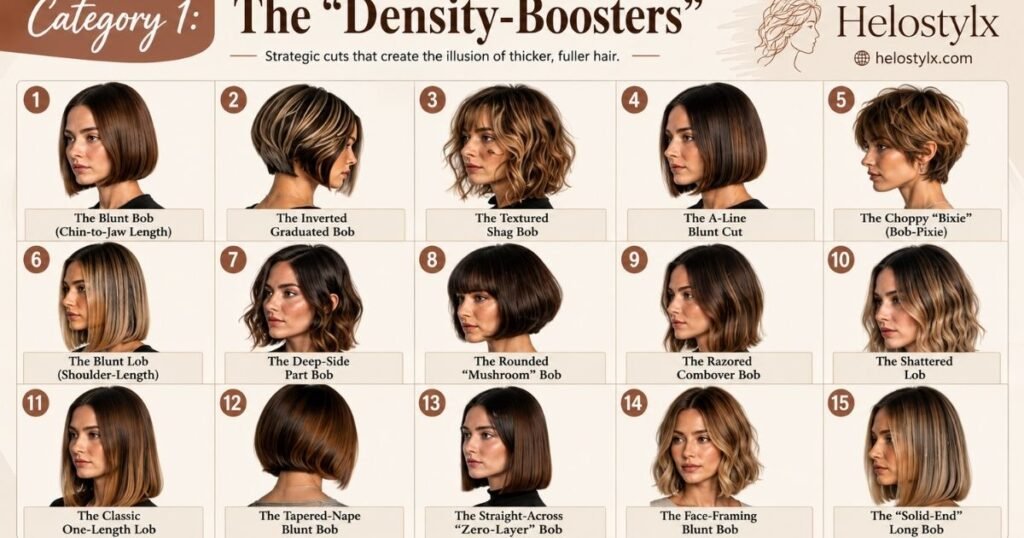
1. The Blunt Bob (Chin-to-Jaw Length)
The single most recommended cut for fine hair, and for good reason. Cutting hair to one clean, blunt line at the chin or jaw concentrates every strand into a single dense-looking edge. There’s no blending or thinning involved, which means no accidental volume loss. It’s wash-and-go on a good day and a five-minute round-brush job on a bad one.
2. The Inverted Graduated Bob
Shorter in the back, longer in the front, with graduated layers built into the perimeter. This shape naturally lifts the crown and back, which is exactly where thin hair tends to fall flattest. It also creates a flattering frame around the jawline without any daily effort.
3. The Textured Shag Bob
Soft, choppy layers throughout give this bob movement and a lived-in look that hides thinning far better than a stick-straight style. Because the layers are irregular, any frizz or flyaways just blend into the texture instead of standing out.
4. The A-Line Blunt Cut
Slightly longer in the front, shorter in the back, and cut with a crisp, blunt edge. The angle draws the eye downward and forward, elongating the face while the blunt line preserves maximum density at the ends.
5. The Choppy “Bixie” (Bob-Pixie)
A hybrid cut that borrows the shortness of a pixie with the shape of a bob. Heavy texturizing at the crown creates instant height and volume, making it one of the most effective options here for genuinely thin, fine hair that needs a boost at the root.
6. The Blunt Lob (Shoulder-Length)
For anyone not ready to go super short, the blunt lob keeps length near the shoulders while still cutting a clean, weighted line. It’s the easiest transition cut if you’re moving from long hair into the world of low-maintenance bob hairstyles.
7. The Deep-Side Part Bob
A dramatic side part instantly adds volume at the root by disrupting the flat, symmetrical fall of fine hair. Pair it with a blunt or lightly graduated bob and you get built-in lift with zero blow-drying skills required.
More Stunning Low-Maintenance Bob Hairstyles (#8–70)
Once you’ve nailed the shape that works for your face and texture, these variations give you dozens of ways to personalize it. Each one below is a quick, easy-to-style twist on the core bob shapes above.
Classic & Blunt Variations
- 8. The Rounded “Mushroom” Bob — soft, curved ends hug the head from crown to chin, hiding thin patches near the temples; needs only a round brush to hold shape.
- 9. The Razored Combover Bob — a side-swept, razor-cut edge softens a blunt line and works great over a receding part or thin root section.
- 10. The Shattered Lob — fine, splintered ends add texture without cutting away real length, so density stays high while the tips look softer.
- 11. The Classic One-Length Lob — zero layers means every strand ends at the same point, giving the thickest possible visual weight with almost no daily styling.
- 12. The Tapered-Nape Blunt Bob — the back is tapered close to the neck while the front stays blunt, so it grows out gracefully with minimal trim upkeep.
- 13. The Straight-Across “Zero-Layer” Bob — the most weight-preserving cut here; a dead-straight hem line traps every strand at the same length for maximum fullness.
- 14. The Face-Framing Blunt Bob — a few subtle face-framing pieces are cut into an otherwise blunt shape, softening the jawline without adding upkeep.
- 15. The “Solid-End” Long Bob — long, uncut ends stay heavy and dense, ideal if you want bob-level fullness while keeping a bit more length.
Graduated & Stacked Bobs
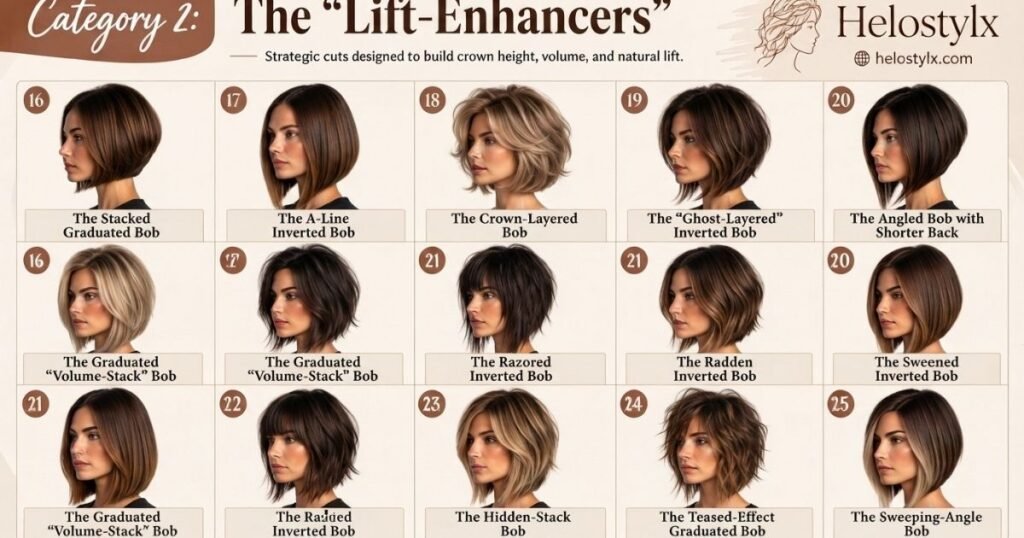
- 16. The Stacked Graduated Bob — internal layering at the back builds a shelf of volume right where fine hair usually goes flat.
- 17. The A-Line Inverted Bob — pairs the slimming, forward-angled line with graduated back layers for lift and a flattering frame together.
- 18. The Crown-Layered Bob — layers are cut only at the crown, giving targeted root lift while the rest stays dense and blunt.
- 19. The “Ghost-Layered” Inverted Bob — barely-there layers add movement invisibly, so it reads as thick hair even up close.
- 20. The Angled Bob with Shorter Back — a dramatic length drop from front to back creates a bold, sculpted silhouette with instant volume behind.
- 21. The Graduated “Volume-Stack” Bob — heavier internal stacking is best for very fine, flat hair that needs serious root lift.
- 22. The Razored Inverted Bob — razor-cut ends soften the graduated shape’s hard edges, blending flyaways into the texture.
- 23. The Hidden-Stack Bob — internal layers stay tucked under the top layer, so you get volume you can feel but can’t see.
- 24. The Teased-Effect Graduated Bob — cut with built-in lift that mimics a backcombed look, so you skip the teasing comb entirely.
- 25. The Sweeping-Angle Bob — a diagonal cut line runs from short to long for asymmetrical movement that hides thin sections on one side.
Lob (Long Bob) Options
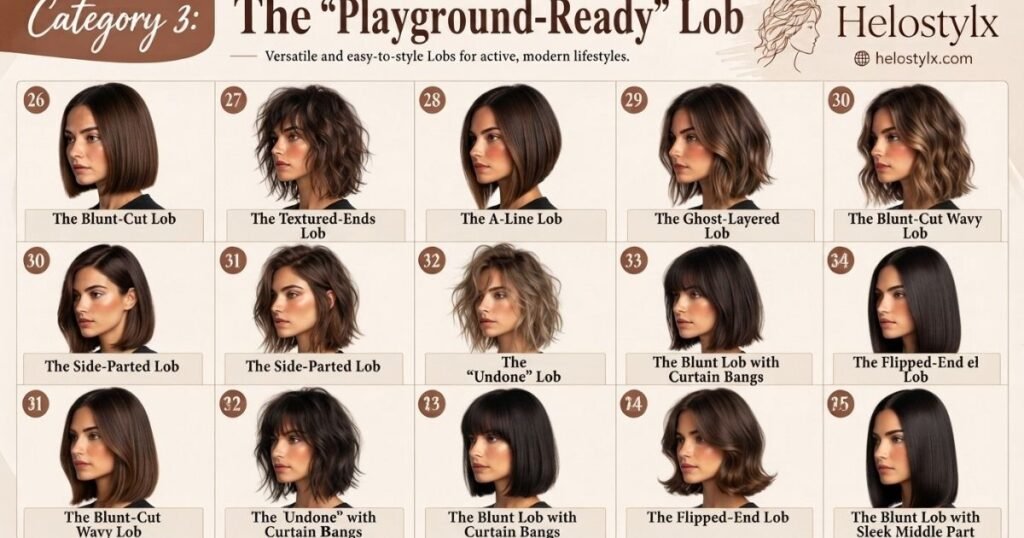
- 26. The Blunt-Cut Lob — shoulder-grazing length finished with a crisp, weighted edge that keeps every strand looking dense from root to tip.
- 27. The Textured-Ends Lob — point-cut tips break up a heavy line just enough for subtle texture, with almost no extra styling required.
- 28. The A-Line Lob — the classic A-line angle stretched to shoulder length, so you get the slimming effect with a little more hair to work with.
- 29. The Ghost-Layered Lob — near-invisible internal layers add gentle movement while the outer shape still reads as one solid length.
- 30. The Blunt-Cut Wavy Lob — a blunt hemline paired with natural waves means you can air-dry and still look intentionally styled.
- 31. The Side-Parted Lob — a deep side part plus lob length lifts the root instantly and needs zero blow-dry technique to hold.
- 32. The “Undone” Lob — cut with soft, irregular ends so it looks deliberately relaxed even straight out of a messy bun.
- 33. The Blunt Lob with Curtain Bangs — face-framing curtain bangs soften a blunt line and draw attention away from thinner temple areas.
- 34. The Flipped-End Lob — ends are cut to curve outward at the tips, adding visual fullness without any layering underneath.
- 35. The Blunt Lob with Sleek Middle Part — a polished, symmetrical middle part paired with a blunt edge for a clean, low-fuss finish.
Textured & Shag-Inspired Bobs
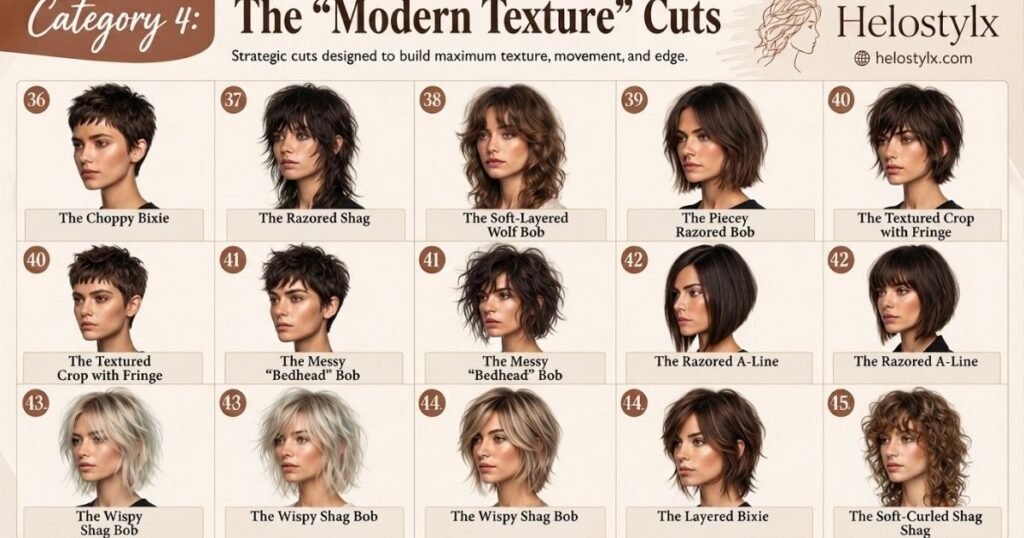
- 36. The Choppy Bixie — a bolder, heavier-textured take on style #5, with more chop at the crown for extra height.
- 37. The Razored Shag — heavy texturizing throughout the whole cut maximizes movement, so thin ends blend right into the layers.
- 38. The Soft-Layered Wolf Bob — trendy shag energy shrunk into bob length, giving fringe-like texture without a full haircut commitment.
- 39. The Piecey Razored Bob — razored, individually defined pieces create a modern, textured finish that hides gaps between strands.
- 40. The Textured Crop with Fringe — a shorter, fringed take on the bob shape that pulls focus to the eyes and away from thin lengths.
- 41. The Messy “Bedhead” Bob — cut with intentional texture so it looks great tousled, cutting your morning styling time to almost nothing.
- 42. The Razored A-Line — a razor finish softens the sharp A-line edge, keeping the slimming angle but with less blunt, harder texture.
- 43. The Wispy Shag Bob — feather-light layers throughout give delicate movement, ideal for very fine strands that can’t handle heavy layering.
- 44. The Layered Bixie — takes style #5 further with more overall layering for a softer, less severe pixie-bob blend.
- 45. The Soft-Curled Shag — layers are cut specifically to enhance natural curl or wave patterns, so styling is mostly hands-off.
Also Read This : 15 Best Short Layered Hairstyles to Try in 2026 (Pixies, Bobs & Shags)
Layered Bobs
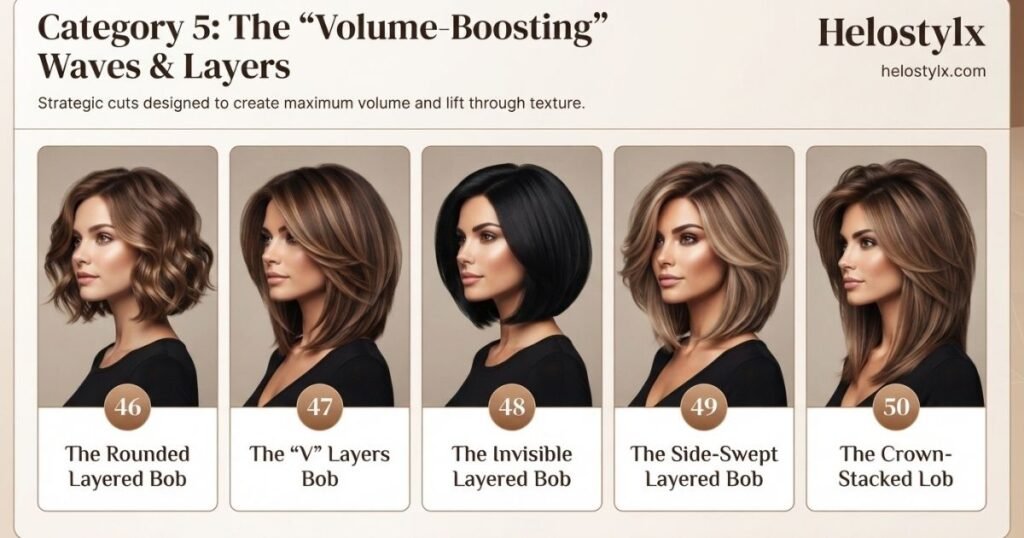
- 46. The Rounded Layered Bob — soft layers sit under a rounded perimeter, keeping the outline full while adding gentle movement underneath.
- 47. The “V” Layers Bob — a V-shaped panel cut into the back adds dimension and a subtle point, great for thicker-looking ends.
- 48. The Invisible Layered Bob — layers are cut so subtly the whole style reads as one solid length, ideal if you want density with a touch of movement.
- 49. The Side-Swept Layered Bob — layering is combined with a soft side sweep, framing the face while adding lift near the part.
- 50. The Crown-Stacked Lob — volume is stacked specifically at the crown while the sides stay lob-length, balancing height with length.
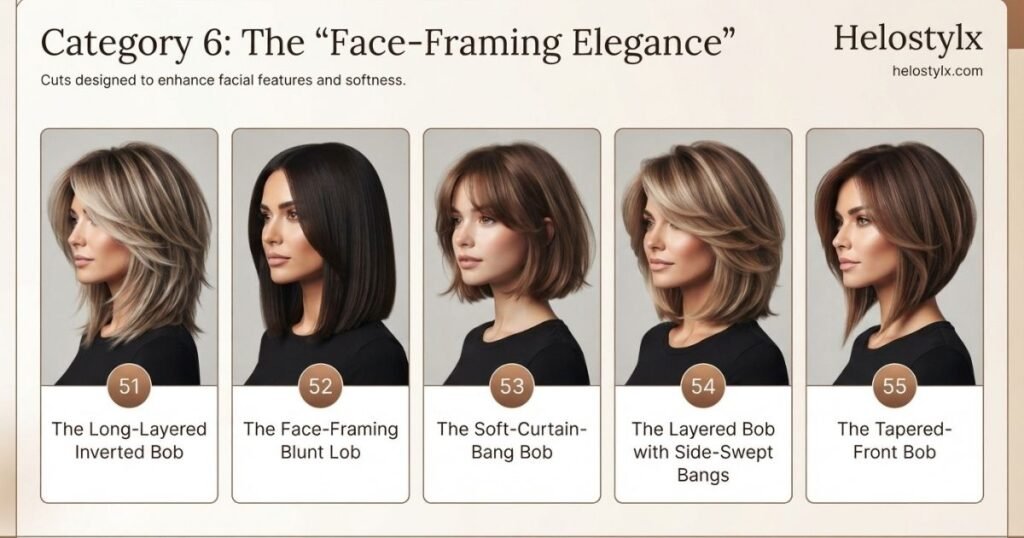
- 51. The Long-Layered Inverted Bob — longer, softer layers ease the harder inverted shape into something more wearable day to day.
- 52. The Face-Framing Blunt Lob — face-framing pieces are cut into a blunt lob base, softening the jaw without losing overall density.
- 53. The Soft-Curtain-Bang Bob — curtain bangs are blended seamlessly into layered sides for an effortless, no-fuss frame.
- 54. The Layered Bob with Side-Swept Bangs — bangs and layers work together to lift the front section, a solid pick for a receding hairline.
- 55. The Tapered-Front Bob — shorter pieces near the face taper inward for a softer frame that needs no extra product to hold.
Bold & Editorial Bobs
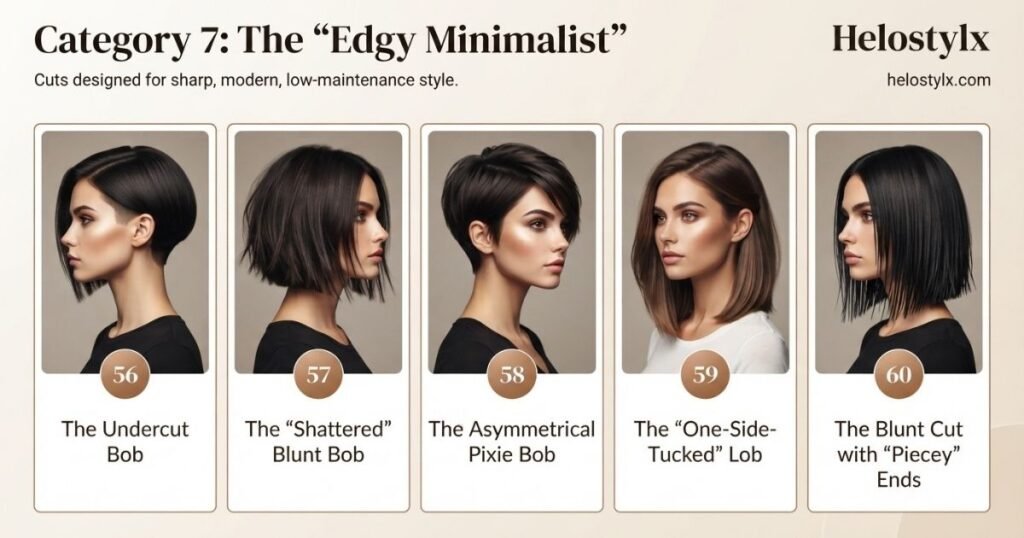
- 56. The Undercut Bob — a hidden shaved section underneath removes bulk without shortening the visible top layer, keeping density up top.
- 57. The “Shattered” Blunt Bob — a blunt base finished with splintered, jagged ends for edge, while the core line still preserves weight.
- 58. The Asymmetrical Pixie Bob — an edgy, uneven take on the bob-pixie hybrid, with one side longer for a striking, low-maintenance shape.
- 59. The “One-Side-Tucked” Lob — cut to sit neatly when tucked behind one ear, giving instant polish with zero product.
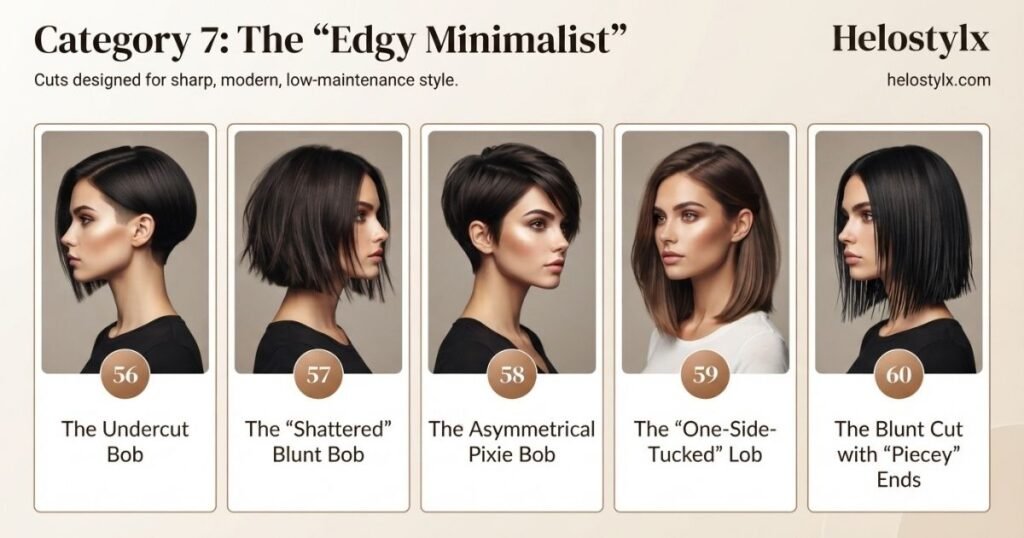
- 60. The Blunt Cut with “Piecey” Ends — a blunt foundation finished with textured, piecey tips for a modern edge without losing overall fullness.
- 61. The “Soft-Touch” Blunt Bob — a gentler, rounded version of the classic blunt bob, softer at the corners for an easier daily style.
- 62. The Classic “French” Bob — chin-length and blunt, paired with soft, wispy bangs for a timeless, editorial look.
- 63. The Blunt Cut with Invisible Layers — density-preserving layers are hidden within a blunt shape, giving subtle movement that’s barely noticeable.
- 64. The “Lived-In” Lob — grown-out color paired with soft layers creates a low-upkeep vibe that hides regrowth and thin patches alike.
- 65. The Textured “Beach” Bob — tousled texture is built into the cut, perfect for air-drying with a little salt spray.
Signature Finishing Styles
- 66. The Rounded “C-Shape” Bob — ends curve inward toward the chin for a soft, polished silhouette that only needs a round brush to set.
- 67. The Blunt “No-Part” Bob — worn without a defined part, letting hair fall naturally from the crown for maximum root volume.
- 68. The Tapered “Neck-Cutter” Bob — a short, tapered nape keeps the back clean while the front stays fuller and blunt.
- 69. The Razored “Edge” Bob — sharp, razored ends give a modern, undone finish that hides split or thinning tips well.
- 70. The “Everything” Bob — a fully custom blend of blunt ends, subtle layers, and soft face-framing that your stylist tailors exactly to your hair type and density.
Styling Tips to Keep Any Low-Maintenance Bob Looking Full
Getting the cut is half the battle. These habits will help you maintain the volume it creates:
- Dry your roots first. Flip your head upside down for the first 60 seconds of blow-drying to lift the root before shaping the rest.
- Use a lightweight volumizing mousse. Heavy creams and oils weigh fine hair down; a mousse applied at the root adds lift without grease.
- Cold-set your curls or waves. A quick blast of cool air after curling locks the shape in place longer, cutting down on midday touch-ups.
- Refresh with dry shampoo at the roots, not the ends. This keeps volume up without making thin ends look drier or more brittle.
- Get regular trims every 6–8 weeks. Bobs grow out fast, and a blunt line loses its density-boosting effect once it starts to soften.
Small habits like these are what actually make a bob “low-maintenance” — the cut does the heavy lifting, and your routine just needs to support it.
Frequently Asked Questions
What is the best low-maintenance bob hairstyle for extremely thin hair?
A blunt, chin-to-jaw bob is the top pick — it concentrates weight into one line for the strongest density illusion with the least styling effort.
Do layers make thin hair look thicker or thinner?
Heavy layers can make thin hair look sparser, while soft, crown-only layers add lift without losing density.
How often should I trim a low-maintenance bob to keep it healthy?
Every 6–8 weeks, since even slight overgrowth softens the line and reduces the volume-boosting effect.
Can a bob really make fine or thinning hair look fuller without extensions?
Yes — a well-cut blunt or graduated bob redistributes weight naturally, no extensions or heavy products needed.
Final Thoughts
Thin hair doesn’t have to mean flat, lifeless, or high-maintenance styling sessions. The right low-maintenance bob hairstyles do the work for you — cutting away exactly what’s making your hair look sparse and keeping exactly what makes it look full.
Whether you land on the classic blunt bob, an inverted graduated shape, or something further down this list of 70, the goal stays the same: less time styling, more hair that looks like it’s thriving. Bring a few of these pictures to your next salon visit, talk through your face shape and texture with your stylist, and get ready for mornings that are actually simple again.
