
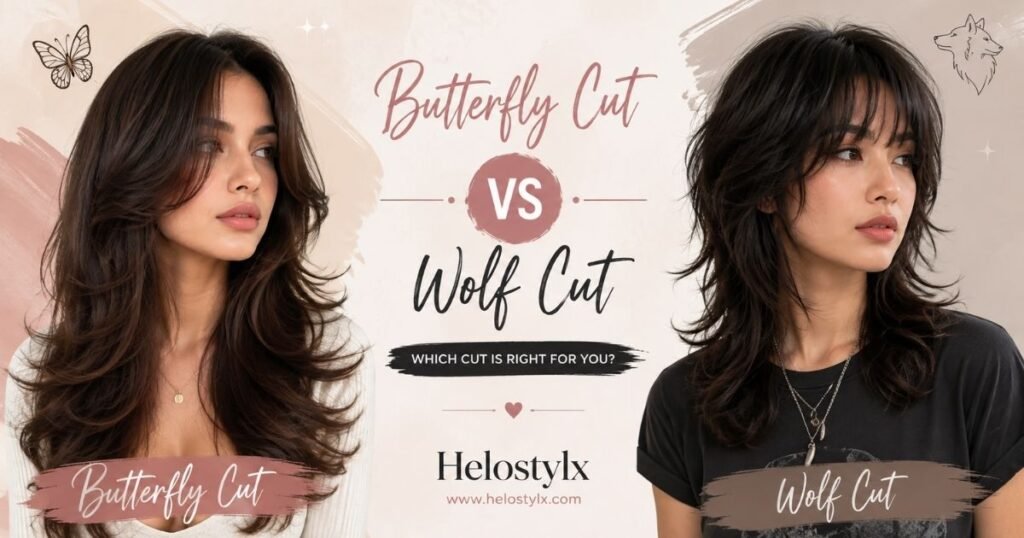
Standing in the salon chair with a photo on your phone, you’ve probably asked yourself: butterfly cut vs wolf cut — which one actually fits my face, my hair type, and my lifestyle? You’re not alone. These two haircuts have dominated hairstyle searches for the past two years, and for good reason — both promise volume, movement, and that effortless “I woke up like this” texture everyone wants.
But here’s the thing: they are not the same haircut with different names. They’re built on different philosophies, cut with different techniques, and suited to different hair types. Get it wrong, and you could end up with a style that fights your natural texture instead of working with it.
This guide breaks down everything — from layering technique to face-shape compatibility — so you walk into your next appointment knowing exactly what to ask for.
Butterfly Cut vs Wolf Cut: Quick Takeaways
Short on time? Here’s the snapshot before we go deep:
- Butterfly Cut: Long, face-framing layers cut close to the crown, creating a soft, voluminous “wing” effect around the face. Best for those wanting elegant movement without losing length.
- Wolf Cut: A shag-mullet hybrid with heavy, choppy, disconnected layers throughout, especially around the crown and ends. Best for those wanting edgy texture and a lived-in, undone look.
- Volume: Both add volume, but the wolf cut is more dramatic and textured; the butterfly cut is softer and more blended.
- Maintenance: Wolf cuts need more frequent trims to keep the choppy shape sharp; butterfly cuts grow out more gracefully.
- Best hair type: Butterfly cuts shine on straight-to-wavy hair; wolf cuts thrive on wavy-to-curly hair with natural texture.
Now let’s unpack the details.
Butterfly Cut vs Wolf Cut: What’s the Difference?
At its core, the butterfly cut vs wolf cut debate comes down to layer placement and intensity.
The butterfly cut uses long, face-framing layers that start higher up near the crown and cascade down in soft, symmetrical sections — think of wings opening outward. The layers are blended, not choppy, which gives the style a polished-yet-relaxed feel.
The wolf cut, on the other hand, borrows heavily from the ’70s shag and mullet. It uses shorter, choppier layers concentrated at the crown, with more disconnection between sections. The result feels rougher, edgier, and intentionally undone.
Think of it this way: if the butterfly cut is a soft brushstroke, the wolf cut is a textured splatter. Both are art — just different styles entirely.
What Is a Butterfly Cut?
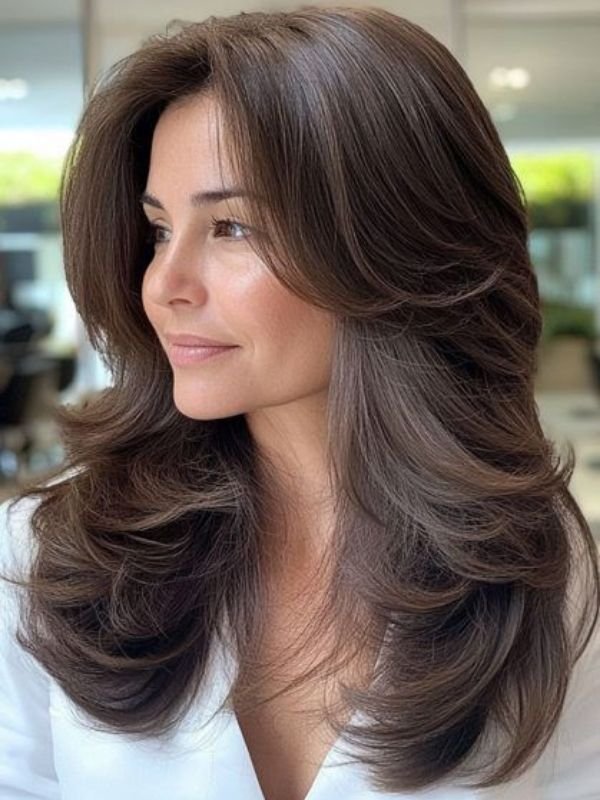
The butterfly cut is a long-layered hairstyle where layers are cut in graduated lengths, starting from around the crown and flowing outward like butterfly wings. It’s designed to add volume at the top while keeping length and softness at the ends.
Unlike traditional long layers, the butterfly cut is more dramatic — the shortest layers can sit at chin or collarbone length, while the longest pieces stay well past the shoulders.
It became a viral trend because it solves a common problem: flat, heavy hair that lacks movement. By removing weight strategically near the crown, the cut creates bounce without sacrificing overall length.
Key Features of a Butterfly Cut
Here’s what defines a genuine butterfly cut:
- Face-framing layers: Shorter pieces around the cheekbones and jaw draw attention to the face.
- Crown volume: Layers cut higher near the top lift the hair naturally, reducing flatness.
- Blended transitions: Unlike choppier cuts, layers here flow smoothly into one another.
- Length retention: Even with heavy layering, overall length stays largely intact.
- Symmetrical wing effect: When you tilt your head, the shortest layers should fan out like wings.
This combination makes the butterfly cut a favorite for anyone who wants transformation without commitment to shorter hair.
Also Read This : Butterfly Haircut: Do You Really Need to Style It?
Butterfly Cut on Different Hair Types
Not all hair responds to layering the same way, and this matters a lot when comparing butterfly cut vs wolf cut suitability.
- Straight hair: Layers show clearly and create instant volume; this is arguably the best canvas for a butterfly cut.
- Wavy hair: Waves enhance the wing effect, adding natural texture to the movement.
- Curly hair: Layers can look beautiful, but curls shrink upward, so stylists must cut longer than the desired finished length.
- Thick hair: Removes bulk while preserving length — ideal for thinning out heavy strands.
- Fine hair: Adds the illusion of density near the crown, though very fine hair may need fewer, more strategic layers to avoid thinning ends further.
What Is a Wolf Cut?
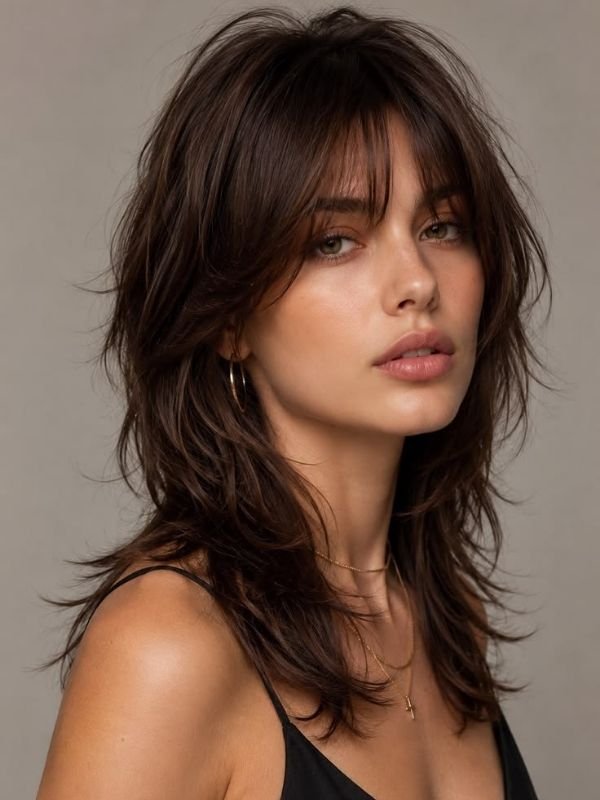
The wolf cut is a shaggy, textured haircut that blends elements of a mullet and a shag. It features heavy layering, especially around the crown, with choppy, disconnected ends throughout the rest of the hair.
Where the butterfly cut whispers, the wolf cut shouts. It’s built for texture-first hair — the messier and more piecey, the better it looks.
This style surged in popularity because it embraces imperfection. There’s no need for sleek blowouts or perfect symmetry; the wolf cut looks intentional even when tousled.
Key Features of a Wolf Cut
A true wolf cut includes these defining traits:
- Heavy crown layering: Short, choppy layers stacked at the top create maximum volume and separation.
- Disconnected sections: Layers don’t blend as smoothly — visible gaps and choppiness are the point.
- Face-framing pieces: Shorter strands around the face, similar to curtain bangs, often accompany the cut.
- Textured ends: Point-cutting or razor techniques create feathered, wispy tips rather than blunt lines.
- Mullet-inspired silhouette: Shorter on top, longer underneath, echoing retro shag influences.
Wolf Cut Styles by Hair Length
The wolf cut adapts across nearly every hair length, which is part of its appeal:
- Short wolf cut: Falls around chin to shoulder length with heavy crown layering — bold and low-maintenance.
- Medium wolf cut: Hits between shoulder and collarbone, balancing edge with versatility for styling.
- Long wolf cut: Retains significant length while adding choppy layers throughout, giving movement without a dramatic cut.
- Curly wolf cut: Works exceptionally well since curls naturally emphasize the disconnected layering.
Compare this flexibility to the butterfly cut, which typically requires more length to achieve its signature wing effect.
Butterfly Cut vs Wolf Cut by Hair Type
Choosing between these two often comes down to how your natural hair type interacts with each technique. Let’s break it down by texture.
Butterfly Cut vs Wolf Cut Long Hair
On long hair, the butterfly cut vs wolf cut comparison becomes especially visible.
- The butterfly cut keeps length dominant while adding lift near the crown — perfect if you love long hair but want less bulk and more bounce.
- The wolf cut also retains length underneath but adds much more texture and choppiness up top, giving a bolder, edgier silhouette.
If your goal is soft glamour, go butterfly. If you want long hair with attitude, the wolf cut wins.
Butterfly Cut vs Wolf Cut Straight Hair
Straight hair shows off layering with total clarity, making both cuts look intentional.
- Butterfly cut on straight hair creates smooth, cascading layers with a polished wing effect — ideal for those who like a refined finish.
- Wolf cut on straight hair requires more styling effort (texturizing spray, curling wand, or dry shampoo) to achieve the tousled look, since straight strands naturally fall flat and blended.
If you don’t want to style daily, the butterfly cut is more forgiving on straight hair.
Butterfly Cut vs Wolf Cut Wavy Hair
Wavy hair is arguably the sweet spot for both cuts.
- Butterfly cut enhances waves beautifully, letting the natural S-pattern do the work of creating movement.
- Wolf cut thrives even more here — waves naturally separate layers, amplifying the choppy, disconnected texture the cut is known for.
Wavy-haired individuals genuinely can’t go wrong with either option; it comes down to whether you prefer soft (butterfly) or edgy (wolf) styling.
Butterfly Cut vs Wolf Cut Curly Hair
Curly hair changes the game slightly for both cuts.
- Butterfly cut on curly hair needs careful length planning since curls shrink significantly once cut, but the payoff is beautifully bouncy, voluminous layers.
- Wolf cut is often considered the better match for curly hair because the natural coil pattern already creates separation, making the choppy layers look effortlessly textured.
If you have curls and want low-maintenance texture, the wolf cut typically requires less daily styling effort than the butterfly cut.
Butterfly Cut vs Wolf Cut vs Hush Cut

A third contender has entered the conversation: the hush cut. So how does it compare in the butterfly cut vs wolf cut debate?
The hush cut sits between the two — it has the face-framing softness of a butterfly cut but incorporates shorter, wispier layers reminiscent of a wolf cut, minus the heavy disconnection.
Here’s a simple way to differentiate all three:
- Butterfly cut: Soft, blended, wing-like layers; most length retained.
- Wolf cut: Choppy, heavily disconnected, mullet-inspired texture.
- Hush cut: A middle-ground blend — subtle texture with softer transitions than a wolf cut, but shorter layering than a classic butterfly cut.
If you’re torn between the two main styles, the hush cut is worth mentioning to your stylist as a compromise.
Butterfly vs Wolf Cut: Which One Suits You?
Still undecided? Use this quick decision guide based on your priorities.
Choose the Butterfly Cut if you:
- Want to keep maximum length while reducing bulk
- Prefer soft, polished, romantic styling
- Have straight to wavy hair that holds blended layers well
- Don’t want to style your hair daily for texture
Choose the Wolf Cut if you:
- Want a bold, edgy transformation
- Love the “undone,” lived-in aesthetic
- Have wavy to curly hair that naturally separates
- Don’t mind more frequent trims to maintain shape
Consider face shape too: Both cuts flatter oval and heart-shaped faces well. Round faces benefit more from the elongating effect of a butterfly cut, while square faces often look striking with the disconnected volume of a wolf cut.
Ultimately, the butterfly cut vs wolf cut decision isn’t about which is “better” — it’s about which philosophy matches your hair type, maintenance tolerance, and personal style.
Frequently Asked Questions
Is a butterfly cut the same as a wolf cut?
No — the butterfly cut uses soft, blended layers, while the wolf cut uses choppy, disconnected layers.
Which is better for thick hair — butterfly cut or wolf cut?
Butterfly cuts smooth out bulk; wolf cuts add dramatic texture — both work well on thick hair.
Does a wolf cut require more maintenance than a butterfly cut?
Yes, wolf cuts need trims every 6-8 weeks, while butterfly cuts grow out more gracefully.
Can I get a butterfly cut or wolf cut on short hair?
Wolf cuts work great on short hair, but butterfly cuts need at least shoulder length.
Conclusion
At the end of the day, the butterfly cut vs wolf cut choice comes down to one question: do you want soft movement or bold texture? The butterfly cut delivers elegant, face-framing layers that keep length intact, making it perfect for anyone craving volume without drastic change. The wolf cut, meanwhile, brings edgy, disconnected layers for those ready to embrace a lived-in, textured look.
Both cuts are versatile across hair types, but your natural texture, styling habits, and desired maintenance level should guide the final decision. Whichever you choose, bring reference photos to your stylist and discuss your hair’s natural behavior — that conversation matters more than any trend name.
