
Frizzy hair doesn’t have to mean fighting your texture every single morning. The right haircut works with your hair’s natural behavior instead of against it, removing bulk in the exact places that cause flyaways and halo frizz. A well-placed layer or a precise blunt edge can do more for smoothness than an entire shelf of anti-frizz serums.
This guide breaks down 21 stylist-approved haircuts for frizzy hair, organized by length, so you can find a cut that matches your texture, face shape, and daily styling routine. You’ll also learn how to identify your specific frizz type, what to ask your stylist for, and how to maintain your new cut so it keeps looking sleek between salon visits.
How to Choose the Right Haircut for Your Frizz Type (Not All Frizz Is Created Equal)
Frizz isn’t one uniform problem. It’s a symptom, and the cause behind your frizz determines which haircut will actually help.
Humidity-reactive frizz happens when hair swells to absorb moisture from the air, lifting the cuticle and creating that fuzzy halo effect. This is common in fine to medium hair and responds well to cuts with weight at the ends, since weight helps hair lay flatter against itself.
Dryness-related frizz comes from a damaged or porous cuticle that can’t retain moisture. Thick, coarse, or chemically treated hair often falls here. These types benefit from cuts that reduce split ends and remove damaged length, since split, dry ends frizz far more than healthy ones.
Texture-based frizz shows up naturally in wavy and curly hair (2A through 4C) as the cuticle doesn’t lie flat by design. This frizz isn’t damage — it’s just texture doing what texture does. The goal here is a cut that defines the curl pattern rather than fighting it.
Density-driven frizz occurs when thick, high-volume hair has too much internal bulk. Without proper thinning or layering, this hair pushes outward instead of settling into shape, creating a triangular or “poofy” silhouette.
Here’s a quick way to match your frizz type to cutting techniques:
| Frizz Type | Main Cause | Best Cutting Technique |
| Humidity-reactive | Cuticle swelling in moisture | Blunt ends, weight-heavy layers |
| Dryness-related | Porous, damaged cuticle | Removing split ends, precision trims |
| Texture-based | Natural curl/wave pattern | Curl-by-curl or dry cutting |
| Density-driven | Excess internal bulk | Point cutting, internal layering |
Knowing your frizz type before your appointment helps you communicate clearly with your stylist and avoid a cut that looks great on the salon chair but frizzes out within an hour of walking outside.
Try These 21 Haircuts for Frizzy Hair (Stylist-Approved + Real-Life Tested)
Below are 21 haircuts organized by length, each with the frizz-reduction logic behind it and a practical styling tip. These aren’t just trendy shapes pulled from a lookbook — each one is chosen because the cutting technique directly addresses one or more frizz types described above.
Short Haircuts for Frizzy Hair
Shorter cuts often reduce frizz simply by reducing weight-bearing length, which means less cuticle surface area exposed to humidity and friction. They also dry faster, limiting the window frizz has to form.
1. Soft Textured Bob
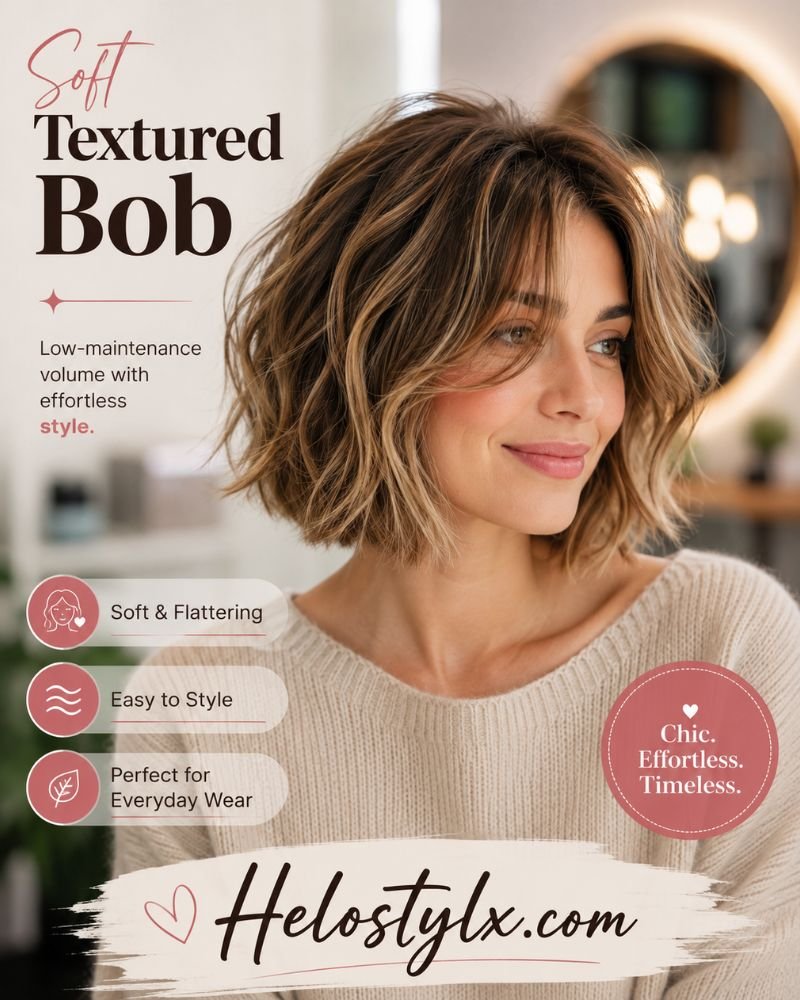
A blunt-ish bob with soft, feathered ends at the perimeter keeps hair heavy enough to resist lifting while removing the thin, wispy ends that catch frizz first.
Pro Tip: Ask your stylist to point-cut only the bottom inch instead of thinning throughout, so you keep density where it matters.
2. Tapered Bob with Interior Layers
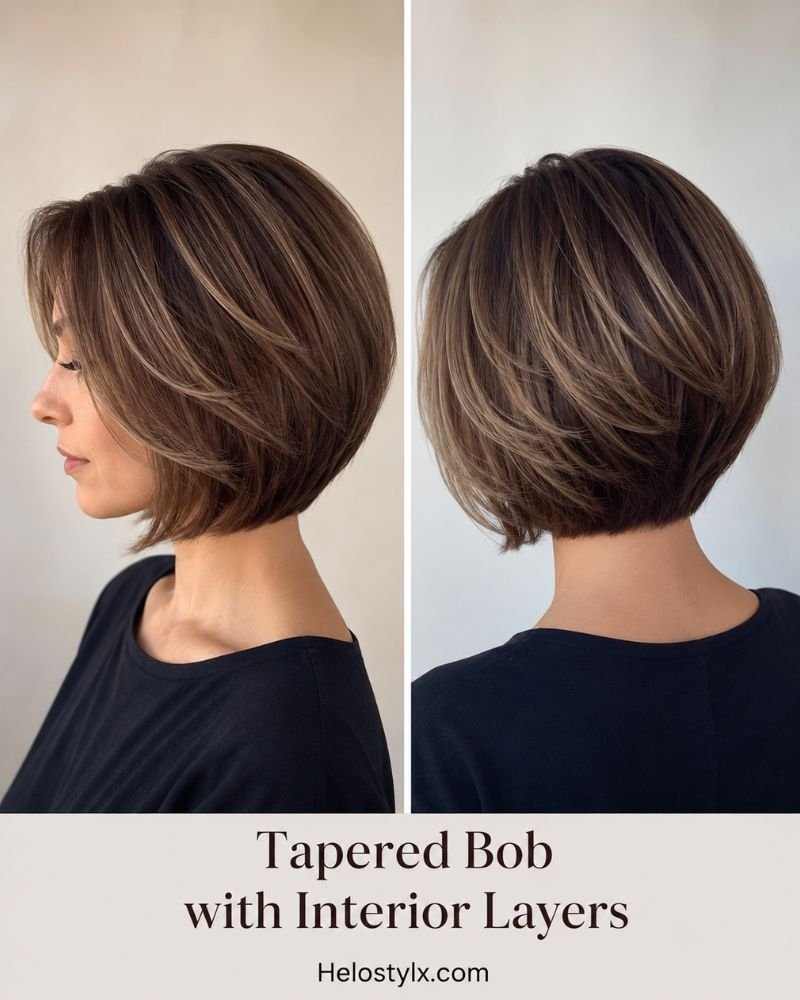
Interior layers remove bulk from underneath without touching the outer silhouette, which controls poof in dense hair while keeping the outline sleek and defined.
Pro Tip: This works best when layers are cut dry, so your stylist can see exactly how your texture falls.
3. Curly Pixie with Elongated Crown
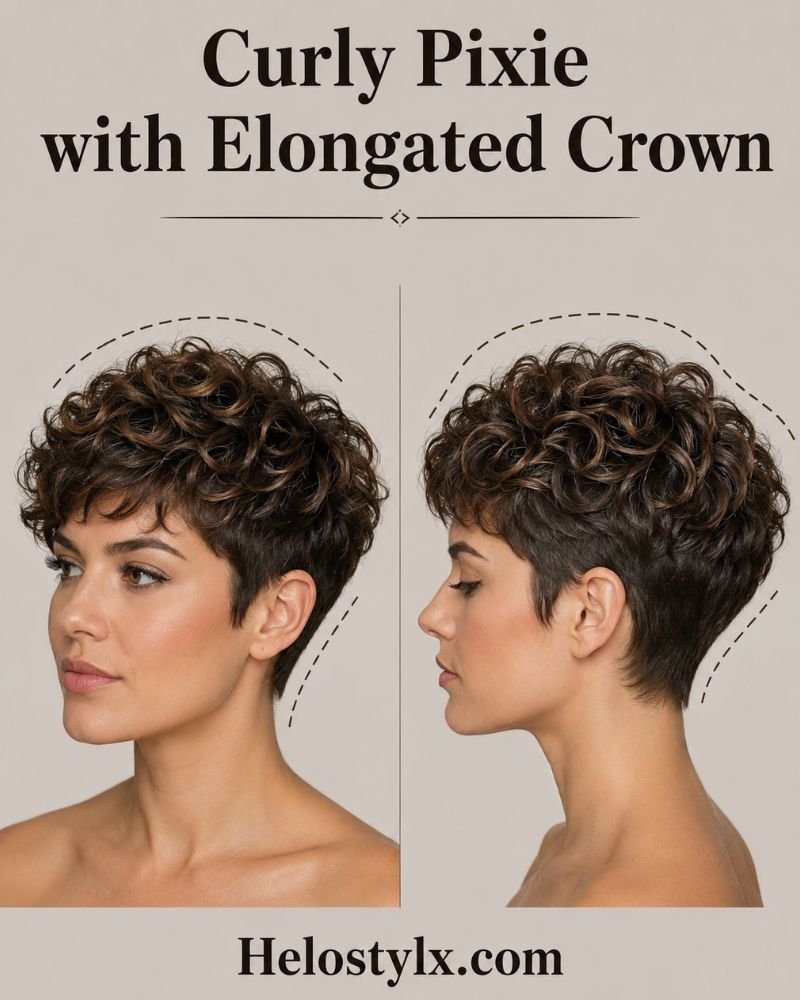
For curl types 3A–3C, a pixie with extra length left at the crown avoids the “helmet” effect and gives curls room to spring and elongate naturally.
Pro Tip: Diffuse on low heat, scrunching upward, to encourage curl clumping instead of separation.
4. Jaw-Length Bob with Soft Fringe
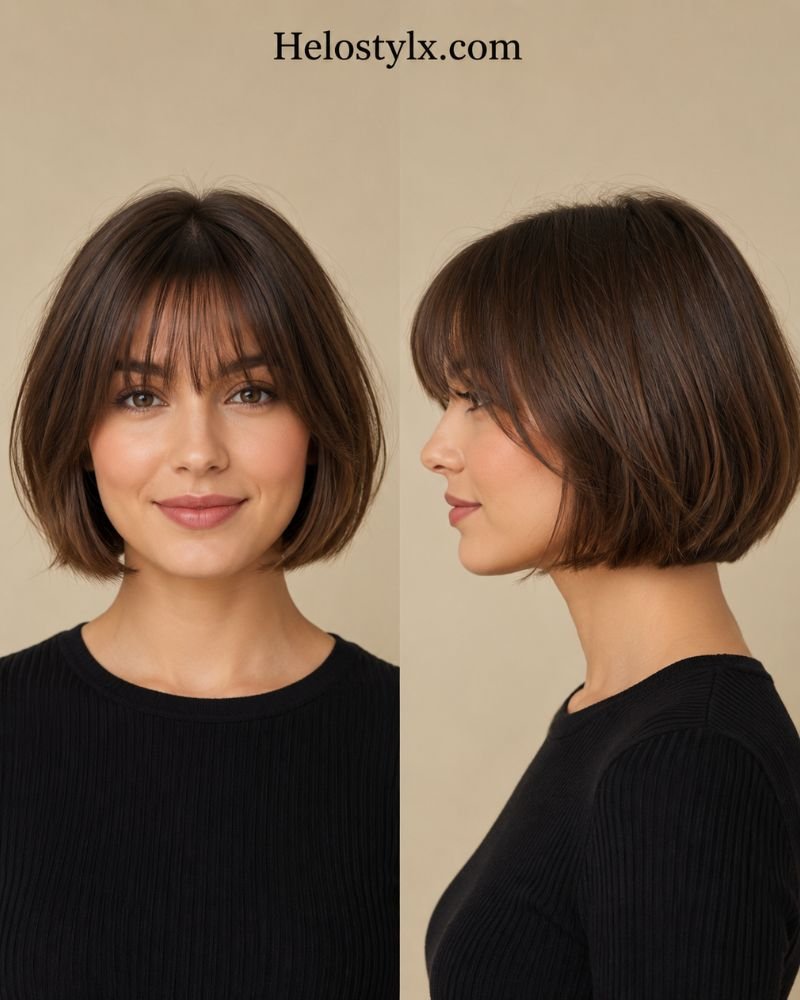
This length hits right where hair naturally wants to curve inward, and a soft, face-framing fringe distracts from any flyaways near the hairline.
Pro Tip: Avoid a hard, blunt fringe line if you have fine, frizz-prone hair — it will flip out by midday.
5. French Bob with Wispy Ends
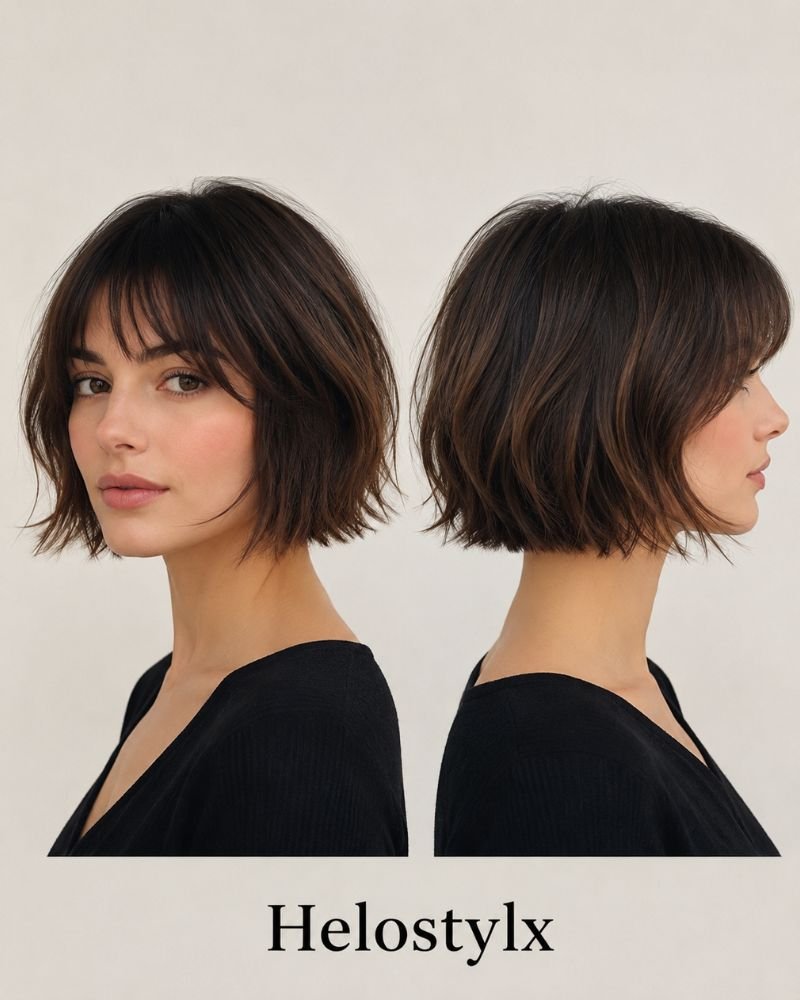
The French bob’s shorter, chin-grazing length combined with razor-textured ends breaks up bulk at the root, which is often where frizz starts on fine, dense hair.
Pro Tip: This cut requires more frequent trims (every 6 weeks) to keep the wispy ends from growing into a frizzy triangle shape.
6. Short Shag with Fringe
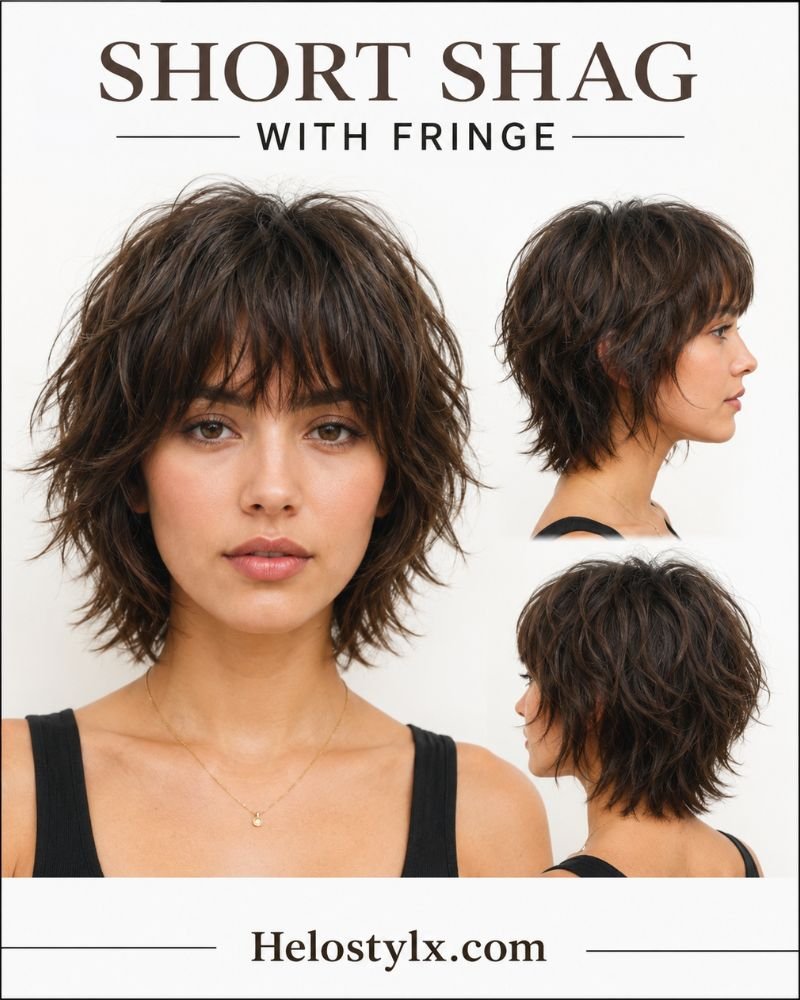
Shags are built entirely around layering, and for frizzy hair that’s a genuine advantage — heavy layering breaks the hair into smaller, more manageable sections that dry with more uniform texture.
Pro Tip: Use a lightweight mousse before air-drying to keep the shaggy layers from separating into individual frizzy strands.
7. Ear-Length Layered Pixie
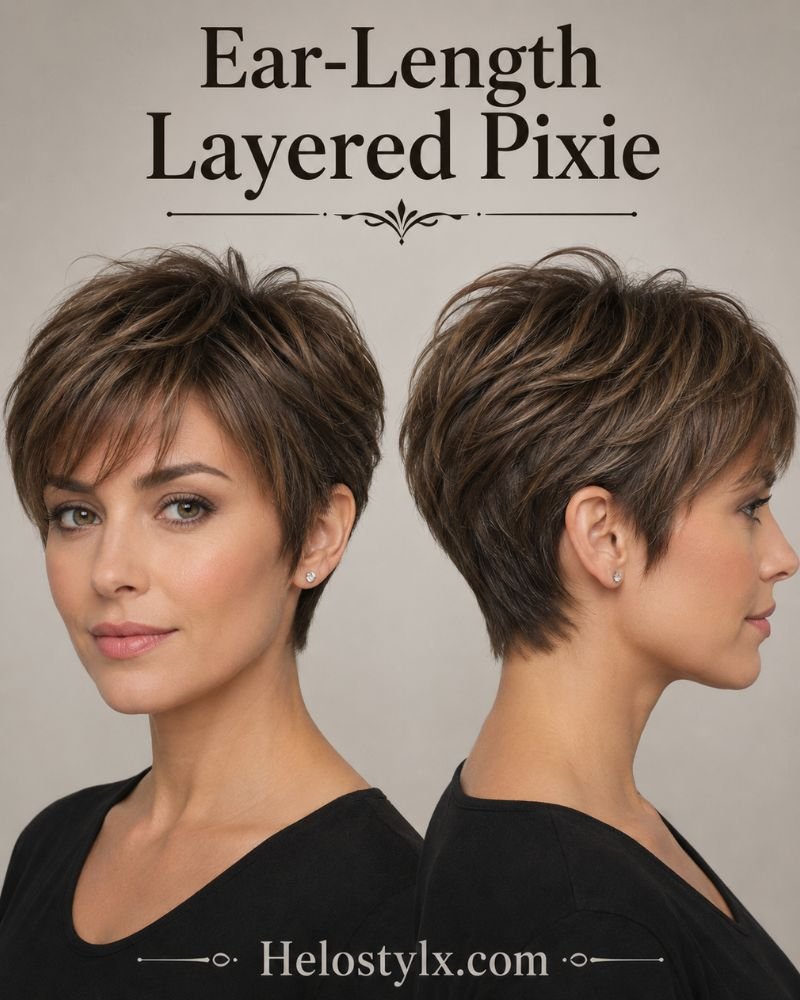
A pixie with soft layering (rather than a close-cropped buzz style) leaves just enough length to weigh hair down while still keeping it short enough to dry quickly and evenly.
Pro Tip: Request texturizing shears only at the very tips, not throughout, to avoid creating fuzzy, frizz-catching layers near the scalp.
Medium Haircuts for Frizzy Hair
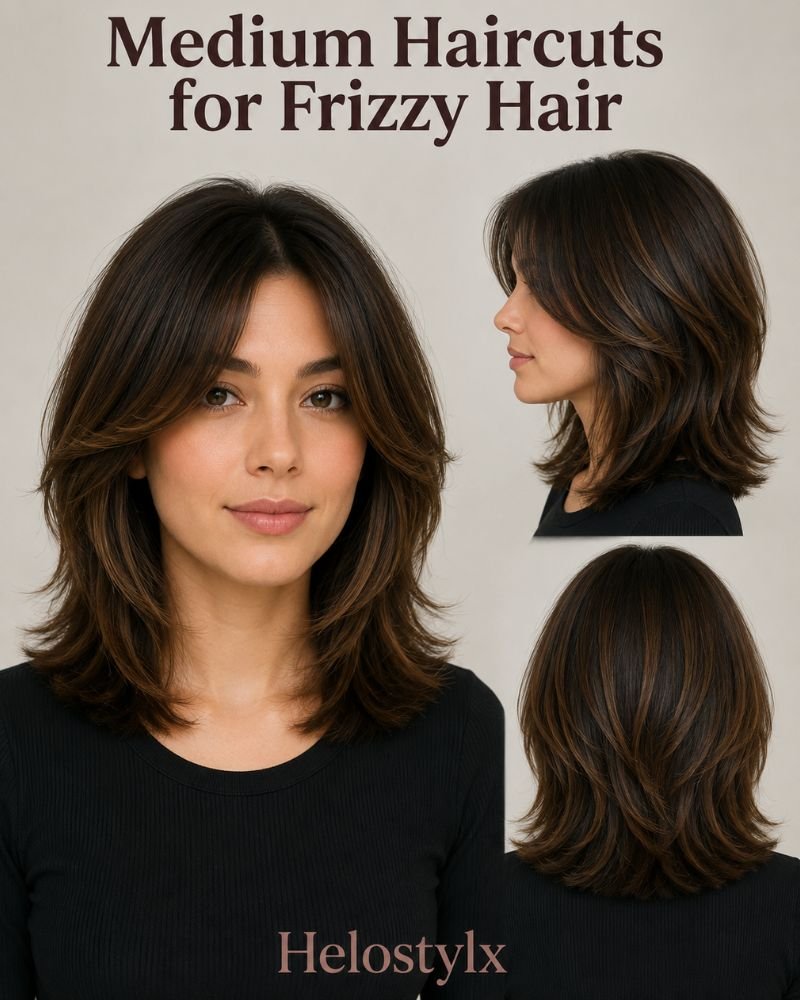
Medium lengths (shoulder to collarbone) are the sweet spot for frizz control because they’re long enough to carry weight but short enough to avoid the heavy split-end damage that plagues longer hair.
8. Collarbone Cut with Curtain Bangs
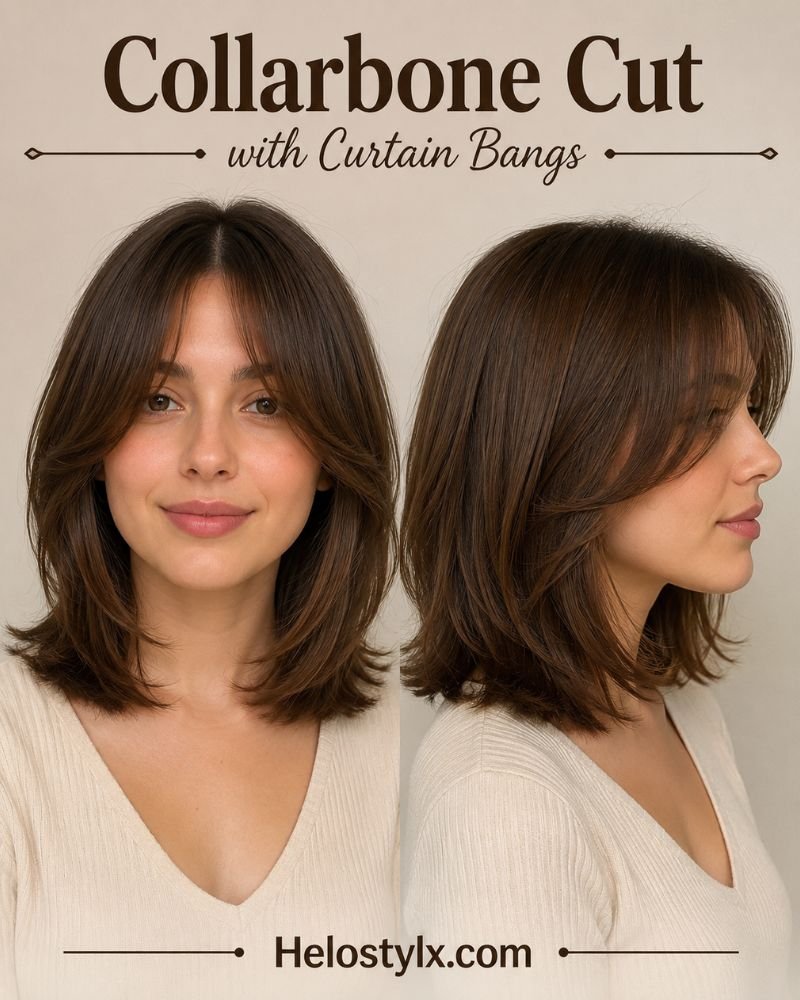
This length sits at a natural gravity point where hair tends to settle rather than lift, and curtain bangs soften the face without the frizz risk of a blunt fringe.
Pro Tip: Blow-dry curtain bangs with a round brush pulling outward, not straight down, to prevent them from puffing up at the roots.
9. Wavy Shag with Air-Dried Finish
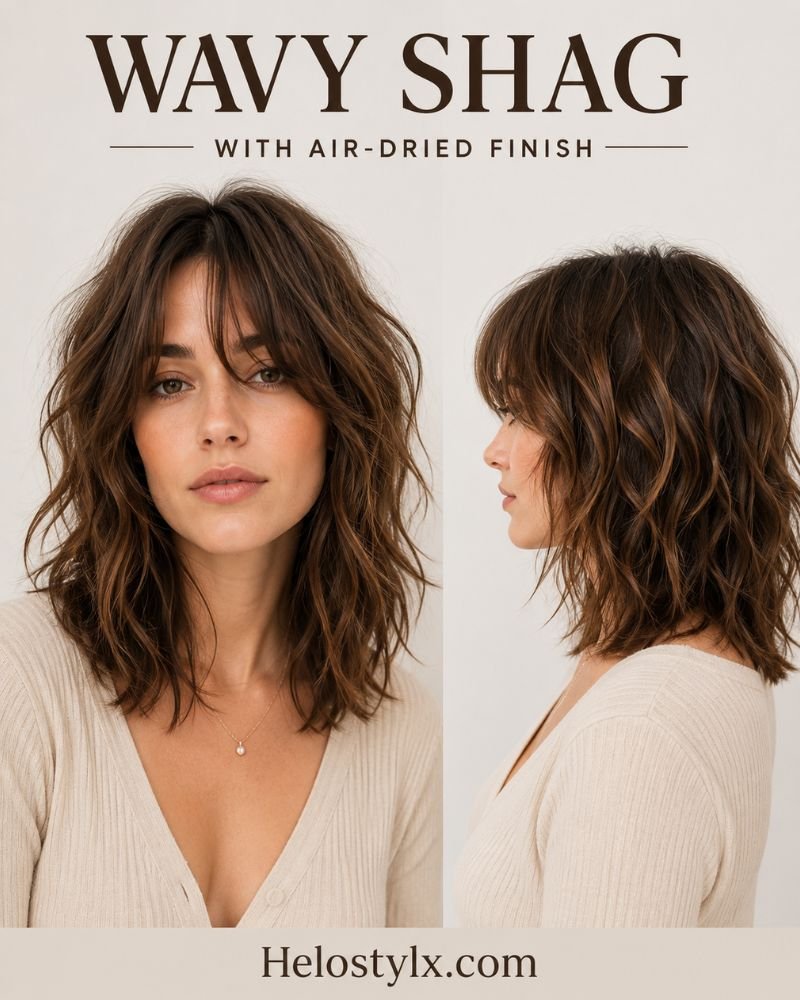
Built for texture rather than sleekness, this shag is specifically layered to enhance natural waves so frizz reads as intentional texture instead of an accident.
Pro Tip: Apply a curl cream to soaking-wet hair (not damp) for the most defined, least frizzy air-dry result.
10. Mid-Length Round Layers
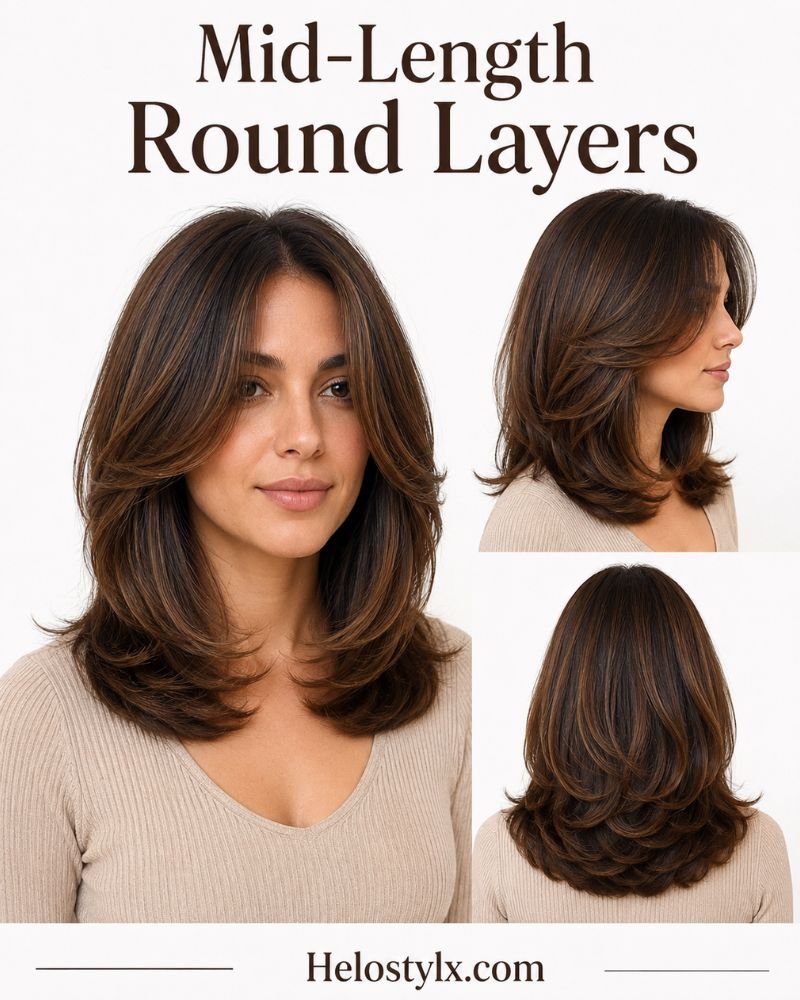
Rounded, rather than choppy, layering keeps the silhouette smooth and rounded, which prevents the pointed, spiky look frizz often creates in unevenly layered hair.
Pro Tip: This cut suits fine-to-medium frizz-prone hair better than very thick hair, since heavy layering can add unwanted volume in dense strands.
11. Wolf Cut (Modified for Density Control)
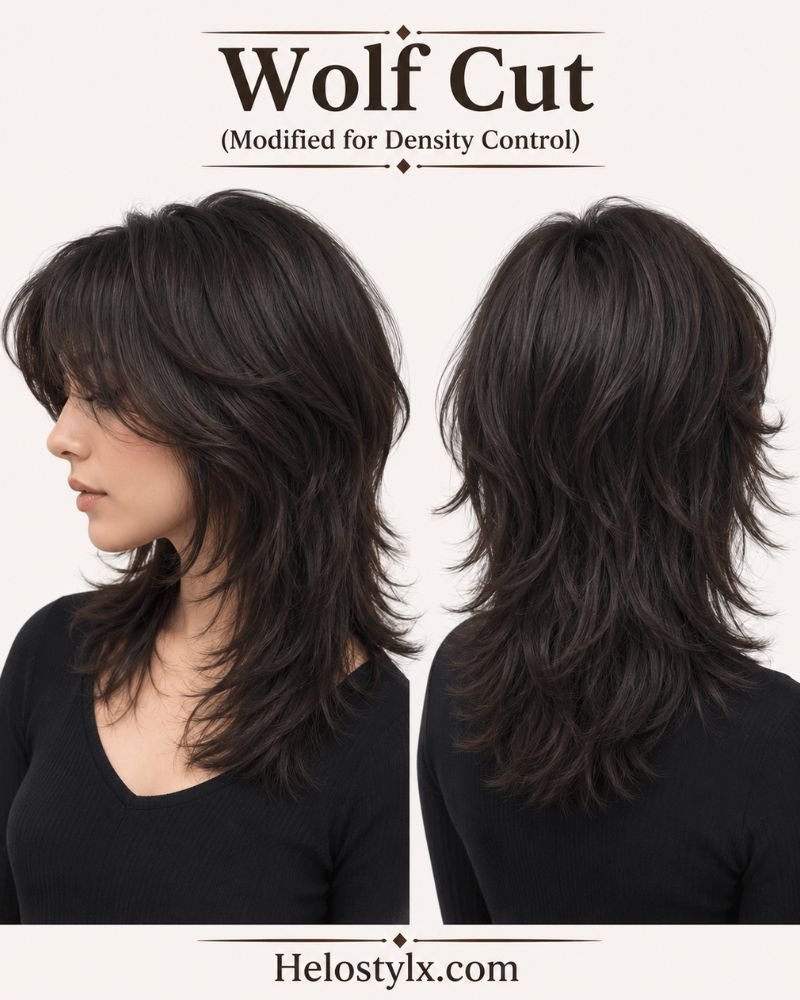
A traditional wolf cut is heavily layered and choppy, which can worsen frizz in fine hair. This modified version keeps the wolf cut’s shape but softens the layering for smoother movement.
Pro Tip: Ask specifically for “blended” rather than “chunky” layers if your hair is on the finer side.
12. Razor-Cut Lob for Wavy Hair
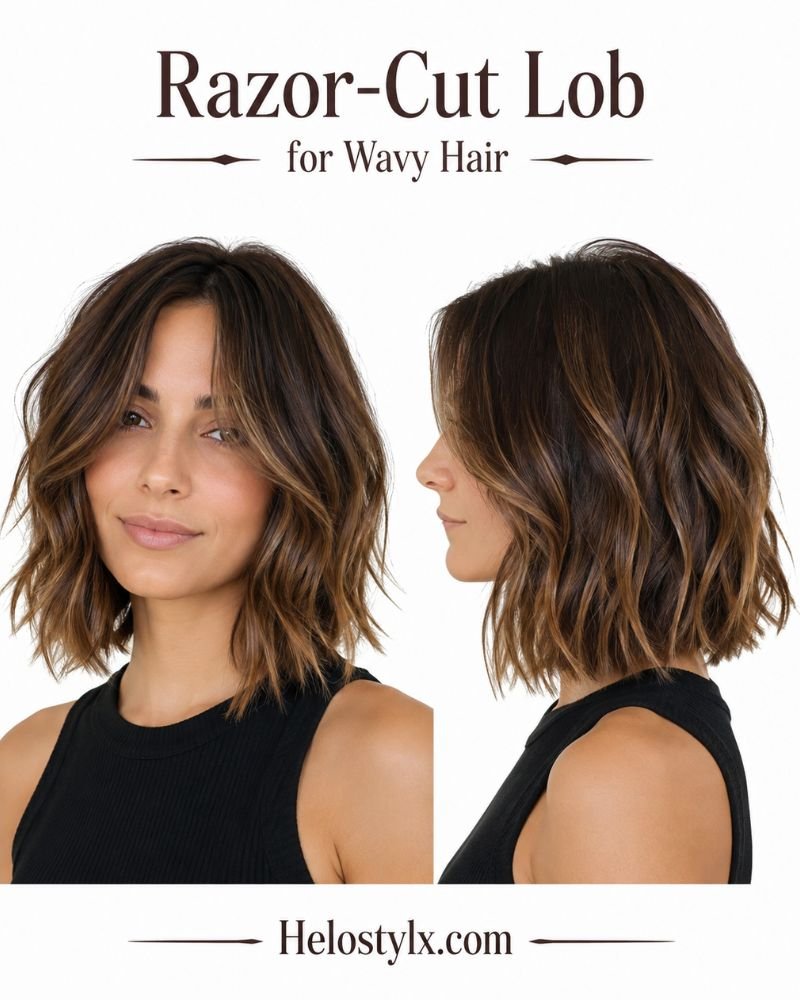
Razor cutting removes the blunt, thick edge that traps humidity-driven frizz, replacing it with a soft, feathered line that lets waves fall naturally.
Pro Tip: Razor cuts work beautifully on wavy hair but can create more frizz in very coarse or curly textures — ask your stylist which technique suits your pattern.
13. Face-Framing Layers on Medium Hair
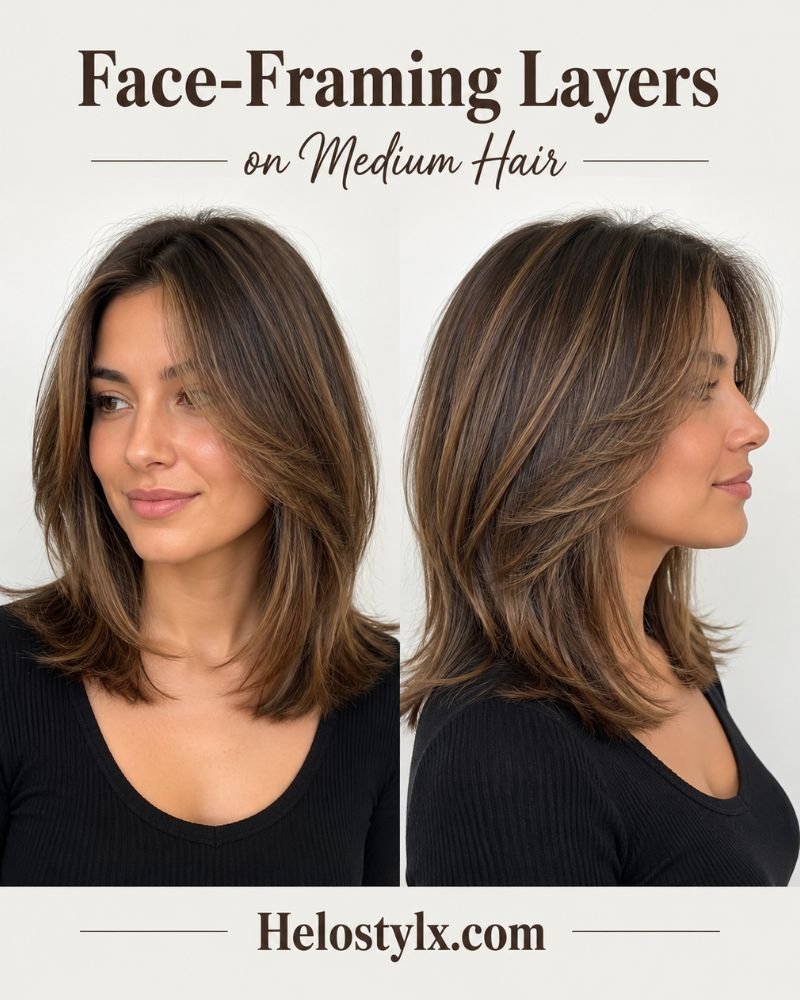
Long, soft layers around the face reduce bulk exactly where frizz is most visible — near the hairline and temples — without shortening the overall length.
Pro Tip: Keep these layers no shorter than chin-length to avoid short, spiky pieces that frizz independently of the rest of your hair.
14. Grown-Out Curtain Bangs with Internal Layers
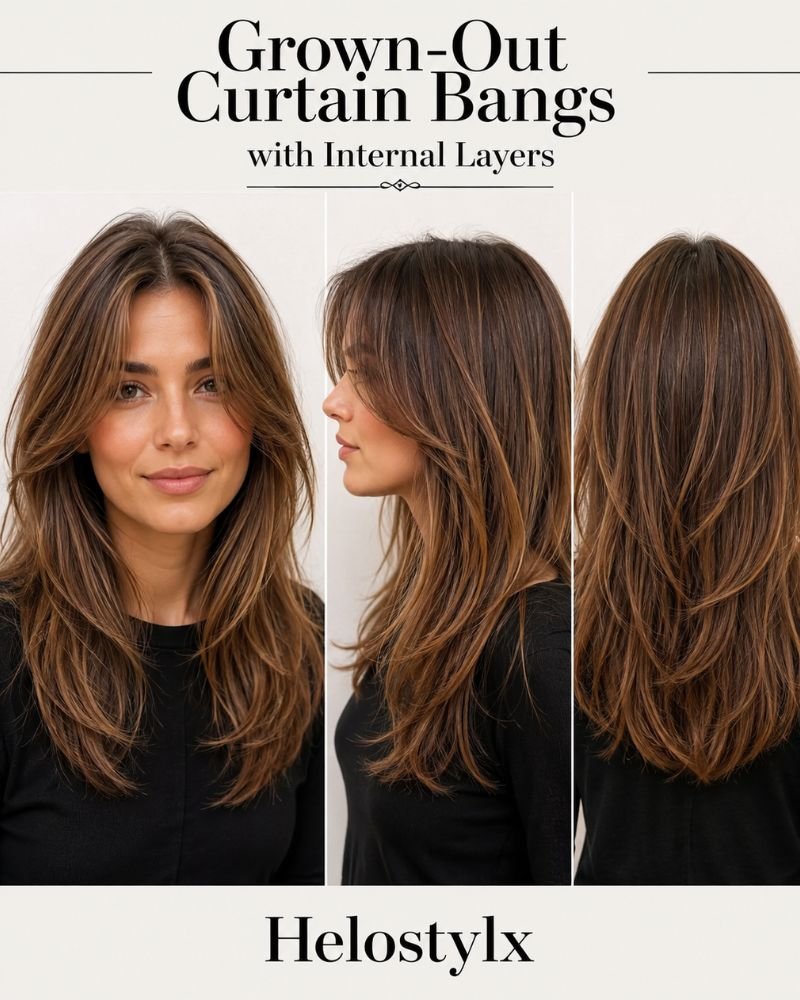
For anyone transitioning bangs, internal layering blends the awkward growing-out stage while keeping frizz-prone shorter pieces tucked within the length rather than sticking out.
Pro Tip: A lightweight, flexible-hold pomade helps train grown-out bangs to blend into your part instead of frizzing upward.
Long Haircuts for Frizzy Hair
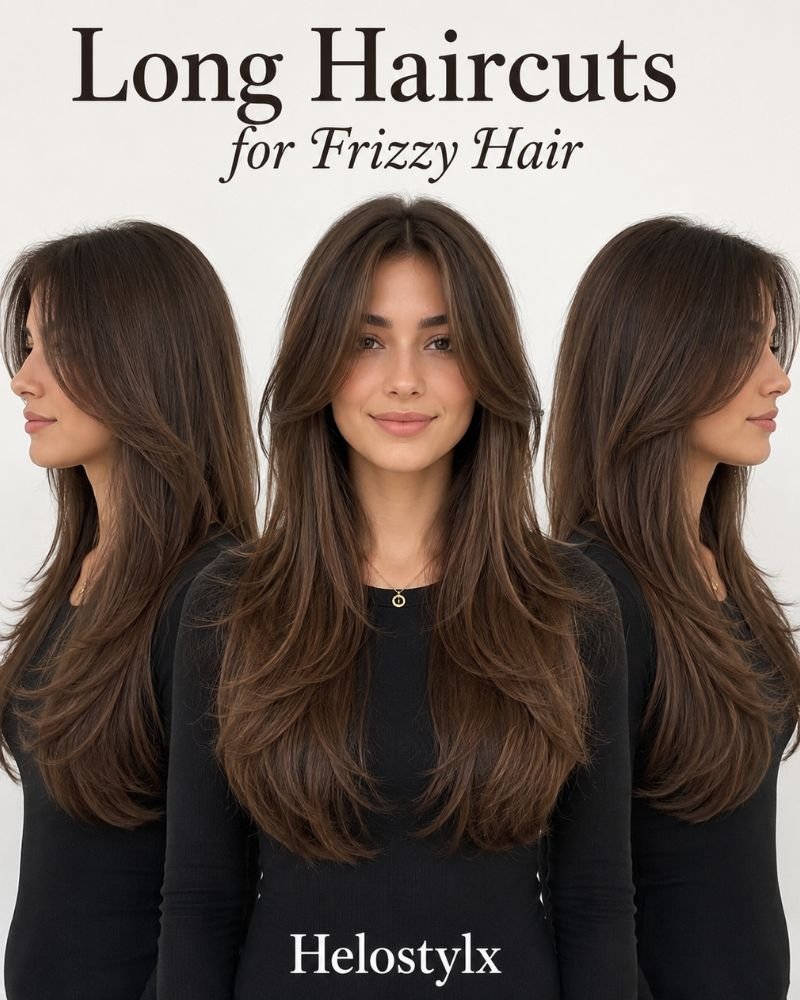
Long hair carries the most weight, which can naturally suppress frizz — but it’s also the most prone to dry, damaged, split ends that frizz aggressively if not maintained.
15. Long Blended Layers with No Hard Ends
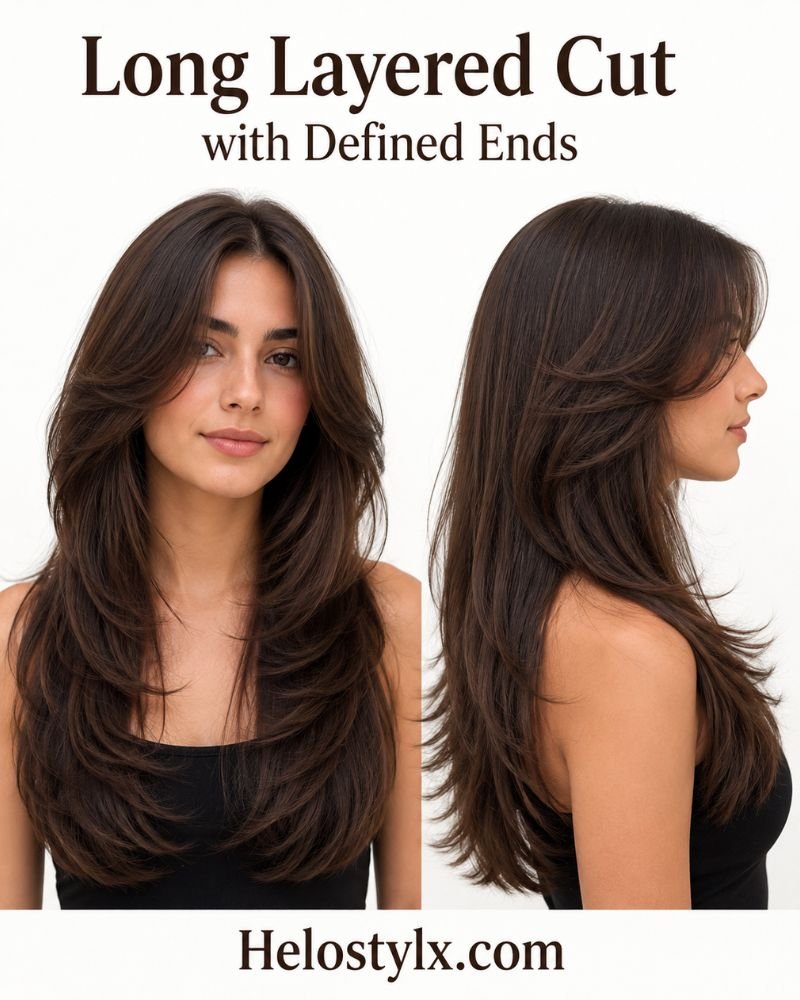
Seamlessly blended layers with zero hard lines prevent the “shelf” effect where one length ends abruptly and frizzes out from the rest of the hair.
Pro Tip: Ask for “invisible layers,” a technique where layers are cut at a low angle so the ends blend rather than stack.
16. The Butterfly Cut
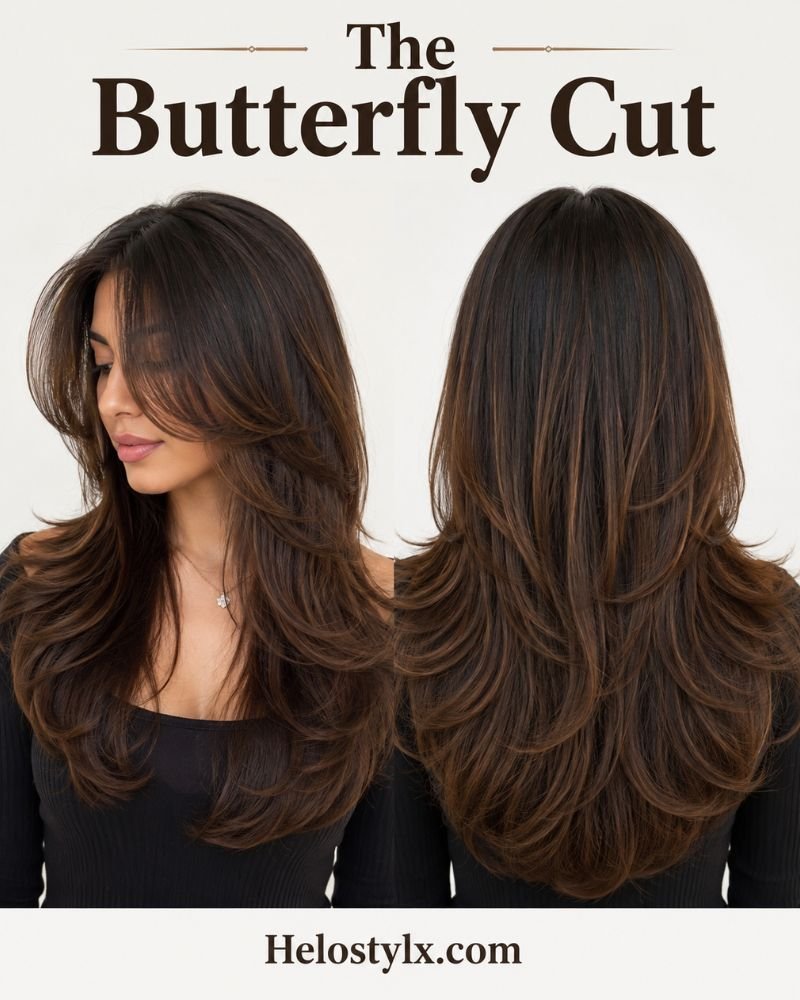
This heavily requested style uses short, face-framing layers on top combined with long, barely-layered length underneath, giving movement up top while keeping the bottom weighty and frizz-resistant.
Pro Tip: The butterfly cut is best suited to hair with at least some natural wave, since pin-straight hair can look overly thin on top.
17. Long Layered Cut with Defined Ends
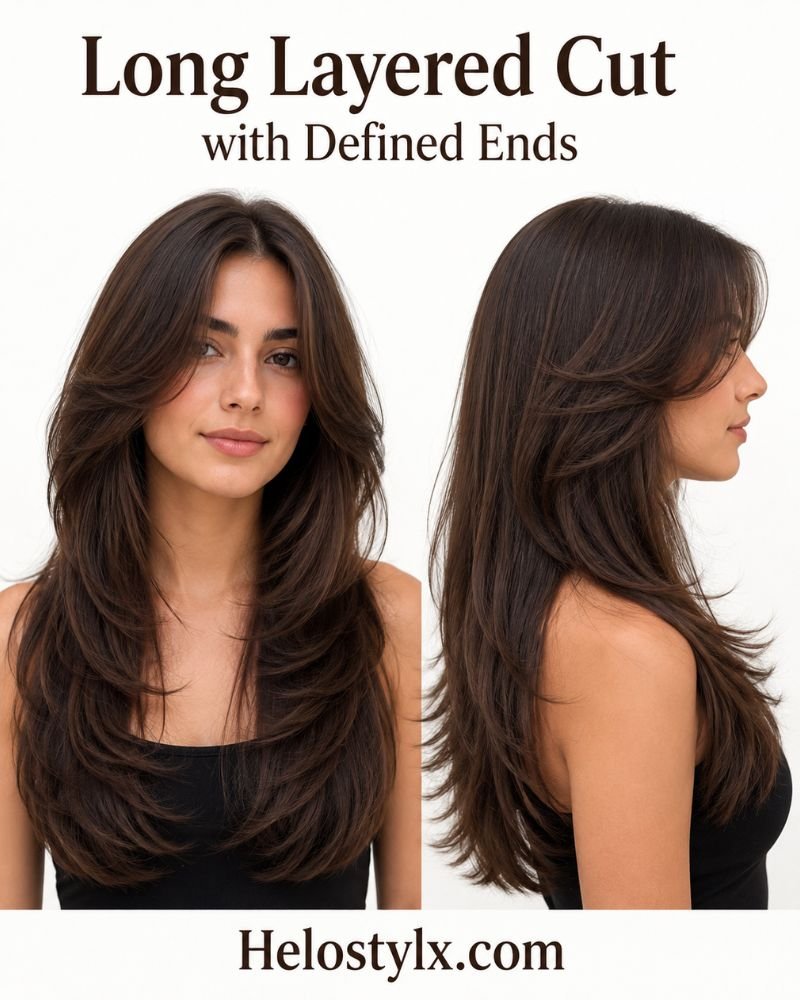
Rather than heavy internal layering, this cut keeps most of the length intact with only subtle layers, preserving weight while a precise, blunt end line resists split-end frizz.
Pro Tip: Get a “dusting” trim every 8–10 weeks (removing just a quarter-inch) to maintain the blunt line without losing length.
Alao Read This : 12 Best Low-Maintenance Haircuts for Women Over 50, According to Celebrity Stylists
18. Tapered Ends on Long Curls
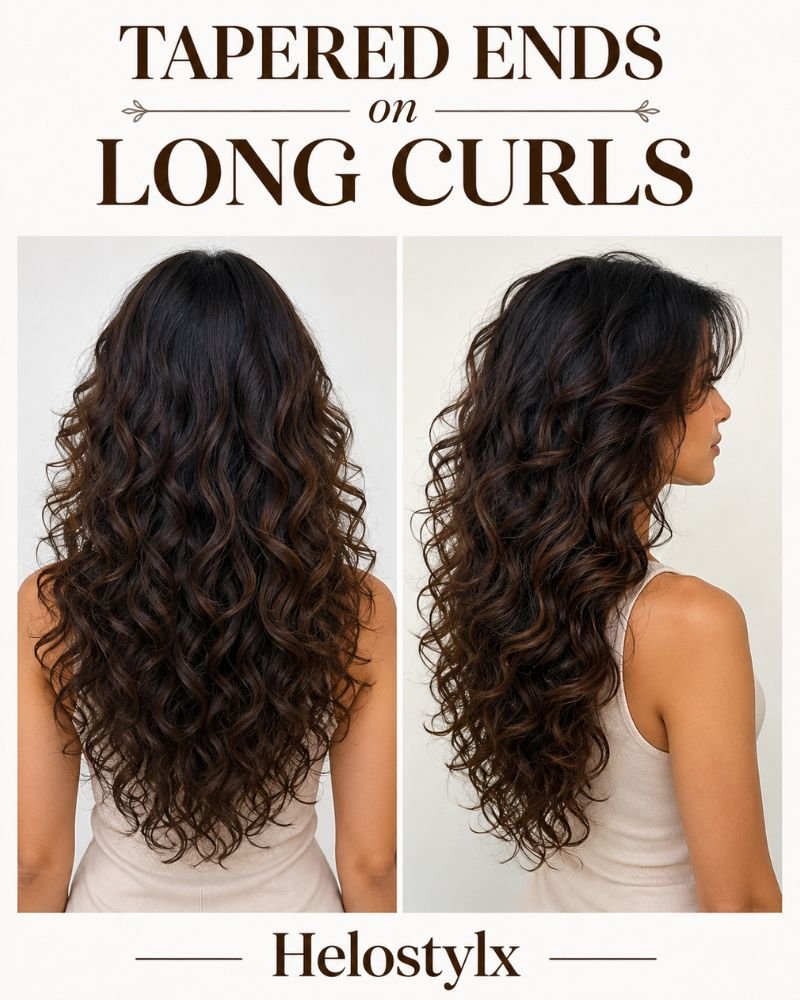
Tapering — gradually thinning the very ends rather than the whole length — controls the triangular shape common in long, dense curly hair without disrupting curl pattern higher up.
Pro Tip: This should always be done on dry, undisturbed curls so your stylist can see the true taper needed.
19. Curly Pixie Cut for Natural Texture
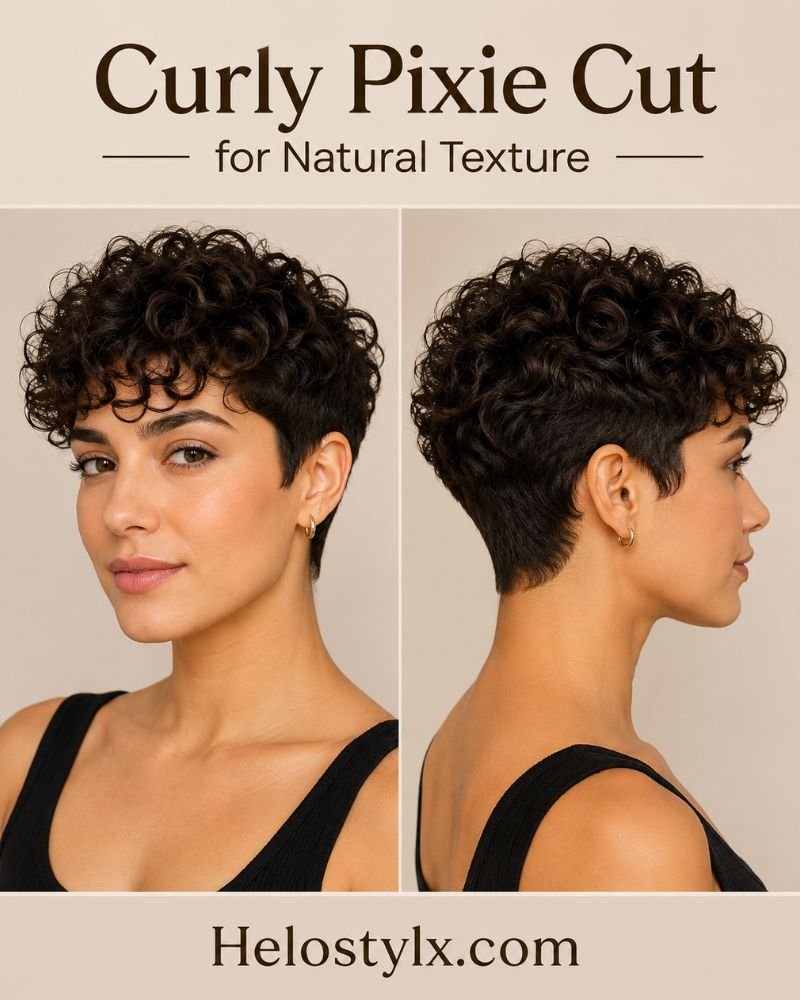
Yes, a pixie can work beautifully on long-haired clients ready for a change — for tightly coiled or heavily damaged curls, a curly pixie removes years of dryness in one cut and lets healthy curl pattern grow back in.
Pro Tip: Expect a longer adjustment period as your curl pattern “resets” over the first few months post-cut.
20. Long Wolf Cut with Internal Debulking
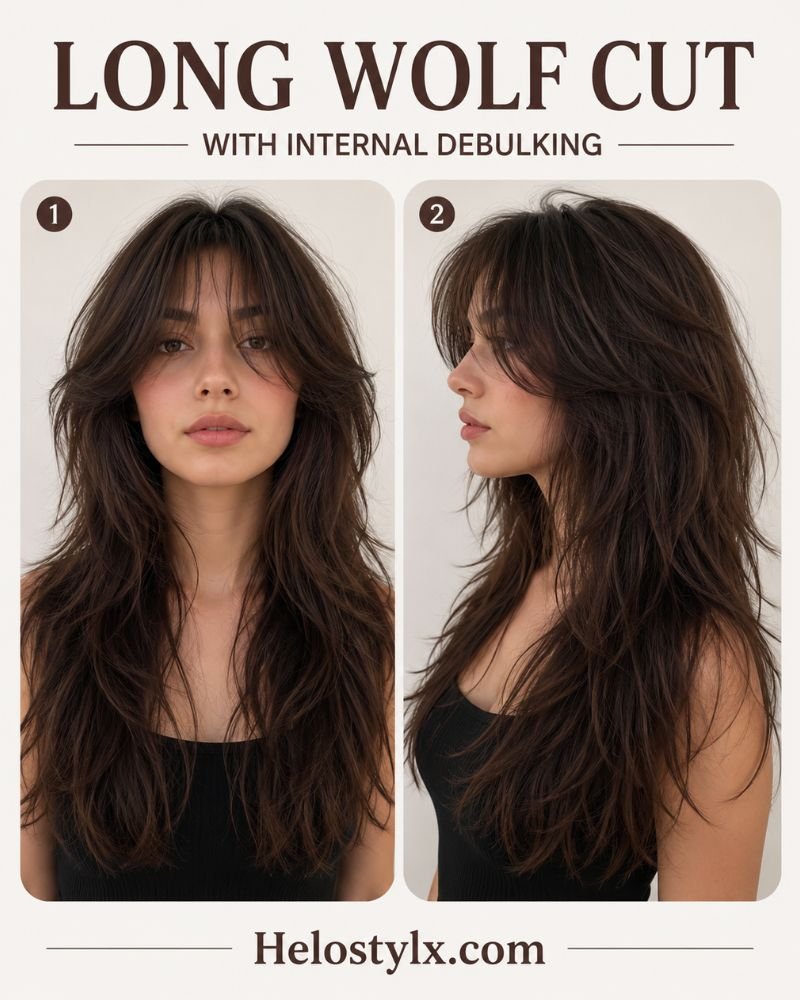
Internal debulking (thinning layers cut underneath the top layer, invisible from the surface) reduces weight and poof in very thick long hair without shortening or visibly layering the outer shape.
Pro Tip: This technique should only be done by a stylist experienced in it — done poorly, it creates uneven bulk and worsens frizz.
21. Blowout-Ready Long Layers
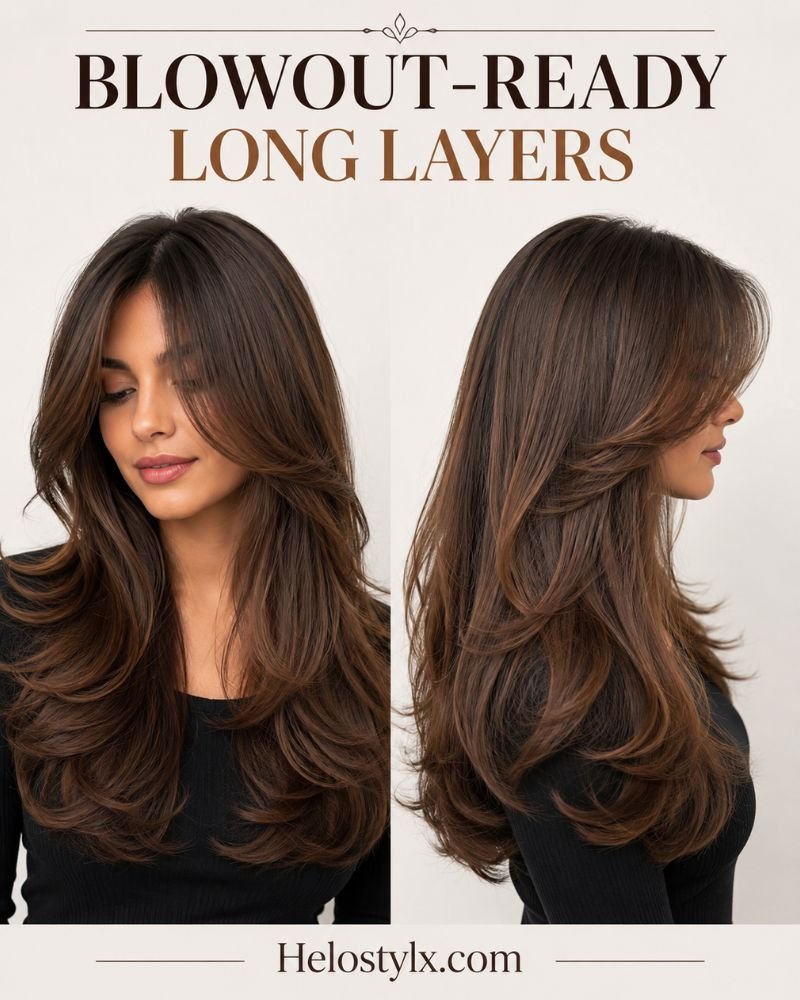
Layers cut specifically to support a round-brush blowout — softer at the crown, heavier at the ends — give hair the structure to hold a smooth style through humidity for longer than an unlayered cut would.
Pro Tip: Pair this cut with a heat protectant and a boar-bristle round brush for the smoothest, longest-lasting blowout result.
Your Next Haircut Could Change Everything
A great haircut is often the single most overlooked frizz solution. While products and tools matter, they’re working against your hair’s structure if the cut itself doesn’t support smoothness. Choosing a shape based on your specific frizz type — not just what’s trending — is what actually changes your day-to-day styling experience.
Keep Your Frizz-Friendly Haircut Looking Fresh
Even the best cut needs upkeep to keep frizz at bay between salon visits. Follow these maintenance habits to protect your investment:
- Trim on schedule. Split ends frizz faster than healthy ones, so stick to trims every 6–10 weeks depending on your cut’s length and layering.
- Sleep on silk or satin. Cotton pillowcases create friction that roughens the cuticle overnight; silk or satin lets hair glide instead.
- Avoid over-washing. Washing too frequently strips natural oils that help hair lie smooth, especially in dry or coarse frizz types.
- Use the right brush for your texture. Wide-tooth combs and detangling brushes cause less cuticle disruption than fine-tooth combs, particularly on wet hair.
- Protect hair before heat styling. A heat protectant spray is non-negotiable if you’re blow-drying or straightening a layered cut regularly.
- Get regular deep conditioning treatments. A weekly hydrating mask keeps the cuticle smoother, which directly supports whatever shape your stylist created.
Best Products for Frizzy Hair That Make These Haircuts Shine
The right cut and the right products work together — one without the other only gets you halfway to smooth, manageable hair. Here’s a quick reference by hair type:
| Hair Type | Recommended Product Category | Why It Helps |
| Fine, humidity-prone | Lightweight anti-humidity spray | Seals cuticle without weighing hair down |
| Thick, coarse | Leave-in conditioner + smoothing serum | Adds slip and moisture retention |
| Wavy (2A–2C) | Curl cream or mousse | Defines wave pattern, reduces frizz halo |
| Curly (3A–4C) | Rich curl butter or gel | Locks in moisture, encourages clumping |
| Color-treated or damaged | Bond-repair treatment | Restores cuticle integrity, reduces breakage-frizz |
For an in-depth breakdown of ingredient-level differences between anti-frizz serums and leave-in conditioners, the American Academy of Dermatology’s hair care guidelines offer a science-backed overview of how moisture and protein balance affect frizz.
If you’re also working on your at-home styling routine, check out our related guide on blow-drying techniques for frizz-free hair for step-by-step tool and product pairing advice.
Recommended visual: Consider embedding a short comparison video such as “Best Haircuts for Frizzy Hair — Stylist Reacts & Explains” from a reputable hairstyling YouTube channel, placed right after the “21 Haircuts” section, so readers can see the cutting techniques in motion before reaching the maintenance tips.
Wrapping Up: Choosing a Cut That Works With Your Frizz
The best haircut for frizzy hair isn’t a single universal style it’s the one that matches your specific frizz cause, texture, and lifestyle. Whether you’re managing humidity swelling, dryness, natural curl pattern, or excess density, there’s a cutting technique on this list built to address it directly.
Bring this guide to your next salon appointment and use the language here point cutting, internal layering, tapering, blunt ends to have a more precise conversation with your stylist. A cut chosen with intention will do more for your frizzy hair than any product alone, and it’s the foundation every good hair day is built on.
