

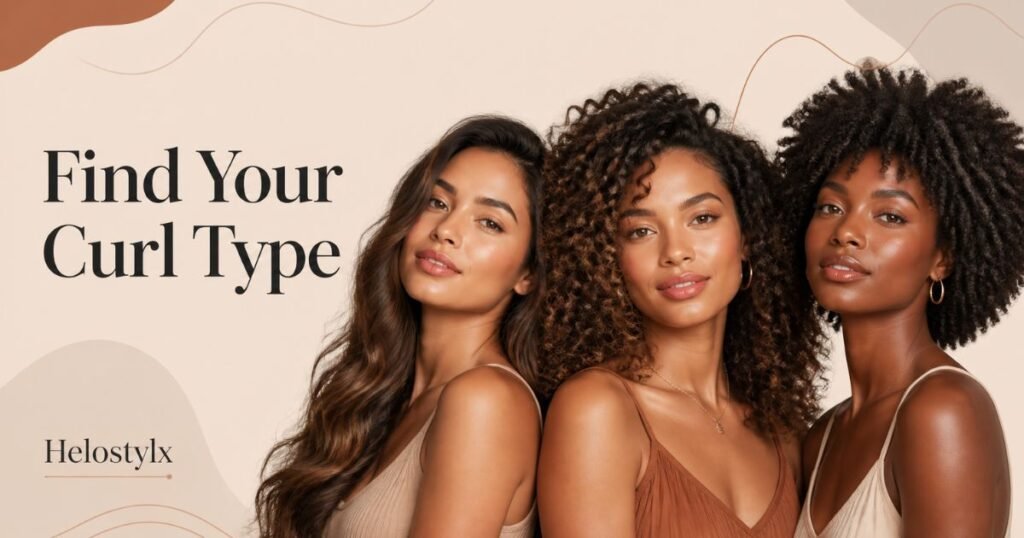
Your curl type is the shape your hair takes when it grows out of your scalp and dries without heat, tools, or heavy product. Knowing it changes everything. It tells you which products to buy, how often to wash, which styling method to try, and why that “miracle” gel your friend swears by did nothing for you.
The good news is that you don’t need a salon appointment to figure it out. You need clean hair, a little patience, and about 30 minutes. This guide walks you through the most widely used hair typing system, shows you how to identify your curl type at home, and explains what each pattern needs to look and feel its best.
Meet the Curly Hair Experts Behind the System
Most of what you read online about curly hair types traces back to one source: the hair typing system popularized by celebrity stylist Andre Walker. He divided natural hair texture into four numbered types, then split each into three letter-based subtypes. Straight hair is Type 1, wavy hair is Type 2, curly hair is Type 3, and coily hair is Type 4.
It isn’t a scientific standard. It’s a practical shorthand, and that’s exactly why it stuck. Stylists, brands, and curl communities use it to talk about hair texture types in a shared language.
Today, working curl specialists and trichologists (hair and scalp scientists) generally agree on a few points:
- The system is a starting point, not a verdict. Hair is a spectrum, and real heads rarely fit one box neatly.
- Curl type describes shape, not health. A 4C head can be strong and thriving. A 2A head can be damaged and dry.
- Care routines matter more than the label. The number helps you choose products, but how your hair responds is the real test.
- Mixed patterns are normal. Most people have more than one curl pattern on their head.
Keep those four ideas in mind as you read. The classification is a map, and you are the one who knows the territory.
Where to Start: How to Identify Your Curl Type
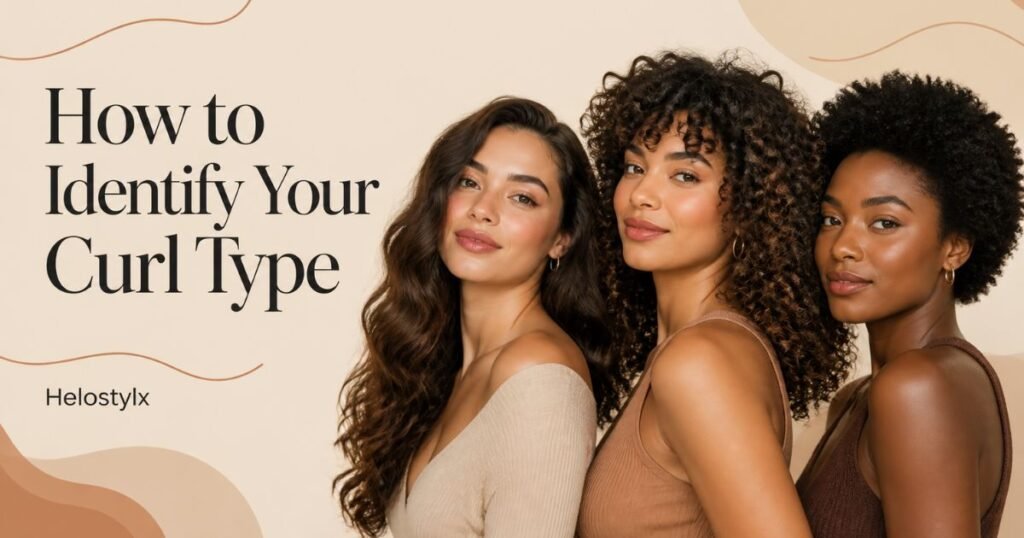
Before you compare your hair to any curl type chart, you need an honest reading of your natural curl pattern. Heat damage, chemical straightening, and product buildup can all hide it.
Step 1: Start With Clean, Product-Free Hair
Wash with a clarifying or gentle shampoo to remove buildup. Skip heavy conditioner and styling product for this test. Residue weighs hair down and can make a curl look looser than it really is.
Step 2: Let It Air Dry Completely
Don’t blow-dry, flat-iron, or diffuse. Towel-blot the water out gently, then let your hair dry on its own. This can take a few hours, so do it on a day when you’re staying in.
Step 3: Study the Shape, Not the Size
Look at the pattern each section makes as it dries. Check these areas separately:
- The front hairline
- The crown
- The nape of your neck
- The sides near your ears
Many people discover that their front sections curl differently from their back sections. That’s normal.
Step 4: Use the Strand Test
Pull out one shed hair or gently stretch a single strand from a damp section. Hold it up against a light background and ask:
- Does it lie flat or form an “S” shape? That points toward Type 2.
- Does it spiral like a corkscrew or ringlet? That points toward Type 3.
- Does it form tight zigzags or coils, sometimes hard to see without close inspection? That points toward Type 4.
Step 5: Note the Shrinkage
Shrinkage is how much shorter your hair looks when it dries compared with its stretched length. Waves shrink a little. Curls shrink more. Coily hair can shrink by 50 percent or more. High shrinkage is a strong hint that you’re dealing with Type 3 or Type 4.
Step 6: Take Photos in Natural Light
Snap pictures of your hair wet, half-dry, and fully dry. Compare them side by side. Your phone camera often reveals patterns your mirror hides.
If you want a simple rule of thumb for how to identify curl type: straight hair has no bend, wavy hair bends, curly hair loops, and coily hair coils tightly.
Curl Type Chart at a Glance

Here’s a quick curly hair patterns chart to help you place yourself. Use it as a first pass, then read the detailed sections below.
| Type | Subtype | Pattern Description | Typical Traits |
| 1 | 1A–1C | Straight, no natural bend | Often shiny, can get oily fast |
| 2 | 2A | Loose, barely-there “S” waves | Fine texture, easily weighed down |
| 2 | 2B | Defined “S” waves from mid-length | Frizz at the crown, flat roots |
| 2 | 2C | Deep “S” waves, some spiral curls | Thick, frizz-prone, bridges into Type 3 |
| 3 | 3A | Big, loose spiral curls | Shiny, defined, about the width of sidewalk chalk |
| 3 | 3B | Springy ringlets | Voluminous, drier than 3A |
| 3 | 3C | Tight corkscrews | Dense, high shrinkage, about the width of a pencil |
| 4 | 4A | Soft, springy coils | Defined “S” pattern, about the width of a crochet needle |
| 4 | 4B | Sharp zigzag, “Z” angles | Fragile, strong shrinkage |
| 4 | 4C | Very tight, dense coils | The most delicate, highest shrinkage |
Notice how the types move from open bends to tight coils. The tighter the pattern, the more shrinkage you’ll see and the more moisture your hair typically needs.
Type 2 (Wavy Hair)
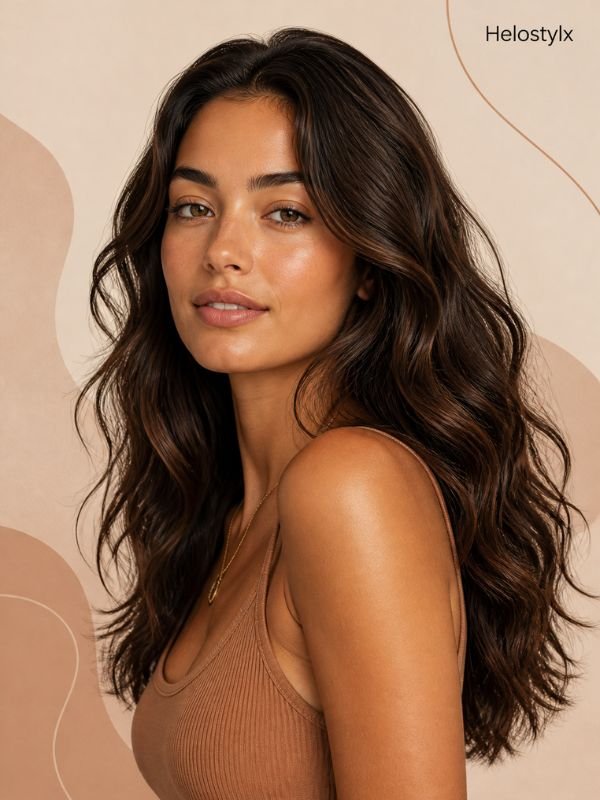
Wavy hair types sit between straight and curly. Your hair isn’t flat, but it doesn’t form full loops either. Instead, it bends into soft “S” shapes.
Type 2 hair tends to be easier to weigh down than other curl types. Heavy butters and thick creams can leave waves limp and greasy. Lightweight products usually win here.
Type 2A: Loose and Fine
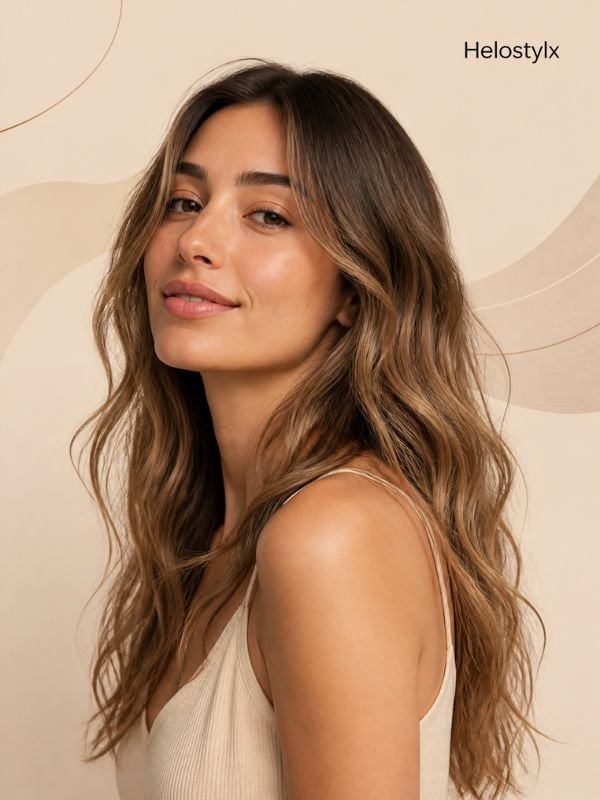
2A waves are the subtlest. They look like gentle bends starting around the mid-lengths, often with straighter roots.
What it needs:
- Lightweight mousse or foam instead of heavy cream
- Light conditioner focused on the ends
- Scrunching while damp to encourage the wave
Type 2B: Defined “S” Waves
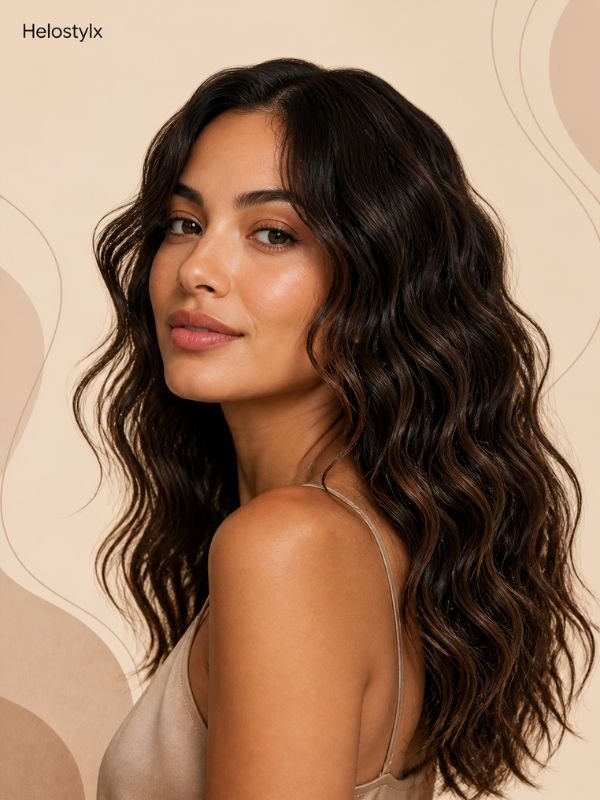
2B waves start closer to the roots and hold a clearer S-shape. They often frizz at the crown and can look flat at the top while staying wavy below.
What it needs:
- A leave-in conditioner that doesn’t weigh down the roots
- Gel or mousse applied to soaking-wet hair
- A diffuser on low heat, if you use heat at all
Type 2C: Deep Waves With Curl Tendencies
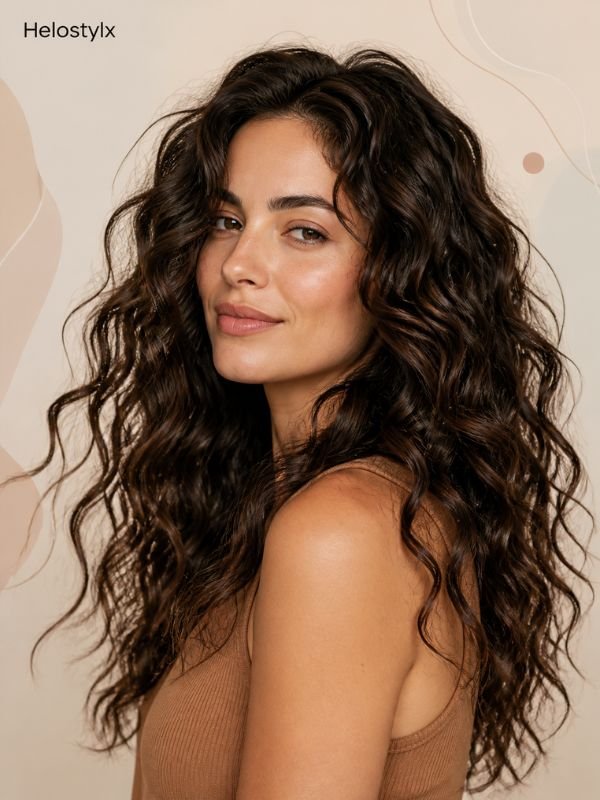
2C is where the natural curl pattern becomes thicker and more stubborn. These waves can include loose spirals, and the hair is often coarse and frizz-prone. Many people with 2C mistake their hair for Type 3A.
What it needs:
- Richer creams than 2A or 2B, but still not too heavy
- Gel for hold and frizz control
- Regular deep conditioning to keep the texture soft
Quick tip: If your waves look more defined after a wash-and-go with gel, you’re likely 2B or 2C. If they barely show up without product, you may be 2A.
Type 3 (Curly Hair)
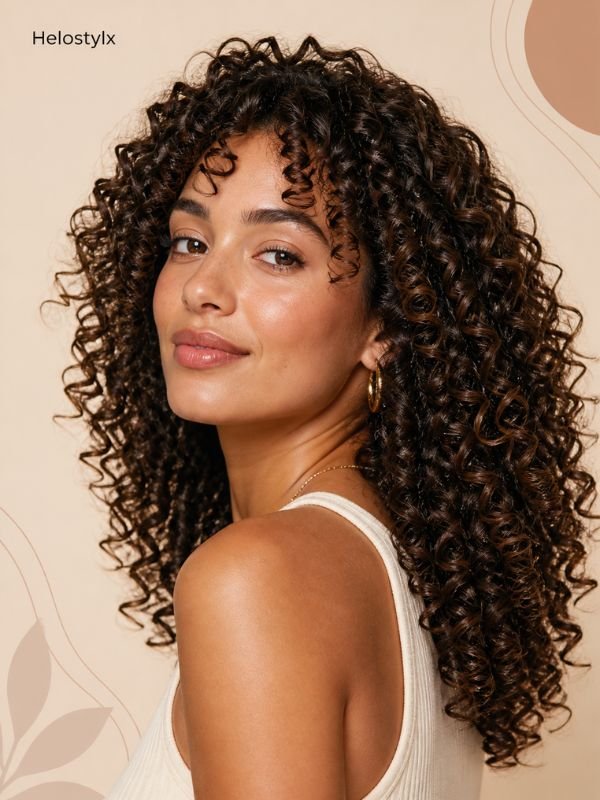
Curly hair types in the Type 3 family form true loops and spirals. Unlike waves, these curls hold their shape from root to tip, and they bounce back when you tug them gently.
Curly hair tends to be drier than straight or wavy hair. That’s because natural scalp oils have a harder time traveling down a spiral-shaped strand. The oils reach the roots easily but struggle to coat the ends.
Type 3A: Loose, Shiny Spirals
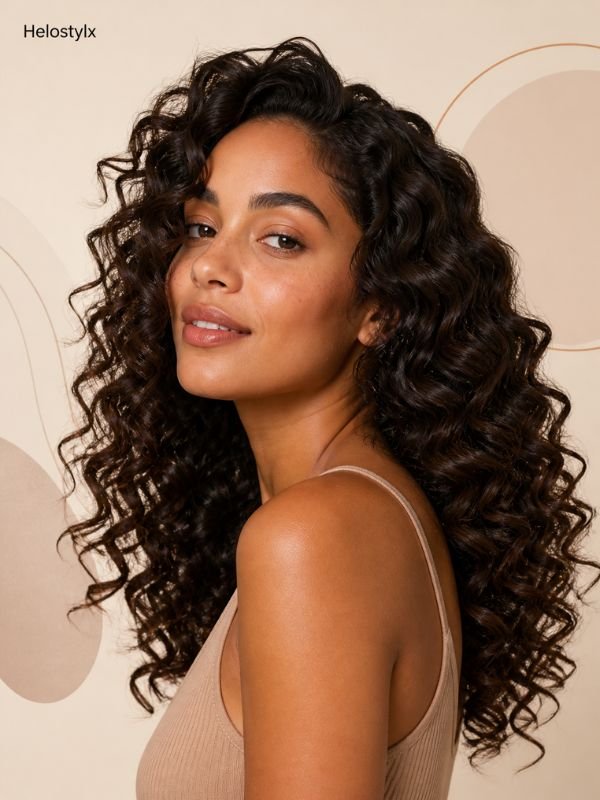
3A curls are big and bouncy, with a diameter roughly like a piece of sidewalk chalk. They’re often shiny and have a clear S-to-spiral shape.
What it needs:
- Light-to-medium creams
- A curl-defining gel to fight frizz
- Gentle detangling in the shower with conditioner
Type 3B: Springy Ringlets
3B hair forms tighter, springier ringlets, often around the size of a marker. It holds more volume than 3A and tends to be drier.
What it needs:
- Rich conditioners and leave-ins
- Layering a cream, then a gel, for definition
- A weekly deep conditioner to keep the curls elastic
Type 3C
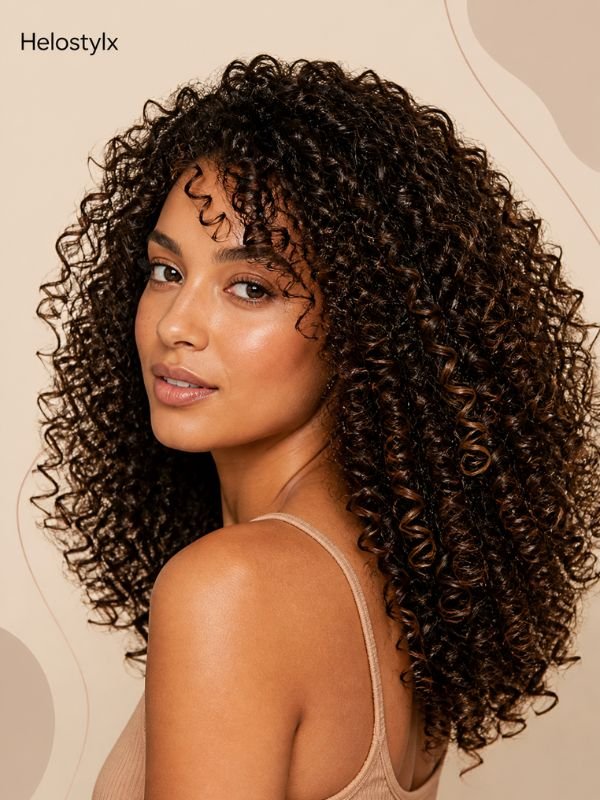
Type 3C is the tight corkscrew texture, with curls roughly the width of a pencil or a straw. It sits right on the border between curly and coily, and many people debate whether they’re 3C or 4A.
3C hair is dense. Strands pack closely together, which gives it incredible volume but also makes detangling and product distribution harder.
What 3C hair needs:
- Heavier creams and butters, especially on the ends
- Sectioning during wash day so product reaches every strand
- Finger-detangling or a wide-tooth comb on very wet, conditioned hair
- Protective styles like twists or braids to limit breakage
How to tell 3C from 4A: Look at the shape. 3C forms rounded corkscrews. 4A forms an “S” pattern when stretched, with coils that look more like springs. If you can’t decide, the difference matters less than finding products that work.
Quick tip: If your hair forms defined ringlets when wet but frizzes into a cloud when dry, you probably need more moisture and a stronger gel for your curl type.
Type 4 (Coily Hair)
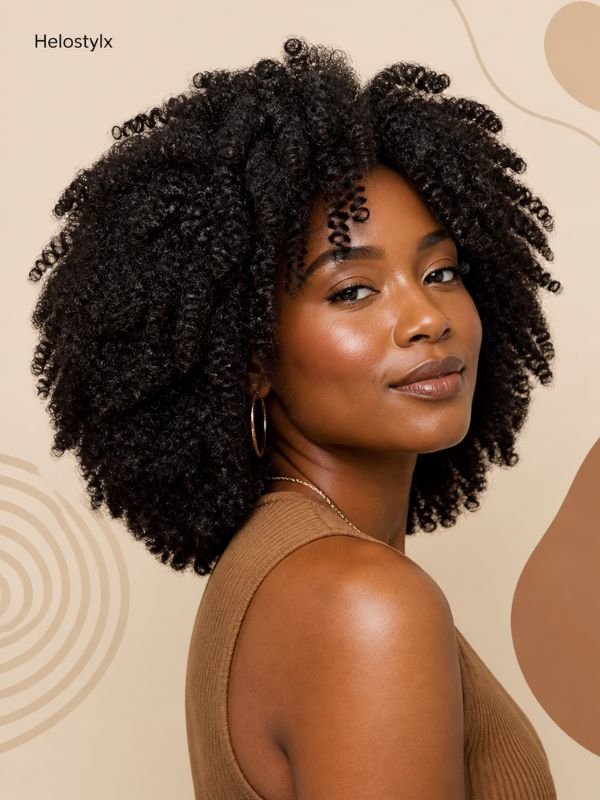
Coily hair types are the tightest of all. Type 4 strands curl in small, springy coils or sharp zigzags, and they’re the most fragile of the four categories because the many bends create natural weak points along each strand.
Coily hair also shows the most shrinkage. A head of 4C hair might look like it ends at your jawline when it actually falls past your shoulders when stretched. That’s not a flaw. It’s the nature of the texture.
Type 4A: Soft, Defined Coils
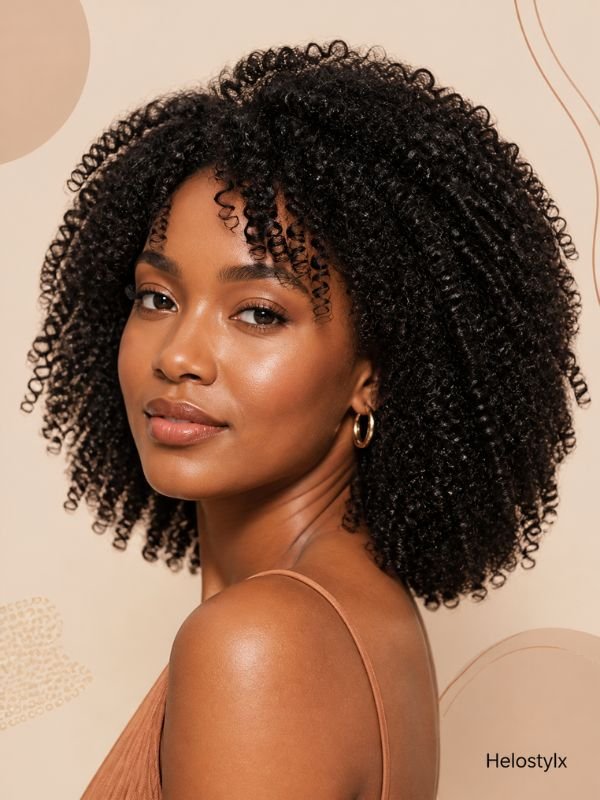
4A coils are small, springy, and clearly shaped like an S, about the circumference of a crochet needle. They tend to be easier to define than other Type 4 patterns.
What it needs:
- Moisturizing cream plus a sealing oil or butter
- Wash-and-go styles with gel
- Gentle, patient detangling
Type 4B: Sharp Zigzags
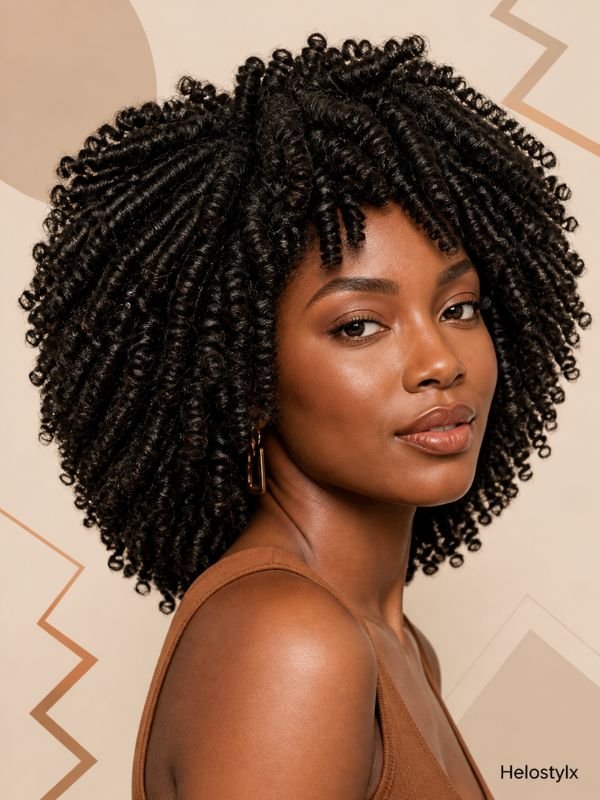
4B hair bends in a Z-shape instead of forming a smooth spiral. Individual strands may be fine and fragile, and the pattern is less likely to clump into defined curls on its own.
What it needs:
- Heavy moisture and consistent sealing
- Stretching methods like twist-outs or banding
- Low-manipulation styles to protect the ends
Also Read This : 13 Twist Braid Hairstyles for a Stylish Look Year-Round
Type 4C: Tight, Dense Coils
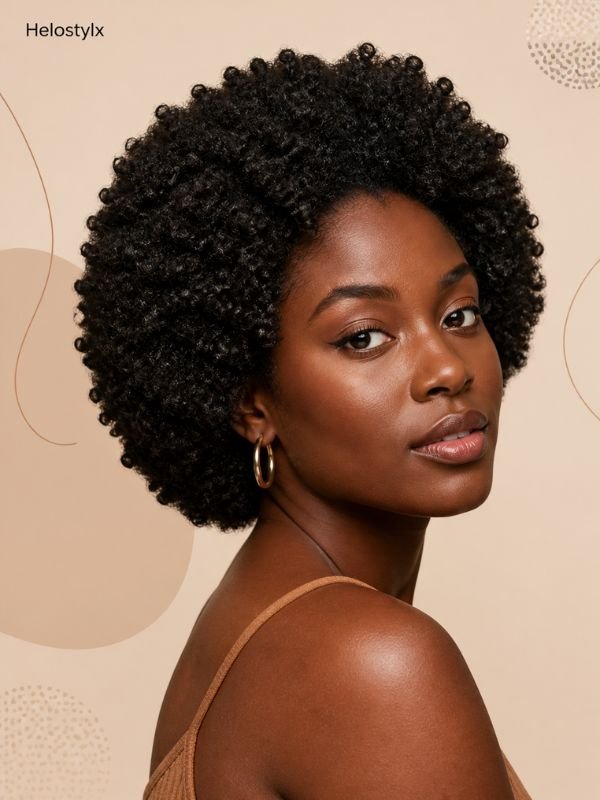
4C hair has the tightest pattern and the most shrinkage, and the coils can be hard to see without close inspection. It’s often the most delicate texture because moisture escapes quickly and breakage happens easily.
What it needs:
- Rich, water-based moisture followed by an oil or butter
- Weekly deep conditioning
- Protective styling and satin or silk protection at night
- Minimal heat and minimal tension
Quick tip: If your hair seems to “disappear” into a puff when dry and looks very different when wet, the shrinkage you’re seeing is typical for 4B and 4C.
Beyond Curl Type: Porosity, Density, and Strand Width
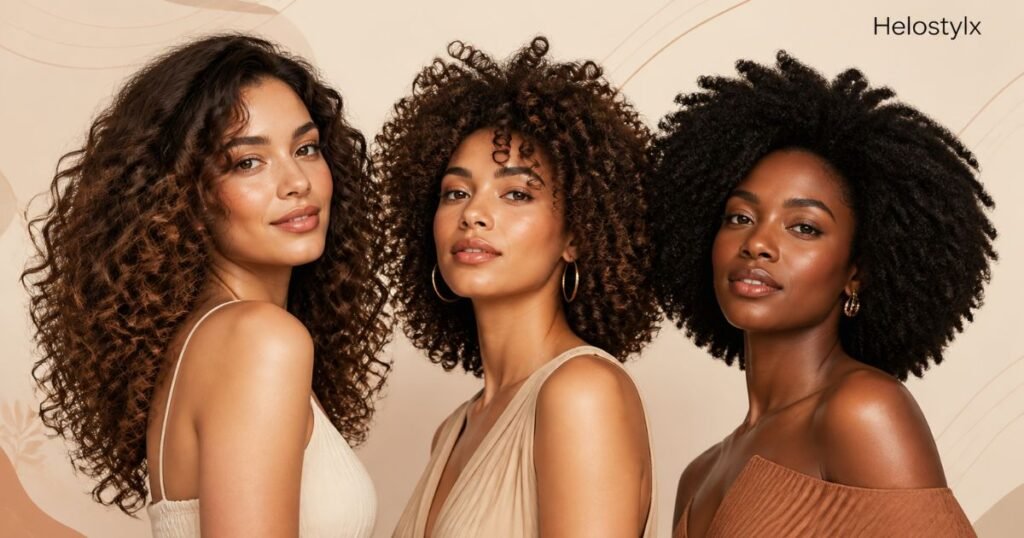
Your curl type is only one piece of the puzzle. Three other traits shape how your hair behaves, and they matter just as much when you’re choosing products.
Porosity
Porosity describes how well your hair absorbs and holds moisture.
- Low porosity: The cuticle lies tight. Water and product sit on top. Use lighter products and a little heat during deep conditioning.
- Medium porosity: Balanced. Moisture goes in and stays in.
- High porosity: The cuticle is open or damaged. Hair soaks up water fast and loses it fast. It benefits from sealing oils and protein treatments.
A quick home check: drop a clean strand in a glass of water. If it floats for a long time, it’s likely low porosity. If it sinks quickly, it’s likely high porosity. This isn’t a lab test, but it gives you a helpful hint.
Density
Density is how many strands grow per square inch of scalp. You can have thin strands with high density or thick strands with low density. High-density hair needs more product and more sectioning. Low-density hair can look overloaded with too much cream.
Strand Width
Strand width, sometimes called texture, is the thickness of each individual hair.
- Fine: Barely feels like anything between your fingers. Easily weighed down.
- Medium: The most common. Handles a wide range of products.
- Coarse: Feels thick and wiry. Often needs richer products.
Two people can share the same curl type and need totally different routines because of these three traits. If a product isn’t working, check porosity, density, and width before you blame the hair typing system.
Common Curl Type Mistakes
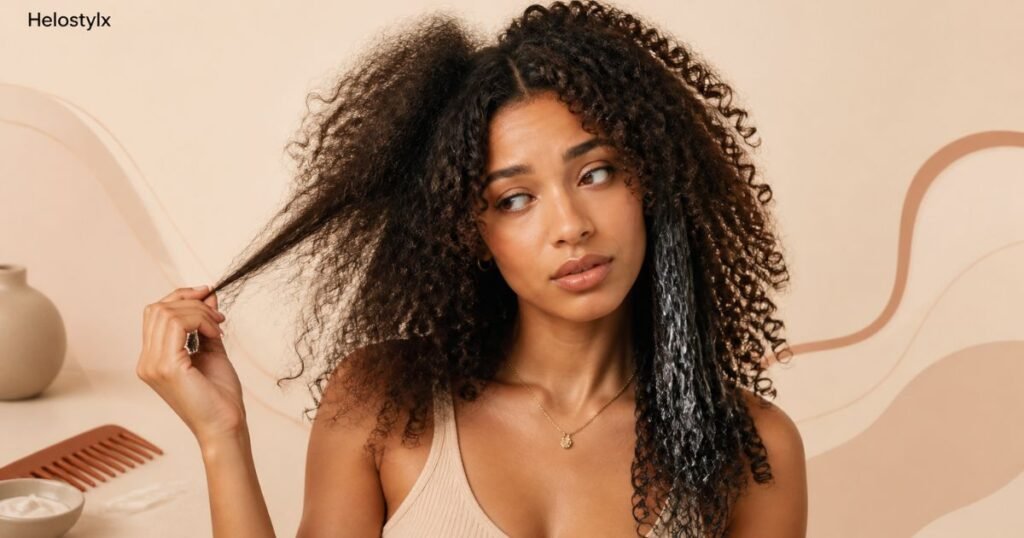
Even people who’ve studied the hair typing system for years fall into these traps.
- Judging your curl type from damaged hair. Heat styling, bleach, and relaxers can loosen or distort your natural pattern. Look at new growth near the roots for the truth.
- Testing on dirty or product-coated hair. Buildup changes the way curls form.
- Choosing based on the loosest or tightest section only. Check the whole head.
- Chasing a “better” curl type. There isn’t one. Every pattern has its own strengths and needs.
- Treating the number as a product guide. A 3B with low porosity may need different care than a 3B with high porosity.
- Comparing your hair to filtered photos or heavily styled hair. Social media often shows hair after diffusing, defining, and editing.
- Skipping the strand test. Looking in the mirror isn’t always enough.
Frequently Asked Questions
What is the best way to find my curl type?
The most reliable way is to wash your hair with a clarifying shampoo, skip styling product, and let it air dry completely. Then compare each section of your head to a curl type chart. Pay attention to the shape of the pattern, the level of shrinkage, and how individual strands behave. Taking photos in natural light helps you compare patterns more objectively.
Can I have more than one curl type on my head?
Yes, and it’s very common. Many people have looser waves at the front or nape and tighter curls at the crown, or the other way around. Hormones, age, medications, and past damage can also change your natural curl pattern. Use the curl type that covers the largest part of your head as your main guide, and adjust care for the other areas.
Does my curl type change over time?
It can. Pregnancy, puberty, hormonal shifts, illness, and chemical processing are all known to change hair texture. Some people see their waves become curls, or their curls loosen with age. If your hair suddenly behaves differently, it’s worth paying attention to your routine and, if the change is dramatic or comes with shedding, talking with a doctor or trichologist.
Is the hair typing system accurate?
It’s useful, but not perfect. The system was created as a style guide, not a scientific measurement, and it doesn’t account for porosity, density, or strand width. It also doesn’t fully capture the diversity of curl patterns, especially within Type 4. Treat it as a helpful starting point for finding the right products and techniques, not as a rigid rule.
Final Thoughts
Finding your curl type isn’t about squeezing yourself into a category. It’s about understanding your hair well enough to care for it properly. When you know whether you’re working with loose waves, springy ringlets, or tight coils, you stop guessing and start building a routine that actually works.
Start with a clean, product-free wash, let your hair dry naturally, and look closely at the pattern it makes. Use the chart in this guide as a starting point, then pay attention to how your hair responds to moisture, products, and styling methods. Add porosity, density, and strand width to the picture, and you’ll have a much clearer sense of what your hair needs.
Remember that your curl type is a description, not a limit. Every natural pattern, from soft waves to dense 4C coils, can be healthy, defined, and beautiful with the right care. Take your time, experiment gently, and trust what your hair tells you.
