

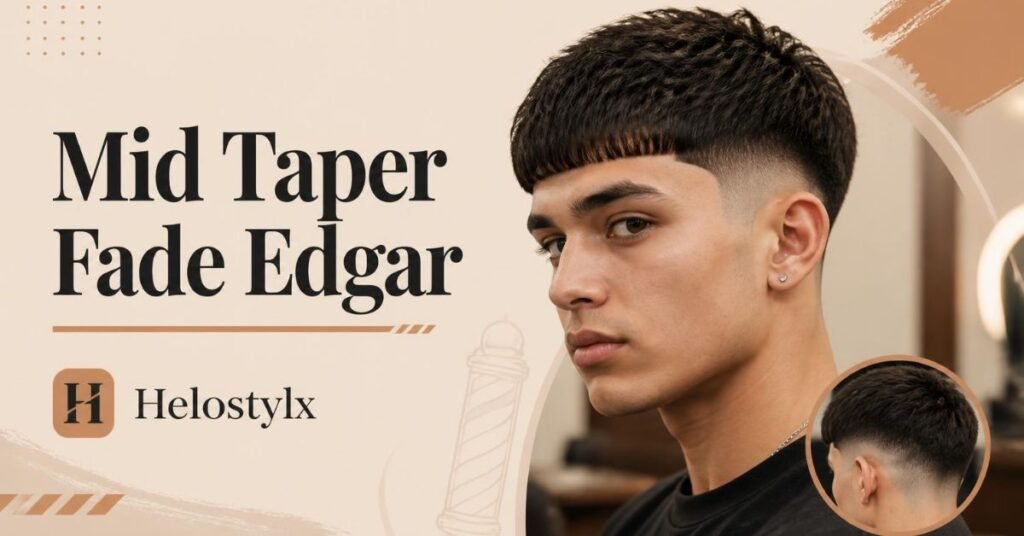
If you’ve spent any time scrolling barber content lately, you’ve seen it: a sharp, boxy fringe sitting above the brows, a close-cropped side, and a clean, almost architectural line-up. That’s the mid taper fade Edgar, and it’s become one of the most requested cuts in barbershops right now — for good reason. It’s sharp without being high-maintenance, structured without looking stiff, and it works on a wider range of hair types and face shapes than most people expect.
This guide breaks down exactly what a mid taper fade Edgar is, who it suits, how to ask for it, and how to keep it looking fresh between barber visits. No fluff — just what you need to walk into your next appointment (or your bathroom mirror) with confidence.
What Is a Mid Taper Fade Edgar?
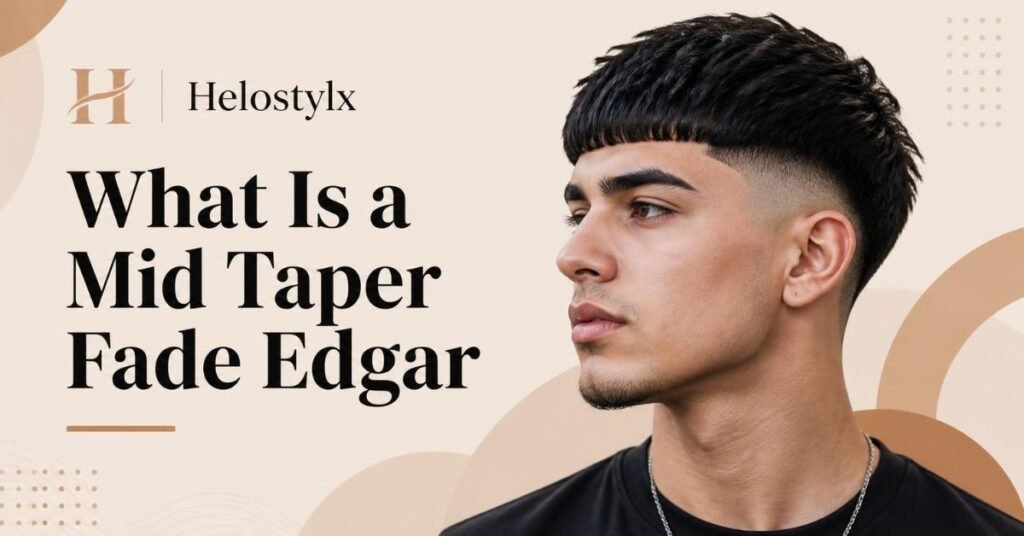
A mid taper fade Edgar combines two distinct elements. First, the “Edgar” itself: a short, blunt forward fringe cut straight across the forehead, paired with short textured top hair that’s often pushed or blow-dried forward for a boxy, geometric silhouette. Second, the “mid taper”: the way the sides and back gradually shorten starting around the middle of the head — roughly between the temple and the ear — down to the skin or a short guard at the neckline.
Put together, you get a cut with serious side contrast: a defined, almost sculpted top framed by a fade that tightens as it moves down. The temple-height taper blends the fringe into the sides for a seamless transition, while a clean line-up along the front and sides keeps every edge crisp.
Unlike a shaggy or textured crop, the Edgar leans into hard, clean geometry. It’s a haircut that photographs well precisely because every line is intentional.
Mid Taper vs Low Taper, High Taper, and the French Crop
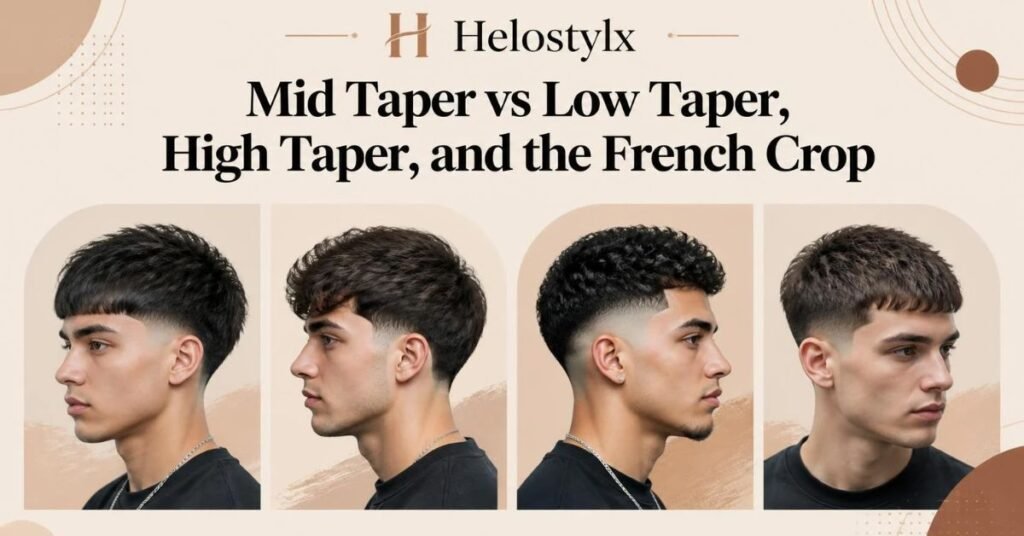
Before you commit, it helps to understand where the mid taper fade Edgar sits relative to its closest cousins.
Mid taper vs low taper Edgar A low taper keeps length longer overall, with the fade starting just above the ear. It’s subtler and better suited to guys who want a softer transition or work in more conservative environments. A mid taper starts higher, around temple height, giving noticeably more side contrast and a bolder, more graphic look.
Mid taper vs high taper (skin taper) Edgar A high or skin taper pushes the fade line up near the crown, leaving very little length on the sides. This version reads as the most modern and aggressive, but it also demands the most frequent barber touch-ups since regrowth shows fast at the top of a skin taper.
Mid taper vs French crop The French crop shares the short textured top and blunt fringe DNA, but it typically pairs with a lower, more casual fade — or even just a trim rather than a true taper. The French crop is softer and more forgiving; the mid taper Edgar is sharper and more deliberate.
If you’re unsure which suits you, a mid taper is genuinely the safest middle ground: enough contrast to look intentional, not so aggressive that it grows out awkwardly.
Is a Mid Taper Edgar Right for Your Hair and Face?
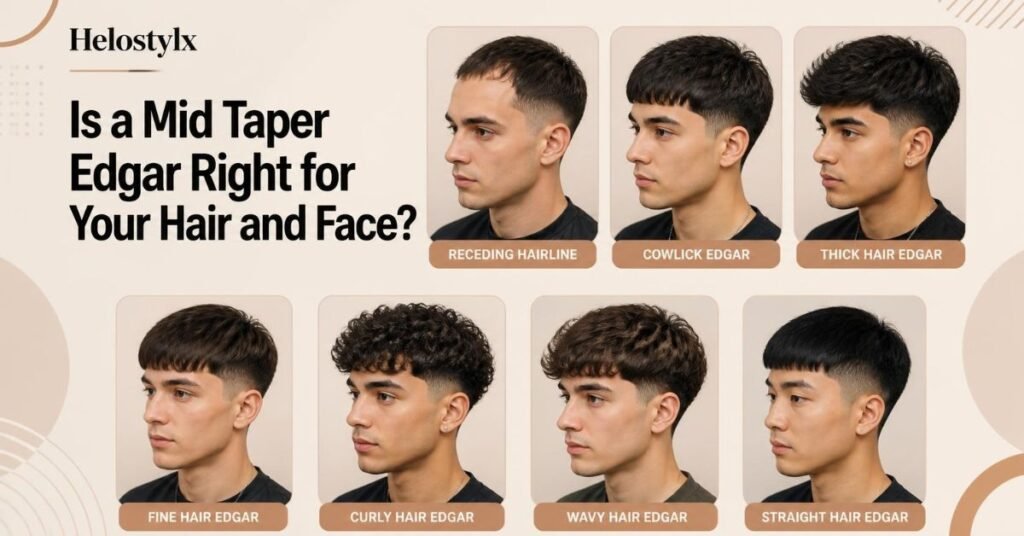
Not every haircut works for every head. Here’s an honest breakdown by hair texture and face shape.
By Hair Texture
Straight hair Edgar Straight hair takes the Edgar’s boxy fringe and clean lines exceptionally well. The fringe sits flat and blunt with minimal effort, though fine straight hair may need texture powder for volume at the crown.
Wavy hair Edgar Wavy hair adds natural texture to the top while still holding the forward fringe shape. Expect to use a bit more matte paste to control flyaways along the hairline.
Curly hair Edgar Curly hair Edgars work, but the barber needs to cut with the curl pattern in mind — curls shrink when dry, so the fringe should be cut slightly longer than the intended finished length. Blow-dry forward with a round brush to achieve the classic blunt look.
Fine hair Edgar Fine hair can look thin against a mid taper’s contrast. A skilled barber will point-cut the fringe to avoid a stark, wig-like line, and a lightweight texture powder at the root helps create the illusion of density.
Thick hair Edgar Thick hair holds the boxy silhouette beautifully but needs regular thinning to prevent bulk. This is one of the most reliable hair types for a crisp, long-lasting Edgar shape.
Cowlick Edgar A cowlick near the hairline can fight against a flat, forward fringe. Mention it during your barber consultation — most barbers will adjust the fringe’s angle or add slight texture to disguise the swirl rather than fight it.
Receding hairline If you have a receding hairline, a straight-across blunt fringe can actually emphasize uneven growth patterns. Ask your barber about a softened or slightly angled fringe line instead of a razor-sharp one — it reads intentional rather than concealing.
By Face Shape
- Round faces benefit from the added height and sharp angles, which create visual length.
- Square faces look great with the Edgar’s straight lines, which echo the jaw’s natural structure.
- Oval faces can wear almost any variation, from mid to high taper.
- Long faces should keep the fringe a touch longer and avoid too much height on top to avoid elongating further.
Which Mid Taper Edgar Styles Should You Consider?
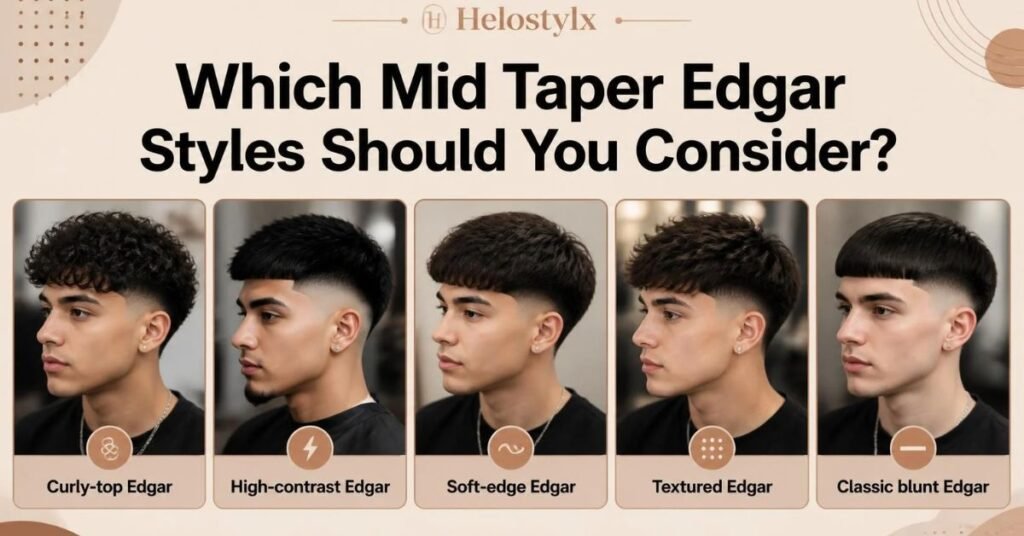
The mid taper fade Edgar isn’t one fixed look — it flexes based on fringe length, fringe position, and how much texture you keep on top.
- Classic blunt Edgar: A perfectly straight, blunt forward fringe just above the brow, short textured top, tight mid taper. The most iconic and recognizable version.
- Textured Edgar: Slightly longer, choppier fringe with visible texture rather than a razor-flat line — more forgiving for cowlicks and curly hair.
- Soft-edge Edgar: The fringe is cut straight but softened at the corners, giving a less severe look that suits receding hairlines and older clients.
- High-contrast Edgar: Mid taper pushed closer to a skin taper for maximum side contrast, paired with a very blunt fringe — bold, graphic, high-maintenance.
- Curly-top Edgar: Curls left slightly longer on top with the classic fringe shape underneath, blow-dry forward for the curls to fall into the boxy silhouette.
Bring reference images for whichever variation appeals to you — this single step prevents more miscommunication than anything else.
How Do You Ask Your Barber for a Mid Taper Edgar?
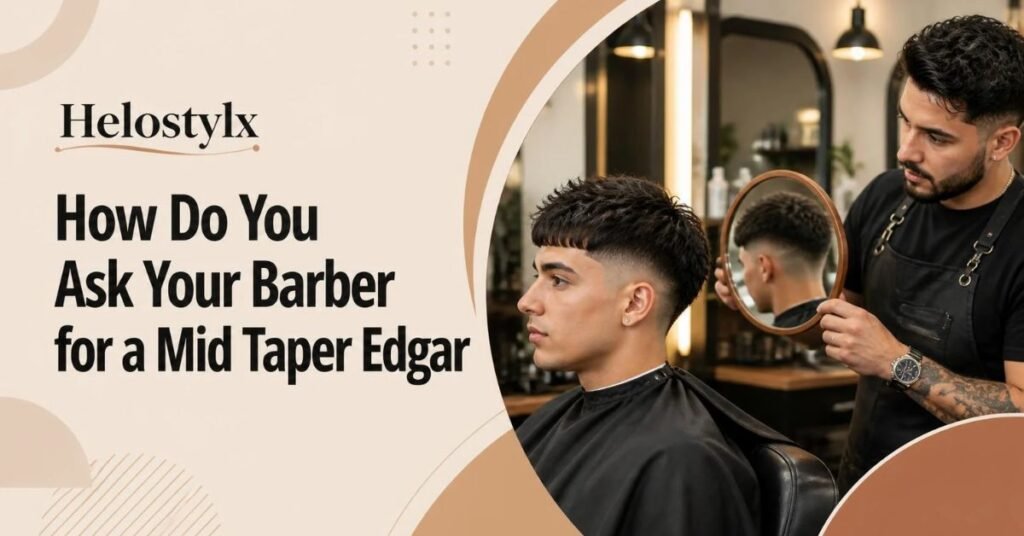
Clear communication is what separates a great Edgar from a mediocre one. Here’s how to set your barber up for success.
- Name the cut specifically. Say “mid taper fade Edgar” rather than just “fade” — barbers see dozens of fade requests daily, and specificity narrows it down immediately.
- Bring barber reference photos. Two or three angles (front, side, back) of the exact fringe length and taper height you want removes almost all guesswork.
- Specify fringe length and position. Do you want the fringe brushing the brow, or sitting an inch above it? Say so.
- Point to your temple. Physically showing where you want the hair taper placement to begin (temple height, for a true mid taper) avoids confusion between mid, low, and high.
- Mention your hair type upfront. Curly, fine, thick, wavy — tell your barber before they pick up the clippers, not after.
- Ask about the neckline. Do you want a natural neckline or a fully tapered neckline? This small detail changes the overall finish significantly.
A confident, specific barber consultation is the single biggest predictor of walking out happy.
What Happens in the Barber’s Chair?
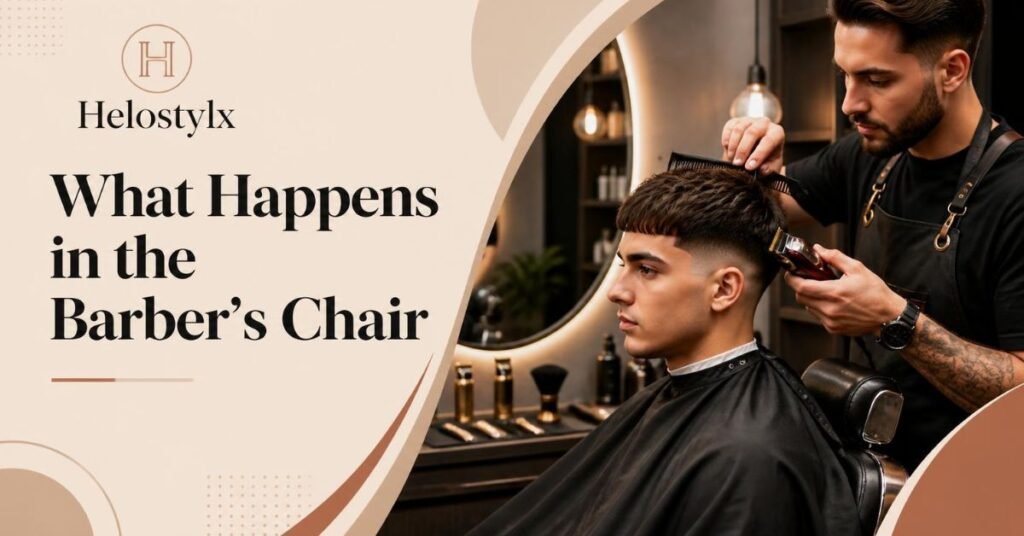
Understanding the process helps you know what to expect and when to speak up.
Step 1: Consultation and sectioning. Your barber assesses hair texture, growth pattern, and any cowlicks, then sections the top from the sides.
Step 2: The taper fade. Using clippers with graduated guards, the barber fades the sides starting at temple height, blending down to the skin or a short guard taper at the neckline. This is where mid taper vs low or high taper gets decided in real time — confirm the starting point before they clip.
Step 3: The line-up. A clean line-up is cut along the hairline, temples, and around the ears using a trimmer or straight razor for crisp edges.
Step 4: The fringe. Hair on top is cut damp and combed forward, then trimmed straight across to create the blunt forward fringe. This step requires precision — it’s usually cut last so the barber can judge the exact length against the fade.
Step 5: Blending and finishing. The barber checks that the fringe integrates smoothly with the sides (no harsh gap at the temple), then finishes with a lineup check and light styling product.
The whole service typically takes 30–45 minutes.
How Do You Style a Mid Taper Edgar at Home?
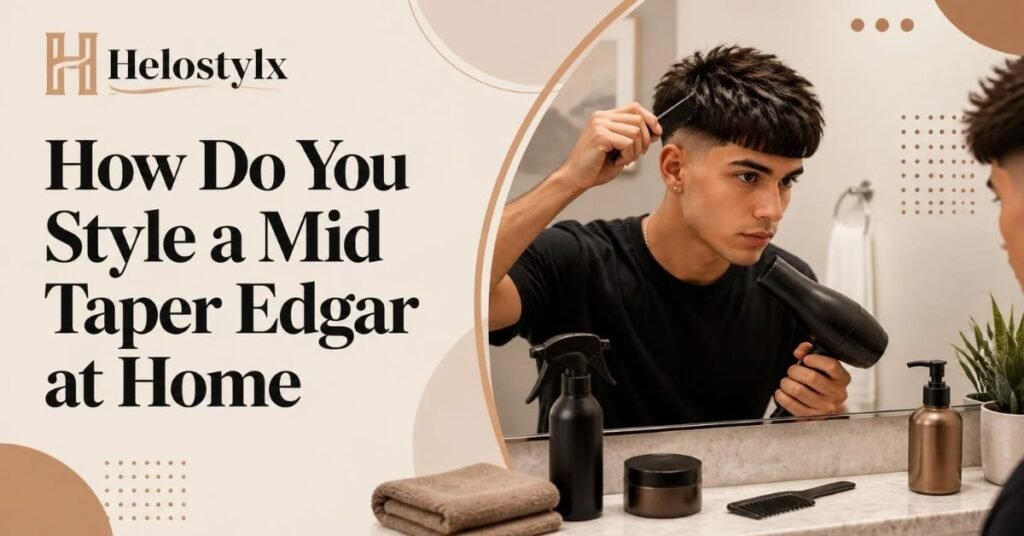
Styling is where the Edgar either looks sharp all day or falls flat by noon. Here’s the routine that works.
- Start damp, not dripping. Towel-dry hair until it’s just damp.
- Apply product before drying. A small amount of styling clay or matte paste, worked evenly through the top section, gives you both hold and a natural (non-shiny) finish.
- Blow-dry forward. Using a paddle or round brush, direct airflow and tension forward and slightly down, coaxing the fringe into its blunt shape. This is the single most important step — skipping it lets the fringe curl back or sit unevenly.
- Set the line. Once mostly dry, comb the fringe flat against the forehead to define the straight edge.
- Add texture powder for volume. If your hair is fine or you want extra root lift, a light dusting of texture powder at the crown adds density without weight.
- Lock it in. A light-hold spray, if needed, keeps humidity or wind from disrupting the shape through the day.
For thick or curly hair, a diffuser attachment on low heat can help maintain natural texture while still coaxing the fringe forward.
How Often Does a Mid Taper Edgar Need Maintenance?
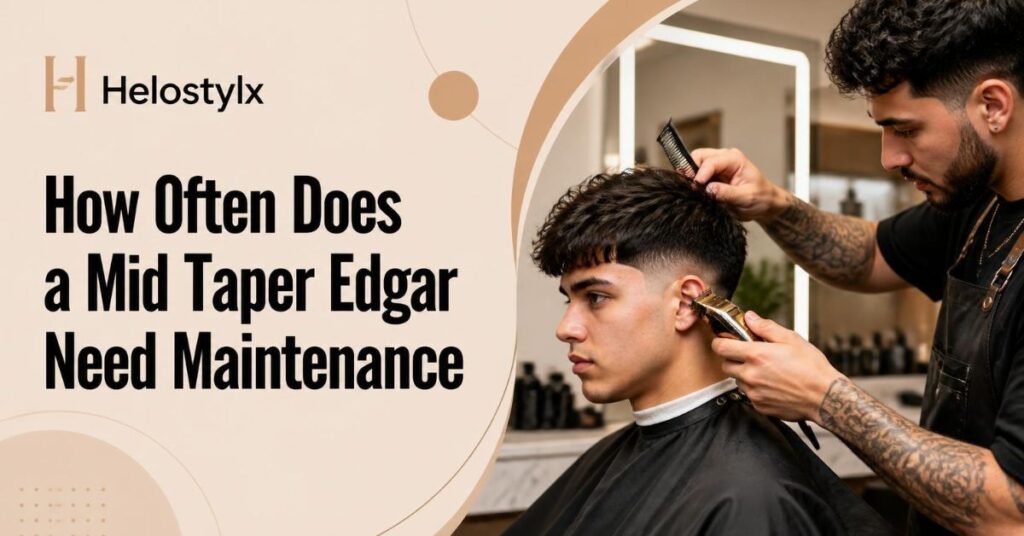
This is where the mid taper fade Edgar asks more of you than a basic haircut — and it’s worth planning for.
- Barber touch-up frequency: Every 2–3 weeks. Because the fade starts at temple height and the fringe relies on a crisp, straight edge, both grow out visibly fast.
- Signs it’s time: The fade line starts blending upward and losing contrast, the fringe edge softens and loses its blunt shape, or the neckline gets fuzzy.
- Between visits: A light trim of just the fringe (or a friend/family member carefully cleaning your neckline with a trimmer) can stretch the gap to 3–4 weeks, but the full shape is best left to your barber.
- Taper fade maintenance at home: Keep the sides brushed down after showering so you notice regrowth early, and don’t let product build up — wash with a clarifying shampoo weekly to keep the scalp and fade visible.
If you’re not prepared for fairly regular haircut upkeep, consider a softer, lower-contrast variation that grows out more gracefully.
Aslo Read This : 18 Best Mid Taper Fade Styles for Black Men in 2026
What Are the Downsides and Common Mistakes?
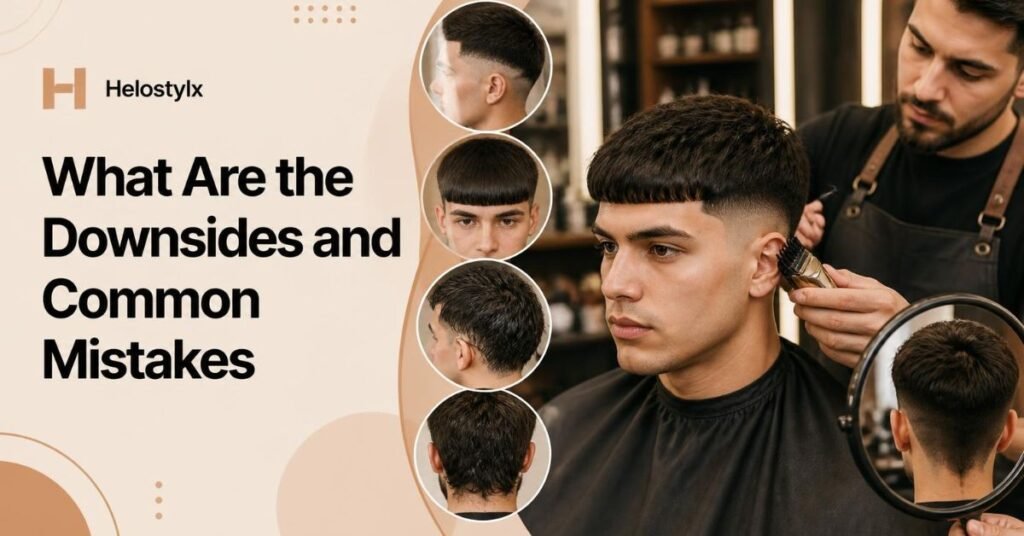
No haircut is perfect for everyone. Here’s what to watch for.
- High upkeep. As covered above, this isn’t a “cut it and forget it for two months” style.
- Unforgiving on some face shapes. Very long faces or those with a heavy brow can find the straight-across fringe overwhelming without slight softening.
- Wrong fringe length. Too short and it looks accidental; too long and it loses the crisp Edgar identity. This is the most common in-chair mistake — always confirm length before the final cut.
- Ignoring cowlicks. Cutting a cowlick Edgar without accounting for the swirl leads to a fringe that splits or lifts unpredictably. Flag it during consultation.
- Overusing product. Piling on styling clay or matte paste to force hold usually backfires, leaving hair greasy-looking rather than matte and structured. Less is more — build up gradually.
- Skipping the blow-dry-forward step. Air-drying without direction often lets the fringe curl backward, undermining the whole silhouette.
- Poor communication. Vague requests like “give me an Edgar” without reference photos or specifics on hair taper placement are the number one cause of dissatisfaction.
What Are the Alternatives If the Edgar Is Not for You?

If the maintenance or the boxy fringe isn’t your style, a few close relatives are worth a look:
- French crop: Similar short top and fringe energy, but softer and lower-maintenance overall.
- Textured crop with a low taper: Keeps things casual, with a longer regrowth window between cuts.
- Classic taper with a side part: Ditches the forward fringe entirely for a more traditional, office-friendly look while keeping clean taper fade lines.
- Curly fringe crop: A great option for curly or wavy hair types who want texture on top without the blunt, geometric fringe.
Each of these borrows elements of the Edgar’s structure while dialing down the commitment.
Final Thoughts
The mid taper fade Edgar earns its popularity honestly: it’s sharp, modern, and works across a genuinely wide range of hair textures and face shapes when it’s cut and styled correctly. The key to nailing it comes down to three things — a clear, specific barber consultation with reference photos, a realistic understanding of the maintenance schedule, and a home styling routine built around blow-drying forward and light product use. Get those right, and a mid taper fade Edgar will consistently be one of the best-looking, most photograph-ready cuts in your rotation.
Mid Taper Fade Edgar FAQs
How long does a mid taper fade Edgar last before it needs a touch-up?
Most people need a barber touch-up every 2–3 weeks since the temple-height taper and fringe edge grow out fast.
Can I get a mid taper fade Edgar with curly or wavy hair?
Yes — the barber just cuts the fringe slightly longer for shrinkage, and you blow-dry forward to set the shape.
What’s the difference between a mid taper fade Edgar and a low taper Edgar?
A mid taper starts at temple height for more side contrast, while a low taper begins near the ear for a subtler fade.
What products do I need to style a mid taper Edgar at home?
A matte paste or styling clay for hold, plus optional texture powder for root volume, keeps the finish natural.
