
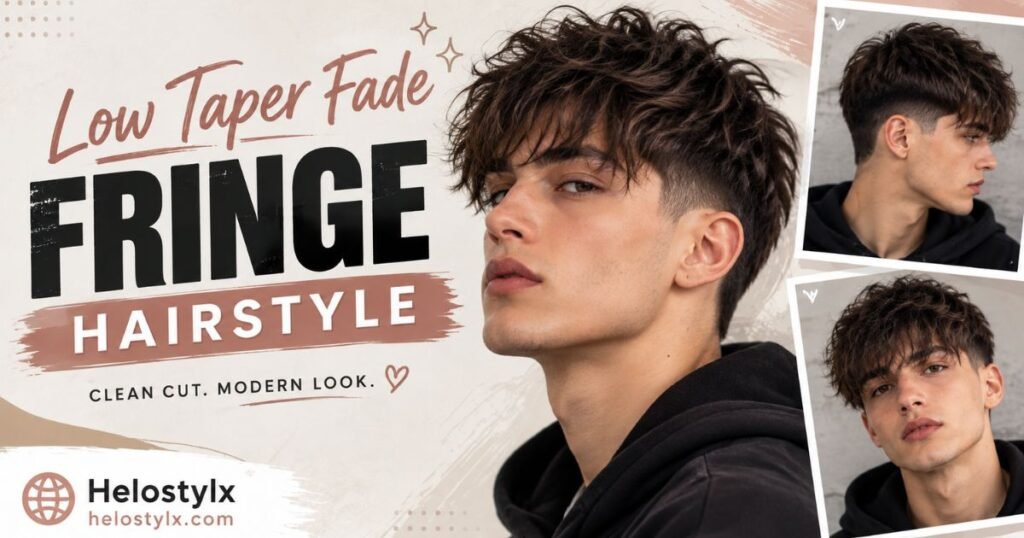
If you’ve been scrolling through barber Instagram pages lately, you’ve probably noticed one style showing up again and again: the low taper fade fringe. It’s clean, it’s low-maintenance compared to most trend cuts, and it works on almost every hair type — from pin-straight to tightly curled.
This guide breaks down everything you need to know about the low taper fade fringe haircut, including 18 real variations you can take straight to your barber, how to pick the right length for your face, and how to keep it looking sharp between appointments.
What Are Low Taper Fade Fringe Haircuts?
A low taper fade fringe combines two classic barbering techniques into one modern package.
The “low taper” part refers to the fade itself. Unlike a mid or high fade, a low taper fade keeps the shortest hair close to the neckline and just above the ears, blending gradually into longer hair on top. It’s subtle, versatile, and works well in professional settings.
The “fringe” is the front section of hair left long enough to fall forward over the forehead, similar to a modern take on a French crop or bowl-inspired cut — but sharper and more textured.
Put together, a low taper fade haircut with a fringe gives you:
- A tidy, controlled fade on the sides and back
- Volume and movement left on top
- A forward-styled fringe that frames the face
- A silhouette that looks fresh for weeks, not just days
It’s become one of the most requested stylish men’s haircuts 2026 has to offer because it balances a low-key fade with a statement fringe — polished enough for the office, edgy enough for weekends.
Low Taper Fade Fringe vs French Crop
People often confuse these two, so let’s clear it up.
A French crop is traditionally a shorter, blunt fringe with tighter sides — often paired with a skin fade or a crop-specific taper. A low taper fade fringe haircut, on the other hand, is more flexible on length and texture.
Key differences:
- Fade height: French crops often use mid or high fades; low taper fringes keep things lower and softer.
- Fringe texture: French crops favor a blunt, straight-cut fringe. Low taper fringes can be textured, choppy, feathered, or side-swept.
- Overall vibe: French crop is sharper and more uniform. Low taper fringe feels more relaxed and adaptable to curly, wavy, or thick hair.
If you want something a little softer and more versatile than the traditional French crop, the low taper fringe is your answer.
Why Barbers Recommend a Low Taper Fade Fringe
Ask any barber why this cut keeps trending, and you’ll hear similar reasons.
- It grows out gracefully. Because the fade is low, regrowth is far less noticeable than with high or skin fades.
- It suits almost every face shape. The fringe adds balance to longer faces and softens angular jawlines.
- It works across hair types. Straight, wavy, curly, and thick hair all take well to a taper fade fringe.
- It’s low-maintenance daily, high-impact visually. A few minutes with product each morning is usually enough.
- It’s office-friendly. Compared to bold high fades or undercuts, a low taper fade reads as neat and professional.
Now let’s get into the styles. Below are 18 ways to wear a low taper fade fringe in 2026.
1. Textured Low Taper Fade Fringe
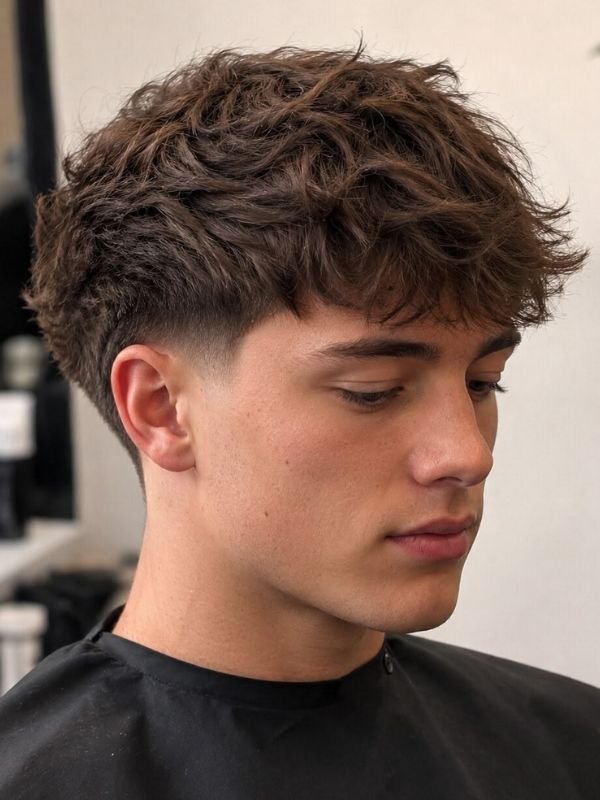
This is the foundation style — and arguably the most requested version of the cut. Hair on top is cut to medium length and textured with point-cutting scissors or a razor, then the fringe is pushed forward for a lived-in, effortless look.
Best for: Straight to slightly wavy hair that needs extra texture and movement.
2. Messy Low Taper Fade Fringe
The messy variation skips the precise, combed-down finish for a tousled, “just rolled out of bed” appearance. Barbers achieve this using heavy texturizing and a light matte paste.
Best for: Guys who want a casual, off-duty look without sacrificing the sharp fade underneath.
3. Curly Low Taper Fade Fringe
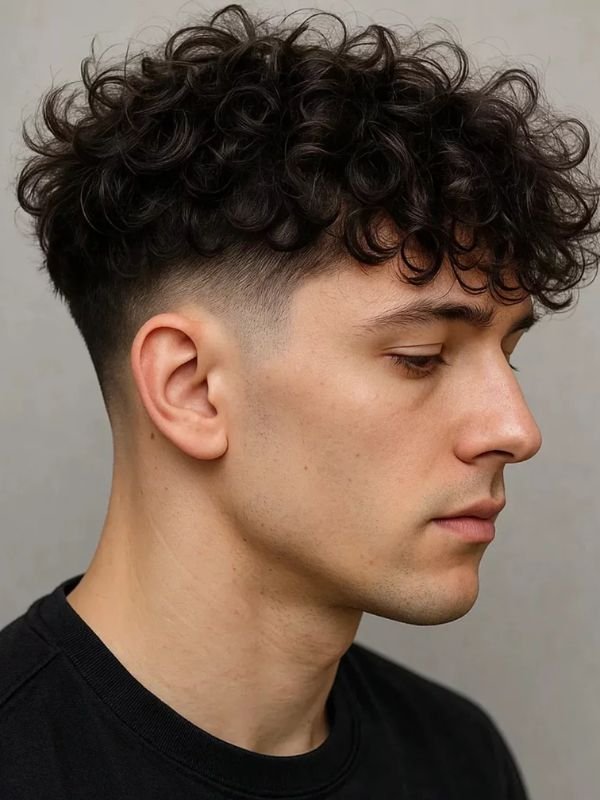
Curly hair pairs beautifully with a low taper fade fringe haircut because the fade keeps the sides controlled while the curls on top are left to do their thing. The fringe curls forward naturally, framing the forehead.
Best for: Type 2 and 3 curl patterns; works especially well with a curl-defining cream.
4. Wavy Low Taper Fade Fringe
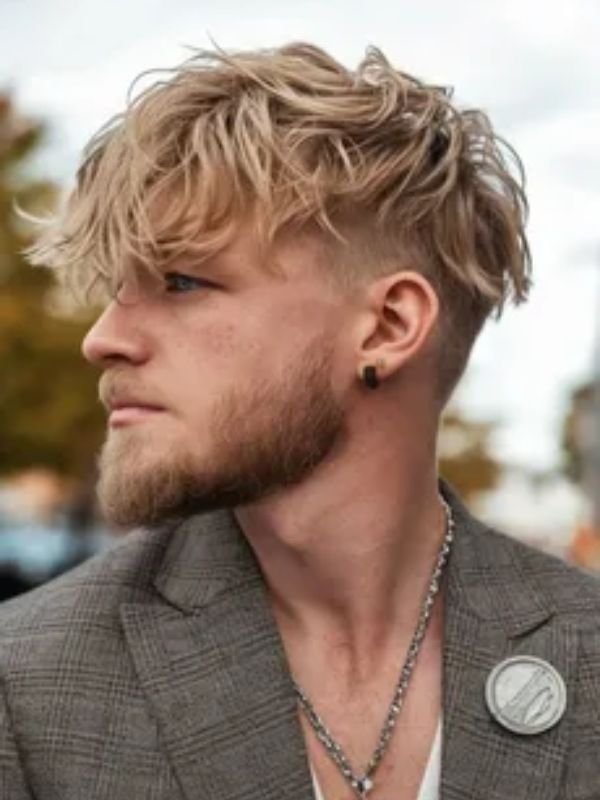
Waves add natural texture without the extra volume of full curls, making this one of the easiest low taper fade hairstyles to maintain. A light sea-salt spray enhances the wave pattern in the fringe.
Best for: Medium-length hair with natural wave; minimal styling effort required.
5. Korean Low Taper Fade Fringe
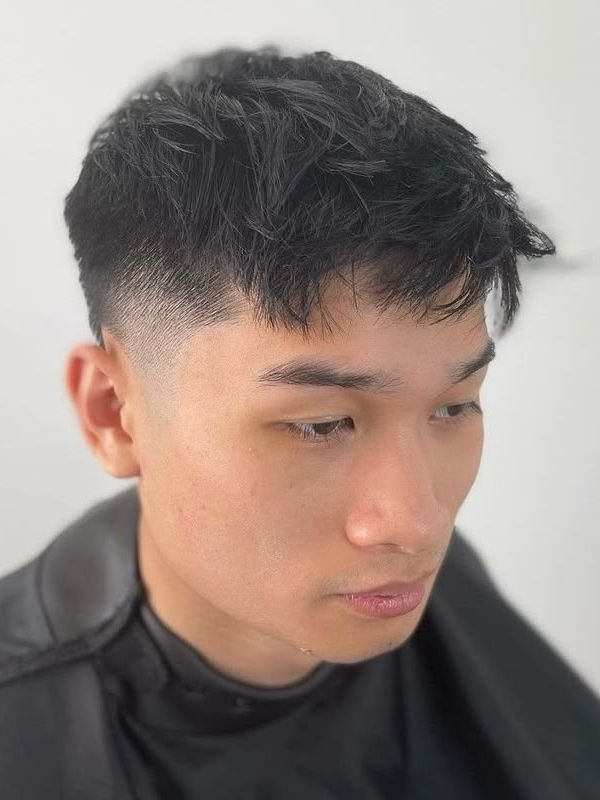
Inspired by Korean street style, this version features a soft, rounded fringe with heavy texture and a slightly longer top. The fade stays subtle and low, letting the fringe take center stage.
Best for: Fine to medium hair; pairs well with a soft matte finish rather than high shine.
6. Long Fringe Low Taper Fade
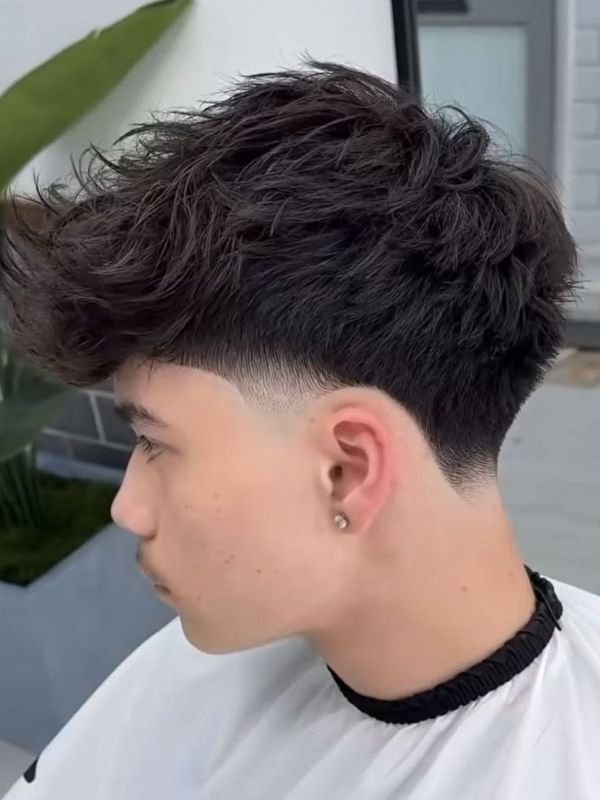
For those who want more coverage and drama, the long fringe extends past the eyebrows, almost brushing the eyes. It’s bold, modern, and a favorite among younger clients chasing fringe hairstyles for men 2026.
Best for: Thick, straight, or lightly wavy hair that can hold length without looking flat.
7. Choppy Low Taper Fade Fringe
Choppy layers throughout the top and fringe create a jagged, textured silhouette. This is one of the more editorial, fashion-forward takes on the taper fade fringe trend.
Best for: Guys who want an edgier, more deliberate “undone” look.
Also Read This : 35 Best Military Haircuts for Men: Sharp & Timeless Styles
8. Side-Swept Low Taper Fade Fringe
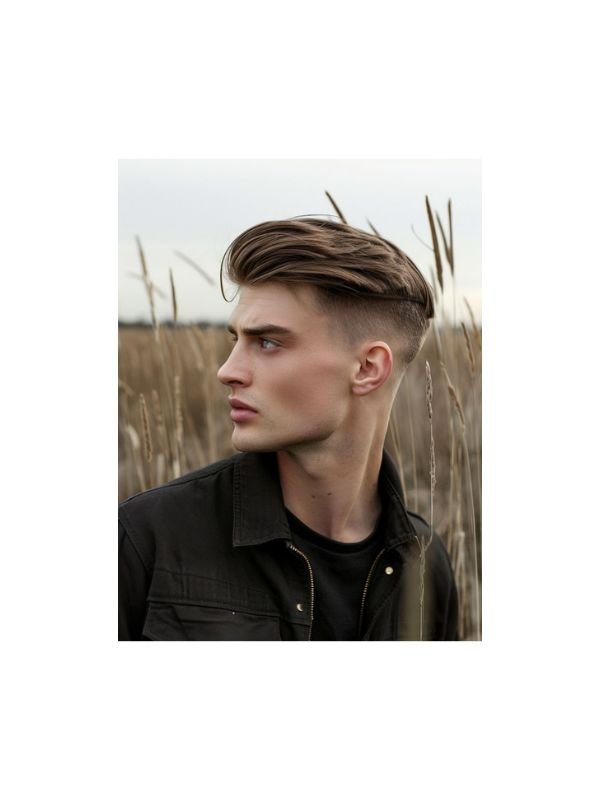
Instead of falling straight down, the fringe is swept to one side, creating asymmetry. It’s a more grown-up, refined variation that still keeps the fade low and clean.
Best for: Oval and square face shapes; great for formal or business settings.
9. Thick Hair Low Taper Fringe
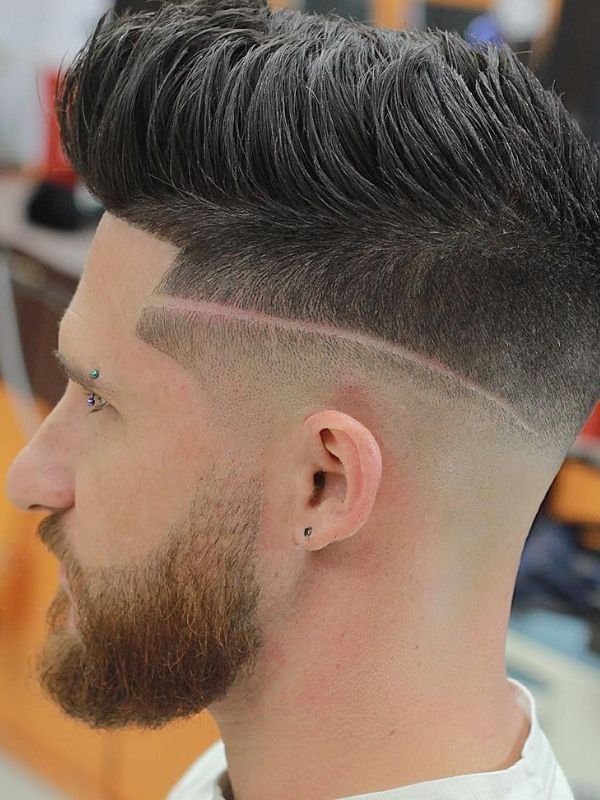
Thick hair holds shape exceptionally well, so this cut leans into volume rather than fighting it. Heavy thinning shears reduce bulk while keeping enough density for a strong fringe line.
Best for: Naturally thick or dense hair that needs weight removal for manageability.
10. Straight Hair Low Taper Fringe
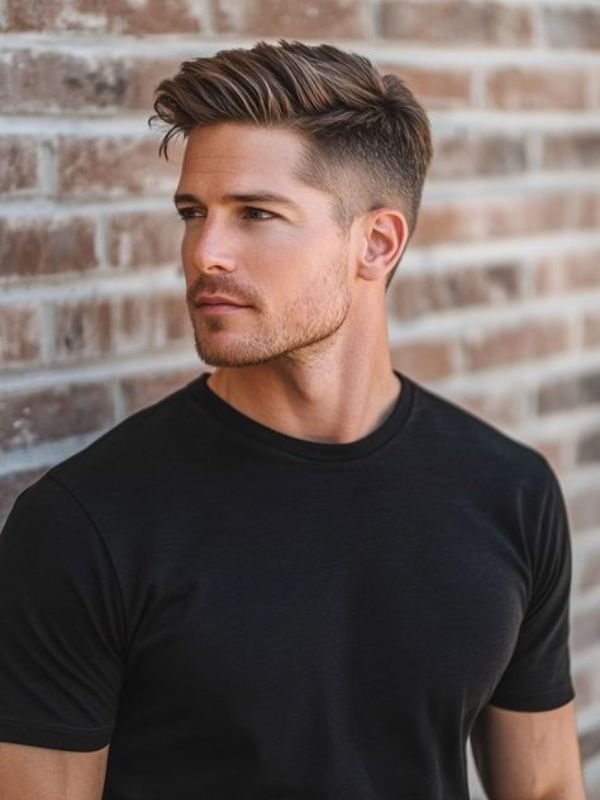
Straight hair gives the cleanest, most defined fringe edge. This version often looks the closest to Korean and Japanese barbering references, with a crisp line and minimal flyaways.
Best for: Fine to medium straight hair; styles quickly with just a comb and light cream.
Choosing the Right Fringe Length
Not every fringe length works for every face or hair type. Here’s a quick breakdown to help you choose:
- Short fringe (above eyebrows): Best for round or square faces; keeps the look tidy and low-effort.
- Medium fringe (eyebrow level): The most versatile option; suits nearly every face shape and hair texture.
- Long fringe (below eyebrows): Adds length to shorter or rounder faces but requires more daily styling.
A good rule of thumb: the thicker your hair, the more length it can hold without looking heavy or flat.
11. Feathered Low Taper Fade Fringe
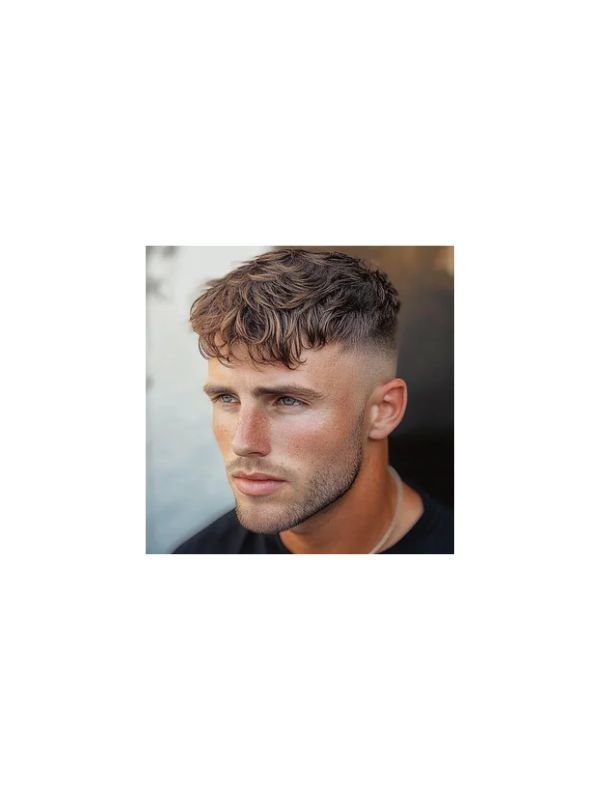
Feathering uses fine point-cutting to create soft, wispy ends rather than a blunt line. This gives the fringe a lighter, airier finish that still frames the face well.
Best for: Medium to fine hair; a subtle alternative to choppy or blunt fringes.
12. Angular Fringe Low Taper Fade
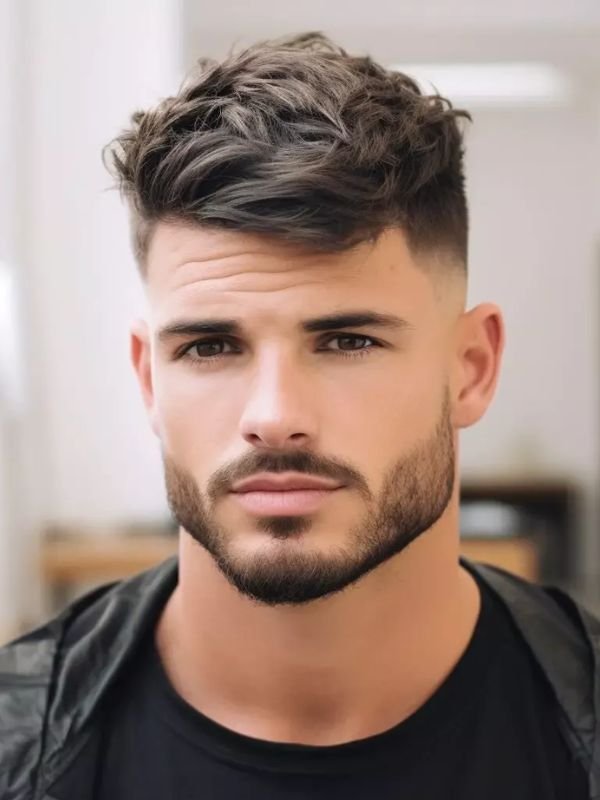
Here, the fringe is cut at a diagonal angle rather than straight across, adding a sharp, geometric edge to the front. It’s a striking option among modern low taper fade hairstyles.
Best for: Square or angular face shapes wanting extra definition.
13. Ivy-Inspired Low Taper Fringe
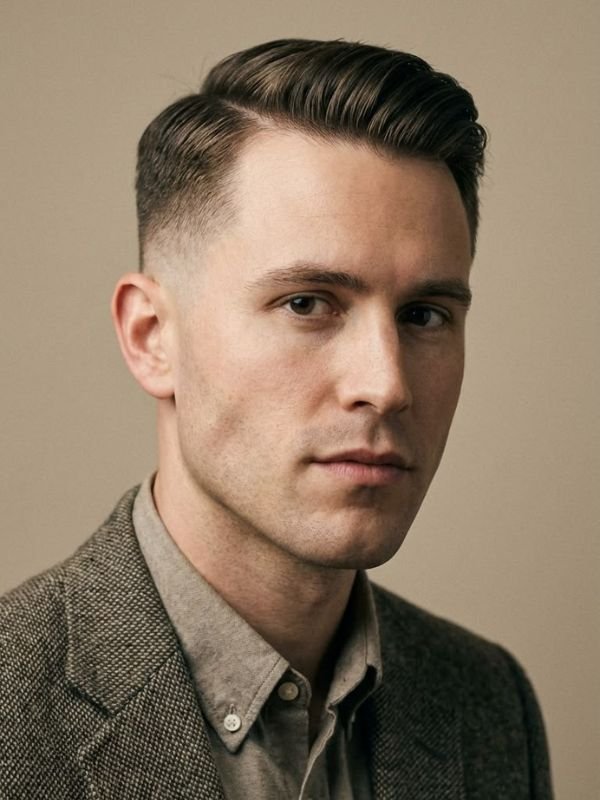
A nod to the classic “Ivy League” cut, this version pairs a slightly longer, side-parted top with a soft fringe and a subtle low fade. It’s polished, preppy, and workplace-appropriate.
Best for: Professional settings; straight to wavy hair.
14. Textured Crop Fringe with Low Taper
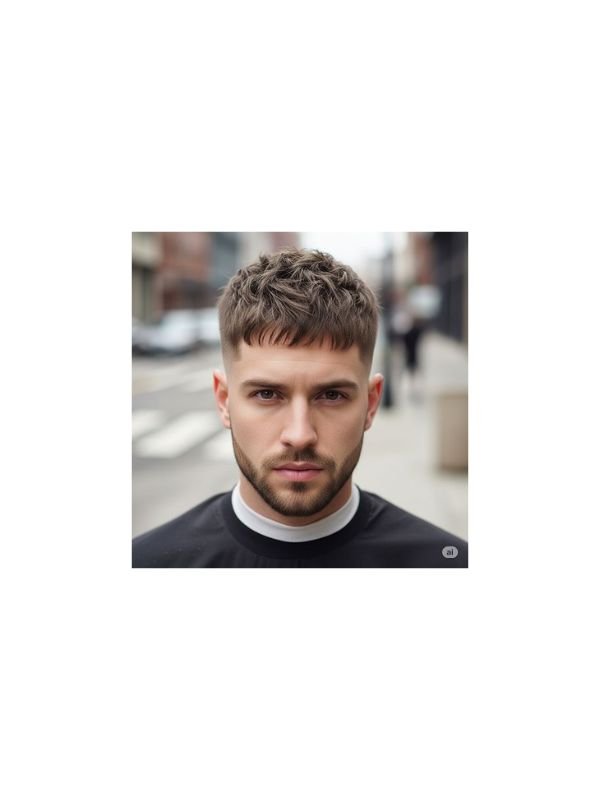
Combining crop-style shortness on top with heavy texture, this cut keeps the fringe short and choppy while the fade stays low and blended. It’s a hybrid of the French crop and textured fringe styles.
Best for: Guys who want the crop silhouette without the harsher fade lines.
15. Modern Curtain Fringe with Low Taper
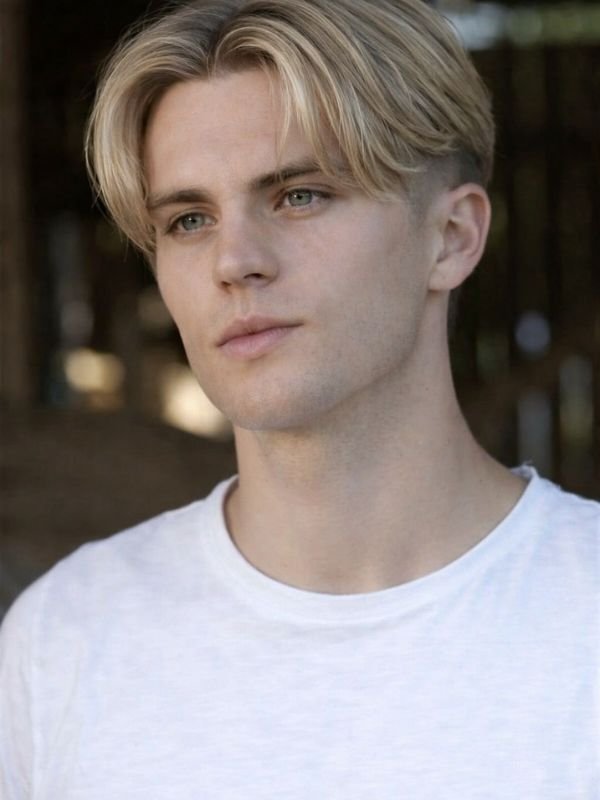
The curtain fringe parts down the middle and falls to both sides, framing the face symmetrically. Pairing it with a low taper fade modernizes the ’90s-inspired curtains trend.
Best for: Medium to long hair with natural wave or movement.
16. Mid Taper Fade
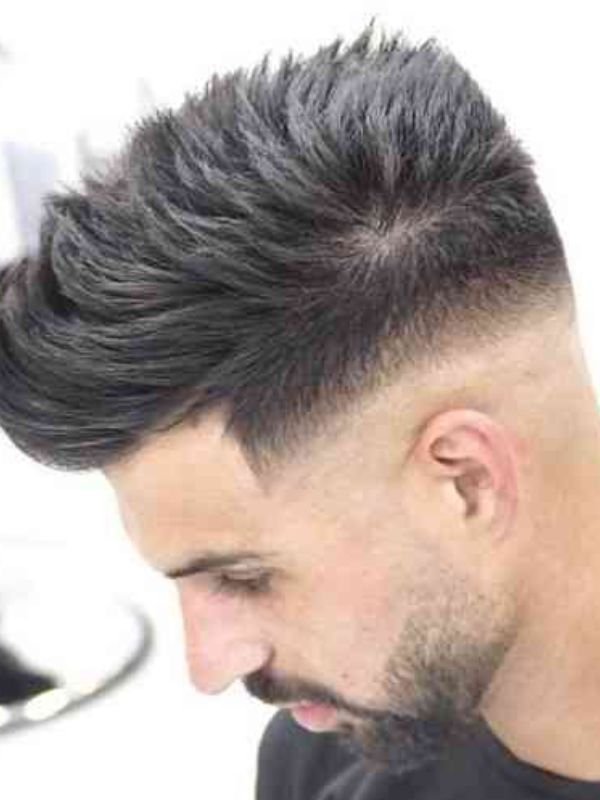
While technically a step up from the low fade, the mid taper fade fringe offers slightly more contrast between the sides and the top. It’s a great option if you want a bit more definition without going full high fade.
Best for: Guys who want extra shape but still prefer a subtle, wearable fade.
17. Messy Low Taper Fade Fringe Straight Hair
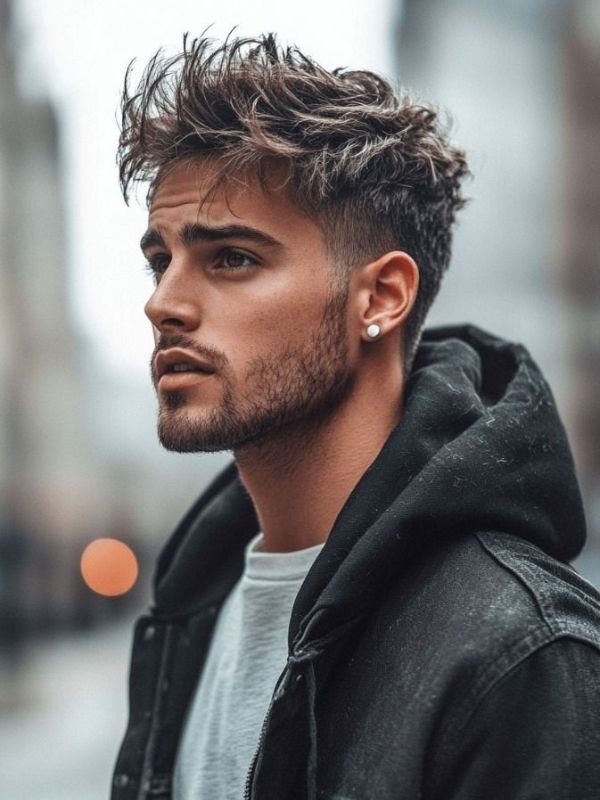
This variation combines the tousled, undone texture of a messy fringe with the clean edge that straight hair naturally provides — giving you the best of both structured and casual styling.
Best for: Straight hair types wanting a relaxed, low-effort finish.
18. Low Drop Mid Taper Fade Fringe
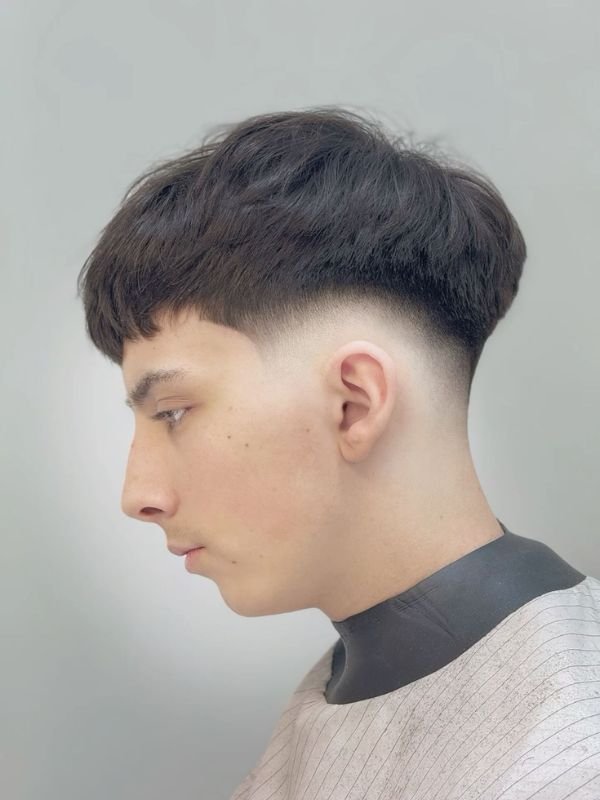
The drop fade curves slightly lower behind the ear rather than staying level, adding subtle shape to the fade line. Combined with a fringe on top, it’s one of the more detailed, barber-favorite finishes.
Best for: Guys who want extra craftsmanship in the fade itself, not just the top.
How to Ask Your Barber for a Low Taper Fade Fringe
Walking in with the right words makes all the difference. Try this script:
- “I’d like a low taper fade — keep it close at the neckline and blend it low, not up the sides.”
- “Leave enough length on top for a fringe I can push forward.”
- “Texturize the top with scissors so it’s not too heavy or blunt.”
- Bring a reference photo. Even the best barbers benefit from a visual, since “fringe” and “fade” can mean slightly different things depending on region and training.
Best Face Shapes for a Low Taper Fade Fringe
- Oval: Almost any fringe length or texture works well.
- Round: Choose a shorter, angular, or side-swept fringe to add length and definition.
- Square: Soft, feathered, or curtain fringes balance strong jawlines nicely.
- Long/Rectangular: A longer, fuller fringe helps shorten the appearance of the face.
- Heart-shaped: Side-swept or textured fringes soften a narrower chin.
Best Hair Types
The good news: a fringe haircut for men works across nearly every hair type, though the finish will differ:
- Straight hair: Cleanest fringe lines; easiest to style daily.
- Wavy hair: Natural texture reduces styling time.
- Curly hair: Adds volume and movement; needs curl-specific products.
- Thick hair: Requires thinning to avoid bulk but holds shape well.
- Fine hair: Benefits from texturizing to create the illusion of density.
Best Styling Products
To keep your low taper fade fringe haircut looking sharp:
- Matte clay or paste: Ideal for textured, messy, or choppy finishes.
- Light-hold cream: Best for straight or wavy hair needing natural movement.
- Sea-salt spray: Enhances texture in wavy or curly fringes.
- Curl cream or gel: Essential for defining curly fringe styles without frizz.
- Light-hold pomade: Good for side-swept or Ivy-inspired looks needing more control.
Maintenance Tips
- Trim every 3–4 weeks. The fade grows out fastest; regular trims keep the blend clean.
- Wash with a lightweight shampoo. Heavy conditioners can weigh down the fringe.
- Dry partially before styling. Hair holds shape and product better at 70–80% dry.
- Blow-dry the fringe forward. Use a round brush or fingers to direct hair the way you want it to fall.
- Avoid over-washing. Two to three washes per week keeps natural oils intact for better texture.
Final Thoughts
The low taper fade fringe has earned its spot as one of the most reliable, adaptable stylish men’s haircuts 2026 offers — and for good reason. It suits nearly every face shape and hair type, grows out without looking messy, and gives you room to experiment with texture, length, and styling.
Whether you go for a clean textured fringe, a curly low taper fringe, or something bolder like an angular or long fringe, the core appeal stays the same: a low-key fade that lets your fringe do the talking. Take a few reference photos from this list to your next barber appointment, and you’ll walk out with a cut that’s genuinely worth the hype.
FAQ’s
1. What is a low taper fade fringe haircut?
It’s a haircut that blends a subtle, low fade on the sides with a longer fringe on top styled forward over the forehead.
2. Is a low taper fade fringe good for curly hair?
Yes, curly hair works great with this cut since the fade stays clean while the curls and fringe add natural texture on top.
3. How often should I get a low taper fade trimmed?
Most guys need a trim every 3 to 4 weeks to keep the fade blended and the fringe in shape.
4. Does a low taper fade fringe suit round faces?
Yes, especially with a shorter, side-swept, or angular fringe that adds definition and visual length to a round face.
