
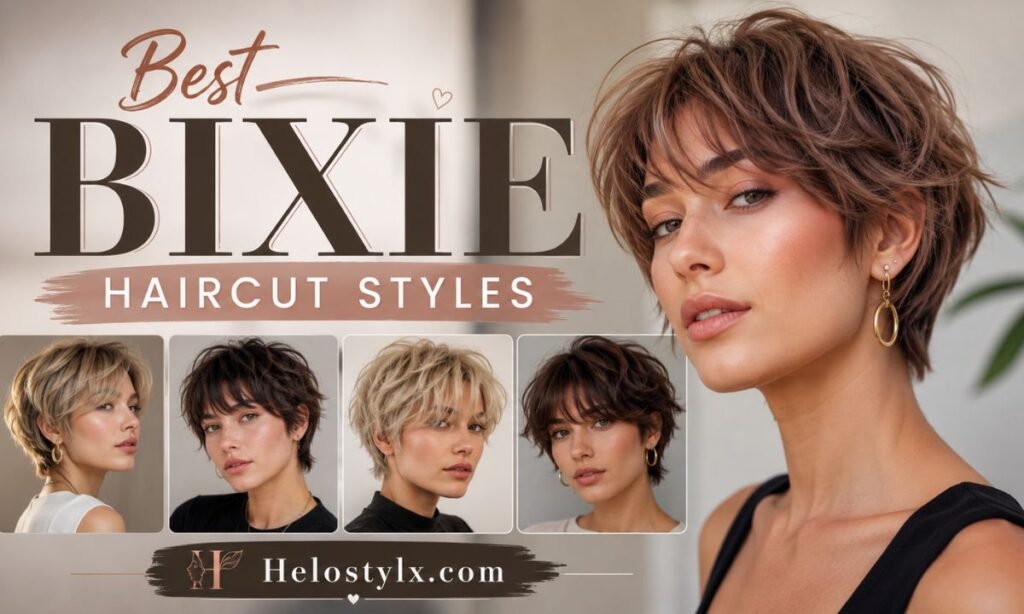
If you’re stuck between growing out a pixie and committing to a bob, the bixie haircut solves the problem for you. This hybrid cut blends the ease of short hair with the softness of a longer style, and it’s become one of the most requested looks in salons heading into 2026. Below, you’ll find 15 bixie haircut variations for different hair types, textures, and ages, along with guidance on choosing the right version for your face shape and how to style it once you leave the chair.
What Is a Bixie Haircut?
A bixie haircut is a short hairstyle that combines the cropped, textured sides and back of a pixie cut with the longer, softer layers of a bob on top. It typically falls somewhere between the chin and the jaw, with choppy or feathered layers that add movement without the severity of a full pixie.
The result is a cut that reads as polished but not stiff. Unlike a traditional pixie, which is cropped close all over, the bixie leaves enough length on top and around the crown to style in different directions — swept back, tousled forward, or parted to the side. This flexibility is a big part of why it has stuck around as a trending cut rather than a passing fad.
Most versions keep the nape and sides shorter, sometimes tapered or undercut, while the crown and top layers are cut longer and textured with a razor or point-cutting shears. That combination gives the bixie its signature lightness.
15 Bixie Haircut Ideas That Feel Modern and Lightweight
Not every bixie looks the same, and that’s the appeal. The base shape stays consistent, but small changes in layering, length, and finishing technique create very different results. Here are 15 ways to wear the cut right now.
Soft Layered Bixie
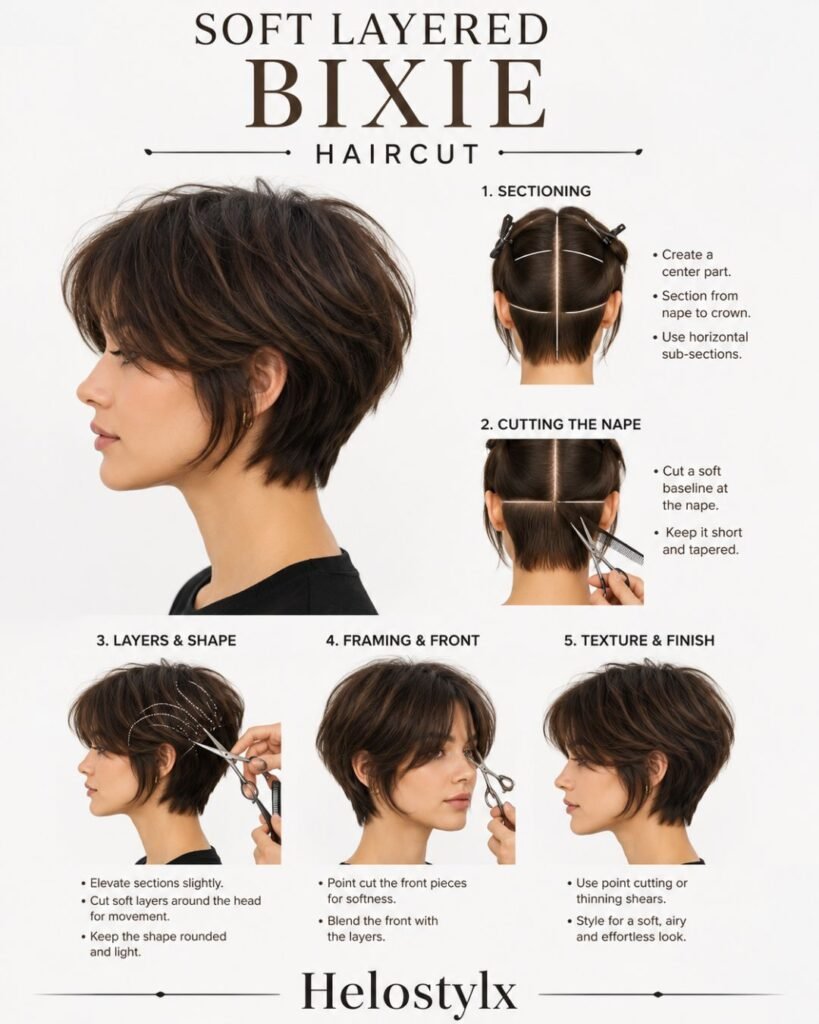
This version leans into gentle, rounded layers rather than choppy, disconnected ones. The layers are cut close together so the ends blend rather than stand apart, giving the style a soft, brushed-back appearance.
It works particularly well if you want something short but don’t want the “just cut” look to be obvious. Because the layering is subtle, it also grows out more gracefully than a heavily textured bixie, making it a practical choice if you’re not ready to commit to frequent trims.
Curtain Bang Bixie
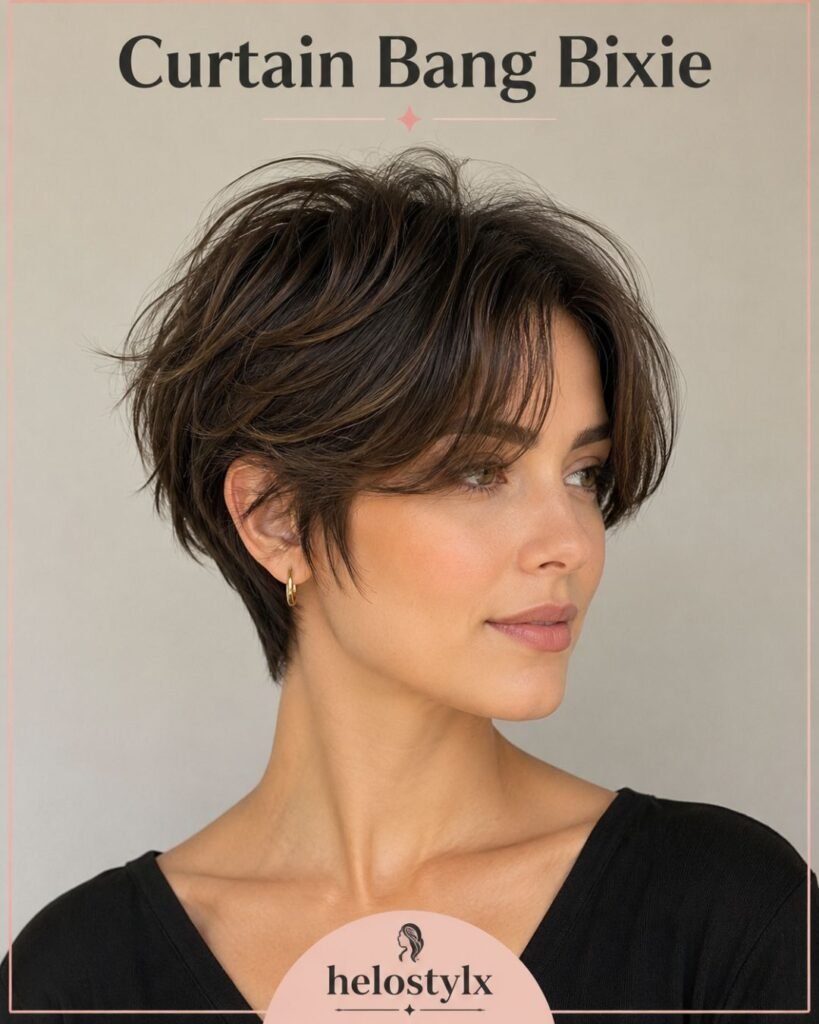
Adding curtain bangs to a bixie softens the face and breaks up the shorter length around the crown. The bangs part naturally in the center and sweep to either side, framing the cheekbones instead of covering the forehead completely.
This pairing works well for anyone transitioning out of a longer fringe, since curtain bangs are easier to grow out than a blunt one. It also adds a slightly retro, French-girl feel to what is otherwise a very modern cut.
Textured Shag Bixie
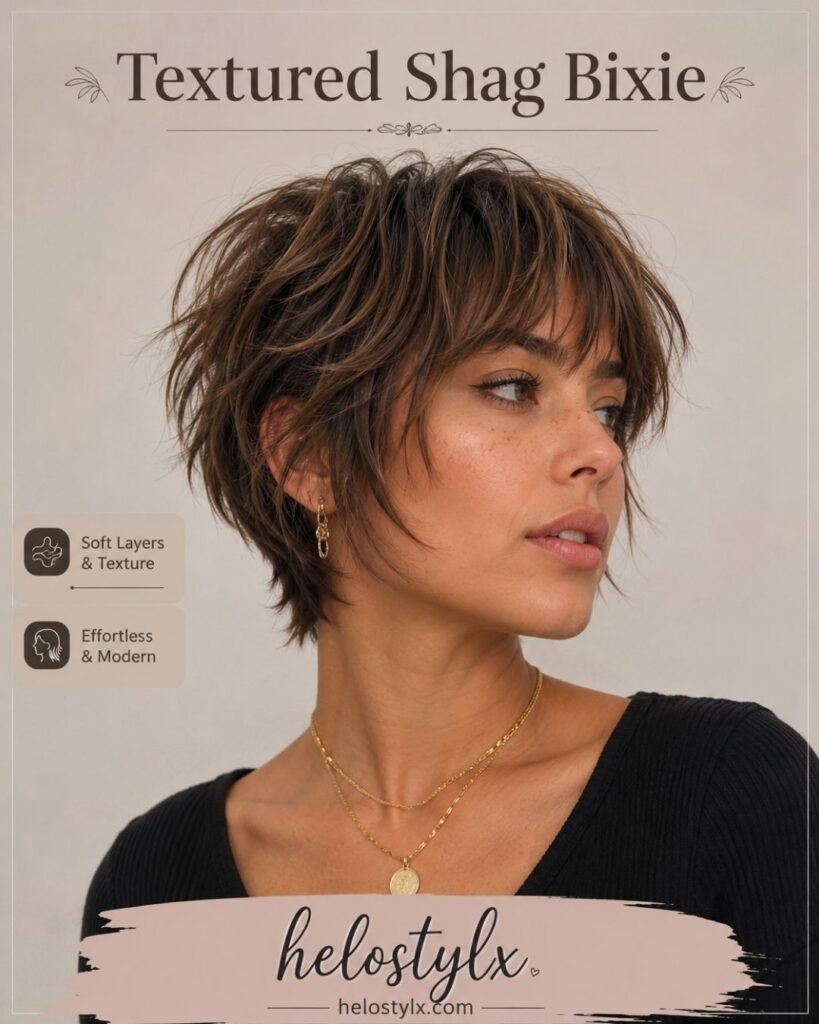
This is the choppiest version of the bixie, borrowing heavily from shag haircuts. Layers are cut at sharp angles and pieced out with a razor for a deliberately undone finish. Texturizing spray or paste is usually needed to keep the separation visible day to day.
It suits thicker hair especially well, since the extra layering removes bulk and prevents the style from looking heavy. Fine hair can wear it too, but may need more product to hold the piecey definition.
Classic Short Bixie
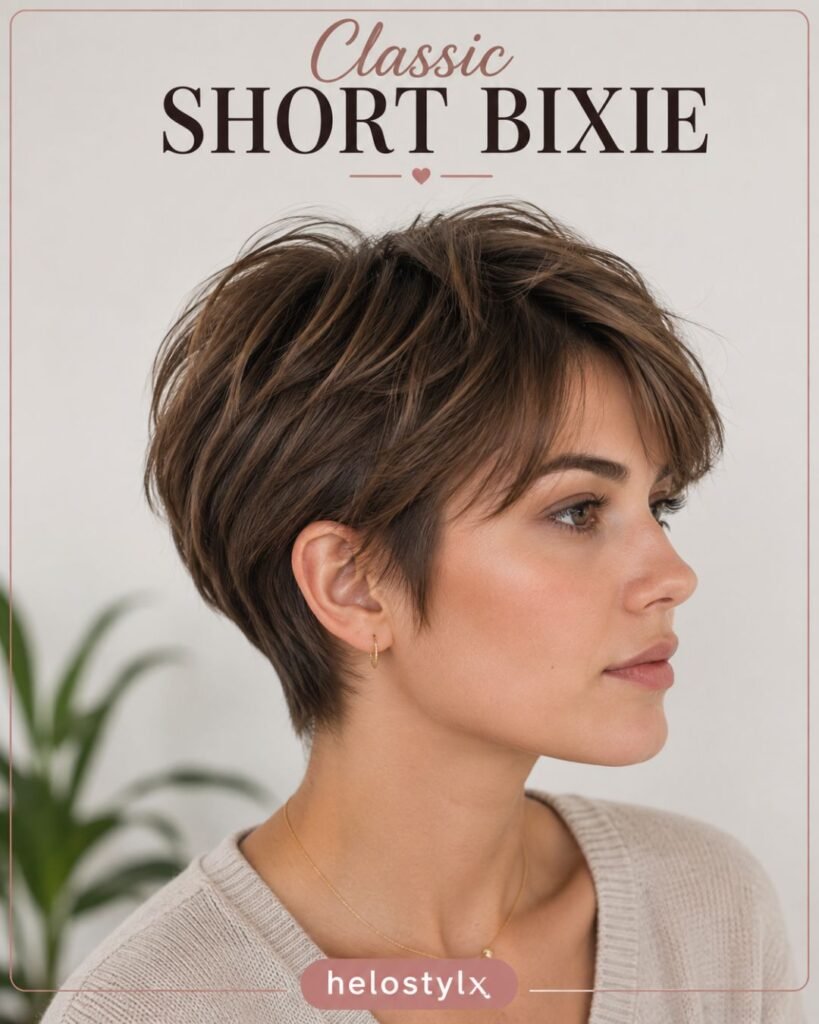
The most straightforward interpretation of the cut: short sides, a slightly longer top, and clean, minimal layering. There’s no heavy texturizing or dramatic fringe here — just a well-proportioned, low-maintenance shape.
This is often the version stylists recommend for a first-time bixie, since it’s the easiest to style with just a round brush or fingers and product, and it photographs cleanly for both casual and formal settings.
Feathered Bixie
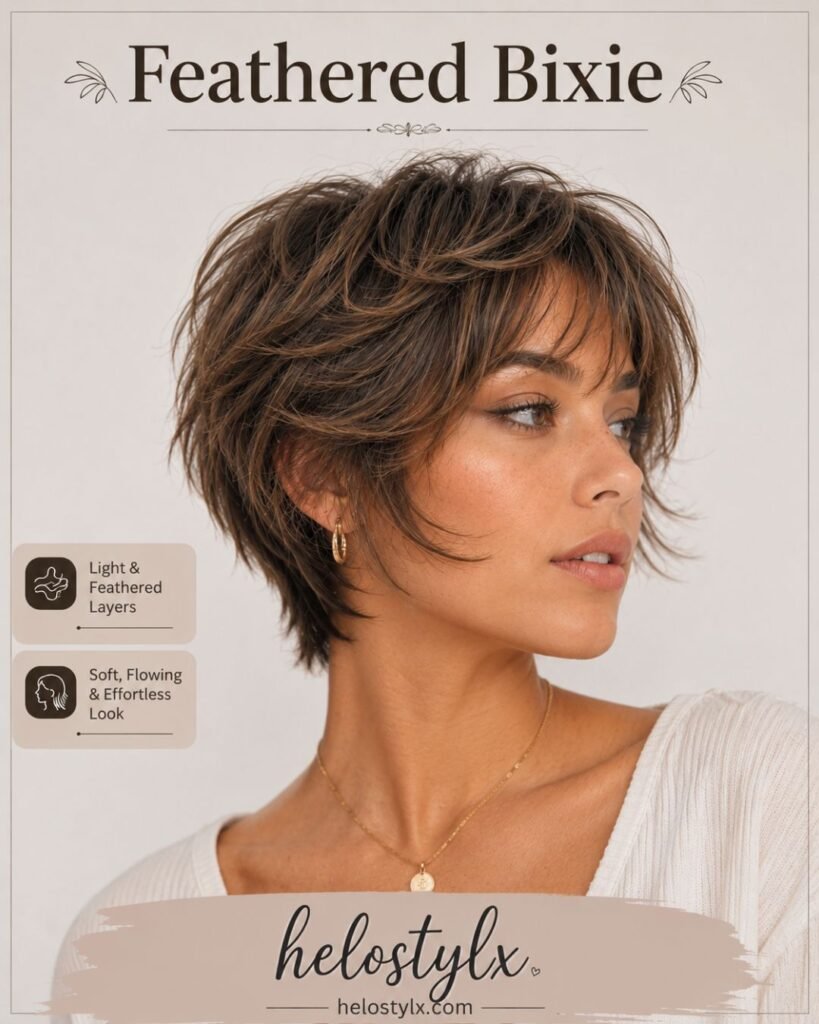
Feathering refers to layers that are cut to flick outward or upward at the ends, similar to 1970s shag styles. On a bixie, this technique is usually applied around the crown and sides, giving the cut extra lift and a slightly wispy silhouette.
It’s a strong option if your hair tends to sit flat, since the feathered layers create the appearance of volume without needing a full blowout every time.
Wavy Bixie Haircut
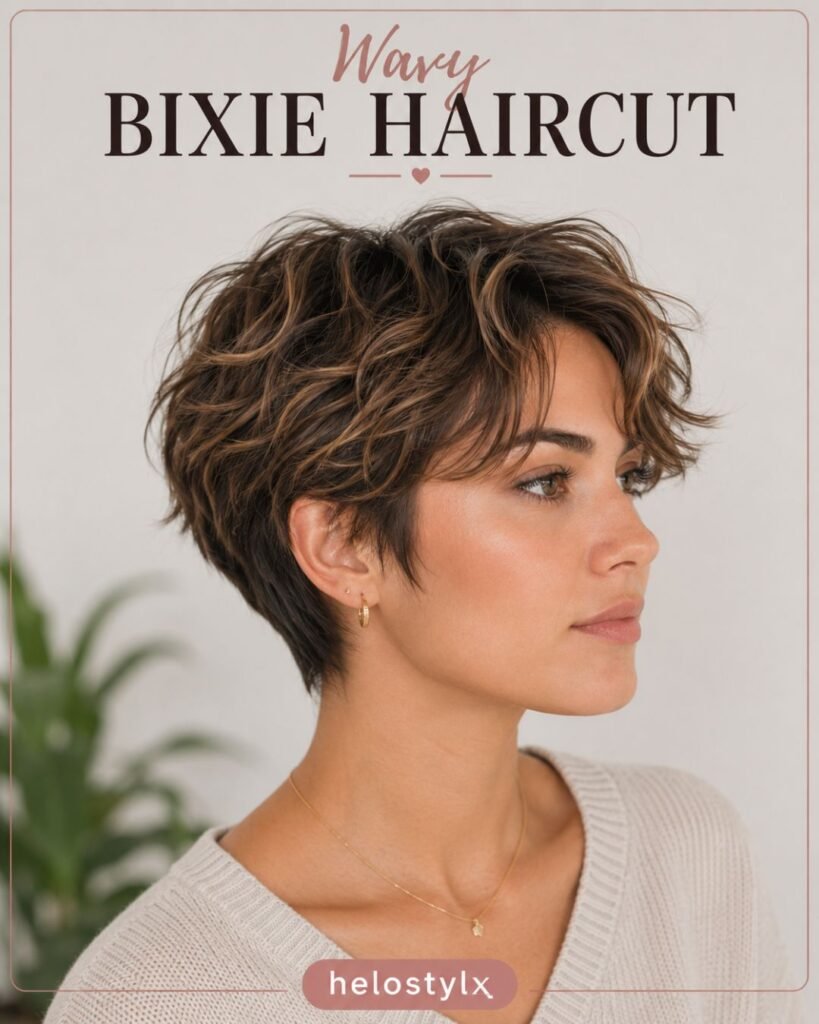
Natural or styled waves add softness to a cut that can otherwise look quite structured. The layering in a bixie actually helps waves show up more clearly, since shorter, separated pieces curl and fall differently than one uniform length would.
If your hair is naturally wavy, this version usually requires the least daily effort — a light curl cream and air-drying is often enough. If you’re styling straight hair into waves, a small-barrel wand or texturizing spray can create a similar effect.
Volume-Boosting Bixie for Fine Hair
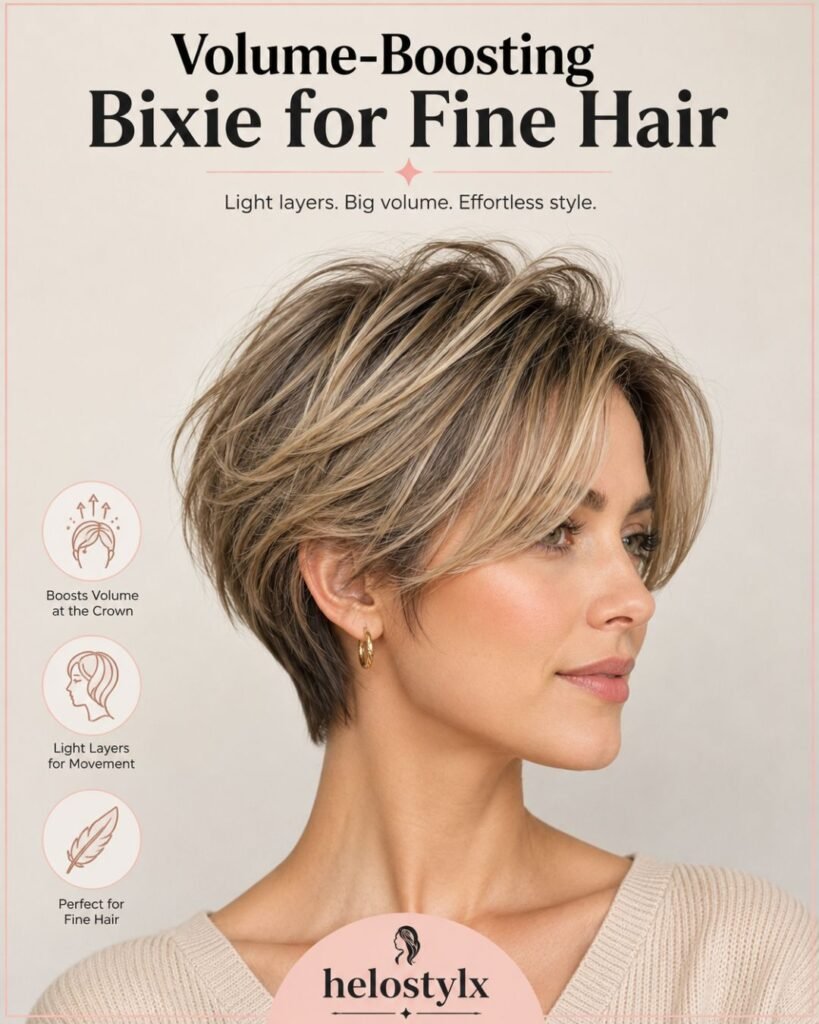
Fine hair tends to lose shape quickly, so this version is cut with shorter, denser layers concentrated at the crown to create the illusion of thickness. The length is usually kept slightly shorter overall, since longer pieces can weigh fine hair down and flatten the style.
A root-lifting mousse applied while hair is damp, followed by blow-drying with a round brush against the direction of growth, helps this cut hold its volume through the day.
Polished Bixie for Straight Hair
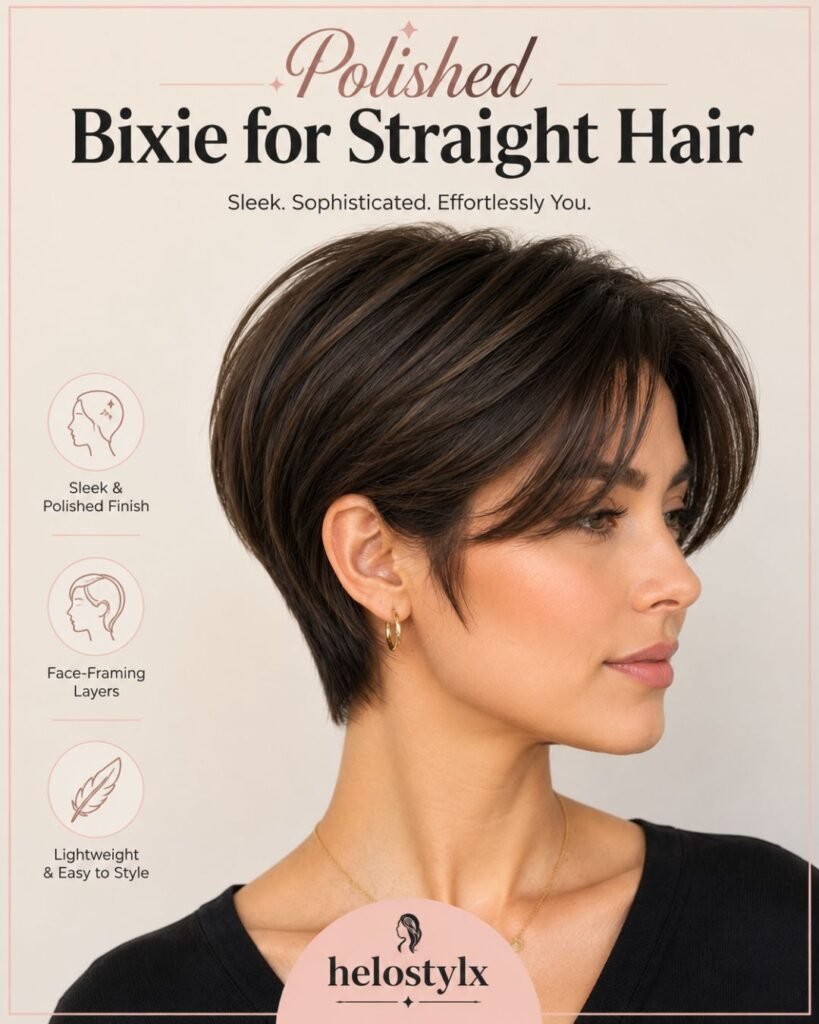
Straight hair shows off the clean lines of a bixie particularly well, since there’s no natural texture to soften the layering. This version is usually cut with slightly more precision and less choppiness than the shag-inspired styles, letting the sharp shape speak for itself.
Styling is simple: a flat brush and a light smoothing serum are usually enough to keep the shape sleek, though a subtle bend at the ends with a flat iron can prevent the style from looking too severe.
Tousled French-Inspired Bixie
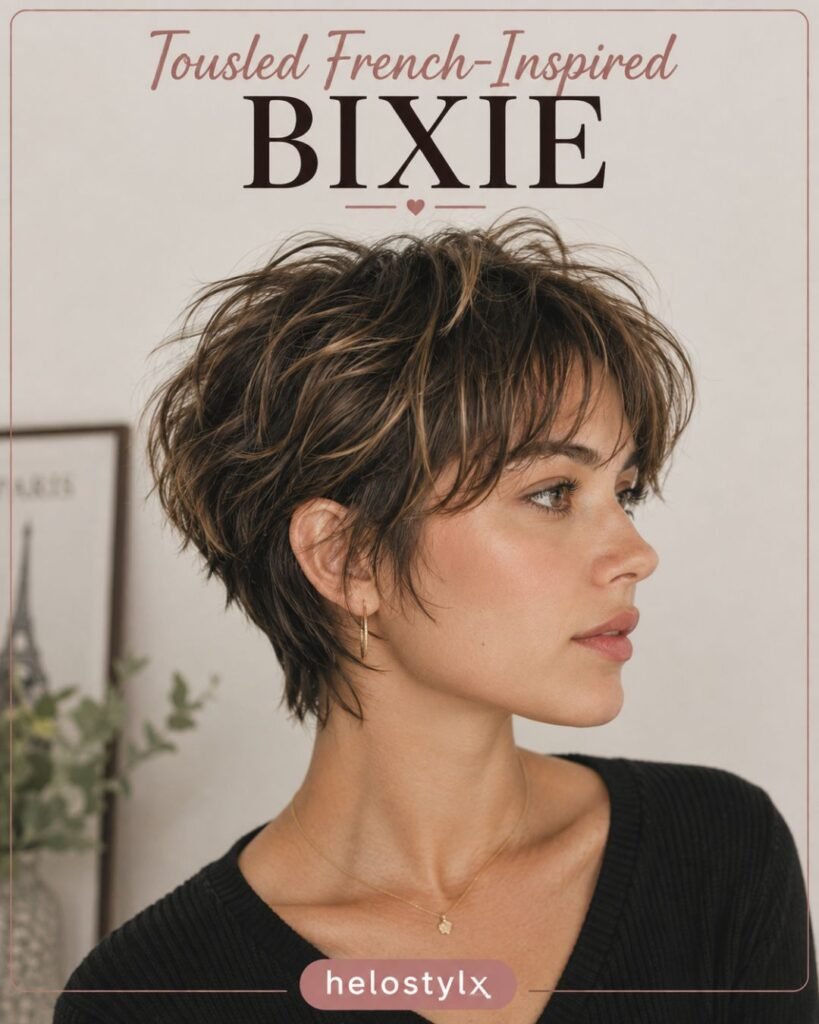
This take favors a deliberately undone, “I didn’t try too hard” look, often associated with French girl hair. The layers are cut with movement in mind, and the styling leans on texture paste worked through dry or damp hair rather than heat tools.
It pairs naturally with minimal makeup and relaxed outfits, and it’s forgiving on days when you don’t have time for a full style — a little product and finger-styling is usually all it needs.
Also Read This : 20 Gorgeous Razor-Cut Hairstyles for Bold, Stylish Women
Layered Bixie with Side Sweep
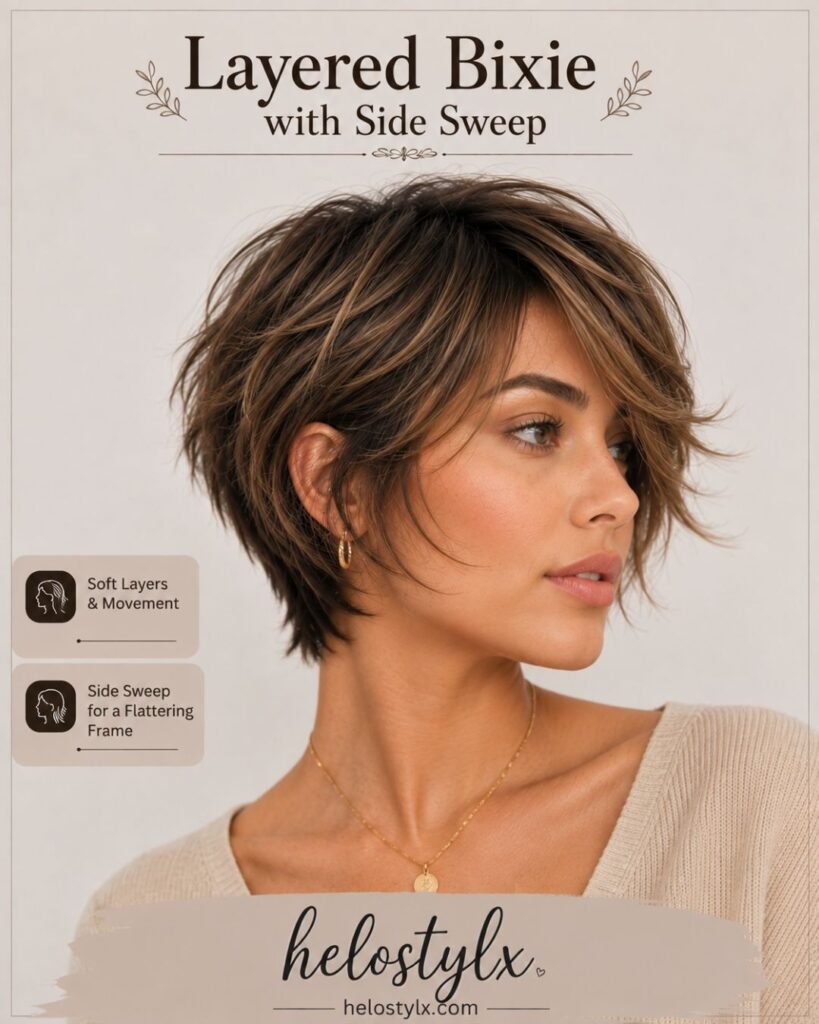
Instead of a center part or blunt fringe, this version is cut and styled with a deep side part, letting longer layers sweep across the forehead. It’s a good middle ground for anyone who wants some coverage over the forehead without going as short as full bangs.
The side sweep also has a slimming effect on rounder face shapes, since it draws the eye diagonally rather than straight across.
Bixie Haircut for Women Over 40
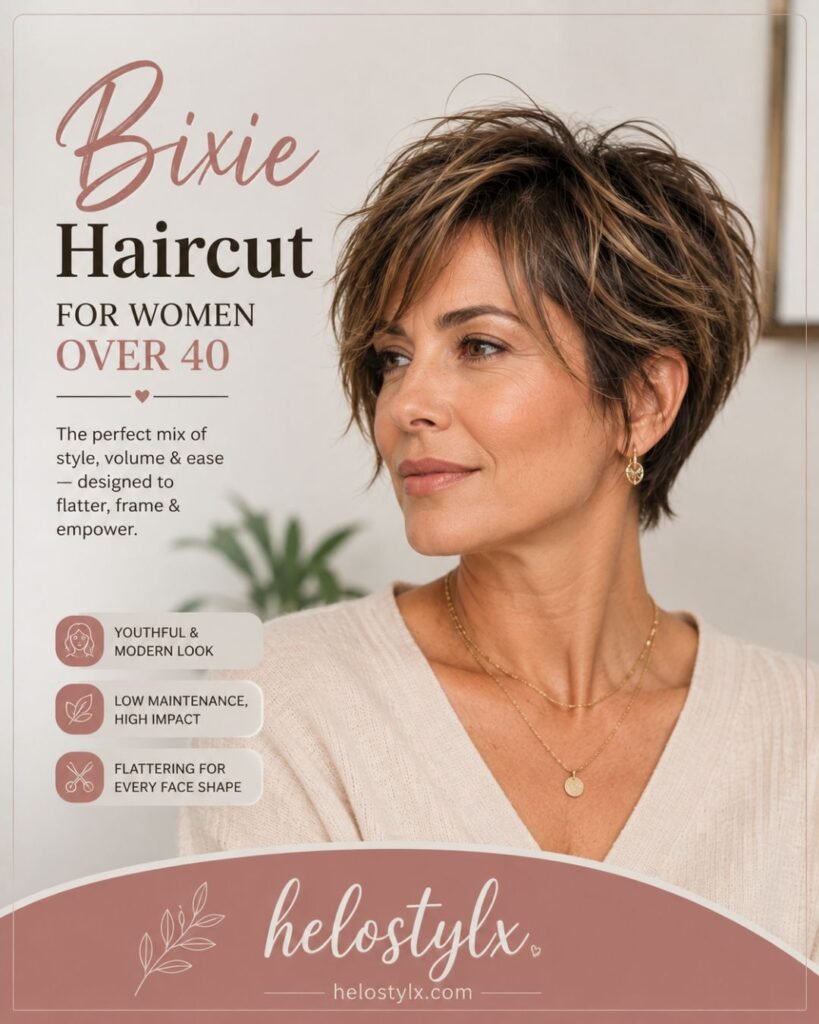
At this stage, many women want a cut that feels fresh without requiring a complete change to their routine. A bixie with soft, face-framing layers around the front and slightly more length left on top tends to work well, since it’s easy to blend with subtle highlights or gray coverage.
Ask your stylist to keep the layering soft rather than choppy if you want the cut to feel elegant rather than edgy — the same base shape can read very differently depending on how sharp the texturizing is.
Bixie Haircut for Women Over 50
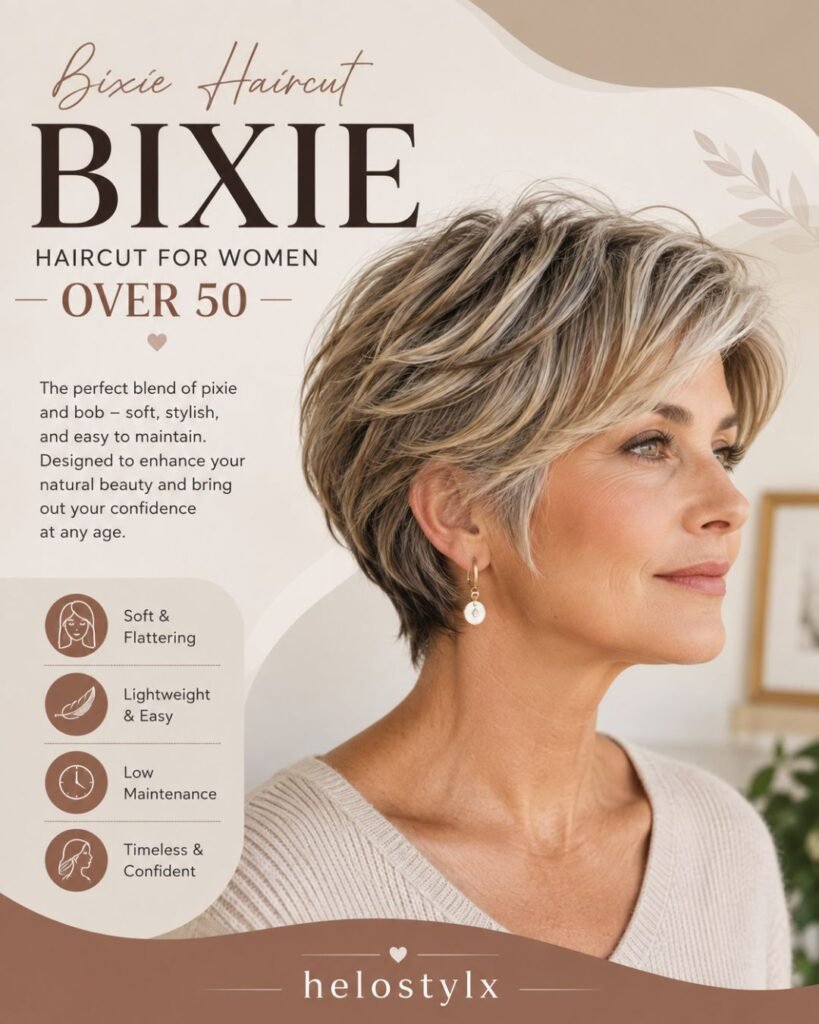
For finer or thinning hair, which becomes more common at this age, a bixie cut with graduated layers at the crown can add noticeable volume. Keeping some length around the face also softens the jawline, which is a common priority for this age group.
A slightly longer version, closer to a pixie-bob than a true pixie, tends to be more flattering here than an ultra-short crop, since it leaves more room to style around the face.
Bixie Haircut for Women Over 60
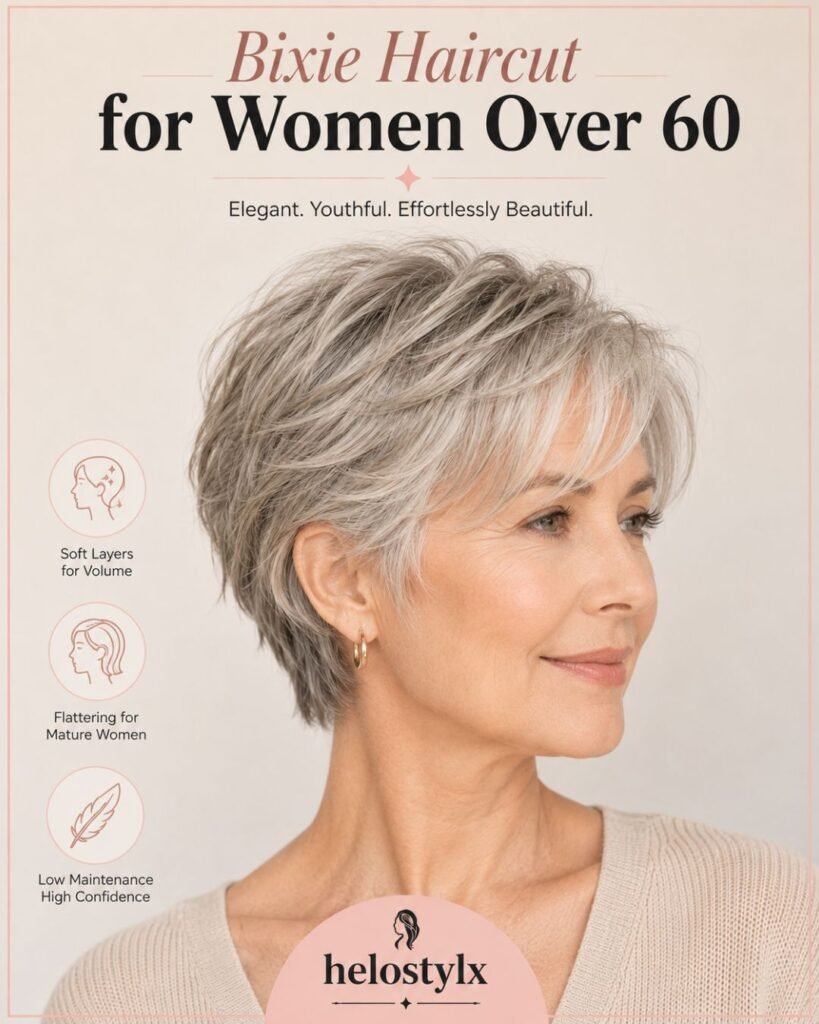
Simplicity tends to work best at this stage — a bixie with clean layers, minimal texturizing, and a length that’s easy to maintain between salon visits. This version usually stays close to the head at the sides and back, with just enough length on top to add softness.
It’s worth discussing color placement with your stylist too, since lighter pieces around the face can brighten the complexion and make the shorter cut feel more youthful without changing the overall shape.
Curly Bixie Haircut
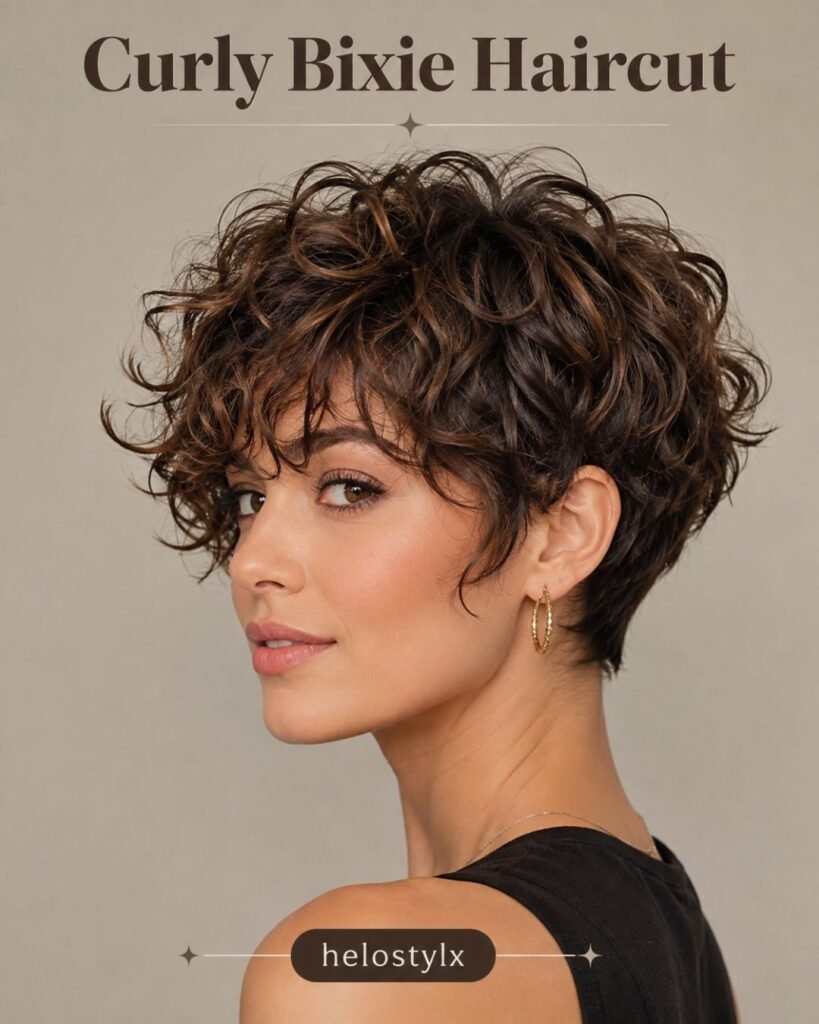
Curly hair adds natural texture that a bixie is built to show off. Because curls shrink upward when they dry, this version is usually cut slightly longer than a straight-hair bixie would be, to account for the bounce-back.
Layering should be done curl by curl rather than with the hair pulled straight, ideally with a dry cut so the stylist can see exactly how each curl falls. Diffusing with a curl cream afterward keeps the shape defined without frizz.
Bixie Haircut for Black Women
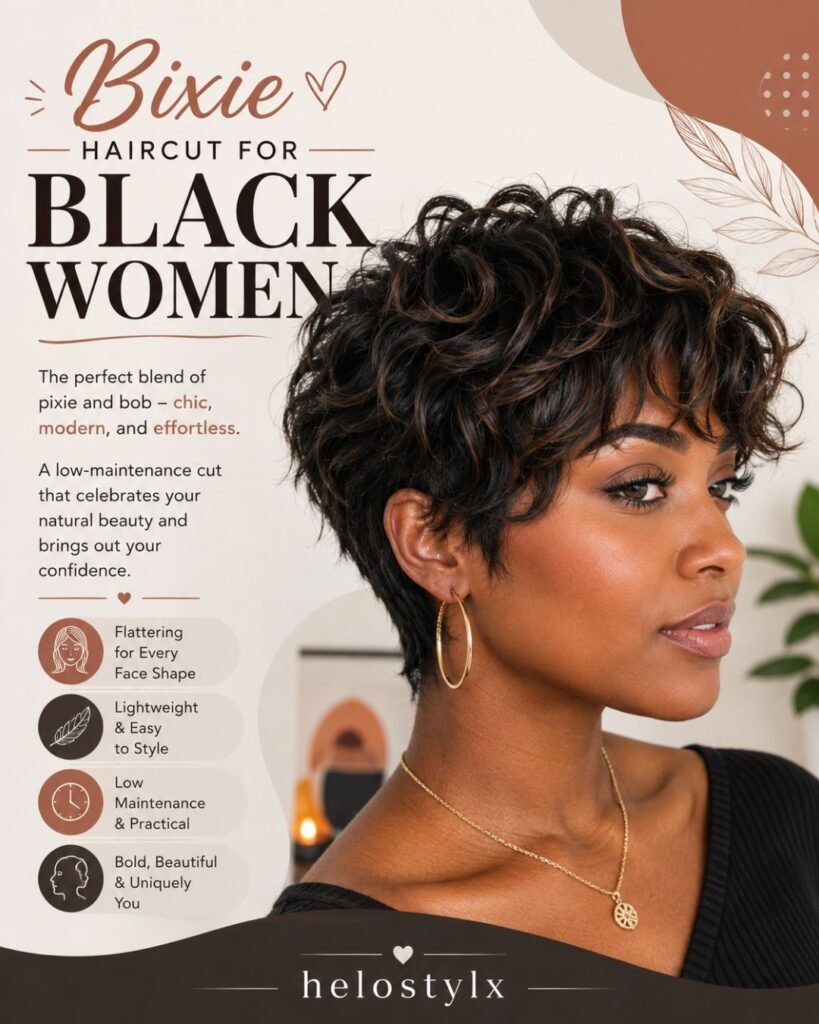
On coily and tightly curled hair textures, a bixie can be cut to highlight natural curl patterns, often with slightly more length retained on top to allow the curls room to form their full shape. Many versions incorporate a tapered nape and sides for a clean, defined outline.
This cut also works well styled straight for those who prefer to alternate textures, since the underlying shape holds up whether the hair is worn curly, blown out, or straightened.
Choose the Right Bixie Haircut for Your Hair Type
The right bixie for you depends less on trends and more on how your hair naturally behaves. Matching the cut to your texture is what makes the difference between a style that works with minimal effort and one that fights you every morning.
| Hair Type | Best Bixie Approach | Why It Works |
| Fine, straight hair | Shorter length, dense crown layers | Prevents the cut from falling flat |
| Thick, straight hair | Heavier layering, razor texturizing | Removes bulk, adds movement |
| Wavy hair | Medium-length layers, minimal blow-drying | Lets natural texture show |
| Curly hair | Slightly longer cut, dry-cutting method | Accounts for curl shrinkage |
| Coily hair | Tapered sides, longer top layers | Preserves curl pattern and shape |
If you’re unsure which category your hair falls into, bring reference photos to your consultation and ask your stylist to explain how your specific texture will change the outcome — the same request can produce noticeably different results depending on how the hair actually behaves once cut.
Will a Bixie Haircut Suit My Face Shape?
Yes, in most cases, because the bixie can be adjusted through layering, fringe placement, and length to complement nearly any face shape. The key is customizing where the layers fall rather than assuming one version fits everyone.
- Round faces: A version with height at the crown and a side-swept fringe elongates the face rather than widening it.
- Square faces: Soft, feathered layers around the jaw soften strong angles.
- Oval faces: This shape can wear almost any bixie variation, including the classic short version, without adjustment.
- Heart-shaped faces: Curtain bangs balance a wider forehead with a narrower chin.
- Long faces: Fuller layers with less height at the crown help shorten the appearance of the face.
Your stylist should be looking at your face shape, hairline, and how your hair grows naturally — not just the shape you point to in a photo — since two people with the “same” face shape can still need different layering to get a flattering result.
Best Products to Style a Bixie Haircut
Because a bixie relies on texture and shape rather than length, the right products matter more than they would with a longer cut. A few core categories cover most styling needs:
- Texturizing spray or paste – builds definition in choppy or piecey layers and keeps them separated through the day.
- Root-lifting mousse – applied to damp hair before blow-drying, this helps fine or flat hair hold volume at the crown.
- Lightweight styling cream – smooths flyaways on straight or wavy versions without weighing the shorter layers down.
- Curl cream or gel – defines curls on curly and coily bixies while controlling frizz as the hair dries.
- Dry shampoo – refreshes volume at the roots between washes, which matters more on a short cut where flat roots are more noticeable.
A small round brush is worth keeping on hand too, since it’s the easiest tool for adding shape and lift to shorter layers during a blow-dry.
Final Word From Haiirology
The bixie haircut works because it doesn’t ask you to choose between low maintenance and personality — the base shape adapts to nearly any hair type, age, and face shape when the layering is customized correctly.
Bring a few reference photos to your next appointment, but talk through your hair’s natural texture with your stylist first. That conversation, more than the photo itself, determines whether your bixie ends up easy to style or a daily struggle.
