
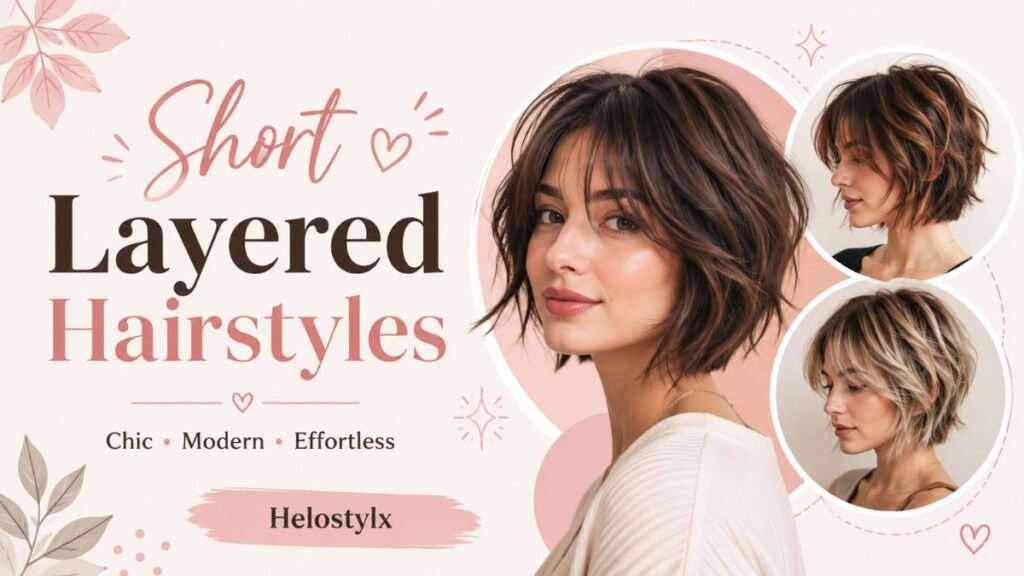
Short layered hair is having a real moment, and it’s not slowing down anytime soon. From face-framing pixies to shaggy, texture-heavy bobs, layering has become the easiest way to add movement, volume, and personality to a short cut without sacrificing manageability.
If you’re tired of flat, one-length hair or you’re simply ready for a lower-maintenance routine that still looks intentional, this guide breaks down fifteen short layered hairstyles worth bringing to your stylist in 2026. Each one includes who it flatters, how much upkeep it needs, and styling tips so you walk into your appointment prepared.
Why Short Layered Cuts Are Trending in 2026
Layering isn’t a new technique, but the way stylists are applying it has shifted. Instead of heavy, choppy layers stacked all over, 2026’s short layered hairstyles lean into soft, blended transitions that look effortless rather than engineered.
Part of the appeal is versatility. A short layered cut can be styled sleek one day and tousled the next, which makes it a practical choice for people who want variety without a full restyle every morning.
There’s also a texture-first mindset driving the trend. Curly, wavy, and fine hair all respond differently to layering, and modern cutting techniques account for that instead of forcing every texture into the same shape.
Below is a quick-reference table for anyone who wants the highlights before diving into each style individually.
| Style | Hair Type | Maintenance | Best Face Shape |
| Classic Pixie | Fine to medium | High | Oval, heart, diamond |
| Textured Blunt Bob | Straight, slight wave | Medium | Square, oval, round |
| Beachy Lob | Wavy, textured | Low–medium | Nearly all |
| Heavy Layers with Wispy Bangs | Thick, coarse | Medium–high | Round, square |
| Slicked Back Blunt Cut | Straight, fine–medium | Medium | Angular shapes |
| Short Shag | Wavy, curly | Medium | Oval, heart |
| Layered French Bob | Straight, slight wave | Medium | Oval, heart, square |
| Old Money Bob | Straight, healthy | Medium–high | Oval, heart |
| Lob with Deep Side Part | Most textures | Low–medium | Oval, round, square |
| Baby-Soft Layers with Wispy Bangs | Fine to medium | Medium | Heart, oval |
| Bixie | Nearly all | High | Nearly all |
| Razor Cut Bob | Thick, coarse | Medium | Most shapes |
| Voluminous Layered Bob | Fine to medium | Medium | Round, oval, heart |
| Curly Layered Pixie | Curly, coily | Medium–high | Oval, heart, diamond |
| Messy Short Shag | Wavy, curly | Medium | Oval, square |
Use this table as a starting point, then read the full breakdown below for styling tips, upkeep expectations, and who each cut genuinely flatters.
Classic Pixie
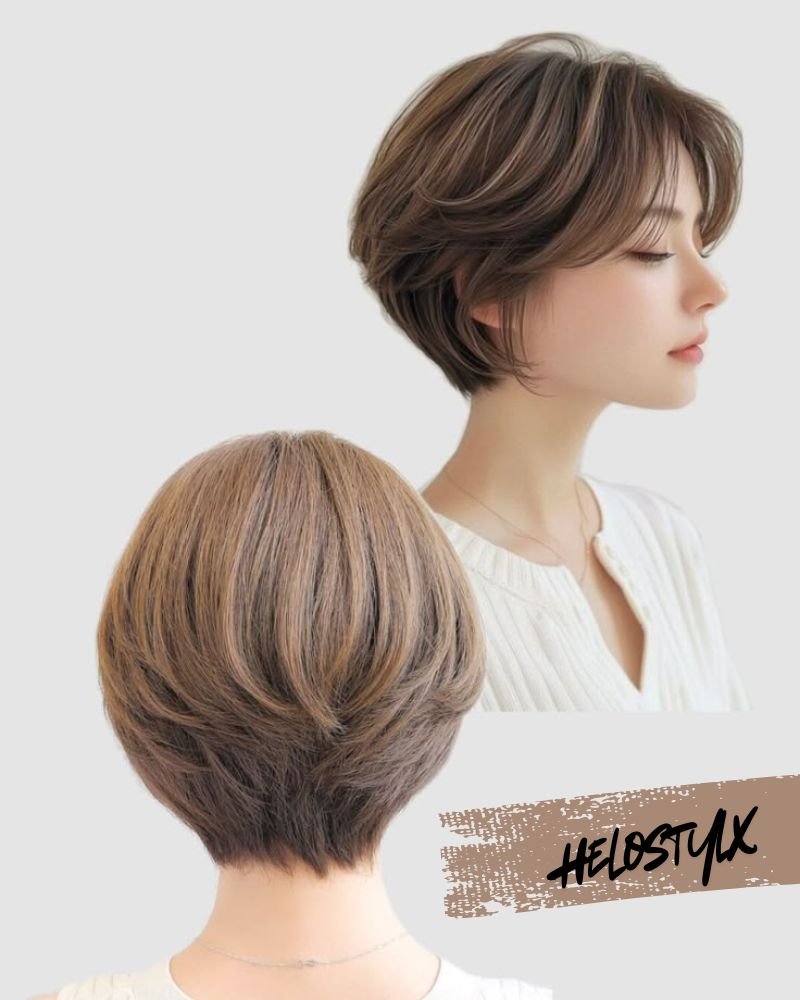
The classic pixie remains one of the most recognizable short layered hairstyles, and for good reason. Short layers around the crown add lift, while slightly longer pieces near the face soften the overall silhouette.
Best for: Oval, heart, and diamond face shapes; fine to medium hair density.
Maintenance level: High — expect trims every four to six weeks to keep the shape crisp.
A well-cut pixie photographs beautifully because the layering catches light differently depending on the angle. Ask your stylist for point-cutting at the ends to avoid a blunt, helmet-like finish.
Styling tip: A small amount of texturizing paste worked into damp hair, then blow-dried with your fingers, keeps the layers separated instead of clumping together.
Common mistake to avoid: Going too long between trims. Because the pixie relies on precise layering for shape, even a few extra weeks of growth can make it look shaggy in an unintentional way rather than styled.
Textured Blunt Cut Bob
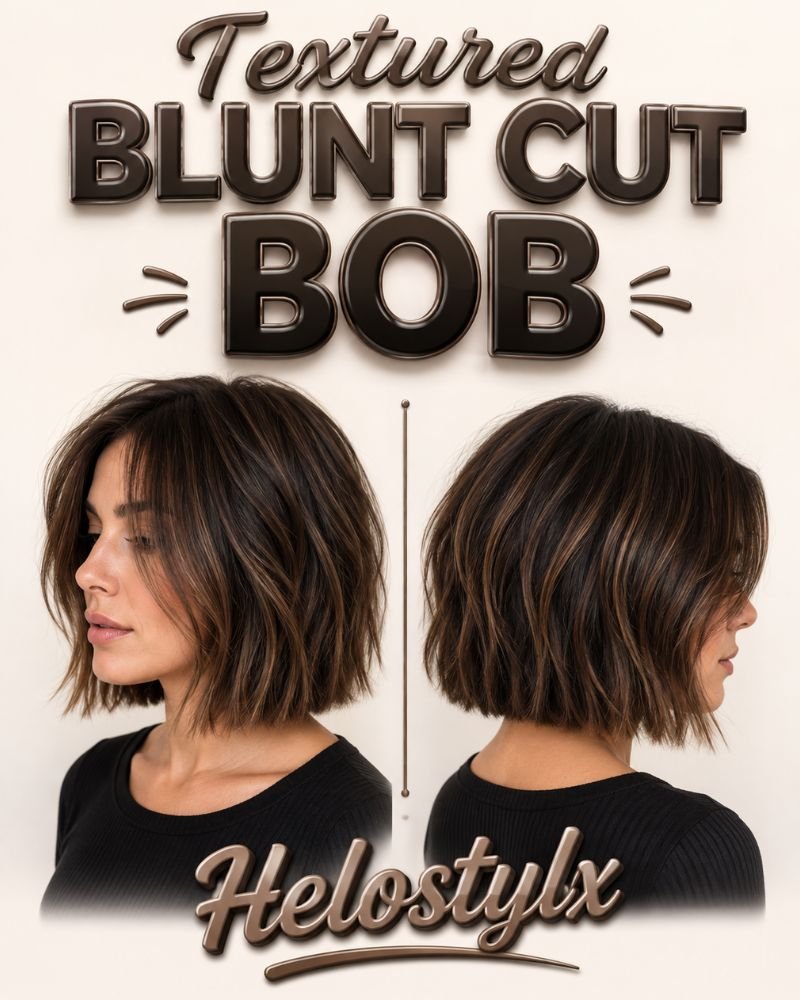
This style pairs a geometric, blunt perimeter with internal layering that’s invisible from the outside but does all the volume work underneath. The result is a bob that looks sharp and structured while still moving naturally.
Best for: Straight to slightly wavy hair; square, oval, and round face shapes.
Maintenance level: Medium.
Unlike a traditional one-length blunt bob, the textured version avoids that stiff, plank-like appearance. The internal layers give it just enough softness to feel current rather than dated.
Styling tip: Round-brush the ends under while blow-drying, then finish with a light-hold spray to keep the blunt line defined without looking flat.
Many people request this cut expecting a low-maintenance style simply because it’s shorter, but the blunt perimeter does require regular trims to stay sharp — otherwise the line softens and starts to look uneven.
The Beachy Lob
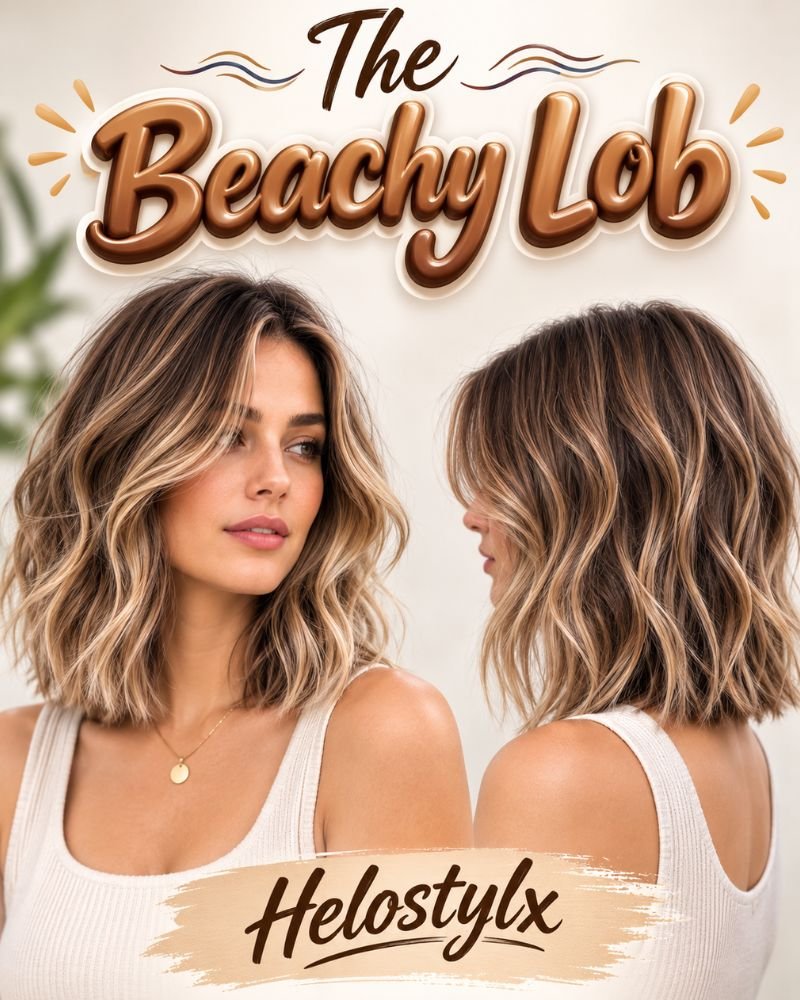
The beachy lob (long bob) combines effortless waves with soft layering that starts around the cheekbone. It’s one of the more forgiving short layered hairstyles because the waves camouflage minor cutting inconsistencies.
Best for: Wavy or naturally textured hair; nearly all face shapes.
Maintenance level: Low to medium.
This cut works exceptionally well for people transitioning from long hair to something shorter, since it still offers enough length to tuck behind the ears or pull into a small ponytail.
Styling tip: Use a texturizing sea-salt spray on damp hair and air-dry, or diffuse for a more polished beachy finish.
If your hair is naturally straight, a beachy lob still works, but plan on adding waves with a curling wand or texturizing spray a couple of times a week to maintain the intended movement.
Heavy Layers with Wispy Bangs
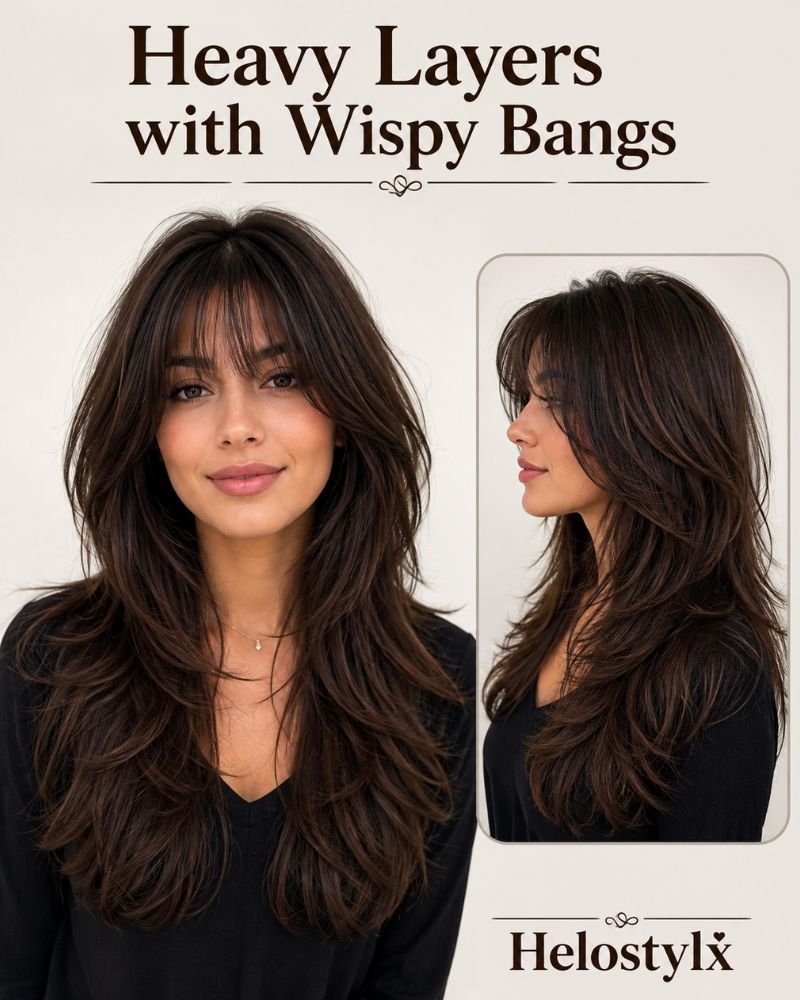
Heavy layering throughout the mid-lengths and ends, paired with soft, wispy bangs, creates serious volume and movement. This is a bolder take on layering compared to subtler, blended styles.
Best for: Thick or coarse hair that needs weight removed; round and square face shapes benefit from the softening bangs.
Maintenance level: Medium to high.
Because the layers are more pronounced, this style tends to have more visible texture and “piece-y” separation, which reads as intentionally undone rather than messy.
Styling tip: Apply a lightweight mousse before diffusing to enhance natural movement without weighing the layers down.
This combination works particularly well for anyone growing out a blunt bob, since the layers help disguise the awkward in-between stage while the bangs add a finished, styled feel.
Slicked Back Blunt Cut with Flippy Ends
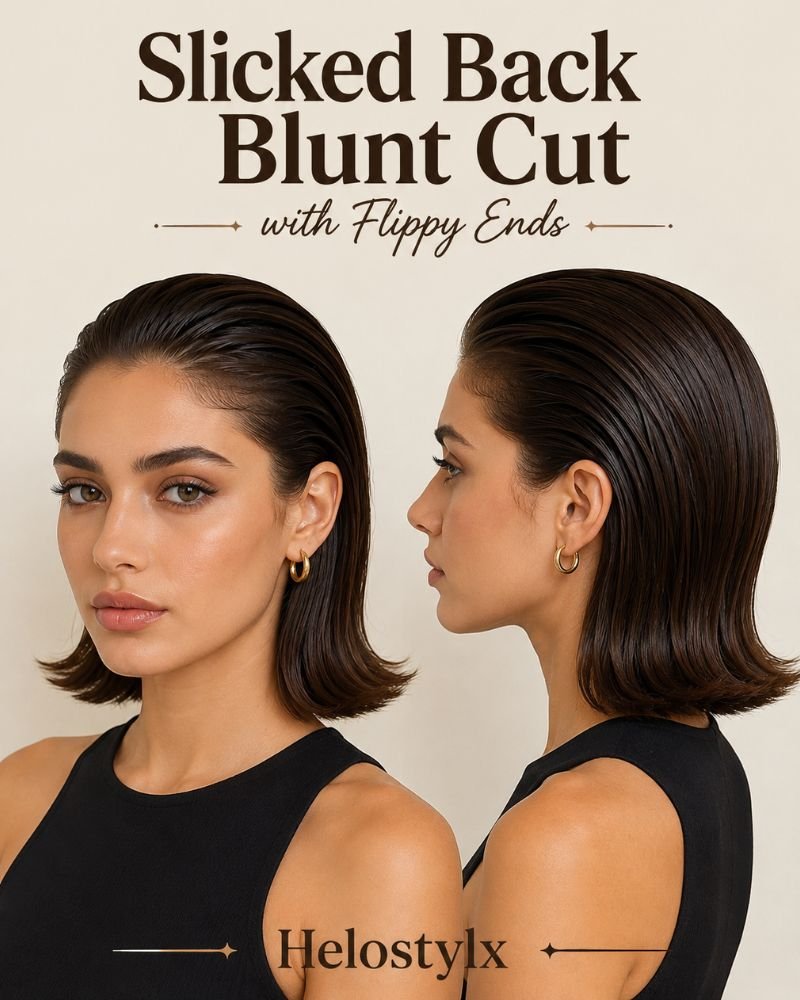
This is a more editorial, fashion-forward take on the bob. The top and sides are slicked close to the head, while the blunt ends flip outward or inward for a graphic, sculptural finish.
Best for: Straight, fine-to-medium hair; angular face shapes that can handle the sleekness up top.
Maintenance level: Medium.
It’s a striking option for special occasions or anyone who wants a dramatic contrast between sleek roots and voluminous ends.
Styling tip: Use a strong-hold gel at the roots, then curl the ends outward with a large-barrel iron for the signature flip.
Because of the daily styling effort involved, this look tends to be reserved for events, photoshoots, or days when you specifically want a sleeker, more polished appearance rather than an everyday routine.
The Short Shag
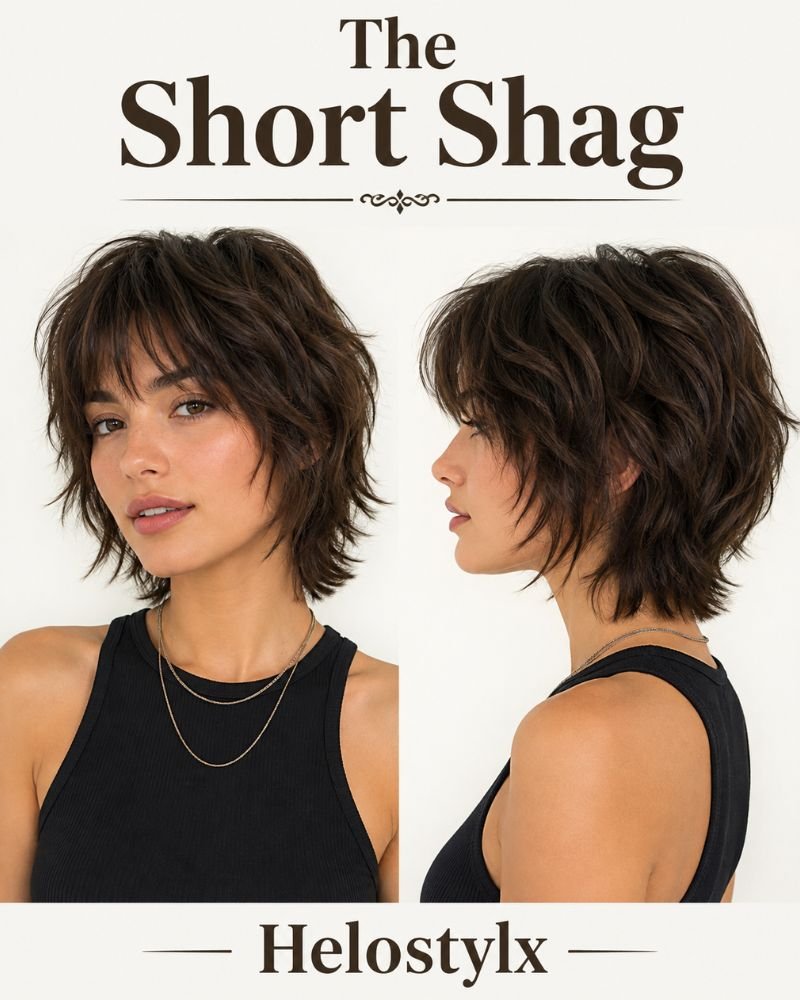
The short shag brings back heavily layered, retro-inspired texture with curtain bangs and lots of face-framing movement. It’s one of the most requested short layered hairstyles for people who want maximum texture with minimal daily styling.
Best for: Wavy or curly hair; oval and heart face shapes.
Maintenance level: Medium.
Shags are forgiving of growing-out periods because the heavy layering blends new growth into the existing shape more gracefully than blunt cuts do.
Styling tip: Scrunch a curl cream into damp hair and let it air-dry, then break up any clumping with your fingers once dry.
The short shag also pairs well with subtle balayage or babylights, since the multi-dimensional layering gives color placement extra opportunities to catch light and add depth.
Layered French Bob
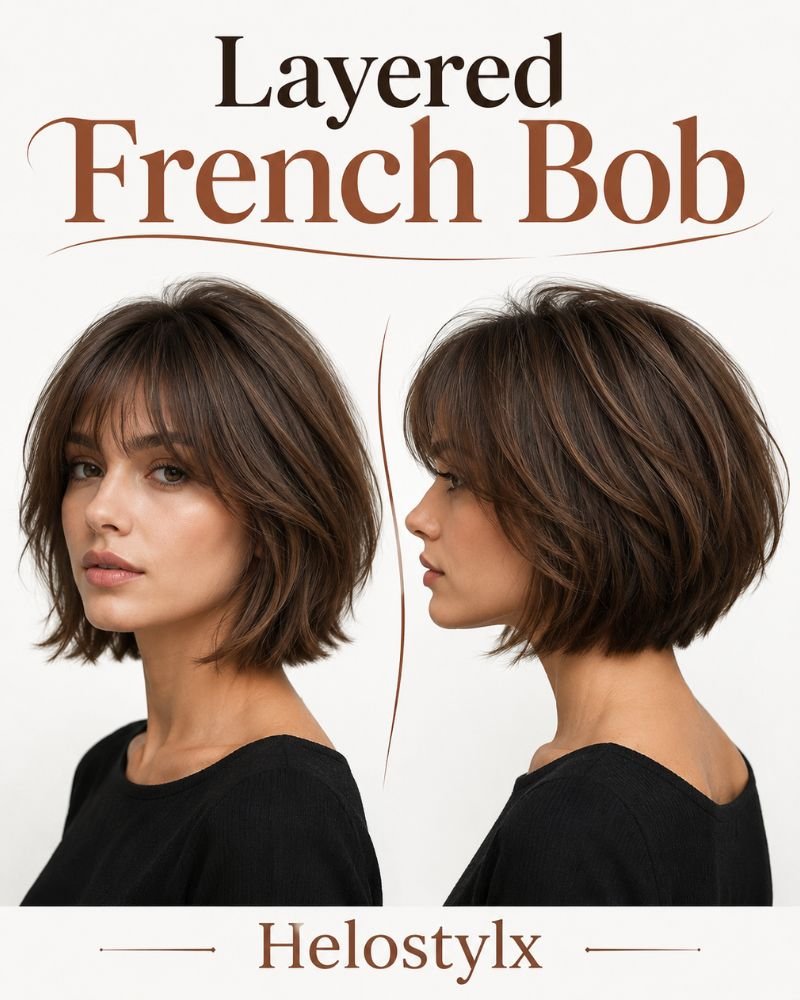
Inspired by effortless Parisian style, the layered French bob sits at chin length with soft, subtle layering and often a soft fringe. It reads polished but never overdone.
Best for: Straight to slightly wavy hair; oval, heart, and square face shapes.
Maintenance level: Medium — the shorter length shows growth faster.
This cut leans into simplicity. The layering is minimal compared to a shag, which keeps the silhouette clean while still avoiding a stiff, one-dimensional look.
Styling tip: Blow-dry with a small round brush for soft inward curves at the ends, then tousle lightly with your fingers.
If you’re considering bangs with this cut, ask your stylist for a soft, curtain-style fringe rather than a full blunt fringe — it keeps the overall look consistent with the effortless French aesthetic.
Old Money Bob
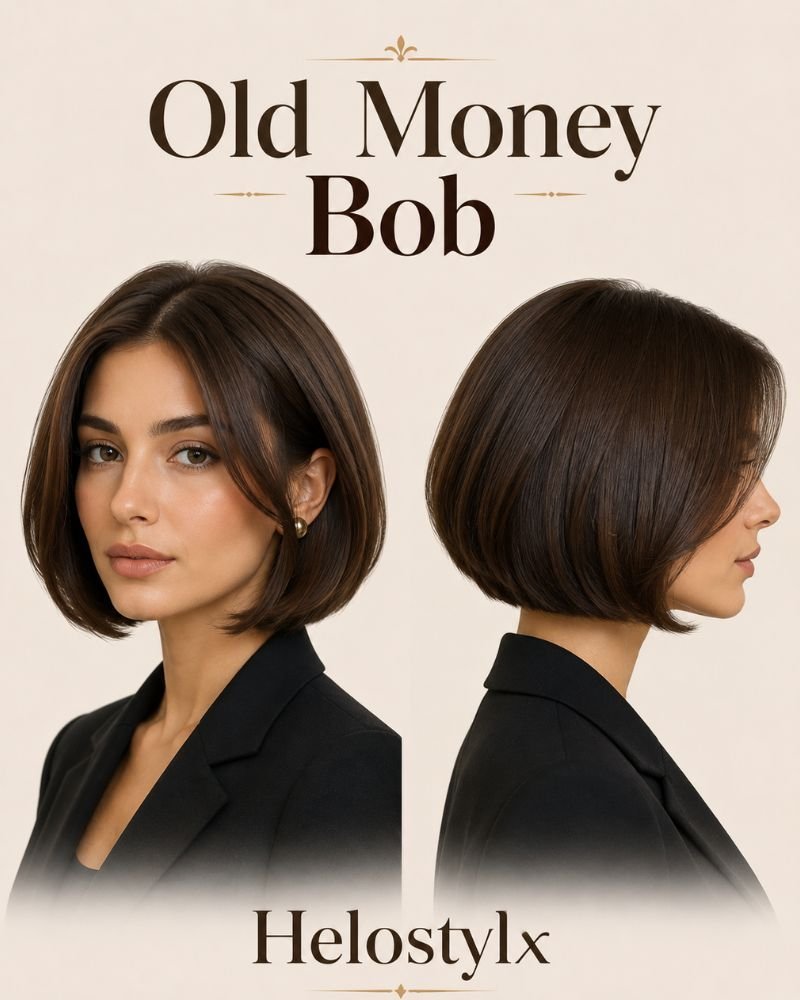
The old money bob takes cues from quiet luxury aesthetics: a smooth, rounded shape, subtle layering, and a polished finish that avoids anything trendy-looking or overly textured.
Best for: Straight, healthy hair; oval and heart face shapes.
Maintenance level: Medium to high, since the polished look depends on regular trims.
This style photographs as understated and refined rather than statement-making, which is exactly its appeal for people who want their hair to look expensive without looking fussy.
Styling tip: Smooth a lightweight serum through mid-lengths to ends and blow-dry straight for that glossy, uniform finish.
Healthy hair is non-negotiable for this look, since any damage or dryness immediately shows against the smooth, glossy finish the style depends on.
Lob with Deep Side Part
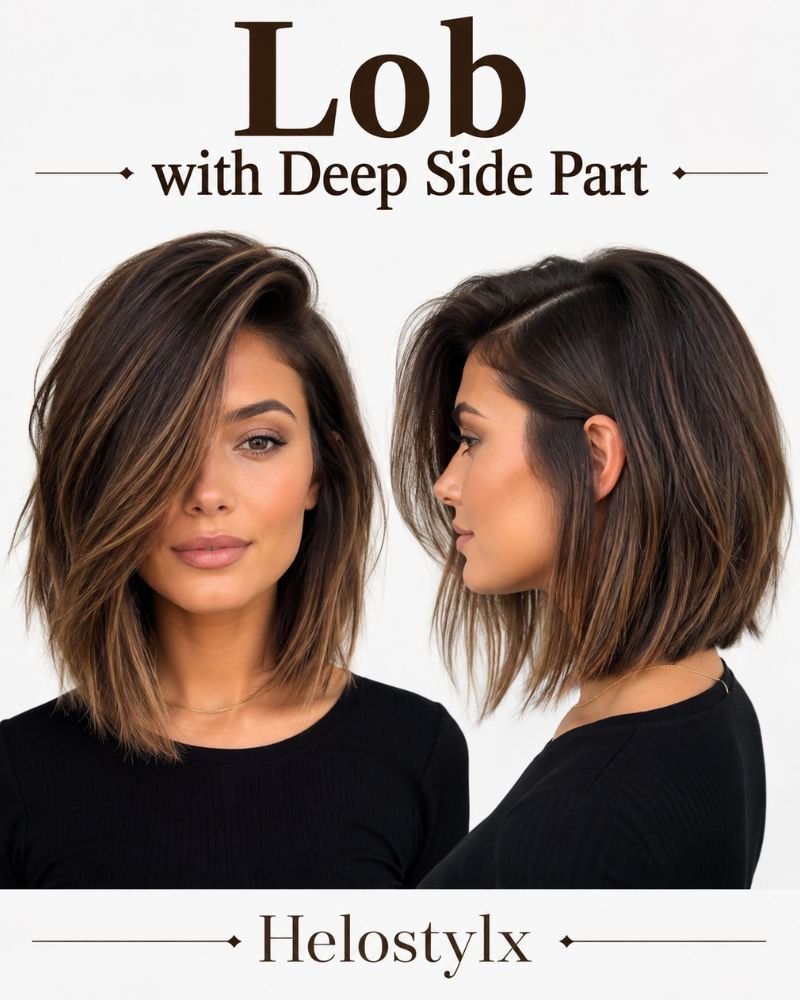
A deep side part instantly changes the proportions of a lob, adding asymmetry and a slightly more dramatic, face-slimming effect. Layering around the part helps the hair fall naturally instead of fighting the new direction.
Best for: Oval, round, and square face shapes looking to add angles.
Maintenance level: Low to medium.
This is a low-effort way to refresh an existing lob without cutting off length — often just a re-part and some strategic layering does the job.
Styling tip: Blow-dry with a paddle brush pushing hair away from the heavier side to train it into the new part.
Give your hair a week or two to adjust to a new part line — it can feel unnatural at first, especially if you’ve worn a center part for years, but the hair will eventually fall that way on its own.
Baby-Soft Layers with Wispy Bangs
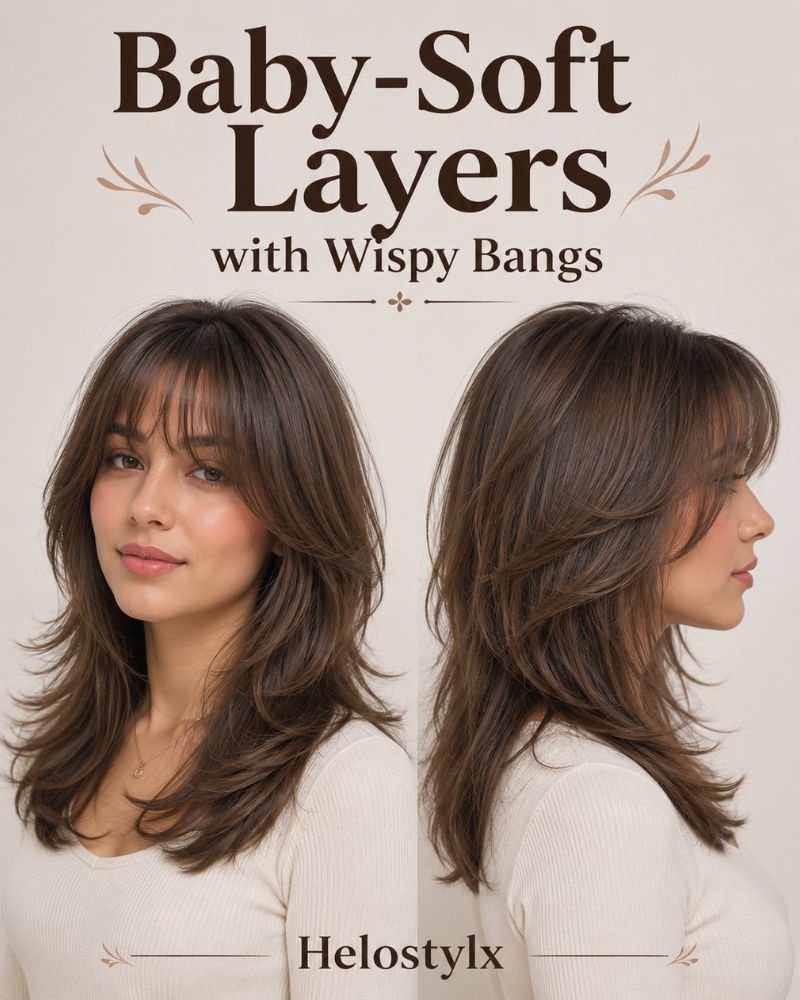
This style is all about softness — fine, feathered layers combined with delicate, barely-there bangs. It’s a gentler alternative to heavier layering and works particularly well on finer hair textures.
Best for: Fine to medium hair; heart and oval face shapes.
Maintenance level: Medium, since wispy bangs need regular trims to stay wispy rather than growing into an awkward stage.
The soft layering avoids bulk at the ends, which keeps fine hair from looking thin or stringy.
Styling tip: Use a volumizing mousse at the roots only, and blow-dry bangs to the side with a small brush for a soft, swept effect.
This is a good transitional cut for anyone nervous about committing to a bolder shag or heavily layered style, since the softness feels approachable while still updating an outdated one-length cut.
The Bixie
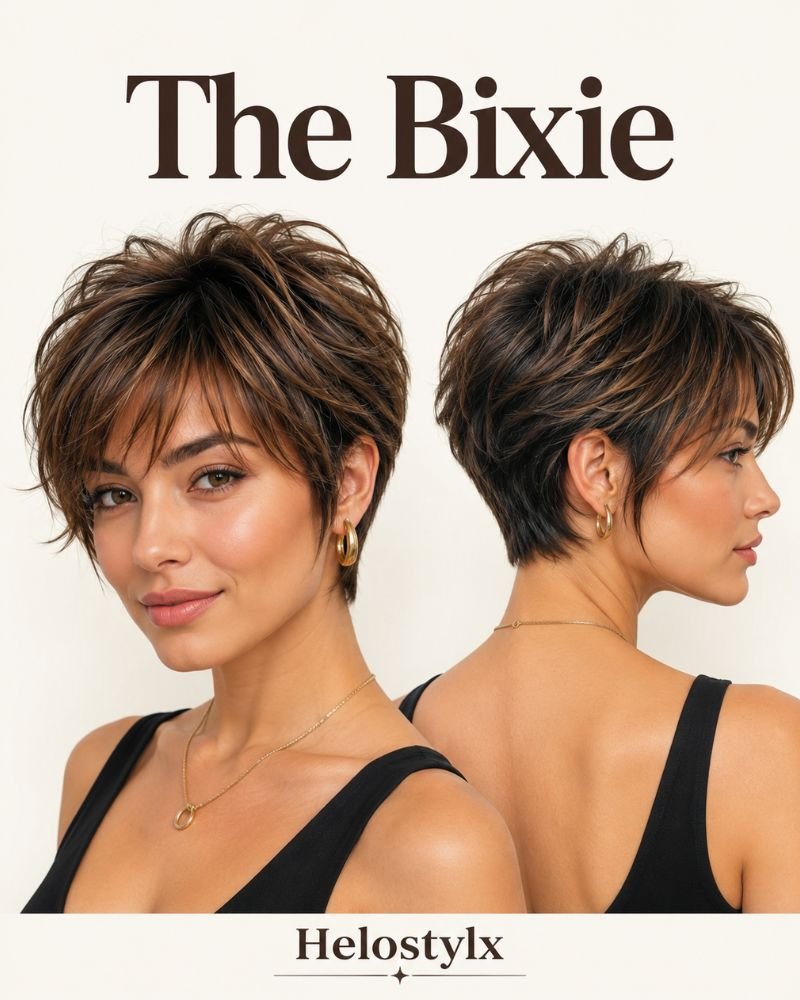
The bixie is a hybrid between a bob and a pixie, offering more length than a traditional pixie while keeping the cropped, layered energy. It’s become one of the most searched short layered hairstyles because it suits so many hair types.
Best for: Nearly all face shapes; works on straight, wavy, and curly textures with adjusted layering.
Maintenance level: High — the in-between length grows out visibly fast.
The bixie’s popularity comes from its flexibility. It can be styled sleek and sophisticated or tousled and edgy, depending on product and technique.
Styling tip: Apply a texturizing cream to damp hair and air-dry for a lived-in look, or blow-dry with a small round brush for more polish.
Because it sits between two distinct cuts, the bixie also grows out more gracefully than a true pixie, giving you a longer window before it needs reshaping into either a fuller pixie or a short bob.
Also Read This : 15 Blunt Bob Haircut Ideas to Bring to Your Next Hair Stylist Appointment
Razor Cut Bob
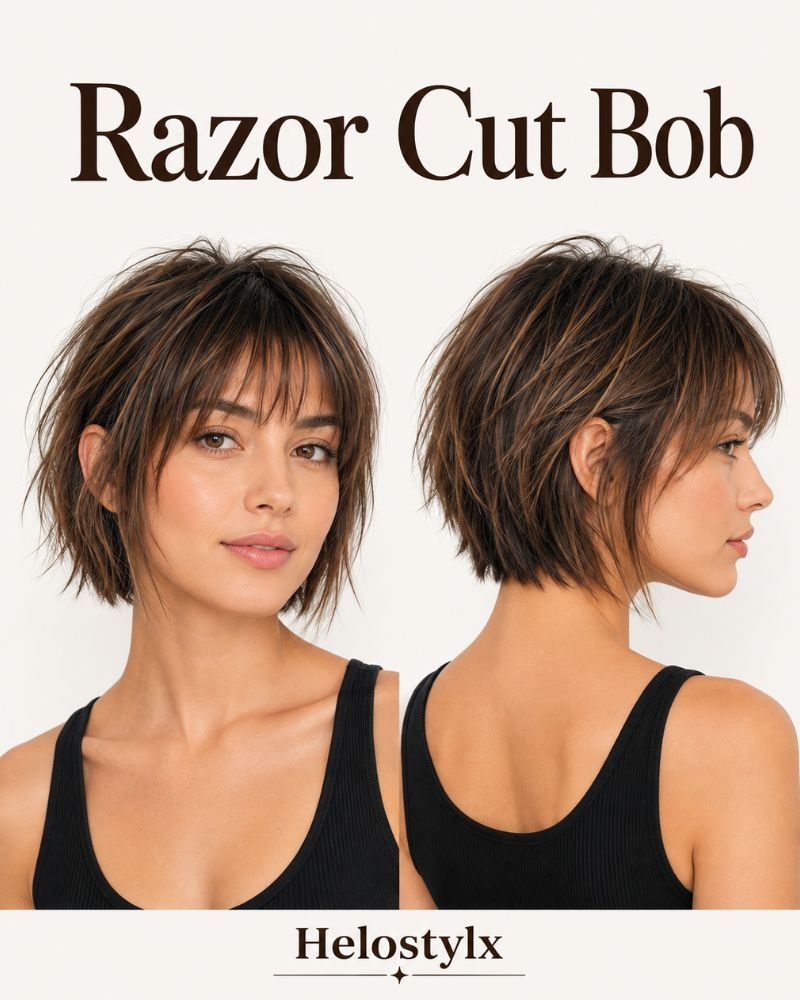
Cut with a razor instead of shears, this bob has soft, feathered ends rather than the crisp line of a blunt cut. The technique naturally removes weight and adds movement throughout.
Best for: Thick or coarse hair that needs texturizing; most face shapes.
Maintenance level: Medium.
Razor cutting is especially useful for hair that tends to look heavy or blocky when cut with traditional shears, since it softens the ends without sacrificing shape.
Styling tip: Use a texturizing spray and scrunch while blow-drying to enhance the naturally feathered ends.
Keep in mind that razor cutting can be more damaging to already-fragile or chemically treated hair, so mention your hair’s history to your stylist before requesting this technique.
Voluminous Layered Bob
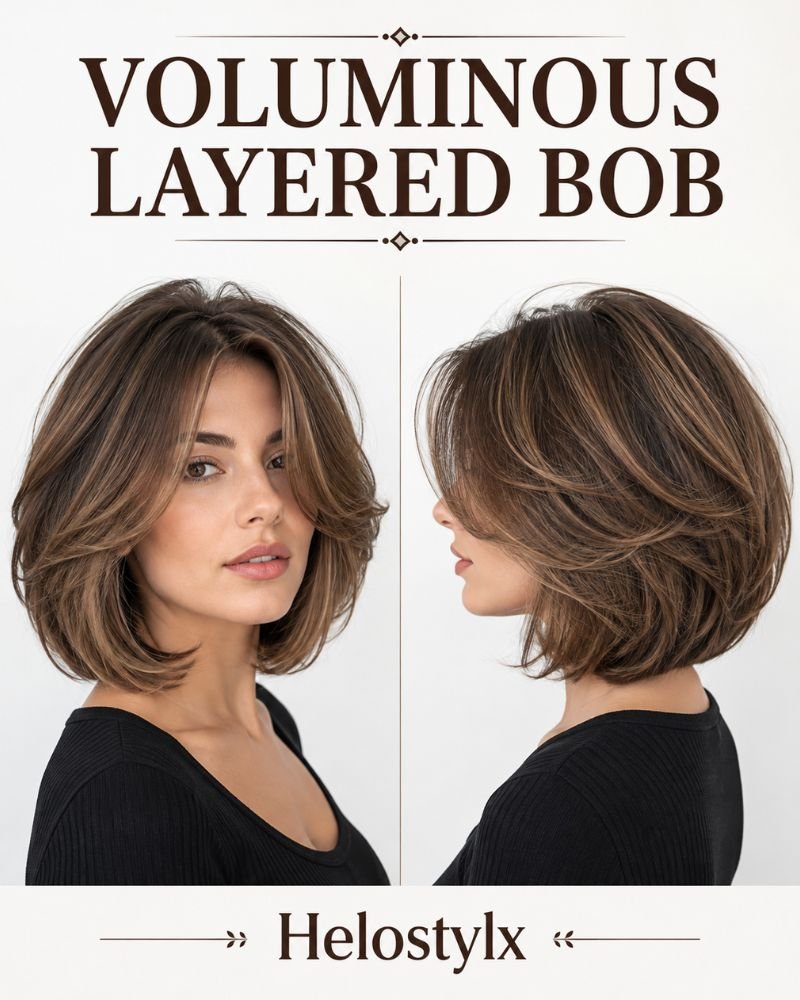
This bob is built for maximum body — layers are cut throughout to create lift at the crown and fullness through the mid-lengths. It’s a strong option for finer hair that tends to fall flat.
Best for: Fine to medium hair looking for extra volume; round, oval, and heart face shapes.
Maintenance level: Medium.
The layering distributes weight evenly so the bob doesn’t collapse under its own length, which is a common complaint with one-length bobs on finer hair.
Styling tip: Blow-dry upside down for a few minutes before flipping hair back over to maximize root lift.
Pairing this cut with a volumizing shampoo and root-lifting spray extends the salon-fresh fullness well past wash day, which matters most for finer textures that lose volume quickly.
Curly Layered Pixie
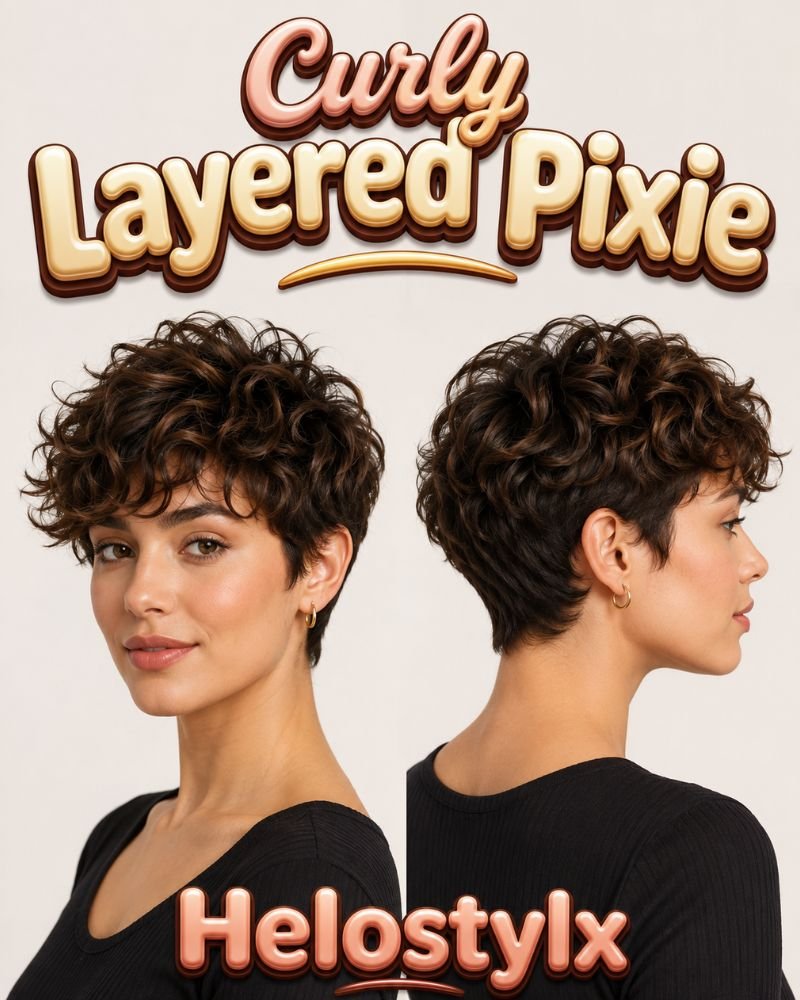
Curly hair needs layering that respects curl pattern and shrinkage, and this pixie is cut specifically with that in mind. The layers are shaped to enhance the natural curl rather than force it into a uniform shape.
Best for: Curly and coily hair textures; oval, heart, and diamond face shapes.
Maintenance level: Medium to high, since curls need to be cut dry to see true shape and length.
A well-executed curly pixie can look strikingly different day to day depending on humidity and styling products, which many curly-haired people see as a bonus rather than a downside.
Styling tip: Apply curl cream or gel to soaking-wet hair and let curls air-dry or diffuse on low heat to avoid frizz.
Seek out a stylist who specifically cuts curly hair dry or uses curl-by-curl techniques — a curly pixie cut using traditional wet-cutting methods often ends up shorter and less flattering than intended once curls spring up.
Messy Short Shag
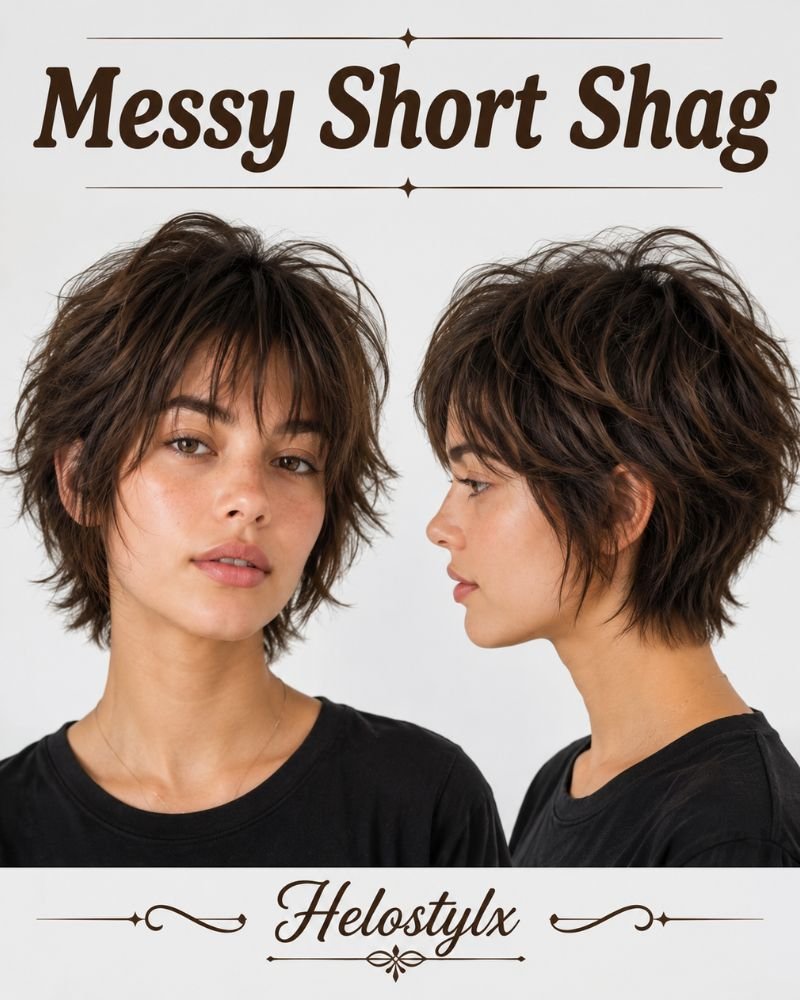
The messy short shag takes the classic shag and pushes the texture even further with choppier, more irregular layering. It’s designed to look undone, almost like you didn’t try — even though the cut itself is precise.
Best for: Wavy and curly textures; oval and square face shapes.
Maintenance level: Medium.
This is a favorite among people who want a low-fuss daily routine, since the messier the styling, the more the cut is doing exactly what it’s supposed to do.
Styling tip: Rough-dry with your hands and a diffuser, then twist a few random pieces with a small curling wand for extra texture.
Because the choppier layering is more forgiving than a precise shape, this cut also holds up well between salon visits, making it a practical choice for anyone who wants low daily upkeep without sacrificing personality.
How to Choose the Right Short Layered Cut for Your Face Shape
Not every layered style suits every face shape equally, and understanding this before your appointment saves time and disappointment. The table below offers a general starting point.
| Face Shape | Recommended Styles | Styles to Approach with Caution |
| Oval | Classic Pixie, French Bob, Bixie | Few restrictions — most styles work well |
| Round | Voluminous Layered Bob, Lob with Deep Side Part | Blunt bobs without layering can widen the face |
| Square | Textured Blunt Bob, Messy Short Shag | Very blunt, heavy fringe can emphasize jawline angles |
| Heart | Baby-Soft Layers with Wispy Bangs, Beachy Lob | Very short, cropped pixies can expose a narrow chin |
| Diamond | Classic Pixie, Curly Layered Pixie | Styles with heavy volume at cheekbone level |
This is a general guide, not a rule. A skilled stylist can adapt almost any of these fifteen short layered hairstyles to flatter your specific features.
Beyond face shape, consider how much of your forehead, jawline, or neck you’re comfortable showing. Short layered cuts naturally draw more attention to these areas than longer hair does, so it helps to be honest with your stylist about which features you want to highlight or soften.
Hair density and texture matter just as much as face shape when it comes to layering. Fine hair generally benefits from shorter, more frequent layers that build volume, while thick or coarse hair often looks better with longer, softer layers that remove bulk without creating unwanted poof.
Styling and Maintenance Tips for Short Layered Hair
Short layered cuts need a slightly different care routine than longer styles, mostly because layering shows growth and product buildup faster.
- Book trims every four to eight weeks depending on how structured the cut is.
- Use lightweight products — heavy creams and oils can weigh down shorter layers and flatten volume.
- Sleep on a silk or satin pillowcase to reduce frizz and preserve styling overnight.
- Invest in a good heat protectant if you regularly blow-dry or use hot tools on shorter hair.
- Ask your stylist to show you the specific brush and product combination that works for your cut, since technique matters as much as product choice.
- Rotate between a clarifying shampoo and your regular shampoo every couple of weeks to prevent product buildup from weighing down shorter layers.
- Keep a travel-size texturizing spray or dry shampoo on hand for quick touch-ups between washes, especially with styles that rely on visible texture.
Short layered hairstyles also tend to respond well to professional blowouts every so often, even if you typically air-dry at home. A salon blowout can show you the full potential of your cut’s layering and give you a style reference to recreate on your own.
Key Takeaways
- Short layered hairstyles in 2026 favor soft, blended layering over harsh, choppy cuts.
- Texture and face shape should guide which of these fifteen styles you choose, not trend popularity alone.
- Maintenance varies widely — pixies and bixies need the most frequent trims, while lobs and French bobs are more forgiving.
- Lightweight, texture-enhancing products consistently outperform heavy creams on shorter layered cuts.
- Bringing reference photos and being specific about layer placement helps your stylist deliver the exact look you want.
Conclusion
Short layered hair works because it adapts to you rather than forcing your hair into a single, rigid shape. Whether you’re drawn to the soft romance of baby-soft layers or the bold statement of a messy shag, there’s a version of this trend suited to your texture, face shape, and lifestyle.
Bring a few of these fifteen short layered hairstyles to your next salon visit and talk through maintenance expectations with your stylist beforehand. The right cut, paired with the right care routine, will look intentional and polished well beyond the first fresh trim.
